Plus, a guide to understanding the future of public renewables in New York.
Plus, a guide to understanding the future of public renewables in New York. ·  View in browser
NEWSLETTER
In rural New York, even some Republicans are frustrated as the administration halts $186 million in conservation payments to farmers.
By Clara Hemphill

Keith Wagner, a dairy farmer in the rolling hills and open fields northeast of Albany, shelled out $1.4 million to build a device that promises to cut his electric bill and to reduce air pollution: a generator powered by manure and food waste. He was confident he would be reimbursed for a big chunk of that money, thanks to a $422,806 grant from the US Department of Agriculture.

Now, the Trump administration has frozen billions of dollars in payments to rural farmers and small businesses for climate-friendly projects approved during the Biden administration. Wagner doesn’t know when, if ever, he’ll see the money.

“It's unfair,” said Wagner, whose 1,000-acre family farm with 400 milk cows, Wagner Farms, is just 13 miles from the state capital. “We signed a contract with the federal government to complete a project. We did that. Now, they're not holding up their end of the deal. It's kind of like, if I wasn't going to pay my taxes, and I said, ‘Well, I'm just not going to pay them.’”

Wagner is one of 151 farmers, rural businesses, and municipalities in New York State who were promised $186 million under Biden’s signature climate law, the Inflation Reduction Act (IRA), according to an analysis by Atlas Public Policy prepared for New York Focus. The grants are for projects designed to plant trees, protect farmland from the effects of climate change and to bring solar power and other forms of clean energy — like Wagner’s manure-powered generator — to rural areas.

Almost all of that money is now frozen. On Trump’s first day in office, he ordered the USDA to stop payments to all IRA grants; Agriculture Secretary Brooke Rollins says the department is reviewing projects to ensure money goes only goes to “farmers and ranchers” and not to “far-left climate programs.”

That leaves grantees in rural parts of the state — where support for Trump is strong — in the dark, with no information about when a review might be forthcoming or what it might entail. “I asked my contact at USDA if they heard anything,” Wagner said.

“They said, ‘Nothing yet. Radio silence.’”

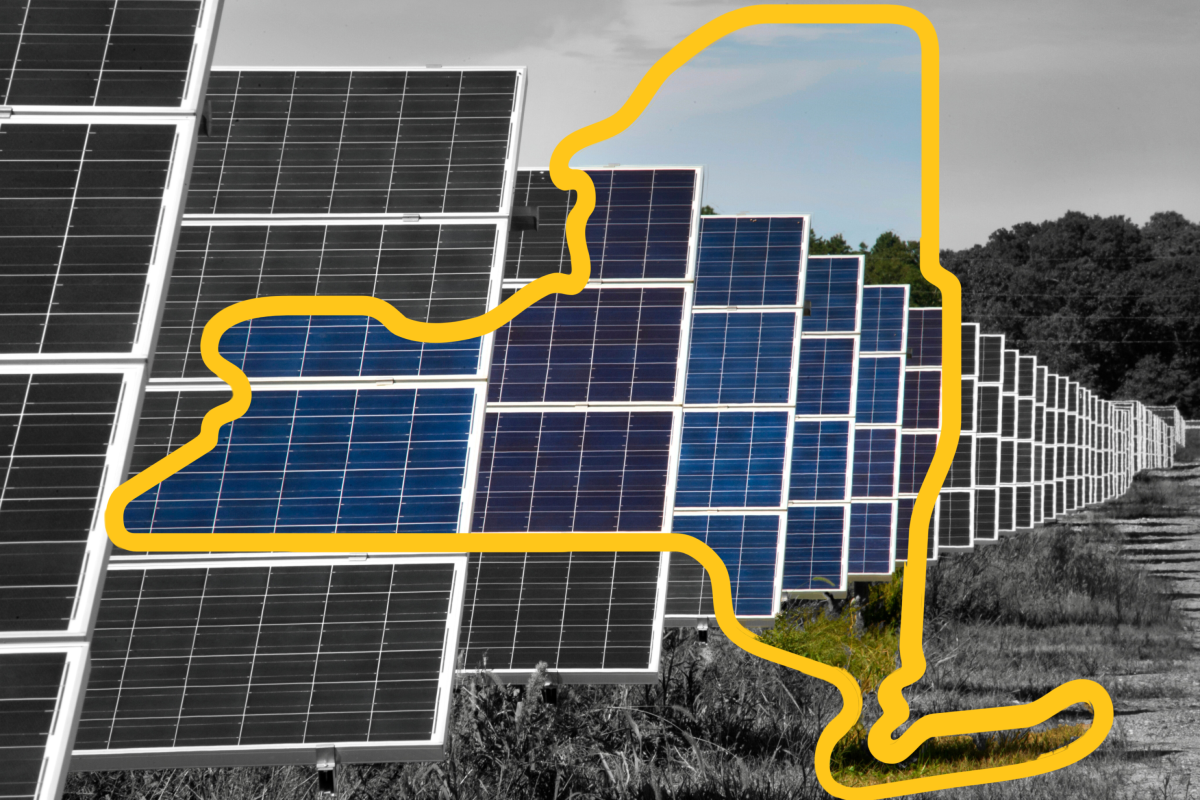
Two years ago, New York gave NYPA the power to help the state speed up its energy transition. Photo: Brookhaven National Laboratory | Illustration: Leor Stylar
A 2023 law is transforming the state power authority into one of New York’s biggest renewable developers. Some still want it to go further.
By Colin Kinniburgh

New York has ambitious climate goals — and is significantly behind on meeting them. That’s in part because the state isn’t building renewable energy fast enough.

But New York has a unique tool in its clean energy toolbox: the New York Power Authority, or NYPA, a public institution that supplies a significant portion of the state’s power thanks to two major hydroelectric dams and a network of transmission lines that spans the entire state. 

Two years ago, New York gave NYPA the power to help the state speed up its energy transition. After a long campaign from progressive organizers, legislators passed a law allowing NYPA to build and operate its own renewables, and in January, the authority approved a plan that would make it one of the biggest clean energy developers in the state.

But the plan has faced significant pushback — from the same group that spearheaded the public renewables legislation in the first place. The group now argues that NYPA is not doing anywhere near enough to help the state meet renewable energy mandates inscribed in its climate law.

So what is the future of public renewables in New York? And can they help the state chart its own energy transition in the Trump era?

Recent Stories

Thousands of NYC parents could be removed from the state’s child care assistance program, starting in April. Photos: Yan Krukau, South_agency / Canva | Illustration: Leor Stylar
Unless Albany offers more money, tens of thousands of parents in New York City are set to lose child care assistance this year. We spoke to six of them.
By Julia Rock

Natalie Colon Vasquez works as a clerk at Woodhull Medical Center, a public hospital in north Brooklyn, checking in patients struggling with addiction. She hopes to become an addiction counselor herself, so a couple days a week after work, she attends an online class through Stony Brook University to get certified.

Colon Vasquez wouldn’t be able to work and attend classes without the voucher she gets from the government to pay for her 3-year-old son’s daycare, she told New York Focus. As a single mother whose parents are in poor health, she doesn’t have other child care options.

“I do everything on my own,” she said. Without the voucher, day care would cost about a third of her income. “Out of pocket, I wouldn’t be able to afford day care…. Without my day care, I wouldn’t be able to work.”

But Colon Vasquez is set to lose her voucher later this year. The Child Care Assistance Program, which pays for her son’s day care and is largely funded by the state and federal governments, is facing a budget shortfall in New York City. The program covers almost the entire cost of child care for income-eligible parents with children aged six weeks to thirteen years old.

New York Focus spoke with New York City parents who, like Colon Vasquez, have benefited from the program’s expanded eligibility levels and are set to lose their benefits. Here’s what they told us.

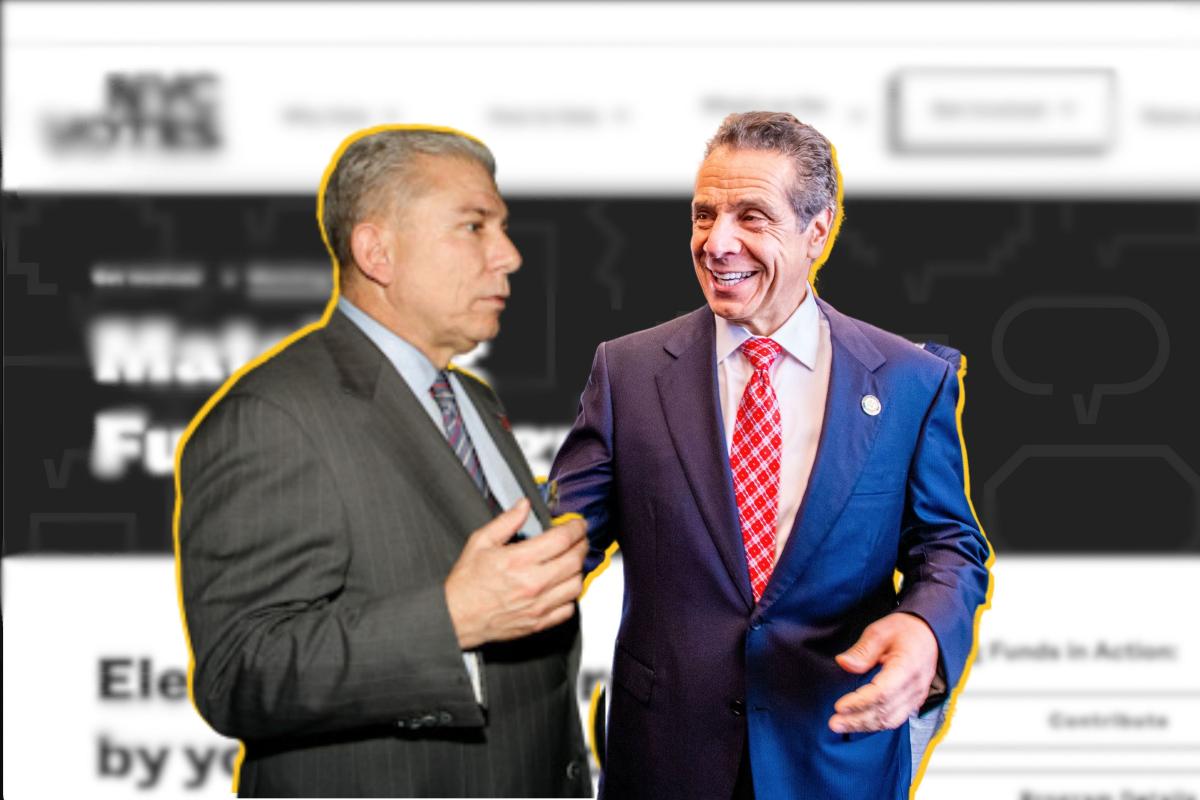
Governor Andrew Cuomo’s campaign failed to disclose that corporate lobbyist Tonio Burgos solicited donations on its behalf. Photos: Kelly Campbell, Delta News Hub / flickr; Screenshot: NYC Votes
Donors solicited by at least three undisclosed bundlers — Tonio Burgos, Jim Whelan, and Rick Ostroff — were told their gifts would be matched with public funds, despite that being barred by city election law.
By Chris Bragg and Julia Rock

It’s no surprise that lobbyist Tonio Burgos is fundraising for Andrew Cuomo’s campaign for New York City mayor. Burgos worked for 15 years for Andrew’s father, former Governor Mario Cuomo. He has long been loyal to the family.

But you wouldn’t know that from the mayoral candidate’s most recent campaign finance report, which failed to disclose any fundraising by Burgos or anyone else.

Records obtained by New York Focus show that on March 7, Burgos sent out a fundraising email seeking donations for Cuomo’s campaign. The email directed potential donors to a fundraising webpage set up by the Cuomo campaign that told them that their donations would be matched with taxpayer dollars — even though Burgos’s work as a New York City registered lobbyist means that any gifts he solicits are ineligible for a match under the city’s public campaign finance system.

In a campaign filing submitted Monday, Cuomo disclosed having had no “intermediaries” — also known as bundlers — that raised money for his mayoral bid. Every other major mayoral candidate has disclosed bundlers, except for City Council Speaker Adrienne Adams, who had only been fundraising for one week before the filing deadline.

New York Focus identified fundraising pages that the Cuomo campaign set up for around 30 bundlers, though it’s not clear how many of them have solicited donations yet. The pages tell donors that their gifts will be matched, even though at least five of the bundlers do work that disqualifies donations they solicit from matching funds.

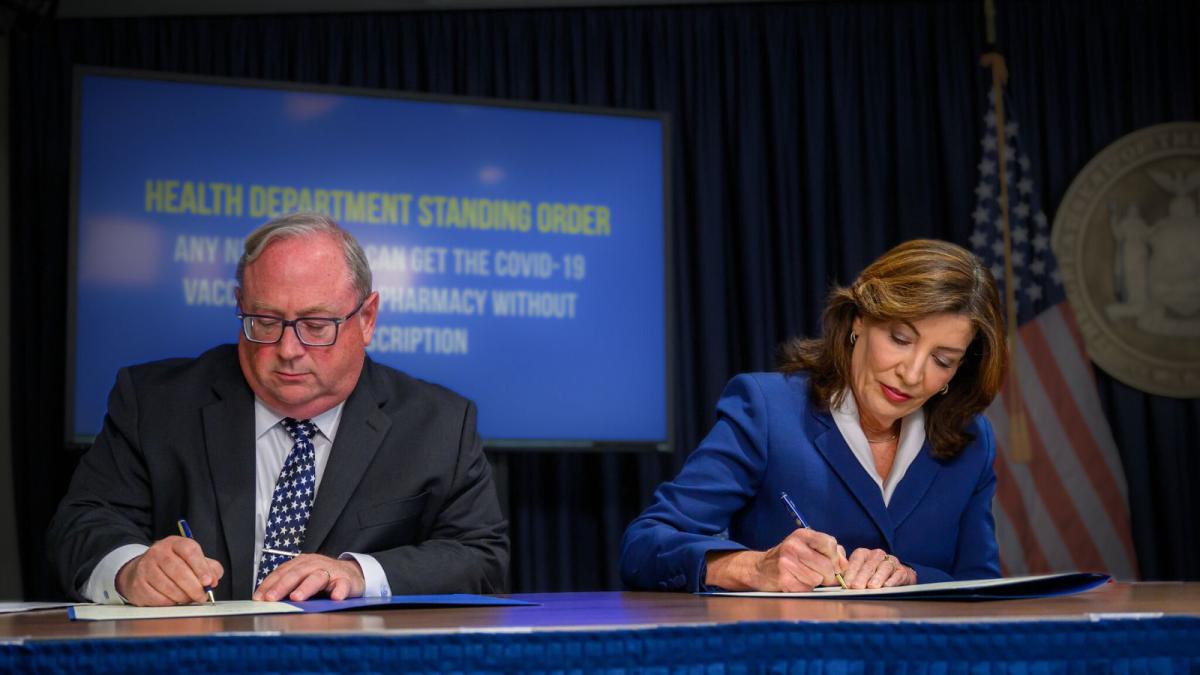
Governor Kathy Hochul and her health department commissioner James McDonald are pushing an overhaul of New York’s home care industry. Governor's Press Office
The company used to help employers avoid paying for workers’ benefits. Now it’s slated to administer health insurance for tens of thousands of low-wage New Yorkers.
By Sam Mellins

In six weeks, New York state will push tens of thousands of low-paid home health care workers onto a private insurance plan that won’t cover basic medical needs.

That’s not the only alarming thing about the plan. The founder of Leading Edge, the company set to administer the plan, was convicted of submitting falsified documents to Congress in an attempt to hide corporate losses, and the company appears to have spent years helping New York home care employers skirt a law meant to boost worker pay and benefits, according to court filings reviewed by New York Focus.

Leading Edge’s background raises concerns of whether the upcoming transfer could present an opportunity for a company with a sketchy past to cash in on the backs of New York’s health care workforce, paid for by taxpayer money.

Copyright © New York Focus 2024, All rights reserved.
Staying Focused is compiled and written by Alex Arriaga
Contact Alex at alex@nysfocus.com

Feedback? Tips? Pitches? Contact us at: editor@nysfocus.com

Support our work!

Interested in sponsoring these emails? Get in touch! Email editor@nysfocus.com.

This email was sent to *|EMAIL|*

unsubscribe from this list  ·  update subscription preferences

New York Focus · *|HTML:LIST_ADDRESS_HTML|* · USA