Following our reporting, the Senate is seeking to strengthen consumer protections.
Following our reporting, the Senate is seeking to strengthen consumer protections. ·  View in browser
NEWSLETTER
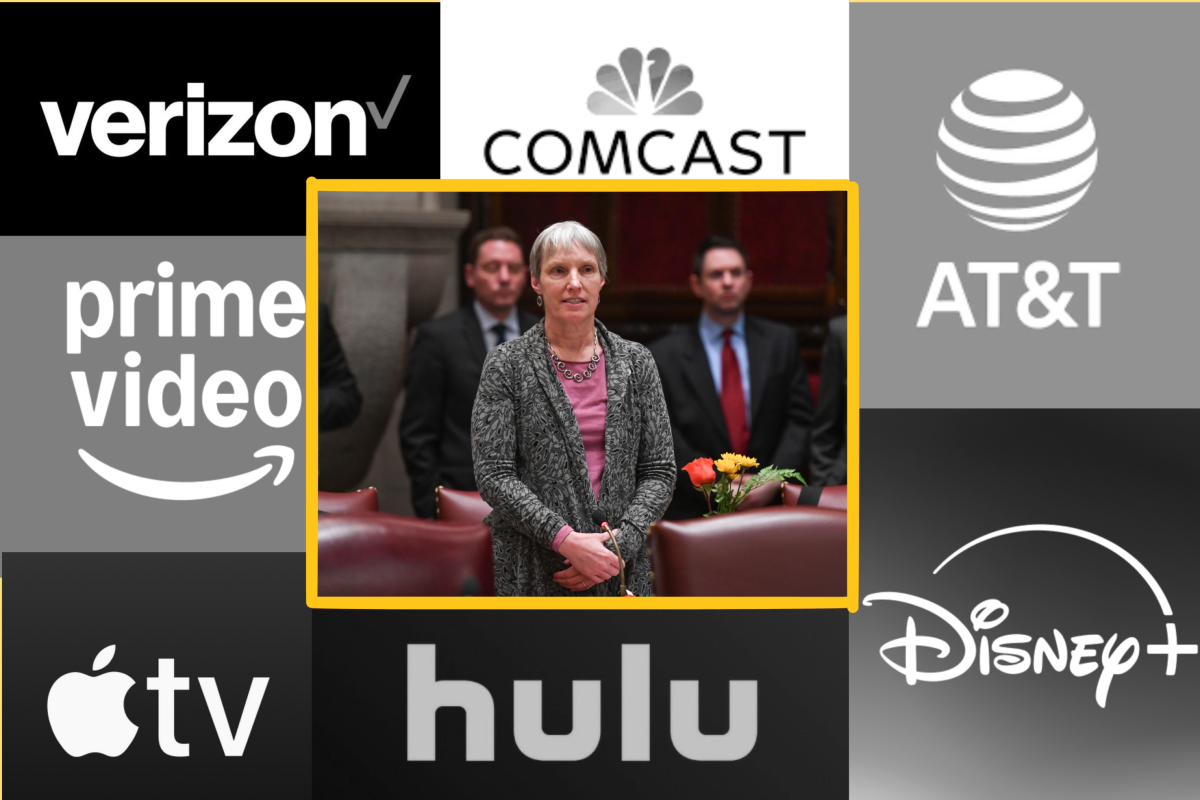
Last month, after New York Focus informed her of the exemptions, state Senate Consumer Protection Committee Chair Rachel May said she’d “look into that and make sure that this law covers what it needs to cover.” Photo: New York State Senate
Governor Kathy Hochul’s proposal to make canceling subscriptions easier would exempt many major companies. The Senate wants to eliminate that loophole.
By Sam Mellins

Almost everyone can think of an instance when they struggled to cancel a streaming service or gym membership, or were billed for something they didn’t want after a company renewed their subscription automatically.

Earlier this year, Governor Kathy Hochul pledged to take on this issue, unveiling a budget proposal she said would make it “just as easy to cancel a subscription as it was to sign up.”

But New York Focus found that her proposal contains a significant loophole: It wouldn’t cover companies that provide internet, TV, radio, or phone service, or any of those companies’ subsidiaries or affiliates. That means that major companies like Verizon, Hulu, Amazon Music, and others wouldn’t be forced to make it easier for customers to cancel, or to give more notice before billing them.

Now, as New York’s April 1 budget deadline ticks closer, the state Senate wants to eliminate those loopholes.

Recent Stories

A New York Focus investigation finds that the state can take up to seven years to resolve complaints against educators.
By Bianca Fortis

Due to understaffing, lengthy investigations, and scheduling challenges, as well as delays caused by the Covid-19 pandemic, it can take the state Education Department up to seven years to resolve some complaints against educators, a New York Focus investigation has found.

The agency said there is no meaningful way to quantify the average amount of time it takes to close a case, and that there are a number of factors that can delay the process. The slow grind has contributed to a backlog of more than 1,360 open complaints as of December.

Nearly 3 million New Yorkers are enrolled in SNAP, with the average household receiving $376 per month in benefits. Photo: Atstock / Canva | Illustration: Leor Stylar
Thousands of New Yorkers have had their food benefits stolen. Meanwhile, Congress will likely move forward with major cuts to the lifeline program.
By Jie Jenny Zou

The true scale of food stamp theft could be much higher than previously thought, putting families at greater risk for going hungry or racking up debt, according to a new survey that polled nearly 12,000 benefit recipients across the country.

For years, New York has been a hotbed for SNAP theft with tens of thousands of recipients reporting stolen funds. Since 2022, the state has reimbursed $40 million in benefits that were likely stolen from skimming — a rising form of fraud that’s been tied to organized crime rings where thieves place hidden devices on card readers at checkouts.

In rural New York, even some Republicans are frustrated as the administration halts $186 million in conservation payments to farmers.
By Clara Hemphill

Under Biden’s signature climate law, the Inflation Reduction Act (IRA), 151 farmers, rural businesses, and municipalities in New York State were promised $186 million, according to an analysis by Atlas Public Policy prepared for New York Focus.

The grants are for projects designed to plant trees, protect farmland from the effects of climate change and to bring solar power and other forms of clean energy to rural areas.

Almost all of that money is now frozen.

Two years ago, New York gave NYPA the power to help the state speed up its energy transition. Photo: Brookhaven National Laboratory | Illustration: Leor Stylar
A 2023 law is transforming the state power authority into one of New York’s biggest renewable developers. Some still want it to go further.
By Colin Kinniburgh

New York has ambitious climate goals — and is significantly behind on meeting them. That’s in part because the state isn’t building renewable energy fast enough.

So what is the future of public renewables in New York? And can they help the state chart its own energy transition in the Trump era?

Copyright © New York Focus 2024, All rights reserved.
Staying Focused is compiled and written by Alex Arriaga
Contact Alex at alex@nysfocus.com

Feedback? Tips? Pitches? Contact us at: editor@nysfocus.com

Support our work!

Interested in sponsoring these emails? Get in touch! Email editor@nysfocus.com.

This email was sent to *|EMAIL|*

unsubscribe from this list  ·  update subscription preferences

New York Focus · *|HTML:LIST_ADDRESS_HTML|* · USA