Already, the state’s green energy businesses are feeling the impact.
Already, the state’s green energy businesses are feeling the impact. ·  View in browser
NEWSLETTER

Funding local news is more important than ever, and it will take a village to succeed. Join us in our work to rebuild local journalism as a pillar of democracy in New York.

Republicans in Congress are intent on rolling back the incentives that brought the cost of clean energy within reach for some New York homeowners. Photo: Daniele de la Rosa Messina/Pexels | Illustration: Leor Stylar
Already, the state’s green energy businesses are feeling the impact of the pending Congressional spending bill that includes phasing out Inflation Reduction Act tax credits.
By Clara Hemphill

Amy Albenda Hill wanted to power her Hudson Valley home in Tarrytown with green energy — solar panels on the roof, a geothermal heating system underground, and an electric vehicle in the driveway. She knew the initial investment would be expensive, but went ahead after her husband Adam discovered that federal tax credits would lower the cost by 30 percent.

“It would have been completely out of the question without the tax credits,” Adam said.

The Hills are among the hundreds of thousands of New Yorkers who have taken advantage of tax breaks for eco-friendly home improvement projects under President Joe Biden’s signature 2022 climate law, the Inflation Reduction Act. The credits make it cheaper to install energy-efficient insulation, new windows, skylights, heat pumps, or solar panels — projects that reduce heating and cooling costs and help mitigate climate change.

Photo collage of President Donald Trump standing in front of several windmills. Faded in the background, the text of the executive order reading, "Temporary Withdrawal of All Areas on the Outer Continental Shelf from Offshore Wind Leasing and Review of the Federal Government’s Leasing and Permitting Practices for Wind Projects."

Now, Republicans in Congress are poised to gut those clean energy tax credits, which President Donald Trump has called a “giant SCAM.” On Tuesday, the US Senate passed a giant tax and spending bill that includes phasing out the tax credits, sending it back to the House, which passed its own version of the bill in May and worked through Wednesday night with the aim of approving the final package by Trump’s July 4 deadline.

Related: Trump Throws Wrench Into Offshore Wind, Putting New York’s Clean Energy Plans In Doubt

Recent Stories

New Yorkers across the state describe how sweeping federal cuts to Medicaid and food assistance could derail their lives.
By Jie Jenny Zou

Congressional Republicans have been working overtime to deliver on the Trump Administration’s promise to lower taxes for corporations and America’s wealthiest. To fund those tax breaks, they have targeted the largest and oldest safety net programs serving America’s poorest, calling for cuts of nearly $1 trillion to Medicaid and over $200 billion to the Supplemental Nutrition Assistance Program (SNAP).

“These are going to be the largest cuts to these programs in their history,” said Nick Gwyn, senior fellow for legislative affairs at the Center for Budget and Policy Priorities, a left-leaning think tank. “They will be much harder to navigate — both for the individuals for whom these programs are designed to help — and for the states.”

An estimated 1.5 million New Yorkers could lose their Medicaid coverage and become uninsured, according to a May analysis by the state Health Department. Over one million New Yorkers, including children, could see their SNAP benefits reduced or eliminated, according to a Fiscal Policy Institute estimate last month.

New York Focus spoke to New Yorkers across the state to learn more about how these cuts could affect them.

Related: Congress Finally Released its Plan to Slash Medicaid and Food Aid. What’s Next for New York?

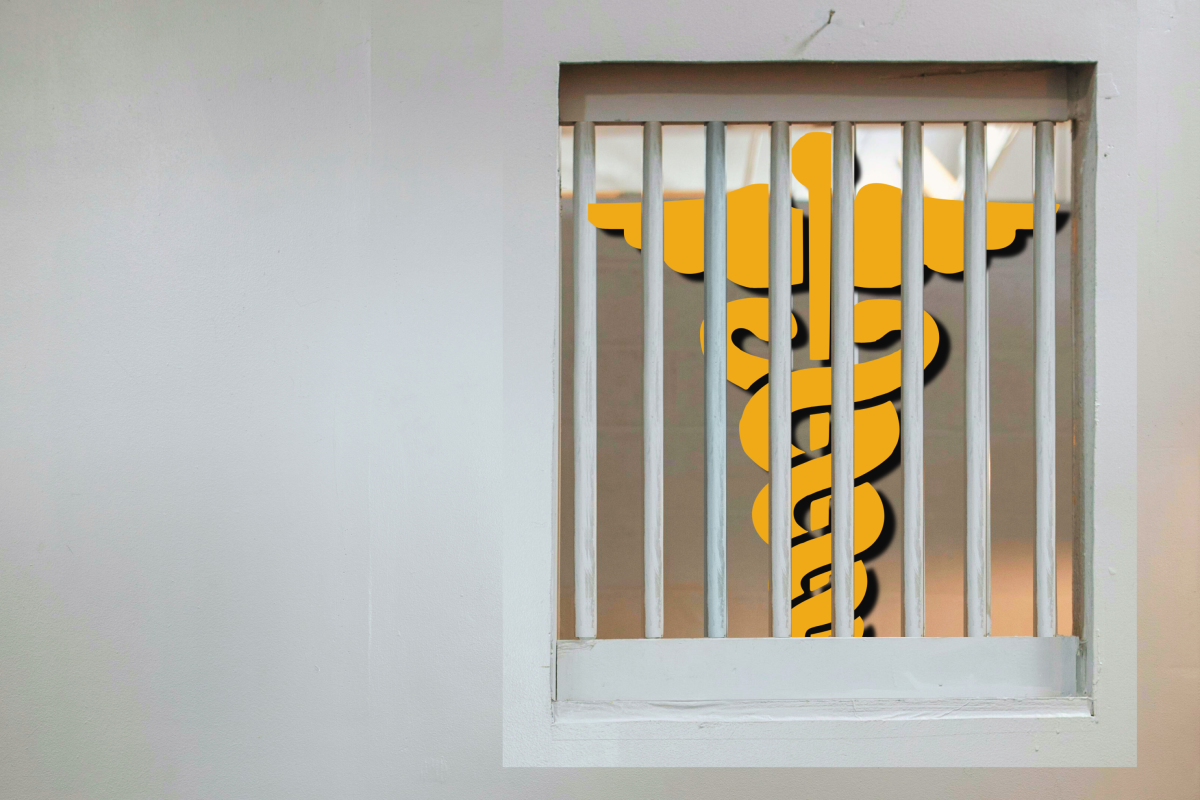
For over a decade, the state health department has considered extending Medicaid coverage to those soon-to-be-released from county jails and state-run prisons. Photo: RDNE Stock Project/Pexels; sdfkjlksdfj/Wikimedia Commons | Illustration: Leor Stylar
The state’s efforts around reentry healthcare have stalled and face an uphill battle under the Trump administration.
By Jie Jenny Zou

At the Healing Springs Recovery Center in Saratoga Springs, Shayne Richardson connects people battling substance and alcohol abuse with healthcare providers and other forms of support. Many were recently released from prisons or jails, and are navigating sobriety alongside reentry. That’s a familiar challenge to Richardson, who was himself released from prison just over a year ago.

“It keeps me green,” said Richardson. “It just reminds me every day of where I was and where I don’t want to go back to.”

As a peer advocate, Richardson uses his firsthand experience with addiction and incarceration to provide the kind of support he hopes more people could get if New York expands Medicaid for people reentering society.

Under federal law, Medicaid is automatically suspended during incarceration. But for over a decade, the state health department has considered extending coverage to those soon-to-be-released from county jails and state-run prisons.

The expansion, under what’s called a Section 1115 waiver, could provide a lifesaving bridge for a population with high rates of chronic illness, addiction, and mental health disorders — and potentially save the state millions of dollars.

Nineteen states, including California, Kentucky, and Montana, have secured federal approval for their own versions of the program. Several others, including New York, have waiver requests awaiting review.

But New York hasn’t updated its request in years. It would need to be rewritten to align with 2023 federal guidelines that require a minimum of pre-release services, like case management, addiction medications, and counseling. The health department declined to explain the delay or to say whether it will submit a revised petition.

It may now be too late.

The Albany County Courthouse. Photo: Warren Lamay via Flickr | Illustration: New York Focus.
The prison agency has suspended solitary confinement restrictions since a corrections officers strike in February.
By Chris Gelardi

A state court will temporarily overturn a New York prison agency policy that indefinitely suspended a solitary confinement reform law across its facilities.

The Department of Corrections and Community Supervision “wholly failed to demonstrate” that keeping the policy in place “has a basis in rational fact,” the judge wrote.

DOCCS stopped following parts of the law, which placed strict restrictions on prisons’ and jails’ use of isolation, after thousands of corrections officers and sergeants launched a wildcat strike in February. The officers said they staged the action over workplace safety and understaffing issues, specifically calling for the repeal of the Humane Alternatives to Long-Term Solitary Confinement Act, or HALT, which they allege has led to increased violence.

Judge Daniel Lynch wrote that DOCCS has abused the leeway HALT gave the department to deal with emergencies. The law allows the prison commissioner to suspend aspects of HALT on a facility-by-facility basis, but he blew past that limit and suspended the law in all of DOCCS’s facilities, and for an indefinite period — “essentially permitting the exception to swallow the rule,” Lynch wrote.

DOCCS issued its suspension order “without any specific findings of fact related to the conditions in each facility,” the judge explained.

Related: Focus's New York's Prison Strike Coverage

Workers pick apples at Wafler Farms. Courtesy of a Wafler Farms worker
Four farms upstate won’t sign or follow contracts awarded by state-appointed arbitrators after bargaining stalled.
By Julia Rock

Four New York farms are refusing to honor union contracts put in place by state-appointed arbitrators — the first such contracts to be reached after a 2019 state law granted farm workers collective bargaining rights.

In May, New York Focus reported that Wafler Farms, an upstate apple orchard, was not paying workers the minimum wages stipulated by its union contract, among other violations.

Now, three more large family farms — A&J Kirby Farms and Lynn-Ette & Sons Farms in Orleans County, and Porpiglia Farms in Ulster County — are refusing to abide by contracts, New York Focus has learned.

Arbitrators awarded the contracts at each farm after the owners refused to participate in the arbitration process laid out under the law. Lynn-Ette and Kirby have not signed their respective contracts, while an attorney for Porpiglia told New York Focus that the owner does not intend to follow the contract reached there last week.

The contracts, which are similar across the four farms, include protections like higher wages, health care benefits, and either access to a union pension plan or contributions to a retirement plan.

Related: An Upstate Orchard Is Putting New Farmworker Protections to the Test

Copyright © New York Focus 2024, All rights reserved.
Staying Focused is compiled and written by Alex Arriaga
Contact Alex at alex@nysfocus.com

Feedback? Tips? Pitches? Contact us at: editor@nysfocus.com

Support our work!

Interested in sponsoring these emails? Get in touch! Email editor@nysfocus.com.

This email was sent to *|EMAIL|*

unsubscribe from this list  ·  update subscription preferences

New York Focus · *|HTML:LIST_ADDRESS_HTML|* · USA