How Congress is Reversing New York’s Progress on Clean Energy

Already, the state’s green energy businesses are feeling the impact of the pending Congressional spending bill that includes phasing out Inflation Reduction Act tax credits.

Clara Hemphill   ·   July 3, 2025
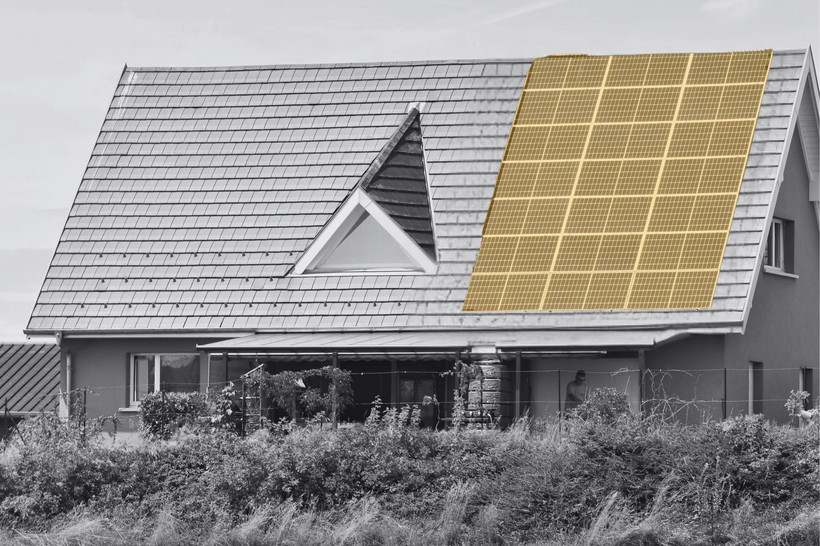
Republicans in Congress are intent on rolling back the incentives that brought the cost of clean energy within reach for some New York homeowners. | Photo: Daniele de la Rosa Messina/Pexels | Illustration: Leor Stylar

Sign up for Staying Focused, our newsletter keeping readers up to speed on New York politics.

Update: The House passed the bill shortly after publication and President Trump is expected to sign it by July 4 as planned.

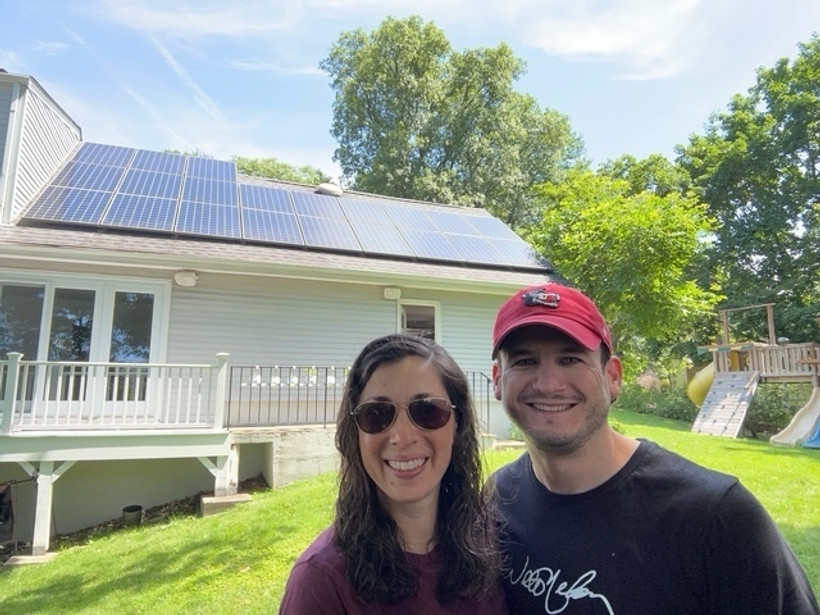
Amy Albenda Hill wanted to power her Hudson Valley home in Tarrytown with green energy — solar panels on the roof, a geothermal heating system underground, and an electric vehicle in the driveway. She knew the initial investment would be expensive, but went ahead after her husband Adam discovered that federal tax credits would lower the cost by 30 percent.

“It would have been completely out of the question without the tax credits,” Adam said.

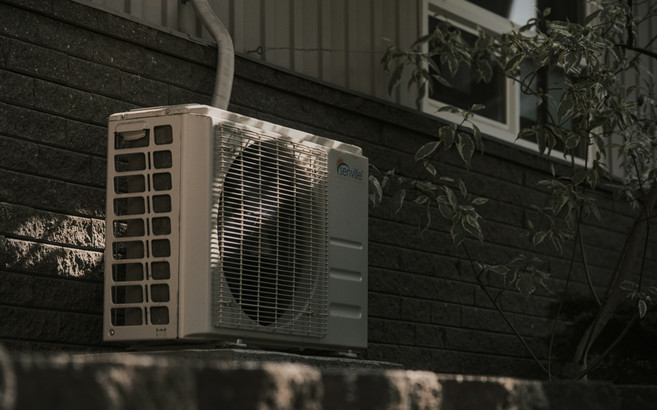
The Hills are among the hundreds of thousands of New Yorkers who have taken advantage of tax breaks for eco-friendly home improvement projects under President Joe Biden’s signature 2022 climate law, the Inflation Reduction Act. The credits make it cheaper to install energy-efficient insulation, new windows, skylights, heat pumps, or solar panels — projects that reduce heating and cooling costs and help mitigate climate change.

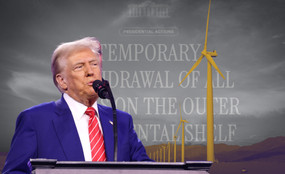
Now, Republicans in Congress are poised to gut those clean energy tax credits, which President Donald Trump has called a “giant SCAM.” On Tuesday, the US Senate passed a giant tax and spending bill that includes phasing out the tax credits, sending it back to the House, which passed its own version of the bill in May and worked through Wednesday night with the aim of approving the final package by Trump’s July 4 deadline.

“The Senate passed a reckless reconciliation bill that would be a devastating blow to New York’s economy and a clean energy future,” the New York League of Conservation Voters said in a statement on Wednesday. “If this bill is passed, it will mean higher electricity costs and the loss of tens of thousands of jobs for New Yorkers.”

Already, green energy businesses are feeling the impact. Customers are reluctant to install solar panels or a geothermal heating system with the tax credits in doubt.

“It’s completely devastating,” said Rob Feuer, owner of Geothermal Works in New Rochelle. “It’s like you turned off a faucet.”

His company builds geothermal heating and cooling systems for homes that transfer heat energy from deep in the earth, where the temperature is always 52 degrees. “By this time last year, we had 30 jobs. Now, we’re down to three,” Feuer said.

“It’s going to become incredibly challenging for businesses to sell solar when the upfront cost to a consumer is now 30 percent higher.”

—Noah Ginsburg, executive director, New York Solar Energy Industries Association

Oliver Koehler, founder and owner of SunTegra Solar, a small Westchester business that builds and sells solar shingles for homes, said he’s going out of business and laying off his two employees. “The current administration has really put a death sentence on the residential part of the solar business,” Koehler said.

Noah Ginsburg, executive director of the New York Solar Energy Industries Association, a trade group, estimates half of the 16,000 solar energy jobs in New York state will be lost if the credits expire.

“It’s folks who are involved in the marketing, sales, design, project management, financing, and, of course, the construction and operation of solar energy systems in the state,” Ginsburg said.

Amy Albenda Hill and her husband Adam pose in front of their house. | Courtesy Amy and Adam Hill


“It’s going to become incredibly challenging for businesses to sell solar when the upfront cost to a consumer is now 30 percent higher.”

President Donald Trump has long disparaged the Inflation Reduction Act as the “Green New Scam” and calls solar power “ridiculous.”

Green energy tax credits sparked a surge in renewable energy, including solar farms and battery storage facilities, which store energy from solar farms to use when the sun doesn’t shine. For example, NineDot Energy has built battery farms in the Bronx, Brooklyn, Staten Island, and Westchester that Con Edison uses to store electricity to release at times of peak demand.

Manufacturing has also received a boost. A factory in Wellsville, in the foothills of the Appalachian mountains near the Pennsylvania border, used to produce parts for coal-fired power plants. With tax breaks from the Inflation Reduction Act, the Ljungström factory retooled to produce parts for wind turbines to be mounted off the coast of Long Island. The Port of Coeymans, on the Hudson River south of Albany, is also producing parts for wind turbines.

All told, renewable energy projects have created more than 4,000 construction jobs and $1 billion in investment in New York since 2022, according to an analysis by the Rhodium Group, a research and policy group, for New York Focus.

Companies have announced an additional $780 million in planned investments that would create about 14,000 construction jobs and 4,000 permanent jobs in New York state, according to the analysis.

Rob Feuer, owner of Geothermal Works in New Rochelle, poses with his daughter. | Courtesy: Rob Feuer

What happens to these projects now is anyone’s guess, said Hannah Hess, associate director of the Rhodium Group.

“It’s wait and see,” Hess said. “We would consider all of the facilities that are under construction or have not yet broken ground to be at risk.”

The debate puts New York’s Republicans in Congress in a tight spot. Many of the economic benefits of clean energy, such as the jobs from two giant wind farms under construction off the coast of Long Island, flow to Republican districts. Three Republican congressmen — Mike Lawler of the Hudson Valley and Andrew Garbarino and Nick LaLota of Long Island — lobbied unsuccessfully to maintain certain tax credits in the House bill.

On June 6, they signed a letter to Senate Majority Leader John Thune asking him to tweak the bill to allow credits for projects that have begun construction, such as Empire Wind and Sunrise Wind, the two wind power projects.

The Senate version of the bill does protect projects that are already under construction, but phases out residential credits for solar and geothermal power by the end of the year. It adds tight construction deadlines for large-scale solar and wind projects that hope to keep their tax credits, and adds complex — some say unworkable — restrictions on imported materials for projects that begin after the end of this year.

The tax changes come on top of Trump’s tariffs, which dealt a major blow to a clean energy industry that is heavily dependent on imported parts. At SunTegra Solar, for example, Koehler buys framing and mounting materials from businesses in New York and assembles them locally — but buys one component, called a solar laminate, from Vietnam.

“We have a container sitting in Vietnam that we can’t ship because the tariff rate has become exorbitant,” he said.

The goods are worth $50,000. The tariff is $100,000.

New York state provides its own incentives for solar and geothermal power and electric vehicles, separate from federal tax credits. Homeowners who install solar panels get a state tax rebate of up to $5,000. Some localities provide property tax relief, and local utilities such as ConEdison give rebates for customers who install solar power. These state programs would not be affected by Washington budget cuts.

But the federal incentives are far larger than anything New York provides.

New York “cannot be expected to fill all funding commitments that the federal government has reversed course on,” the state energy authority NYSERDA said in a statement.

Ginsburg at NYSEIA said the state could reduce red tape for solar project permits and restore state funding — which was reduced this spring — for small-scale solar projects.

“What’s happening at the federal level constitutes an existential threat to our industry, but there are a lot of things that the state of New York could do to support the local solar industry and to prevent layoffs in the next six months,” Ginsburg said.

Feuer, at Geothermal Works, is optimistic he’ll find work — if not installing geothermal systems, then something else. But he’s worried about the implications for the planet.

“The whole country was moving toward a more sustainable world for our children and grandchildren, and now that’s in jeopardy,” he said.

I hope this article helped you better answer the question that guides all of our journalism: Who runs New York? Before you click away, please consider supporting our work and making more stories like this one possible.

New York state is standing at a crossroads for climate action. After passing one of the nation’s most ambitious climate laws in 2019, the state is lagging far behind on its targets, struggling to meet deadlines to build renewable energy and clean up its buildings and roads. Other states are closely watching our progress, making decisions about their own climate plans based on New York’s ability to implement this legislation.

As New York’s only statewide nonprofit news publication, we’ve been scrutinizing the state’s climate progress. Our journalism exists to unpack how power works in New York, analyze who’s really calling the shots, and reveal how obscure decisions shape ordinary New Yorkers’ lives.

But we can't do this work without your help. We rely on reader donations to help sustain our outlet, and every gift directly allows us to publish more pieces like this.

Our work has already shown what can happen when those with power know that someone is watching, with my reporting prompting a state investigation and fine for a major corporation. I have more story ideas than I can count, but only limited resources to pursue all the leads that come across my desk.

If you’re able, please consider supporting our journalism with a one-time or monthly gift. Even small donations make a big difference.

Thank you for reading.

Colin Kinniburgh
Climate and Environmental Politics Reporter
A photo of Colin Kinniburgh.
Clara Hemphill was a writer for Newsday, where she shared the 1991 Pulitzer Prize for local reporting; a foreign correspondent for The Associated Press; and the founding editor of Insid​eSchools​.org.
Also filed in New York State

At a Board of Regents meeting Monday, state officials proposed eliminating credit-based diploma requirements.

The last-minute influx, the biggest ever for a legislative primary, is boosting her opponent, Jessica González-Rojas.

City budget gaps and an ambitious affordability agenda may require pressing Albany again for taxes and aid.

Also filed in Climate and Environment

The citizens assembly model, used for public decision-making around the world, is gaining traction in New York.

A lobbyist who has been romantically linked to Assembly Speaker Carl Heastie led a rally opposing the legislation a week before the speaker declined to bring it to a vote.

In May, state lawmakers passed a $269 billion budget after haggling for months over thousands of line items and policies affecting New Yorkers.