The cooling safety net that provides free air conditioners to New Yorkers across the state ran out of funding during the first week of June, before summer officially started and ahead of the state’s hottest months. It’s the earliest the money has ever run out.
New York City is bracing for the first heat wave of the year this week. Temperatures are expected to soar into the triple digits, prompting the National Weather Service to issue an Extreme Heat Watch — and raising questions about why New York state has let a key cooling program shrink for several years in a row.
The federally funded Low Income Home Energy Assistance Program helps low income households pay for cooling, heating, and weatherization. For years, climate advocates have called on the state to direct more of the program’s funding toward cooling assistance to keep up with warming temperatures caused by climate change. But while the state projects that it will increase its heating assistance allotment from over $200 million to nearly $300 million this fiscal year, the sum allocated to cooling assistance is expected to remain at around $15 million.
“The formula really just is not adapting to climate change. It’s just been set in stone in a way that is really out of touch with reality,” said Caleb Smith, a policy manager at WE ACT for Environmental Justice, adding that the overall pot is also too small.
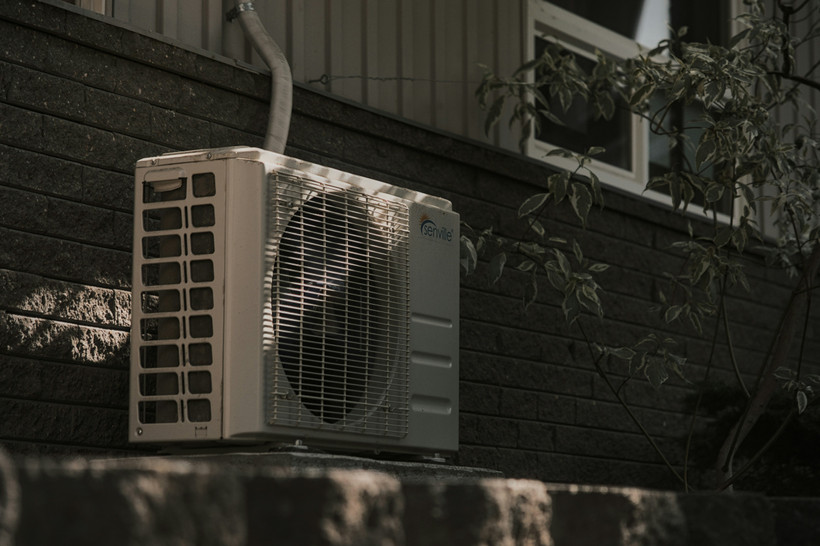
The cooling program provides eligible New Yorkers with up to $800 for a window air conditioner or $1,000 for a wall sleeve unit. It generally begins taking applications in April and accepts applications until funding is exhausted. But the application window has grown shorter each year: This year, applications closed on June 5. Last year, the funding ran out on June 23. In 2024, it ran out on July 19.
Heat is the leading cause of weather-related fatalities and injuries across the country. At least 21 New York City residents died directly from heat stress last year, with most of the deaths attributed to a June heatwave, and an estimated 500 city residents die each year from conditions exacerbated by heat. Children, elderly people, and people with medical conditions are particularly vulnerable to extreme heat, and heat-related deaths disproportionately impact Black and Latino residents.
Over the past three years, the number of households that have received cooling assistance has steadily declined. In 2024, 23,104 households received assistance. Last year, 20,984 households were helped. This year, just 18,500 households are expected to be served, according to the New York’s Office of Temporary and Disability Assistance (OTDA), which administers the state’s eligibility program. It declined to answer questions from New York Focus about that data.
The state’s HEAP program has remained overwhelmingly focused on heating, data gathered by New York Focus shows — and 2026 estimates reveal an even larger investment in heating assistance this fiscal year.
An OTDA spokesperson did not explain the rationale behind the allocations for heating and cooling assistance or whether the agency has considered redistribution, and members of the program’s advisory council deferred to the agency when asked for comment.
Some northeastern states don’t allocate funding under the program to cooling assistance at all. But of the ones that do, New York sets aside the least. Between 2022 and 2024, Rhode Island directed almost a fifth of its LIHEAP funding for cooling assistance. In New York, the figure was roughly 3 percent.
Advocates say that in addition to giving out more air conditioners, New York should help cover the costs of running them. “Even if they get a discounted air conditioner, sometimes people prefer a fan,” said Allison Nickerson, executive director of LiveOn NY, a nonprofit which advocates for older New Yorkers. “And even then they don’t use them because they can’t, they’re so worried about the electric costs.”
Meanwhile, LIHEAP is under attack from President Donald Trump, who recently proposed eliminating it for the sixth time, calling it “unnecessary” since states have policies to prevent utility shutoffs.
“The program rewards States such as New York and California, two of the top recipients for LIHEAP funding, which have implemented antienergy and anti-consumer policies that drive up home energy prices,” the president’s April budget said.
The administration has already fired all of the staff who run the program at the federal level.
“While President Trump again cruelly looks to cut the HEAP program entirely, New York continues to offer this important assistance to thousands of New York households that need it most,” a spokesman for OTDA said in a statement to New York Focus.
New York City Councilmember Crystal Hudson, chair of the body’s general welfare committee, called on Congress to increase LIHEAP funding and urged state leaders to restructure HEAP to account for rising energy costs associated with air conditioning.
The program, she said, has been a lifeline for thousands of low-income New Yorkers, but “is not designed for a world with stronger storms and extreme temperatures.”
The New York City Council recently passed a law which requires landlords to provide renters with air conditioners able to keep bedroom temperatures below 78 degrees, if a tenant requests one. But it won’t go into effect until June 2030.
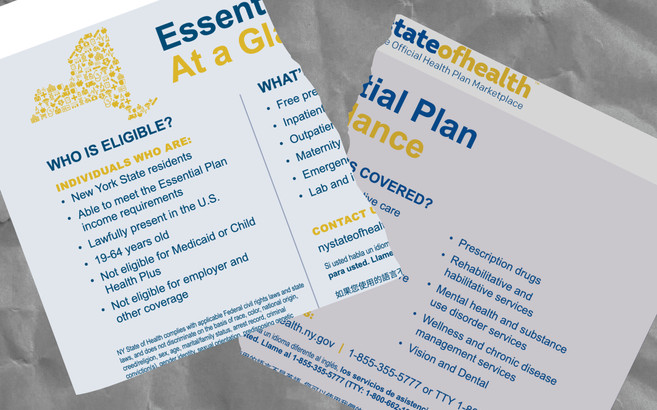
Last year, the state Department of Health launched a separate cooling assistance initiative offering free air conditioners to New Yorkers enrolled in the state’s Essential Plan and with chronic health conditions. The program has approved nearly 7,000 applications to date, a spokesperson said, and eligible New Yorkers can apply through July 6.