Plastics Bill Died in Assembly After Blitz By Lobbyists With Ties to Heastie

A lobbyist who has been romantically linked to Assembly Speaker Carl Heastie led a rally opposing the legislation a week before the speaker declined to bring it to a vote.

Amudalat Ajasa and Chris Bragg   ·   June 11, 2026
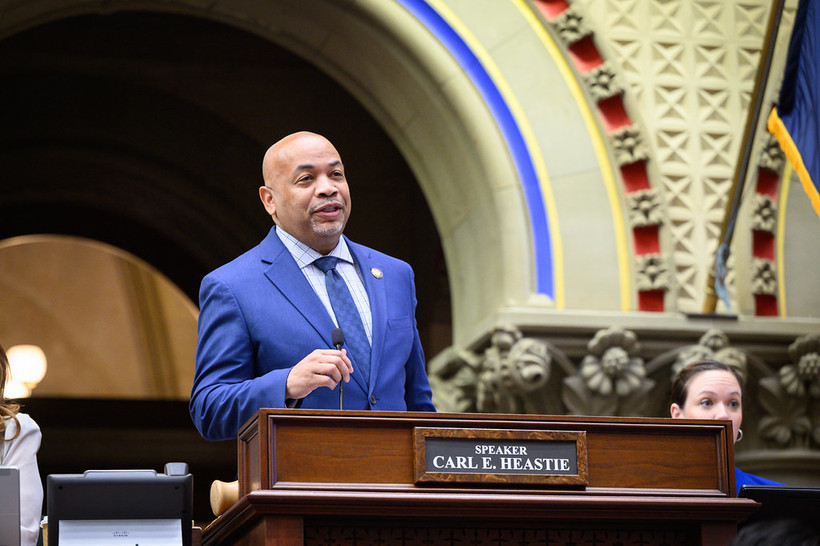
A photo of Assembly Speaker Carl Heastie walking towards the camera while looking off to the side.
At least three lobbyists who oppose the bill have close ties to Assembly Speaker Carl Heastie. | New York State Assembly Majority

Sign up for Staying Focused, our newsletter keeping readers up to speed on New York politics.

An environmental bill that on paper had enough support to pass the Assembly failed to secure a vote after a lobbying blitz led in part by people close to the speaker.

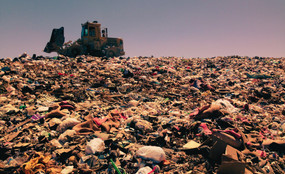
The Packaging Reduction and Recycling Infrastructure Act, which seeks to reduce plastic pollution by charging companies for waste, has been at the center of major clashes between powerful industry groups, environmental advocates, and some Democratic lawmakers for three years. 

The bill has 78 sponsors in the Assembly — enough to pass with two votes to spare, if all sponsors voted in favor. But Speaker Carl Heastie and some other assemblymembers said the votes weren’t actually there.

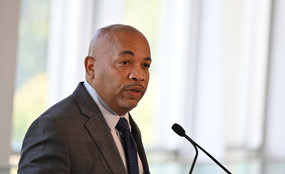
“I’m a ‘yes’ on the bill,” Heastie told reporters last Tuesday, three days before the end of the legislative session. “But you need 76 ‘yeses’ to pass a bill, and we don’t have that.”

Environmental advocates slammed Heastie for not bringing the bill to a vote. 

“I am disappointed that the bill has sat on the Assembly floor since January,” said Judith Enck, president of the advocacy group Beyond Plastics who has pushed for the bill. “There was intense special interest lobbying against the bill, and supporters of the bill were outgunned and outspent.”

At least three lobbyists who oppose the bill have close ties to the speaker. 

In late May, Rebecca Lamorte, a lobbyist who has been romantically involved with Heastie, lambasted the bill at a rally she hosted. The lobbying firm where she works, Brown and Weinraub, represents numerous chemical industry and other clients opposed to the bill, and actively lobbied Albany for at least two of them this year. 

“I woke up with a song on my heart (sic), and I hope you’ll join me in singing it,” Lamorte said at the rally. “Don’t pass PRRIA.”

Lamorte is not among the lobbyists listed as working for those clients in the firm’s lobbying filings. Neither Lamorte nor Brown and Weinraub responded to requests for comment. Heastie had adopted a recusal policy limiting his interactions with Lamorte’s previous employer and his involvement on its legislative priorities, but his office did not respond when asked if he had adopted a similar policy for Brown and Weinraub.

Patrick Jenkins, one of the speaker’s campaign advisers, also directly lobbied him against the bill, and Heastie’s former top aide lobbied his staff.

Heastie did not respond to questions about whether he had adopted any conflict-of-interest policy that could have impacted his own decision-making on the legislation. Under state law, New York officials may not have any interest that is in “substantial conflict” with their public service.

The packaging bill sought to decrease single-use packaging by 30 percent over 12 years; charge companies for those materials; and ban the use of suspected cancer-causing chemicals in the manufacturing of plastic. The money generated from the fees would have gone toward supporting municipal recycling infrastructure across the state.

“If anything, [Lamorte’s] current employer, Brown and Weinraub, has even more entanglements with the New York State Assembly than her prior employer.”

—Rachael Fauss, Reinvent Albany

The chemical industry has pushed for so-called advanced or chemical recycling to count toward companies’ reductions. Those technologies use heat and solvents to break plastics down into fuel and other plastics. Environmental advocates generally oppose chemical recycling because it creates hazardous waste and other pollutants.

Industry lobbyists also argue that the bill would increase costs that would be passed on to consumers, while advocates say it would shift waste collection costs from consumers to manufacturers.

This is the third year in a row that Heastie did not bring the bill to a vote. In the last two legislative sessions, it passed the Senate but did not make it out of the Assembly

This year’s delayed budget gave lawmakers just a few days to pass non-budget bills. As a result, the Senate chose not to vote on the bill either, in part because Senate leaders didn’t want to spend time on a bill that wouldn’t pass the Assembly, according to one Senate staffer, who spoke on the condition of anonymity to discuss internal conversations.

The developments reflect Albany’s well-established culture of secrecy. Heastie allowed his members to avoid taking a potentially controversial vote, keeping any concerns about the legislation from becoming public three weeks ahead of Assembly primary elections.

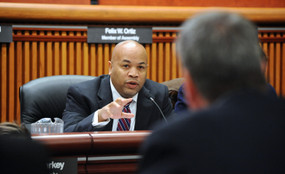
As speaker, Heastie typically has sole discretion over whether bills are voted on by the Assembly. He says he doesn’t put bills up for a vote that don’t have the support of the majority of the Assembly Democratic conference or enough votes to pass the full chamber.

“I’ve been very consistent in my 11 sessions,” Heastie told New York Focus in an interview last year. “I do not bring bills to the floor that don’t have enough Assembly Democratic votes, and maybe a little cushion, because to see a bill come to the floor and potentially have some strain in passing — that’s just never something I’ve done.”

“I don’t force members to vote on bills,” he continued. “I’m a consensus builder.”

But that vote-counting process largely happens behind closed doors, making it difficult for the public to know why any particular piece of legislation dies. 

Less than a week before Heastie announced he would not bring this year’s plastics bill to a vote, Lamorte hosted a rally against the bill alongside labor union officials and the state Business Council, according to a video of the event reviewed by New York Focus.

Standing before the Capitol’s Million Dollar Staircase, Lamorte opened the event by calling the bill “an unaffordable, job-killing piece of legislation.”

During the first four months of this year, lobbying records show that Lamorte’s employer, Brown and Weinraub, directly lobbied Heastie’s staff on the plastics bill on behalf of two clients who opposed it: The American Beverage Association and Eastman Chemical Company. Brown and Weinraub also reported that it was “monitoring” the bill on behalf of Croplife America, Responsible Industry for a Sound Environment, and Syngenta Crop Protection.

After Heastie and Lamorte began dating several years ago, his office was said to have formulated a policy outlining how to handle potential conflicts of interest posed by the relationship. Heastie’s office never released that recusal policy or publicly disclosed the relationship. But a copy of a letter obtained by New York Focus said such a policy had been “communicated to relevant senior staff in late 2023.” 

The memo, written by Heastie’s government counsel, stated the speaker would not meet with officials from the organization where Lamorte worked at the time — a New York City-based labor-employers partnership — or related labor entities. In addition, it barred him from making decisions on government matters “specific or unique to such organizations.” On those issues, senior Assembly staff would come to and advance a “consensus decision” to the speaker.

Neither Heastie’s office nor Lamorte responded to questions about the current status of their relationship, but each have separately been seen around the Capitol complex and in social media photos walking the same dog, a Golden Doodle named Paisley, including during the recent legislative session.

In June 2024, Lamorte was laid off from the labor-employers group — a move that caused Heastie to place an upset phone call to her former employer.

Lamorte was quickly hired by Brown and Weinraub, one of Albany’s top lobbying firms. It’s not clear if Heastie’s office ever adopted a similar recusal policy concerning Lamorte’s new position, or if Brown and Weinraub’s representation of clients deeply opposed to the bill would have limited Heastie’s involvement.

Heastie’s romantic relationship with a lobbyist actively involved with legislation he wields considerable power over warrants a recusal policy, said Rachael Fauss, a senior policy adviser at the government reform group Reinvent Albany.

“If anything,” Fauss said, “her current employer, Brown and Weinraub, has even more entanglements with the New York State Assembly than her prior employer.”

Lamorte is not Brown and Weinraub’s only connection to Heastie. Its roster also includes former top Heastie aide LouAnn Ciccone, who reported lobbying Heastie’s staff concerning the bill on behalf of the American Beverage Association. Different lobbyists at the firm reported lobbying Heastie’s staff for Eastman Chemical.

Heastie’s campaign adviser, close friend, and former college roommate, Patrick Jenkins, was also involved with the opposition. Jenkins and members of his firm, Patrick B. Jenkins and Associates, disclosed lobbying on the bill earlier this year for the American Chemistry Council, a group staunchly opposed to the bill whose members include Dow, DuPont, 3M, ExxonMobil, Chevron, and other major corporations, as well as the EPR Leadership Forum. For those clients, Jenkins’s firm disclosed specifically lobbying the speaker’s staff — as well as Heastie personally.

Jenkins told New York Focus that he “couldn’t convince [Heastie] that it was a bad bill” but was “successful at convincing many members that it was a bad bill.”

“In every meeting I had, not just with the speaker, but every meeting, people explained why the bill, as constructed, as composed, was not a good bill for them,” Jenkins said, stating that there were more than 40 Democratic members who told his clients that they wouldn’t support the bill.

The American Chemistry Council has spent millions of dollars lobbying against the plastics bill. Last fall, it facilitated visits for lawmakers to tour advanced recycling plants in Atlanta, Jenkins said. The American Chemistry Council did not pay for the lawmakers’ trips, he said. He declined to specify whether he or his lobbying firm played a role in facilitating the trips or to say which lawmakers attended. New York lobbyists for the Chemistry Council accompanied lawmakers on visits to a North Carolina chemical recycling plant in recent years.

“I woke up with a song on my heart (sic), and I hope you’ll join me in singing it. ... Don’t pass PRRIA.”

—Rebecca Lamorte, Brown and Weinraub lobbyist

The American Chemistry Council did not answer direct questions about the trips, but said in a statement, “New York’s PRRIA was an anti-plastic NGO wish list aimed at ending the use of plastic rather than responsibly managing packaging.”

While there’s no law preventing lawmakers’ personal associates or friends from lobbying them directly, good government groups have long supported a ban on campaign consultants lobbying their own campaign clients, a prohibition that if enacted, would have prevented Jenkins, who has received payments from Heastie’s campaign beginning in 2009 and as recently as May, from lobbying the speaker. 

Their concern is potentially turning “political relationships into financial gain,” according to Ben Weinberg, director of public policy at Citizens Union. Legislation barring lobbyists from serving as political consultants passed the Senate last decade, but died in the Assembly, before Heastie became speaker.

Jenkins has also served as a campaign consultant for some rank-and-file Assembly members, some of whom went lengthy periods without paying his firm.

Some lawmakers emphasized that despite the bill’s support on paper, industry and business lobbying seemed to have hit home with some lawmakers who face elections this month.

Assemblymember Anna Kelles, who cosponsored the bill, said, “If [Heastie is] saying that there’s not enough to pass … it appears that some of the people who are signed on as co-sponsors now don’t want to take this vote.”

According to Assemblymember Dana Levenberg, another co-sponsor, it became clear in conversations within the Democratic conference that lawmakers who were once in favor of the bill were now reluctant to vote for it.

“I blame the industry, the packaging and chemical companies, and the fossil fuel industry,” Levenberg said. “They’ve poured hundreds of thousands of dollars into lobbying efforts to convince my colleagues that this would raise prices in the grocery stores and raise prices for their constituents.”

In light of those developments, she said, “Anything could have happened if [Heastie] had brought it to a vote. It could have passed, but then he’s not being true to his members who already expressed that they preferred not to vote on it.”

Senator Pete Harckham, who introduced the bill alongside Assemblymember Deborah Glick, said in a statement he would “continue working with all stakeholders out of session to refine the bill, address the concerns of Assembly Members, and advance solutions to New York’s growing waste crisis.”

Glick, who is retiring after this session, did not provide comment before publication.

I hope this article helped you better answer the question that guides all of our journalism: Who runs New York? Before you click away, please consider supporting our work and making more stories like this one possible.

New York state is standing at a crossroads for climate action. After passing one of the nation’s most ambitious climate laws in 2019, the state is lagging far behind on its targets, struggling to meet deadlines to build renewable energy and clean up its buildings and roads. Other states are closely watching our progress, making decisions about their own climate plans based on New York’s ability to implement this legislation.

As New York’s only statewide nonprofit news publication, we’ve been scrutinizing the state’s climate progress. Our journalism exists to unpack how power works in New York, analyze who’s really calling the shots, and reveal how obscure decisions shape ordinary New Yorkers’ lives.

But we can't do this work without your help. We rely on reader donations to help sustain our outlet, and every gift directly allows us to publish more pieces like this.

Our work has already shown what can happen when those with power know that someone is watching, with my reporting prompting a state investigation and fine for a major corporation. I have more story ideas than I can count, but only limited resources to pursue all the leads that come across my desk.

If you’re able, please consider supporting our journalism with a one-time or monthly gift. Even small donations make a big difference.

Thank you for reading.

Colin Kinniburgh
Climate and Environmental Politics Reporter
A photo of Colin Kinniburgh.
A photo of Amudalat Ajasa.
Amudalat Ajasa covers climate for New York Focus. Amudalat comes to Focus from The Washington Post, where she wrote about the effects of air, water and chemical pollution on human health. Prior to that, she worked at The New York Times, where she… more
A photo of Chris Bragg.
Chris Bragg is the Albany bureau chief at New York Focus. He has done investigative reporting on New York government and politics since 2009, most recently at The Buffalo News and Albany Times Union.
Also filed in New York State

In May, state lawmakers passed a $269 billion budget after haggling for months over thousands of line items and policies affecting New Yorkers.

Millions in outside spending was a boon to Gov. Kathy Hochul’s 2022 opponent, Lee Zeldin, and influenced down-ballot races.

The legislation would make it easier for currently and formerly incarcerated people and child victims to sue the state over allegations of past abuse.

Also filed in Climate and Environment

Governor Kathy Hochul was successful in her bid to upend the Climate Leadership and Community Protection Act after legislators caved to finalize an overall budget deal.

The leader of Reinvent Albany discusses a data center subsidy in Rockland County that flew under the radar for years.

No other project in the country has gotten such a large subsidy to create so few jobs, according to watchdogs.