
The Herbicide Haunting a New York Farm Town

Paraquat is banned in more than 70 countries. In a small town that one resident calls “Parkinson’s Valley,” farmers and their families are demanding that New York follow suit.

Amudalat Ajasa   ·   July 20, 2026
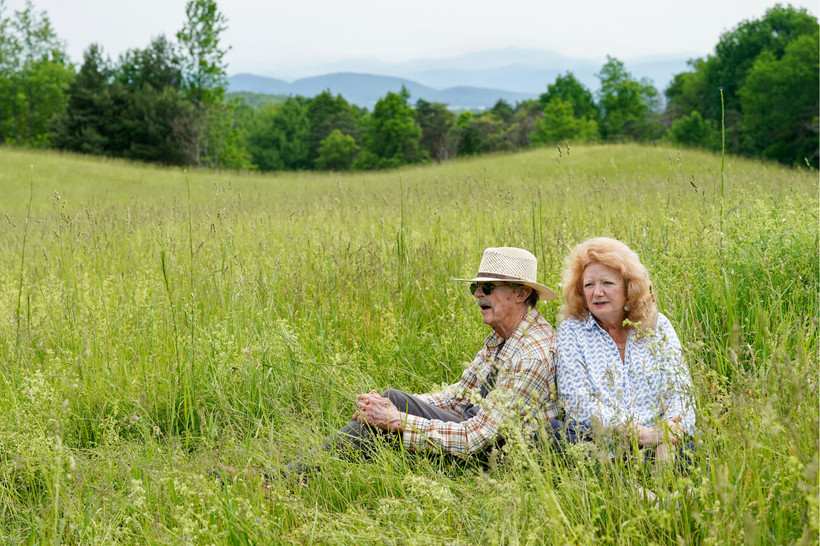
A man and woman sit in a field of tall grass. In the distance, trees and mountains are visible.
Gordon Chaplin and Sarah Teale on the hillside of the farm they have owned for more than 40 years. Chaplin began experiencing symptoms of Parkinson's Disease nearly a decade ago. | Cindy Schultz / New York Focus

Sign up for Staying Focused, our newsletter keeping readers up to speed on New York politics.

Gordon Chaplin gingerly stepped out of the car at the top of the steep hill behind his farmhouse, sporting a bandage on his hand from a fall the day before. He gripped his cane as he shuffled through the knee-high grass. He stopped every few feet to catch his breath, leaning on his caregiver for support. 

Looking out at the distant Adirondacks and Catskill Mountains, he thought back to the years when he could run up the hill with ease.

“Things just don’t work as well as they used to. In fact, sometimes they don’t work at all,” said Chaplin, 81, who has owned the farm for over 40 years. “There’s nothing worse than having your whole life … falling apart.”

Nearly a decade ago, he began experiencing symptoms he couldn’t explain. His once-pristine handwriting became unreadable, his face took on a permanent look of worry, and he acted out his dreams while he slept. After years of inconclusive test results from various doctors, he received a diagnosis: He had Parkinson’s disease, an incurable degenerative brain disease that affects motor functions and causes cognitive impairment. He had no family history or genetic predisposition to the disease.

Chaplin and his wife, Sarah Teale, believe the cause lay hidden under the idyllic hills of their 200-acre cattle and corn farm. For decades, a tenant farmer sprayed the land with paraquat, a herbicide that’s used to kill broadleaf weeds and grasses — and that research has linked to Parkinson’s.

The couple lives in Hebron, a rural farming town of about 1,800 residents in Washington County. After Chaplin’s diagnosis, Teale discovered that 14 people near their home had the disease, too. She calls the 7-mile stretch of highway between east and west Hebron “Parkinson’s Valley.” In nearby towns, she found dozens more. And she believes there’s a common culprit.

Paraquat is banned in dozens of countries and is coming under heavier scrutiny in the US. This year, 14 states introduced bills to restrict or ban its use. Vermont was the only state to pass a ban. New York lawmakers sought to be the second, but the bill died on the floor amid a prolonged budget standoff that crowded out other legislation.

“Hundreds of bills that we would normally pass never got a vote because we ran out of time,” said assemblymember and bill sponsor Linda Rosenthal. “More people will suffer between now and when this bill becomes law. You can bet I’m going to work really hard to make sure it passes the next session.”

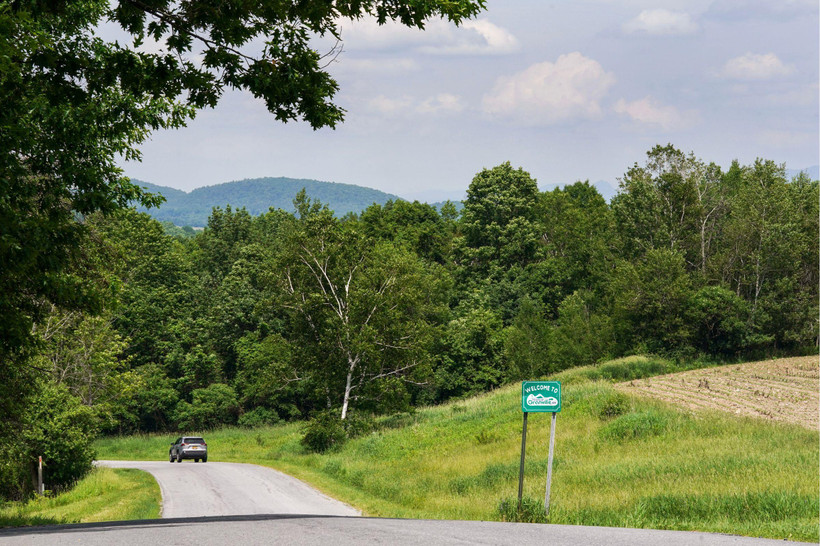
A road with a single car cuts through a grassy hillside surrounded by tres, mountains are visible in the distance. A sign reads, "Welcome to Town of Granville, NY."
Teale calls the 7 mile stretch of highway between east and west Hebron, “Parkinson’s Valley.” | Cindy Schultz / New York Focus
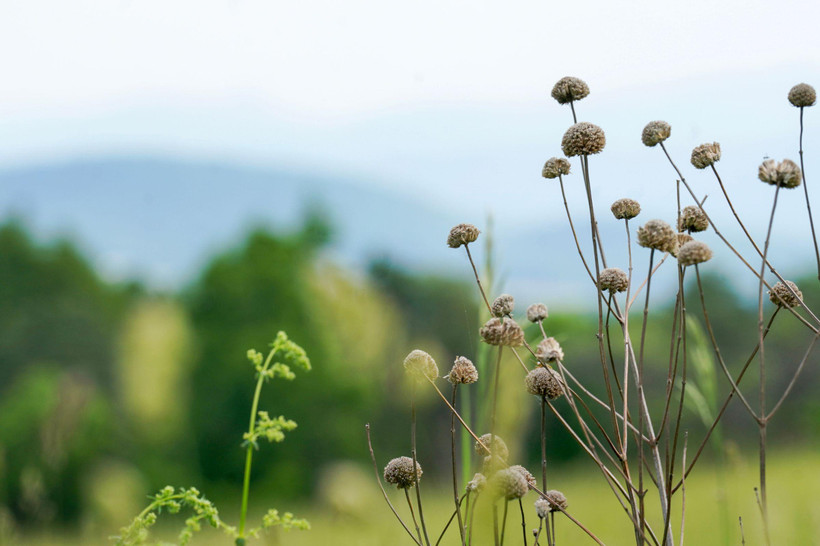
A closeup shot of two plants native to New York.
Chaplin and Teale believe the cause of Chaplin's Parkinson's Disease is the pesticide paraquat, which a tenant farmer sprayed on their land for a decade. | Cindy Schultz / New York Focus
Paraquat was first registered for use in the 1960s. Since then, its popularity has ballooned.

Between 2014 and 2018, paraquat use across the country doubled to at least 11 million pounds a year, according to the latest available data from the US Geological Survey. It’s most commonly sprayed on crops including corn, soybeans, cotton, and grapes.

In some years in the early 2000s, New York’s paraquat use ranked in the top 10 nationally. According to 2018 USGS data, the latest available, growers in New York sprayed a total of nearly 149,000 pounds of paraquat, ranking 31st in the country.

The scientific debate over paraquat’s safety has been building for decades. Studies dating back to the late 1990s have linked paraquat exposure to Parkinson’s disease. A 2002 study found that mice injected with paraquat lost dopamine neurons, a hallmark of Parkinson’s. A 2011 study found that farmers who sprayed paraquat were 2.5 times as likely to develop Parkinson’s as those who did not. A 2024 study found that people living or working near areas sprayed with paraquat had double the risk of developing Parkinson’s.

Research linking paraquat to Parkinson’s is “one of the strongest databases out there linking a chemical exposure to a disease,” said Deborah Cory-Slechta, a University of Rochester neurotoxicologist.

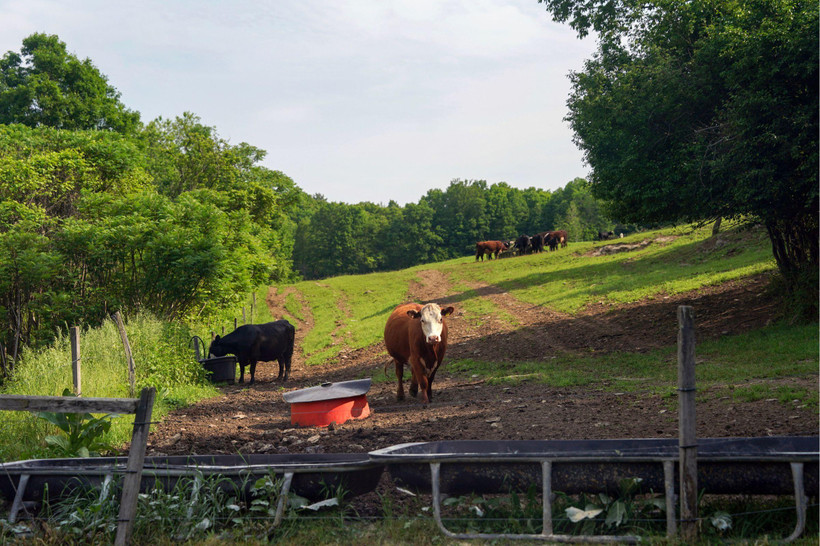
On a grassy hillside surrounded by trees, one cow drinks water from a trough while the other looks at the camera. A group of five or six cows is visible farther away.
Chaplin gave up his cows when running and walking became too difficult. | Cindy Schultz / New York Focus

Ray Dorsey, a neurologist at the Atria Research and Global Health Institute, said it’s a common misconception that people with Parkinson’s developed it primarily because of aging or genetics. About 85 percent of Americans with Parkinson’s carry no known genetic risk factor for the disease, he said.

“The principal causes of Parkinson’s disease are not inside of us, not in our DNA, but outside of us, in our environment,” said Dorsey, who published a book on the disease last year that identified Hebron as a hotspot. “The continued use of paraquat is likely sowing the future seeds of Parkinson’s disease.”

The herbicide has been banned in over 70 countries, including China, Brazil, and the entire European Union. But not the United States.

Under President Joe Biden’s administration, the Environmental Protection Agency determined that it needed more time to examine the health risks of paraquat use. The agency has warned about the herbicide’s toxicity, noting that “one small accidental sip can be fatal,” and requires sprayers to undergo special training. The agency has stopped short of linking exposure to Parkinson’s disease, as other government health bodies have done abroad.

“The pilot would tip the wings and wave and spray us with his poison.”

—Sharon "Sally" Giambatista, diagnosed with Parkinson's at 56 years old
Last November, the agency said it would require paraquat manufacturers to study how far paraquat vapors travel from the initial spray site. That announcement came after Syngenta, one of the world’s largest producers of paraquat, submitted new data that suggested vapors may travel miles farther than previously thought.

The company, based in Switzerland, stood by the product’s safety.

“While Syngenta has great sympathy for those suffering from Parkinson’s, we reject the claim that our product is the cause,” said Syngenta spokesperson Dimitri Houtart in a statement to New York Focus.

Houtart pointed to a 2013 study conducted by the company’s scientists that found that paraquat did not cause the neuron damage associated with Parkinson’s, even with high doses in the brain. He also cited recent research conducted by the California and Australian governments that did not find a causal link between Parkinson’s and paraquat exposure.

Just about everyone in Hebron knows someone touched by Parkinson’s, residents told New York Focus during a visit to the town last month.

In 2024, Teale hosted a town hall for families in the area affected by the disease. The room had a maximum occupancy of 60 people. About 85 people piled in.

“They just started coming in, and coming in, and coming in,” Teale recalled. “They didn’t know all the people that had it. They were really shocked.”

Sharon “Sally” Giambatista was among them.

Growing up, summers in Hebron for Giambatista often meant hours in her family’s strawberry fields, plucking and munching her way through row after row of fruit.

No one in her family dreamed pesticides could be toxic. Her father mixed them with his bare hands, and cropdusters sprayed them overhead from their cabs.

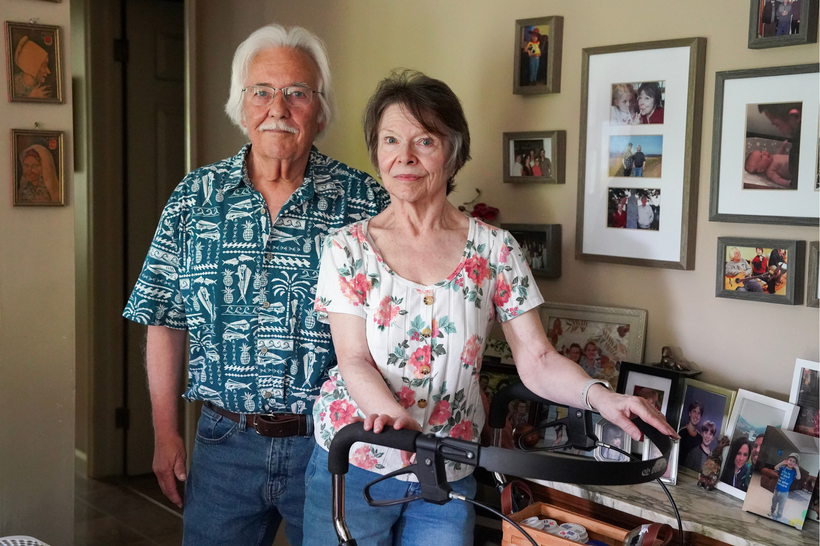
An older man and woman stand in a room filled with photographs from the past, looking at the camera. The woman holds a walker.
Sharon "Sally" Giambatista and her husband Paul in their Hebron, NY home. Giambatista and her older sister have both been diagnosed with Parkinson's. | Cindy Schultz / New York Focus

“The pilot would tip the wings and wave and spray us with his poison,” Giambatista remembered.

That exposure, she believes, changed the course of her life. Hours after getting engaged in the fall of 2009, imagining the future ahead of her, she received a call: she had Parkinson’s disease. She was 56 years old. 

A few years later, one of her older sisters was diagnosed, too. They had no family history of the disease. Of her four siblings, Giambatista and that older sister spent the most time in the fields.

“We thought we are lucky to live out here in the fresh air,” Giambatista said, her shoulders and arms trembling in waves that never fully stop. “We just didn’t know.”

New York state doesn’t publish town-level Parkinson’s data. But Brian Campbell, Hebron’s town supervisor, said there are far more cases than there should be. His own father died of Parkinson’s after living with the disease for more than 30 years.

Campbell believes a herbicide or pesticide is the culprit, though he’s not sure which. “I’ve got to believe it’s things we sprayed that were in the valley,” he said.

“[I’m] fortunate at this point that I don’t have it yet. That’s about all you can say,” he added with an uneasy laugh.

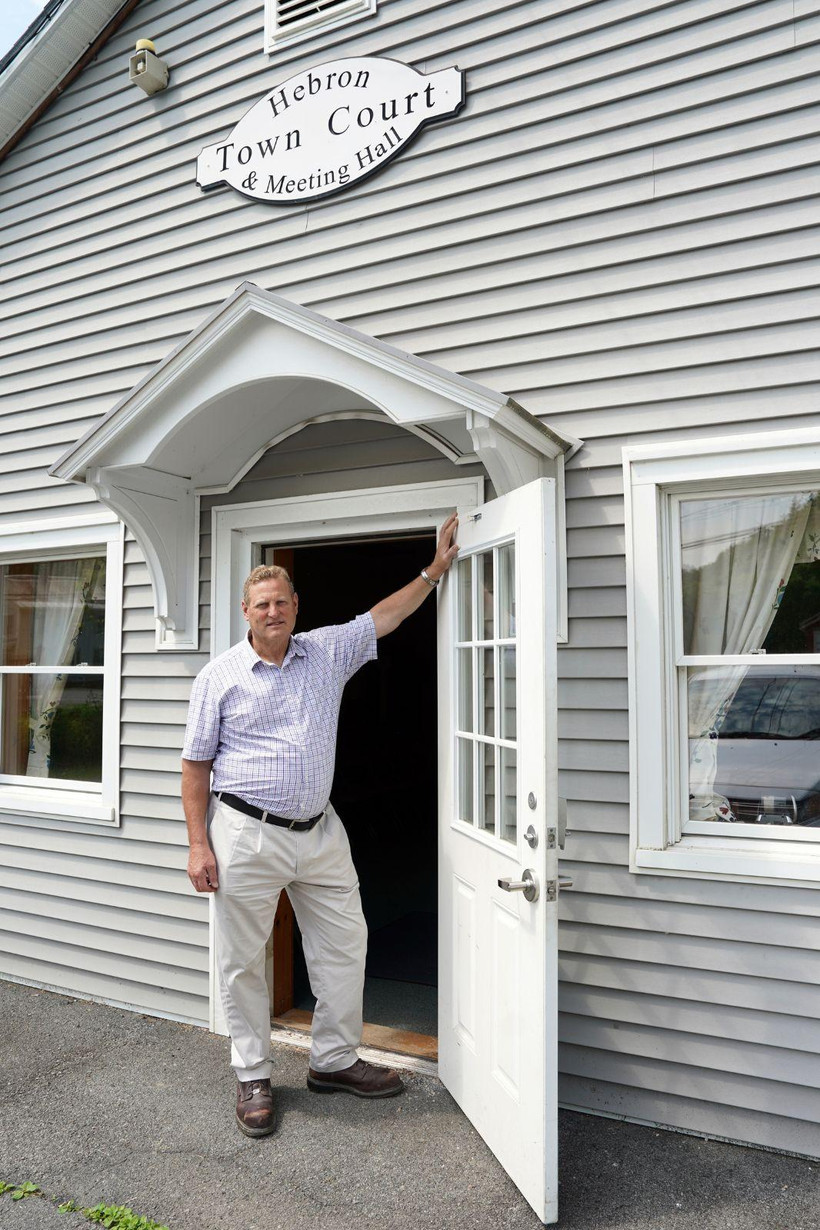
A middle-aged man wearing khakis and a short-sleeve button up shirt stands in the doorway of the Hebron Town Court and Meeting Hall, one hand up on the doorframe.
Brian Campbell, Hebron’s town supervisor, said there are far more Parkinson's cases than there should be compared to other towns. His own father died of Parkinson’s after living with the disease for more than 30 years. | Cindy Schultz / New York Focus

Thousands of Americans have filed lawsuits against Syngenta, which sells paraquat under the brand name Gramoxone, alleging that the company failed to warn consumers about paraquat’s substantial health risks. Neither Chaplin nor Giambatista is currently seeking damages.

In 2025, Syngenta raised $792 million to cover settlement costs; the company said its goal was to “end the cost and distraction of lawsuits which Syngenta believes are without merit.”

In 2022, The Guardian and The New Lede published internal documents revealing that Syngenta was aware of the mounting research linking the herbicide to Parkinson’s disease. The company monitored scientists studying the links, lobbied the EPA to bar critical scientists from sitting on advisory panels, strategized ways to “influence academia, and regulatory and NGO environments,” and created a team to respond to external scientific publications.

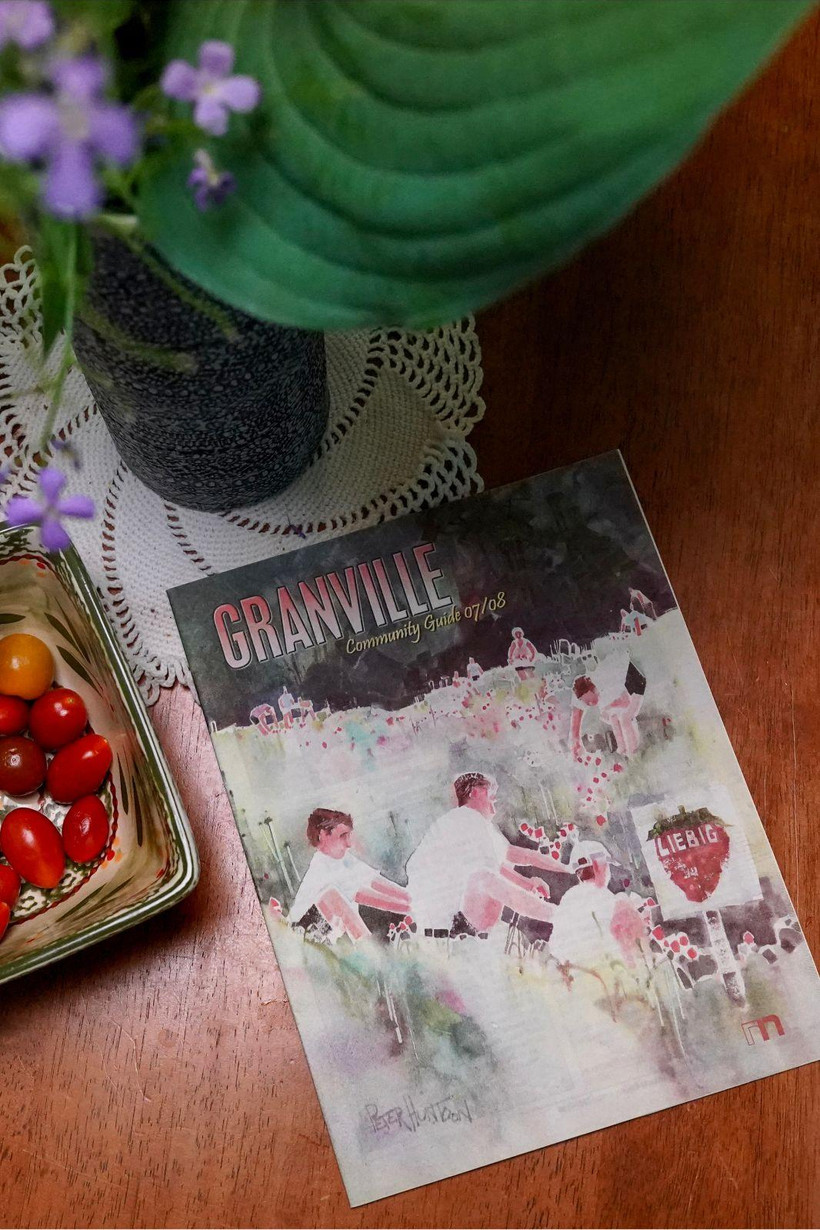
On a wooden table, a pamphlet titled "Granville Community Guide 07/08" shows a painting of people picking fruit at Liebig's Farm. Next to the pamphlet, a bowl of cherry tomatoes and a vase of flowers.
About 85 people attended a town hall for families in the area near Hebron affected by Parkinson's last year; about half of them had Parkinson’s. | Cindy Schultz / New York Focus
The overall goal, the internal documents revealed, was “to protect people and our reputation.” 

This March, Syngenta announced that it would stop making paraquat by the end of June. The company cited “significant competition from generic producers” as the reason; a spokesperson said that the change was not made in response to litigation or safety concerns.

Generic paraquat produced by other companies poses similar risks. 

“Without a ban, there’s nothing stopping another company from swooping in and filling the void,” said Nathan Donley, a senior scientist and pesticide expert at the Center for Biological Diversity, an environmental advocacy group.

When New York lawmakers try to enact a ban next year, they’ll go up against the New York Farm Bureau, the state’s largest agriculture advocacy group and one of the lead opponents of the bill. The group did not respond to repeated requests for comment.

A week before the legislative session ended, Renée St. Jacques, the Farm Bureau’s director of public policy, told “The Capitol Pressroom,” a radio show, that if paraquat is “used with the safety precautions in place, farmers are safe.”

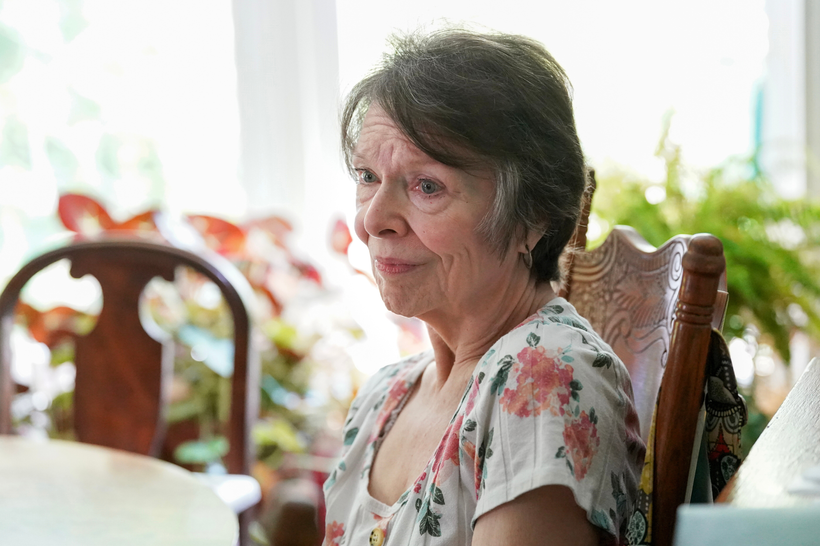
Sally Giambatista looks to the side of the camera while sitting at a dining room table. It's unclear if her expression is smiling or pained.
Giambatista, now 73, was diagnosed with Parkinson's Disease at 56. | Cindy Schultz / New York Focus

Gordon Chaplin sits in the passenger's seat of a car, holding a cane. A man on his right standing outside the car seems ready to assist him.
Chaplin now uses a cane and has a caregiver, after a fall left him with 60 stitches. | Cindy Schultz / New York Focus

Now 73 years old, Giambatista wonders what her life would be like if Parkinson’s hadn’t taken the things she loved most. Would she still be singing if the disease hadn’t reduced her voice to just above a whisper? Would she paint more if her trembling hands could hold a brush?

She struggles to understand why manufacturers continue to sell something so seemingly toxic, and why lawmakers haven’t done more to stop them.

“Knowing what you know now, how can you not fight against that? How can you not strive to find something better, or give up some of the big profit?” Giambatista asked. 

The disease’s slow creep has touched every corner of Chaplin’s life, too. He gave up his cows when running and walking became too difficult. He used to roam the woods for hours on end; he now depends on a cane and a caregiver, after a fall left him with 60 stitches. He was a writer and wanted to finish his sixth book; he now struggles to hold a pen or remember his thoughts.

“It’s stripped me of half of my life or more,” Chaplin said. “There’s always a hope that I’ll beat it and be able to come back. I don’t think it’s hopeless, but then, I’m pretty sure it is hopeless.”

On the eve of Teale’s birthday in early June, the couple sat at a picnic table in their backyard.

She thought about the year to come. She looked at Chaplin, who coughed after taking a bite of food, and wished simply that he would get better. 

The sun dropped behind the trees, and the pet goats retreated. Chaplin pointed at the edge of the woods. 

“Look at that tractor coming out,” he said.

There was no tractor. 

He spent the next few hours at the table with a pair of binoculars, watching a party unfold in the garden. No one was there.

I hope this article helped you better answer the question that guides all of our journalism: Who runs New York? Before you click away, please consider supporting our work and making more stories like this one possible.

New York state is standing at a crossroads for climate action. After passing one of the nation’s most ambitious climate laws in 2019, the state is lagging far behind on its targets, struggling to meet deadlines to build renewable energy and clean up its buildings and roads. Other states are closely watching our progress, making decisions about their own climate plans based on New York’s ability to implement this legislation.

As New York’s only statewide nonprofit news publication, we’ve been scrutinizing the state’s climate progress. Our journalism exists to unpack how power works in New York, analyze who’s really calling the shots, and reveal how obscure decisions shape ordinary New Yorkers’ lives.

But we can't do this work without your help. We rely on reader donations to help sustain our outlet, and every gift directly allows us to publish more pieces like this.

Our work has already shown what can happen when those with power know that someone is watching, with my reporting prompting a state investigation and fine for a major corporation. I have more story ideas than I can count, but only limited resources to pursue all the leads that come across my desk.

If you’re able, please consider supporting our journalism with a one-time or monthly gift. Even small donations make a big difference.

Thank you for reading.

Colin Kinniburgh
Climate and Environmental Politics Reporter
A photo of Colin Kinniburgh.
Amudalat Ajasa covers climate for New York Focus. Amudalat comes to Focus from The Washington Post, where she wrote about the effects of air, water and chemical pollution on human health. Prior to that, she worked at The New York Times, where she… more
Also filed in New York State

Northrup, a public defender and Democratic nominee for state Assembly, says it’s time to move toward more humane and effective policies.

Health care union 1199SEIU helped Public Partnerships LLC take over the state’s home care program, even as it warned some workers could see wage cuts.

Boards of Visitors are supposed to oversee state-run disability and psychiatric programs. Almost none of them have enough members.

Also filed in Health

The deal could benefit 200,000 aides, and includes at least $25 million to compensate for wage deductions that New York Focus extensively reported on.

New York’s biggest health care union wants 200,000 home health aides to join up.

Unclear notices have left participants unsure about the status of their insurance and what steps to take next.

Also filed in Climate and Environment

New York’s free air conditioner program ran out of funding before summer, even as extreme heat becomes a deadlier threat.

Mayor Mamdani is facing pressure to limit an avenue for large building owners to buy credits instead of cutting emissions.

The citizens assembly model, used for public decision-making around the world, is gaining traction in New York.