These Young New Yorkers Thought Their Future Was Secure. They’re Facing Deportation Instead.

Under Trump, a status for young immigrants who have experienced abuse or neglect no longer offers much protection.

Isabelle Taft   ·   June 23, 2026
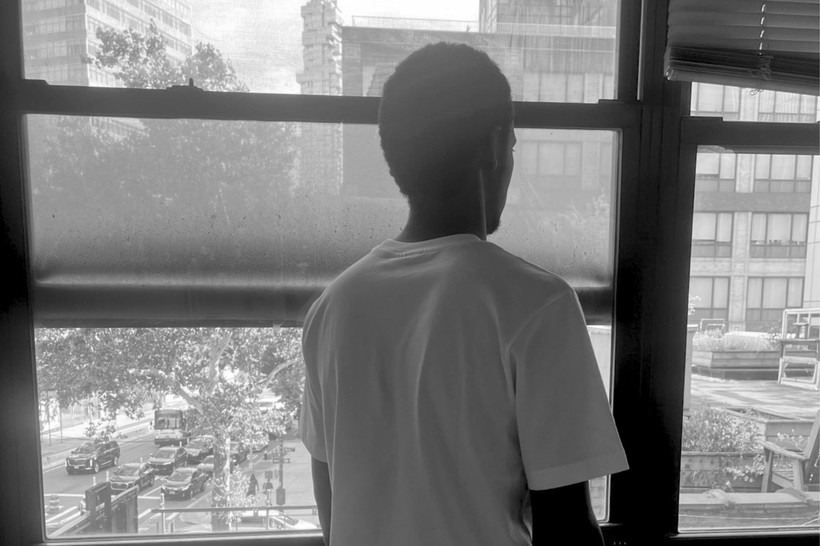
Theirno sits at a table, looking over his shoulder out of the window.
Thierno is one of an untold number of people with special immigrant juvenile status, or SIJ, who have received deportation orders in New York and across the country in recent months. | Isabelle Taft/New York Focus

Sign up for Staying Focused, our newsletter keeping readers up to speed on New York politics.

Thierno was about to leave for his shift as a delivery driver last September when he got a call from his lawyer. The 22-year-old had moved to New York City from Guinea in 2023, seeking to escape the violence and arrests directed at anti-government protesters there. Now, his lawyer was telling him that he had received a special status for young immigrants who have suffered abuse, abandonment, or neglect. He stayed home and called his friends to share the good news: Though he’d probably have to wait a few years for his turn, he was in line to apply for permanent US residency. He was safe, he thought.

Seven months later, an immigration judge ordered him sent to Uganda. President Donald Trump’s administration had shifted the legal ground on which Thierno stood, and the judge concluded that his status didn’t protect him from deportation.

“I was not expecting it at all,” Thierno said in French through an interpreter. (New York Focus is identifying Thierno by only his first name to avoid jeopardizing his case.)

Thierno is one of an untold number of people with special immigrant juvenile status, or SIJ, who have received deportation orders in New York and across the country in recent months. 

As recently as last year, it was rare for judges to order SIJ recipients deported. They understood that the program offered a path to eventual permanent residency and generally gave applicants time for that process to play out. But recent opinions by the immigration court system’s top administrative court have largely invalidated that approach.

The changes are set to hit New York — home to over a fifth of all SIJ petitioners — particularly hard. They’re part of the Trump administration’s ongoing assault on immigration protections, during which it has detained people indefinitely and facilitated rapid-fire in-absentia deportation orders. The administration is also trying to send immigrants to countries that they have no connections to. Uganda, where a judge has sought to send Thierno, is 3,000 miles from his home country.

With the changes to SIJ, young people like Thierno who thought they could build a life in the United States are instead fighting to stay.

“The fact that a young person had an upcoming court appearance really was not cause for concern for a while for us,” said Ellie Rutkey, an attorney at the youth support nonprofit The Door who represents Thierno. “We would just send them to court, tell them to tell the judge, ‘I’m eligible,’ and that would be enough. Now, it is the complete opposite.”

To qualify for sij, an immigrant younger than 21 years old must convince a state court that they’re separated from one or both parents and can’t reunite because of abuse, abandonment, or neglect. Then they must apply for the status with the Department of Homeland Security.

One major problem for recipients is that SIJ on its own does not offer them legal status in the US. Instead, it makes them eligible to apply for a green card, which bestows legal permanent residency. And because Congress created SIJ as an employment-based visa program, with a tight limit on the number of visas available each year, status holders have to wait for a visa to become available before they can apply for residency. In the last decade, more and more people applied for SIJ, and the number approved for the status but not yet eligible for a visa skyrocketed. By 2023, the number of those recipients in limbo topped 100,000, according to a report by the national End SIJS Backlog coalition. New York was home to over 20,000, more than any other state.

“In this presidential administration, no one is protected.”

—A

In the past, Immigration and Customs Enforcement generally didn’t arrest people with SIJ, and immigration judges would pause their deportation cases while they waited to apply for a green card. Recent decisions by the Board of Immigration Appeals — a precedent-setting administrative court inside the Justice Department that the Trump administration has stacked with its appointees —  have concluded that the wait for a visa for many SIJ recipients is too long to justify pausing their deportation proceedings.

“We’re seeing immigration judges saying, ‘You’re too far along in the backlog, it’s too speculative that you are eventually going to adjust your status, and so we’re going to order you removed,” said Ellie Norton, senior staff attorney at the National Immigration Project, a nonprofit that litigates immigration cases.

The new approach to SIJ is one of the many ways the Trump administration is working toward fulfilling Trump’s promise of “mass deportations.” It also aligns with the administration’s efforts to eliminate the backlog in immigration courts — now of nearly 3.3 million cases — said Andrew Arthur, a fellow at the Center for Immigration Studies, which advocates for stricter limits on immigration. Judges refusing to order the deportations of people with SIJ but no green card was “an impediment to the removal of potentially tens of thousands, maybe 100,000 people,” he said. The Board of Immigration Appeals decisions have largely eliminated that impediment.

Judges could still use their discretion to delay or terminate immigration cases for SIJ-eligible youth who are waiting their turn to apply for a visa, according to Olivia Cassin, who served as an immigration judge from 2015 until the Trump administration fired her last year. Instead, judges seem to be following the rulings of the Board of Immigration Appeals, she said.

The role of sij in Trump’s deportation push was on display inside Judge Jem Sponzo’s Manhattan courtroom on a Wednesday last month. An immigration judge since 2017, Sponzo had often ruled in favor of immigrants, granting asylum at a rate much higher than the national average in recent years. But like many judges, she ordered deportations more frequently after Trump took office for his second term, according to immigration court data.

That day, many of the immigrants with hearings before Sponzo either had SIJ or were in the process of applying for it. An attorney representing the federal Department of Homeland Security argued that, with the wait to apply for a visa currently yearslong, using the status as a reason to halt deportation is “unduly speculative.”

Sponzo ordered deportation in nine of the roughly dozen cases she handled during the portion of the hearing New York Focus observed. A few people who had also applied for asylum got new hearing dates. 

One attorney said that, at a hearing a year ago, no one had told her SIJ applicant client that SIJ wouldn’t be enough to protect them from deportation. Sponzo ordered the client deported to Ecuador. (The next day, the Trump administration fired Sponzo. She did not respond to a request for comment.)

The Justice Department told New York Focus that it doesn’t track how many people with SIJ have so far received deportation orders. People like Thierno can still appeal, and federal appellate courts could eventually wind up hearing their cases.

It’s also unclear how many SIJ recipients have been arrested or deported. Last year, ICE deported at least 132 people with SIJ and detained 265, according to data the Department of Homeland Security sent to US Senator Catherine Cortez Masto of Nevada and her office shared with New York Focus.

Ordering SIJ recipients deported “directly contradicts Congress’s intent to provide humanitarian protection from deportation to vulnerable youth,” said Cassin, who now works as the legal director of ICARE, a coalition of organizations that represent immigrant kids.

In a statement to New York Focus, a Department of Justice spokesperson said the Executive Office for Immigration Review is “restoring integrity” to immigration courts.

“Board of Immigration Appeals decisions reflect straightforward interpretations of clear statutory language,” the statement said. The agency also referred New York Focus to a US Citizenship and Immigration Services report that claimed SIJ posed “national security threats.”

The Department of Homeland Security did not respond to a request for comment.

The Biden administration took steps to protect those caught in the SIJ backlog. In 2022, it began granting recipients “deferred action,” an additional status that formally shielded them from deportation and made them eligible for work permits.

The Trump administration ended that practice, so Thierno didn’t receive deferred action. (A lawsuit challenging the administration’s decision is ongoing.) It also started revoking the protection from those who already had it. The Department of Homeland Security stripped at least 990 SIJ recipients of their deferred action status last year, up from an average of about 100 in each of the previous three years, according to the data Cortez Masto received.

“One pattern that we are seeing a lot is that they detain a young person and then they terminate their deferred action right after,” said Rachel Davidson, director of the End SIJS Backlog coalition.

“The fact that a young person had an upcoming court appearance really was not cause for concern for a while for us. ... Now, it is the complete opposite.”

—Ellie Rutkey, The Door

That’s what happened to A, a 21-year-old from central Mexico who has lived in the United States since 2021. Shortly after arriving in Brooklyn and moving in with his aunt, he applied for SIJ, receiving the status, along with deferred action, in 2024.

The day after Christmas last year, A spent the day watching his 1-year-old nephew. Around 4 pm, he left for his shift at a Mexican restaurant. As he was walking to the subway station, two cars pulled up next to him and ICE agents jumped out, screaming at him that he was in the US illegally, he told New York Focus. A was afraid, but felt confident that he couldn’t be detained.

“Because I had deferred action and a work permit, and since I was legally protected with that deferred action, I thought they weren’t going to arrest me,” he said in Spanish.

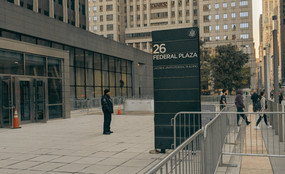
The ICE agents took him to the holding facility at Manhattan’s 26 Federal Plaza, then to a detention center in New Jersey. ICE eventually transferred A to Mississippi, to one of the largest ICE detention centers in the country, where he slept in a dorm with up to 300 others, he said. He made friends with men from Venezuela, Guatemala, Mexico, China, and the Middle East, and watched one by one as they lost their court cases and were ordered deported.

When A’s court date finally arrived, an immigration judge acknowledged his deferred action and terminated his deportation proceedings. While still in detention, he then received paperwork saying that the Trump administration had revoked his deferred action and restarted his deportation case. A new judge terminated that case, too, writing that the cancellation of A’s deferred action revealed “a disregard for the lawful orders of this Court.” But because immigration judges lack jurisdiction over deferred action, the judge could not restore it.

Thirty days later, ICE finally released A. With no other option in rural Adams County, Mississippi, A and two other men paid a driver $300 each to take them to a bus station. His cousin sent him money for a ticket, and after two sleepless days on the road, A arrived back in New York City in April. He’d been away for over three months.

For days, A couldn’t shake the rigid schedule he followed while in detention, waking up at 4 am. He was afraid of cars passing him on the street. Though the government never explained why it had revoked his deferred action, he has little hope of getting it back. Without deferred action, he lost his work permit, too, and can no longer work legally.

“In this presidential administration, no one is protected,” he said. “Because anyone who is following the rules is being locked up.”

As Thierno waits for his appeal to play out, he lives in fear of ICE arrest and deportation. He tries to limit the amount of time he spends out in the open.

“I go to work and I go home,” he said.

He hasn’t told his mother back in Guinea about the deportation order, knowing it would worry her. When he talked about it with his older brother and sister, they asked him if there was anything he could do to change the outcome. He told them he was working on it.

Liv Veazey contributed reporting.

At New York Focus, our central mission is to help readers better understand how New York really works. If you think this article succeeded, please consider supporting our mission and making more stories like this one possible.

New York is an incongruous state. We’re home to fabulous wealth — if the state were a country, it would have the tenth largest economy in the world — but also the highest rate of wealth inequality. We’re among the most diverse – but also the most segregated. We passed the nation’s most ambitious climate law — but haven’t been meeting its deadlines and continue to subsidize industries hastening the climate crisis.

As New York’s only statewide nonprofit news publication, our journalism exists to help you make sense of these contradictions. Our work scrutinizes how power works in the state, unpacks who’s really calling the shots, and reveals how obscure decisions shape ordinary New Yorkers’ lives.

In the last two decades, the number of local news outlets in New York has been nearly slashed in half, allowing elected officials and powerful individuals to increasingly operate in the dark — with the average New Yorker none the wiser.

We’re on a mission to change that. Our work has already shown what can happen when those with power know that someone is watching, with stories that have prompted policy changes and spurred legislation. We have ambitious plans for the rest of the year and beyond, including tackling new beats and more hard-hitting stories — but we need your help to make them a reality.

If you’re able, please consider supporting our journalism with a one-time gift or a monthly gift. We can't do this work without you.

Thank you,

Akash Mehta
Editor-in-Chief
A photo of Akash Mehta.
A photo of Isabelle Taft.
Isabelle Taft covers immigration for New York Focus. She’s also a corps member with Report for America, a national program that places reporters in local newsrooms. She previously covered national news as a fellow at the New York Times, worked on the health… more
Also filed in New York City

The Department of Housing Preservation and Development has vowed to go after negligent landlords, but it’s wrestling with a huge backlog of complaints.

A lawsuit accuses federal officials of ignoring evidence that the boy, born in Mexico, held US citizenship through his mother.

City budget gaps and an ambitious affordability agenda may require pressing Albany again for taxes and aid.

Also filed in Immigration

We’ve compiled information for the 450,000 New Yorkers who will lose health care coverage on July 1.

In May, state lawmakers passed a $269 billion budget after haggling for months over thousands of line items and policies affecting New Yorkers.

The legislation comes after months of haggling over how best to protect New Yorkers from President Trump’s immigration crackdown.