Immigration Authorities Kept an 8-Year-Old US Citizen in a Brooklyn Shelter for Nearly Seven Months

A lawsuit accuses federal officials of ignoring evidence that the boy, born in Mexico, held US citizenship through his mother.

Isabelle Taft   ·   June 18, 2026
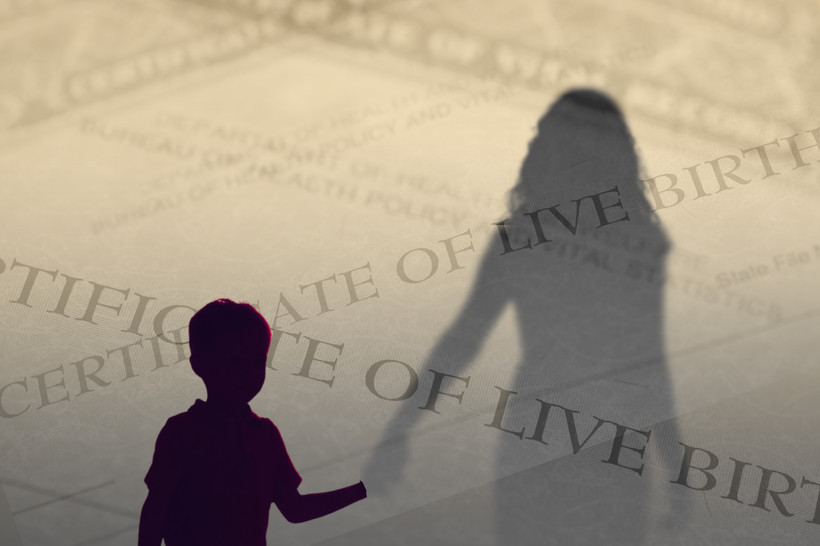
A child silhouetted in the foreground holds hands with an adult, who is separated from the child by a transparent layer composed of birth certificate paperwork.
“He appears sad, isolated, reluctant to engage, and often unwilling to speak,” an advocate for the boy wrote to federal officials months into his detention. | Photos: Nadezhda1906/Getty Images; eric1513/Getty Images | Illustration: Leor Stylar

Sign up for Staying Focused, our newsletter keeping readers up to speed on New York politics.

Last November, an 8-year-old boy was dropped off by relatives at Mexico’s border with the United States.

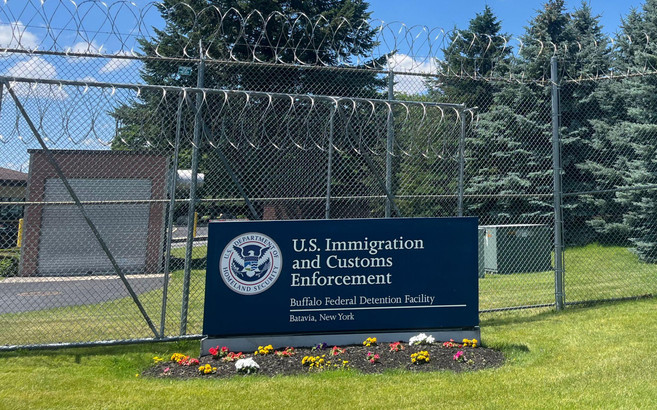
He went through the same process as tens of thousands of immigrant kids who’ve crossed the border alone in recent years: Border agents picked him up and sent him to a federally contracted shelter while he waited for officials to release him to family living in the US. Under President Donald Trump’s administration, that previously speedy unification process has slowed drastically. He spent nearly seven months in a Brooklyn shelter, sometimes with no other kids. He began showing signs of depression. He had his ninth birthday in federal custody.

The boy never should have been in the shelter at all. He’s a US citizen, not subject to immigration laws or the Trump administration policies that kept him from his family for over half a year.

Late last year, the federal Office of Refugee Resettlement, which oversaw the shelter and unification process, contacted the boy’s mother and grandmother to find a sponsor for him. His grandmother said she told federal officials that his mother was a US citizen and gave them a copy of his birth certificate, listing his mother’s nationality. That should have triggered an inquiry into the boy’s own citizenship status, according to a former ORR official — but officials told his relatives that it was irrelevant, the family said in court documents.

It ultimately took a federal lawsuit and an immigration judge’s ruling for the feds to release the boy — identified as RGM in the documents — to New York City’s child welfare agency. Within hours, the city sent him to his grandmother in Brooklyn.

RGM’s story, detailed in court filings, paints a picture of a federal bureaucracy uninterested in exploring evidence that the boy was in the wrong place, unnecessarily separated from his family.

It also illustrates the strain that new Trump administration policies have placed on families trying to reunite with their children, forcing them to risk arrest or deportation if they come forward.

RGM’s grandmother declined an interview request through the family’s attorney, and his mother didn’t respond to attempts to reach her by phone. New York Focus is withholding their names to avoid subjecting their family to targeting by immigration enforcement.

In response to questions, the federal Administration for Children and Families, which includes ORR, said it does not comment on individual cases. In court filings, the agency did not confirm or deny RGM’s grandmother’s account of telling officials about her daughter’s citizenship. It said no one told them RGM was a citizen until late May and argued that his case was complicated by his relatives’ concerns about the sponsorship process. It didn’t address why it didn’t look into his citizenship status earlier.

Rachel Levenson, an attorney for the nonprofit immigrant rights’ organization Make the Road New York who worked on the family’s case, said ORR failed to follow the law and its own policies requiring the release of children with US citizenship.

“They were told he had a US citizen mother, they were provided a birth certificate showing the mother is a US citizen, and for months they took absolutely no steps to investigate,” Levenson said.

“It is pretty horrifying that it does not appear to have been even that alarming to them,” she said.

RGM’s mother was born in Queens in 2001, giving her birthright US citizenship. Court documents describe a difficult childhood. For a time, she and her siblings lived with their mom in a shelter to escape her violent father, according to an affidavit from RGM’s grandmother. Her parents eventually separated. City education records submitted to prove her residency show that she struggled in school and frequently missed class. When she was about 14, her mother took her to live in Puebla, Mexico, with her grandparents. It was her first time leaving the United States.

“If it’s found that there’s a citizen in custody, ORR has to release them.”

—Jen Smyers, former ORR deputy director

She gave birth to RGM in February 2017 in Mexico. US rules about passing on citizenship to children born abroad are complex, but RGM’s case was straightforward, according to Peter J. Spiro, a law professor at Temple University and expert on citizenship law. Based on his mother’s years of residence in New York and the laws in place when he was born, RGM automatically inherited his mother’s US citizenship.

When RGM was a toddler, his mother got an American passport and moved back to the US, leaving RGM with relatives in Mexico. His grandmother visited and sent money for the boy’s care, she said.

Then, late last year, immigration officials called RGM’s grandmother to tell her that RGM was in federal custody in Texas. She said she gave them the boy’s birth certificate, which showed that his mother is a US citizen.

“They told me that it did not matter that [RGM’s] mother is a citizen,” she said in the affidavit. 

The court records suggest that RGM’s family initially didn’t realize that he was born a US citizen. It wasn’t until May that his immigration attorney informed the Office of Refugee Resettlement of his citizenship status. 

Regardless of whether the family understood his status, the federal government should have, according to Jen Smyers, who served as deputy director of ORR under the Biden administration.

After reviewing one of RGM’s court filings, Smyers said it appeared that whoever allegedly told his grandmother that his mother’s citizenship was irrelevant was poorly informed, and that that detail should have immediately triggered an inquiry into the possibility that the boy was a citizen.

ORR doesn’t have statutory authority to hold a US citizen in custody,” she said. “Per the policy guide, if it’s found that there’s a citizen in custody, ORR has to release them.”

Instead of releasing RGM, ORR subjected his family to intensive new vetting procedures for people who wish to take custody of immigrant children who cross the border alone. The Trump administration imposed the procedures starting last year, portraying them as a necessary corrective to looser standards under the Biden administration that contributed to children ending up working in factories, slaughterhouses, hotels, and construction sites. Last week, the Justice Department announced smuggling charges against several Guatemalan immigrants in Ohio for falsely claiming to be the relatives of unaccompanied children in order to sponsor them. One man posed as the brother of a 14-year-old girl, whom he was later convicted of sexually abusing.

Advocates say the procedures are designed to discourage people from sponsoring their young family members, forcing children to spend months in shelters designed for short-term stays. In May, the average stay in an ORR shelter was more than 200 days, up from about 30 days during the Biden administration.

“They told me that it did not matter that [RGM’s] mother is a citizen.”

—RGM's grandmother
Advocates also complain that the process exposes sponsors and their family members to potential arrest and deportation, as ORR now shares information with the Department of Homeland Security and sometimes asks sponsors to attend appointments at Immigration and Customs Enforcement offices.

Early in the boy’s detention, both RGM’s mother and grandmother, who is a legal permanent resident, had stepped forward to sponsor him, but both hesitated when they learned that the vetting process would require their household members to provide identity documents and fingerprints. At the end of February, RGM’s grandmother told ORR “that she no longer wanted to sponsor RGM and she also requested that she no longer have calls or visits with him,” according to a court declaration from an agency official. On the same day, his mother “confirmed that she cannot sponsor due to her partner’s legal status,” the official claimed.

In early April, RGM’s grandmother got back in touch with the agency and said she did, in fact, want to proceed with sponsorship, according to the declaration, but she never submitted a sponsorship application. In her affidavit, she said she had been doing everything possible to reunite with the boy.

“He has had a lot of instability in his life and I am ready and eager to provide him with consistency and care,” she said. “I want to give him a future here in the United States: to take him to school and to show him my love.”

The ORR official’s court declaration noted that his agency took custody of RGM after the Department of Homeland Security determined he was an “unaccompanied alien child,” with no legal status in the US. But while ORR tried to get his relatives to go through the sponsorship process, no one apparently looked into the possibility that he was actually a US citizen.

“From ORR’s perspective, the difficulty here is the very unusual set of facts,” the ORR official wrote. “Since he has come into ORR custody, the purported mother and grandmother have gone back and forth on whether to sponsor and neither has submitted a sponsorship application package.”

As the months wore on, court documents show, RGM grew more and more distressed. A government-appointed child advocate wrote in a letter to ORR that he “presents as consistently sad, withdrawn, and emotionally detached … and appears unable to meaningfully process the distress caused by his separation.” He often refused to speak.

By early June, RGM was the only child still living at the Brooklyn shelter, according to the advocate’s letter. As the federal government has all but closed the southern border, the number of kids in ORR custody has fallen drastically, from about 7,000 at the end of 2024 to just over 1,800 in May, according to federal data, prompting shelters to close and lay off staff.

“He is now enduring this prolonged separation entirely alone,” the advocate wrote.

The organization that ran the shelter, HeartShare’s St. Vincent’s Services, did not respond to a request for comment.

RGM’s citizenship may never have been discovered if not for his child advocate, appointed by ORR to independently assess his needs and plans for release. This spring, the advocate asked RGM’s grandmother to provide proof of her daughter’s citizenship and residency in New York, which she did in the form of her daughter’s birth certificate and school records. On May 29, RGM’s immigration attorney emailed ORR and the shelter to tell them he was a US citizen.

According to the ORR official, the agency then asked Homeland Security about the citizenship claim. 

ORR intended to wait to hear back from DHS,” he wrote. 

Smyers said that, in her experience, ORR could evaluate such a case on its own without involving DHS. Make the Road filed a lawsuit demanding RGM’s release on June 3.

Only after an immigration judge dismissed RGM’s immigration case on the basis that he was a US citizen did ORR release him, on June 10, to New York City’s Administration for Children’s Services, according to a court filing. (A spokesperson for the city agency told New York Focus that all case-specific information is confidential under state law.)

By Thursday morning last week, RGM was at home with his grandmother in Brooklyn.

At New York Focus, our central mission is to help readers better understand how New York really works. If you think this article succeeded, please consider supporting our mission and making more stories like this one possible.

New York is an incongruous state. We’re home to fabulous wealth — if the state were a country, it would have the tenth largest economy in the world — but also the highest rate of wealth inequality. We’re among the most diverse – but also the most segregated. We passed the nation’s most ambitious climate law — but haven’t been meeting its deadlines and continue to subsidize industries hastening the climate crisis.

As New York’s only statewide nonprofit news publication, our journalism exists to help you make sense of these contradictions. Our work scrutinizes how power works in the state, unpacks who’s really calling the shots, and reveals how obscure decisions shape ordinary New Yorkers’ lives.

In the last two decades, the number of local news outlets in New York has been nearly slashed in half, allowing elected officials and powerful individuals to increasingly operate in the dark — with the average New Yorker none the wiser.

We’re on a mission to change that. Our work has already shown what can happen when those with power know that someone is watching, with stories that have prompted policy changes and spurred legislation. We have ambitious plans for the rest of the year and beyond, including tackling new beats and more hard-hitting stories — but we need your help to make them a reality.

If you’re able, please consider supporting our journalism with a one-time gift or a monthly gift. We can't do this work without you.

Thank you,

Akash Mehta
Editor-in-Chief
A photo of Akash Mehta.
A photo of Isabelle Taft.
Isabelle Taft covers immigration for New York Focus. She’s also a corps member with Report for America, a national program that places reporters in local newsrooms. She previously covered national news as a fellow at the New York Times, worked on the health… more
Also filed in New York City

City budget gaps and an ambitious affordability agenda may require pressing Albany again for taxes and aid.

We’ve compiled information for the 450,000 New Yorkers who will lose health care coverage on July 1.

The citizens assembly model, used for public decision-making around the world, is gaining traction in New York.

Also filed in Immigration

In May, state lawmakers passed a $269 billion budget after haggling for months over thousands of line items and policies affecting New Yorkers.

The Department of Justice has terminated more than 100 immigration judges since last year as it has pressured courts to order more deportations.

The legislation comes after months of haggling over how best to protect New Yorkers from President Trump’s immigration crackdown.