Woman Robbed By Her Lawyer Gets $70K+ Back After New York Focus Investigation

Larger questions remain about New York’s cash-strapped fund for compensating victims of attorney theft.
Chris Bragg   ·   July 22, 2026
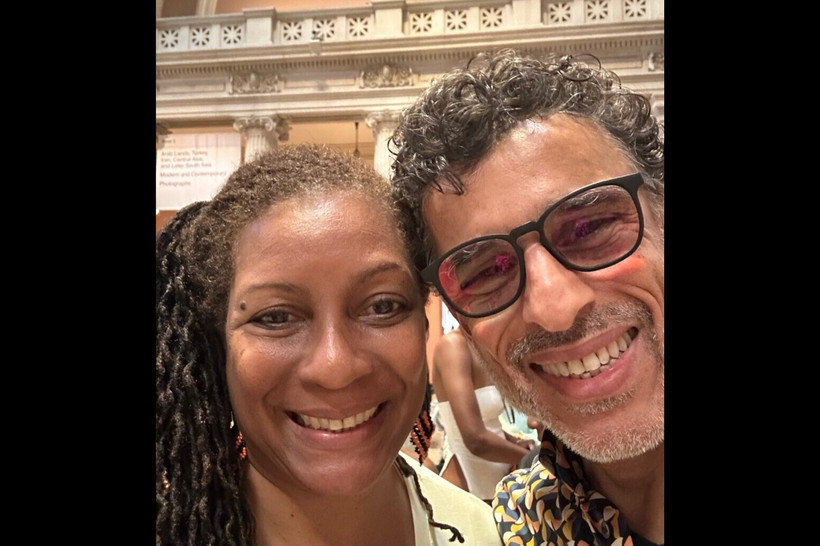
Pamela and Christopher Brown
Pamela and Christopher Brown | Courtesy of Pamela Brown

Sign up for Staying Focused, our newsletter keeping readers up to speed on New York politics.

A Brooklyn woman fleeced by her own attorney will be repaid more than $70,000 after New York Focus highlighted prosecutors’ failure to investigate her case.

Two years ago, Manhattan District Attorney Alvin Bragg’s office almost entirely ignored a dozen phone calls and five emails from the victim, Pamela Brown, she said. After New York Focus reached out for comment last October, a spokesperson said her case would be reopened. 

In 2017, Brown paid lawyer Daphna Zekaria $15,000 to bring a lawsuit against her Brooklyn landlord. Brown was required to place more than $50,000 into an escrow account controlled by Zekaria while the case unfolded. She later paid the attorney $20,000 more for a lawsuit aimed at unlocking the escrow funds. Unbeknownst to Brown, Zekaria had already stolen the money herself.

Last year, Zekaria pleaded guilty to stealing nearly $400,000 from three other clients in a case prosecuted in Suffolk County. She was recently sentenced to serve six months in jail and was ordered to pay $373,500 in restitution to a state fund that compensates victims of attorney theft.

At the time of Brown’s escrow transaction, Zekaria’s law firm was located in Manhattan. A Suffolk County prosecutor told Brown to reach out to Bragg’s office — which ignored her until after New York Focus contacted the office about the case, more than a year later. (Brown was more recently told that the case had “slipped through the cracks” after a Manhattan assistant district attorney left for a job in the private sector, she said.)

After the case was reopened, the district attorney sought to obtain the proof needed for Brown to successfully apply for repayment from the state fund that compensates victims of attorney theft. The office secured a felony plea in Manhattan, but did not seek additional jail time.

“The goal of the DA was to help us to get the money back — because they were caught not really doing their job,” Brown said.

The evidence was hiding in plain sight. To prove the escrow theft, a Manhattan assistant district attorney, Kelly Thomas, listened to a recording of a 2018 appearance by Zekaria in Brooklyn Civil Court during which she acknowledged the receipt of more than $50,000 into an account she controlled.

According to the Manhattan district attorney’s office, Zekaria pleaded guilty to grand larceny in the second degree in June. She made a detailed admission to the court confessing to taking more than $50,000 in escrow funds as well as a $20,000 legal fee for a lawsuit that, at least in part, was related to releasing escrow funds that Zekaria had already taken.

Zekaria could not immediately be reached for comment.

Brown says Zekaria stole more from her than the amount that will be repaid. She’s relieved the years-long ordeal has ended — and that she’s been made partially whole — but worries about the labyrinthine system for compensating other victims of lawyer theft. 

“A lot of people don’t have my persistence and are not going to go and seek a journalist to write a story about wrongdoing,” Brown told New York Focus. “How many people are really going to do something like that? Very few.”

Zekaria, who has lost her law license, is not the one repaying the money to her former client. 

“The goal of the DA was to help us to get the money back — because they were caught not really doing their job.”

—Pamela Brown, victim of attorney theft

Brown will be repaid by The Lawyer’s Fund for Client Protection, an independent public trust meant to help maintain public confidence in New York’s legal profession that’s funded through a small portion of registration fees paid by attorneys in the state.

Until recently, the fund had refused to pay Brown anything. The Manhattan district attorney’s office hadn’t investigated, and Brown’s bank no longer had records of Brown’s original deposit into the escrow account. Brown had considerable other evidence of the escrow payment, but she was still denied. The fund has investigatory powers — including to issue subpoenas — but has a small staff, and generally relies on law enforcement to gather evidence.

Brown recently received a letter stating the fund would repay more than $70,000, she said. 

But the fund is declining to compensate Brown for the $15,000 she paid to Zekaria to bring the original case against her landlord, she said. The law firm did some work in that lawsuit but also missed court appearances and deadlines, earning a reprimand from the judge, who cited the “history of plaintiffs’ non-compliance with court mandated orders.” Citing a “woefully deficient” legal filing, the judge precluded Brown’s side from pursuing a number of key claims against her landlord.

The fund’s resources have become strained in recent years. In December, Newsday highlighted the prevalence of escrow account theft in downstate New York real estate transactions, which eats up a significant portion of the fund’s annual payments. And for decades, state legislators have not increased the portion of the attorney registration fee — $60 — that pays for the fund.

In 2024, the fund approved about 26 percent of claims, paying out $11.6 million. Claimants had alleged losses that year of $54.7 million — nearly five times the amount that was paid out. The fund ended the year with a $11.7 million balance.

Asked if the fund faced fiscal constraints that required rejecting a certain number of claims, chairman Eric Seiff told New York Focus last year that “we try to be careful.”

“We don’t want to overspend, but we would like to recompense the victims to the extent of their loss, to the extent we can,” he said.

For decades, the Lawyer’s Fund has stressed in annual reports the need to reform downstate real estate transactions in which lawyers often hold significant sums related to closing costs in escrow. 

Brown believes a neutral third party, such as a bank, should be entrusted to hold escrow funds instead of attorneys.

In the meantime, “the consumer should know when they put money into escrow that it is not safe,” Brown told New York Focus. “It is only as safe as the individual whose name is on the account.”

BEFORE YOU GO, consider: If not for the article you just read, would the information in it be public?

Or would it remain hidden — buried within the confines of New York’s sprawling criminal-legal apparatus?

I started working at New York Focus in 2022, not long after the outlet launched. Since that time, our reporters and editors have been vigorously scrutinizing every facet of the Empire State’s criminal justice institutions, investigating power players and the impact of policy on state prisons, county jails, and local police and courts — always with an eye toward what it means for people involved in the system.

That system works hard to make those people invisible, and it shields those at the top from scrutiny. And without rigorous, resource-intensive journalism, it would all operate with significantly more impunity.

Only a handful of journalists do this type of work in New York. In the last decades, the number of local news outlets in the state has nearly halved, making our coverage all the more critical. Our criminal justice reporting has been cited in lawsuits, spurred legislation, and led to the rescission of statewide policies. With your help, we can continue to do this work, and go even deeper: We have endless ideas for more ambitious projects and harder hitting investigations. But we need your help.

As a small, nonprofit outlet, we rely on our readers to support our journalism. If you’re able, please consider supporting us with a one-time or monthly gift. We so appreciate your help.

Here’s to a more just, more transparent New York.

Chris Gelardi
Justice Bureau Chief
A photo of Chris Gelardi
A photo of Chris Bragg.
Chris Bragg is the Albany bureau chief at New York Focus. He has done investigative reporting on New York government and politics since 2009, most recently at The Buffalo News and Albany Times Union.
Also filed in Criminal Justice

Northrup, a public defender and Democratic nominee for state Assembly, says it’s time to move toward more humane and effective policies.

A sweeping report excoriates the Department of Corrections and Community Supervision for failing to protect prisoners and staff.

In May, state lawmakers passed a $269 billion budget after haggling for months over thousands of line items and policies affecting New Yorkers.

Also filed in New York State

Paraquat is banned in more than 70 countries. In a small town that one resident calls “Parkinson’s Valley,” farmers and their families are demanding that New York follow suit.

Health care union 1199SEIU helped Public Partnerships LLC take over the state’s home care program, even as it warned some workers could see wage cuts.

Boards of Visitors are supposed to oversee state-run disability and psychiatric programs. Almost none of them have enough members.