A quiet fight is erupting in Albany over how — and where — to add more judges.
A quiet fight is erupting in Albany over how — and where — to add more judges. ·  View in browser
NEWSLETTER
State Senator Brad Hoylman-Sigal and Assemblymember Alex Bores (pictured) are the two main sponsors of the Uncap Justice Act. Video still: Office of Assemblymember Alex Bores | Illustration: New York Focus
As courts buckle under hundreds of thousands of unresolved cases, a quiet fight is erupting in Albany over how — and where — to add more judges.
By Chris Bragg

New York’s justice system has a major problem with backlogs. People languish at Rikers Island and other jails, waiting for their trials. Civil cases drag on for years.

In the final days of the Albany legislative session, a proposed fix — a constitutional amendment to create an uncapped number of new state Supreme Court justice seats — is nearing the finish line, and it has broad and powerful support.

Yet it's facing fierce opposition from a surprising source — state Supreme Court justices, who routinely witness the consequences borne by the backlogs.

Recent Stories

Nearly a third of rural hospitals in New York are at immediate risk of closing, according to the Center for Health Care Quality and Payment Reform. Maternity care is particularly vulnerable. Map: Ikonact / Wikimedia Commons; Photo: HCHMD / Flickr | Illustration: New York Focus
From nursing homes to Planned Parenthood clinics, rural health care in Upstate New York could collapse under proposed Republican budget changes.
By Clara Hemphill

New York's Adirondack region includes six million acres of protected wilderness, featuring mountains, rivers, and lakes beloved by hikers and canoeists. The Adirondack Park is a checkerboard of public and private land, with 105 villages and towns — some home to just a few hundred people — scattered across rugged terrain. Vacationers crowd the region in the summer. Skiers come in winter.

But the year-round population is small, declining, and aging. Many residents patch together part-time and seasonal jobs — work that doesn’t come with health insurance. Twenty-eight percent of the residents in the congressional district that includes the Adirondacks rely on Medicaid, the federal-state health insurance program for low-income people. Half of births and two-thirds of nursing home residents are covered by Medicaid.

John Rugge has spent half a century building a network of health clinics in the isolated villages and towns of New York’s Adirondack mountains. Now 80 years old, as most of his peers enjoy retirement, the locally celebrated outdoorsman and physician is organizing other rural doctors and community leaders in this strongly Republican part of the state to protect the health care system in the face of proposed cuts to Medicaid under debate in Congress.

Rugge says the federal cuts in health care spending — projected at $715 billion over the next 10 years — could have a devastating impact, not just on the New Yorkers who will lose insurance, but also on the rural hospitals, nursing homes, and clinics that rely on Medicaid payments.

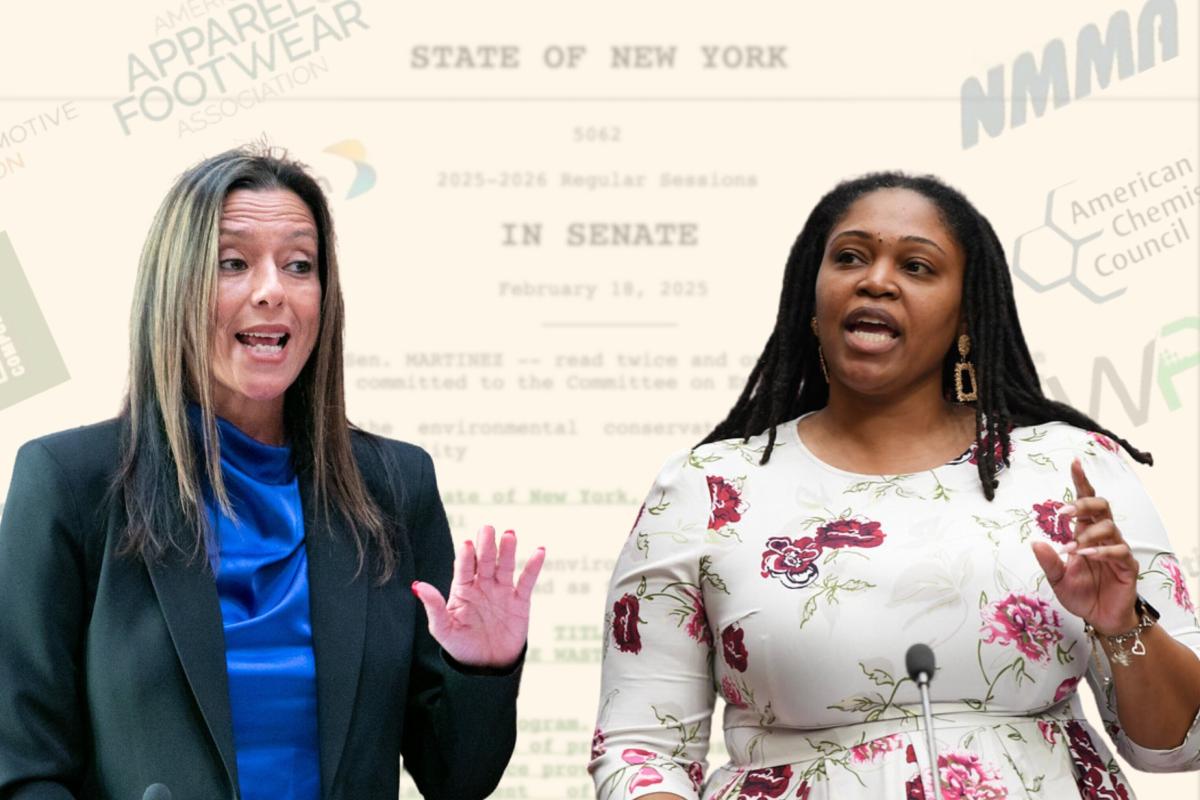
The sponsors of a new, industry-backed bill say it offers a cost-effective way to cut waste. Photos: New York State Senate and New York State Assembly Majority | Illustration: New York Focus
The chemical industry is pushing to replace a sweeping plastics bill with a more business-friendly alternative.
By Colin Kinniburgh

Business groups have made no secret of their opposition to a major waste reduction bill currently advancing through the halls of Albany.

Like last year, dozens of industry interests have been lobbying against the Packaging Reduction and Recycling Infrastructure Act, a wide-reaching proposal to curb plastic pollution at its source. But this year, business interests aren’t just in opposition mode. They say they have a constructive solution.

A coalition led by the Business Council, the state’s leading business group, is rallying behind a bill introduced this February that proponents say would cut waste without hamstringing companies with mandates. Like the longer-standing bill, it would establish a version of “extended producer responsibility,” or EPR, a policy that holds companies responsible for handling their products when they’re thrown away. But the new Affordable Waste Reduction Act shuns many of the more prescriptive elements of the older bill, which business groups say will drive products off shelves, businesses out of New York, and prices up for consumers.

The bill’s introduction comes amid a multimillion-dollar, years-long push by the chemical industry and wider business lobby to advance their preferred solutions to New York’s increasingly untenable waste problem.

Demonstrators protect a protest encampment against an NYPD raid outside New York City Hall on July 1, 2020. Chris Gelardi
Previously unpublished photos and video show how protesters set up encampments, burned police vehicles, and marched almost daily. Today, the NYPD operates much as it did before the movement.
By Chris Gelardi

On May 28, 2020, in the midst of the worst pandemic in a century, tens of thousands of people began flooding onto the streets of New York City. They joined millions across the country who’d risen up to protest Minneapolis cops’ killing of George Floyd and demand smaller, less violent, more accountable police forces.

Five years later, New York City’s mayor is a former cop, and the New York City Police Department eats up as many resources as it did before the protests. Though it’s a mayoral election year, no candidate has pledged to alter that.

Previously unpublished photos and video offer a look back at New York City’s role in the 2020 Black Lives Matter protest movement — one of the largest in United States history.

Has anything changed?

Copyright © New York Focus 2024, All rights reserved.
Staying Focused is compiled and written by Alex Arriaga
Contact Alex at alex@nysfocus.com

Feedback? Tips? Pitches? Contact us at: editor@nysfocus.com

Support our work!

Interested in sponsoring these emails? Get in touch! Email editor@nysfocus.com.

This email was sent to *|EMAIL|*

unsubscribe from this list  ·  update subscription preferences

New York Focus · *|HTML:LIST_ADDRESS_HTML|* · USA