Video: Five Years Since an Uprising Against the NYPD, What Has Changed?

Demonstrators protect a protest encampment against an NYPD raid outside New York City Hall on July 1, 2020. | Chris Gelardi

Previously unpublished photos and video show how protesters set up encampments, burned police vehicles, and marched almost daily. Today, the NYPD operates much as it did before the movement.

Chris Gelardi   ·   May 28, 2025

Sign up for Staying Focused, our newsletter keeping readers up to speed on New York politics.

On May 28, 2020, in the midst of the worst pandemic in a century, tens of thousands of people began flooding onto the streets of New York City. They joined millions across the country who’d risen up to protest Minneapolis cops’ killing of George Floyd and demand smaller, less violent, more accountable police forces.

Five years later, New York City’s mayor is a former cop, and the New York City Police Department eats up as many resources as it did before the protests. Though it’s a mayoral election year, no candidate has pledged to alter that.

Previously unpublished photos and video offer a look back at New York City’s role in the 2020 Black Lives Matter protest movement — one of the largest in United States history.

Has anything changed?

The protests took the five boroughs by storm. Demonstrators staged marches virtually daily for nearly a year.

They took over busy streets and bridges. There were so many demonstrations at the height of the movement, it was common for independent marches to accidentally cross paths and join forces.

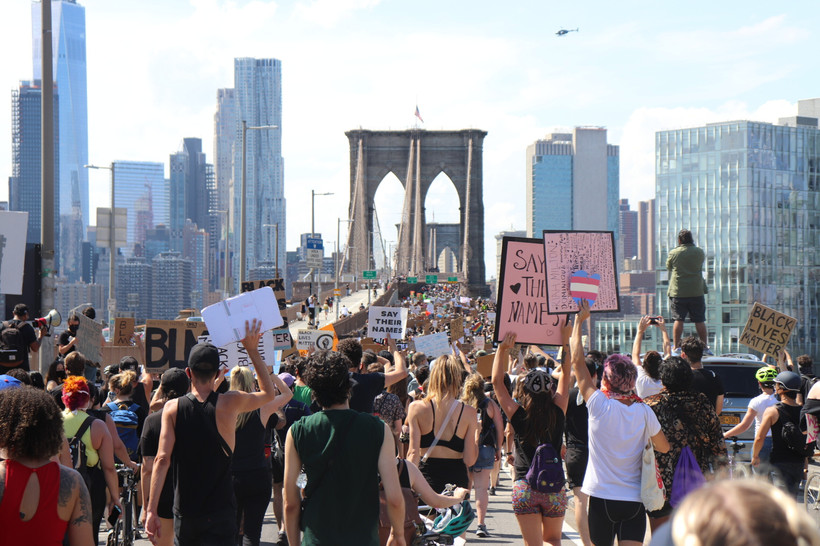
Protesters march across the Brooklyn Bridge during a Juneteenth demonstration on June 19, 2020. | Chris Gelardi
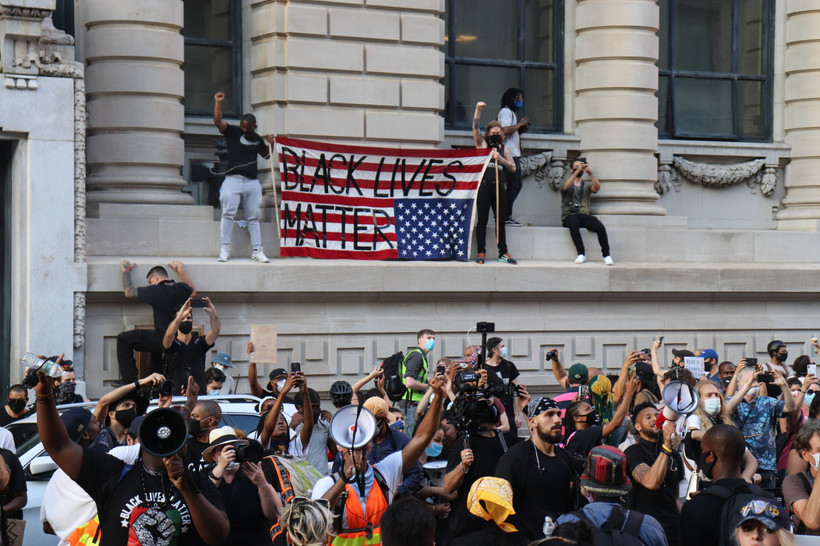
Protesters raise their fists shortly before establishing a protest encampment at City Hall Park on June 23, 2020. | Chris Gelardi
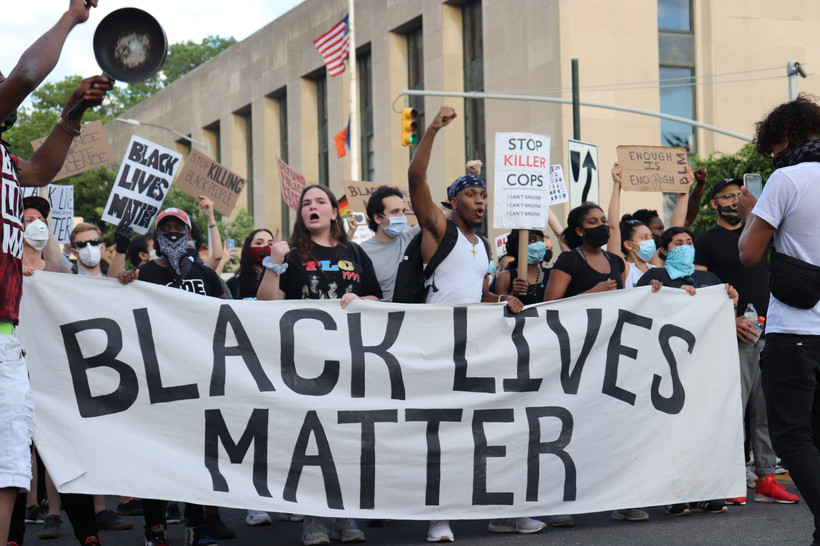
Protesters march through New York City streets on June 7, 2020. | Chris Gelardi

The protests were often joyful, with music and dancing. Some doubled as pride marches.

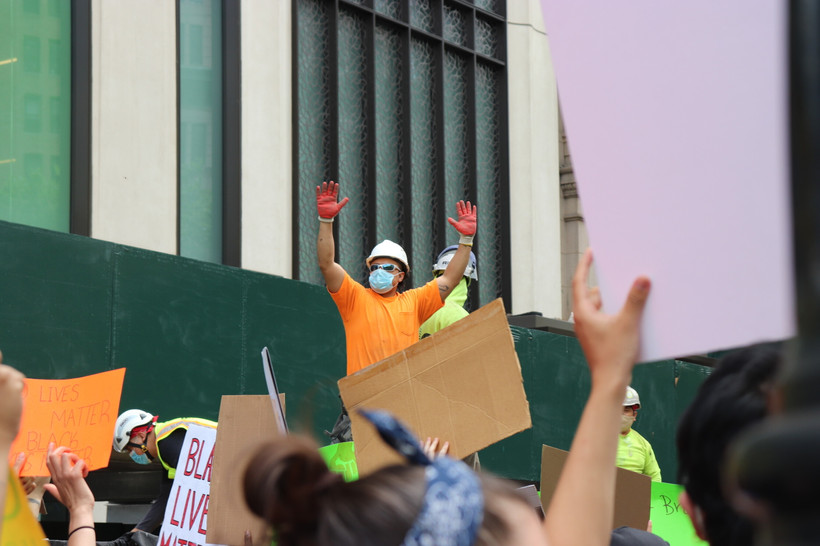
A construction worker cheers on a protest march on June 2, 2020. | Chris Gelardi
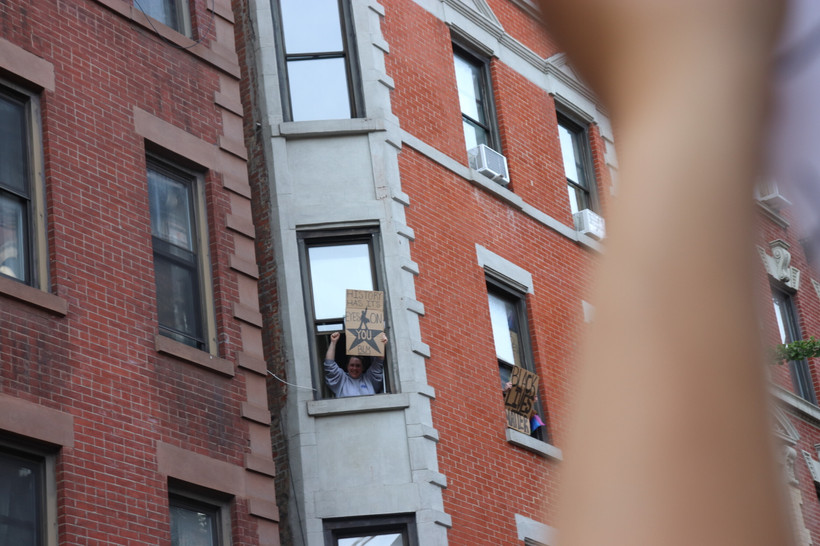
Manhattan residents cheer on a protest march from their apartment windows on June 25, 2020. | Chris Gelardi
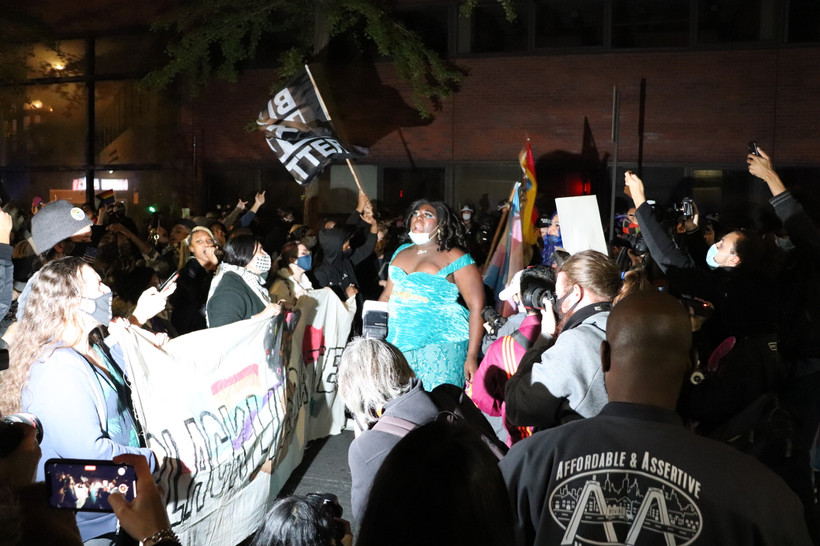
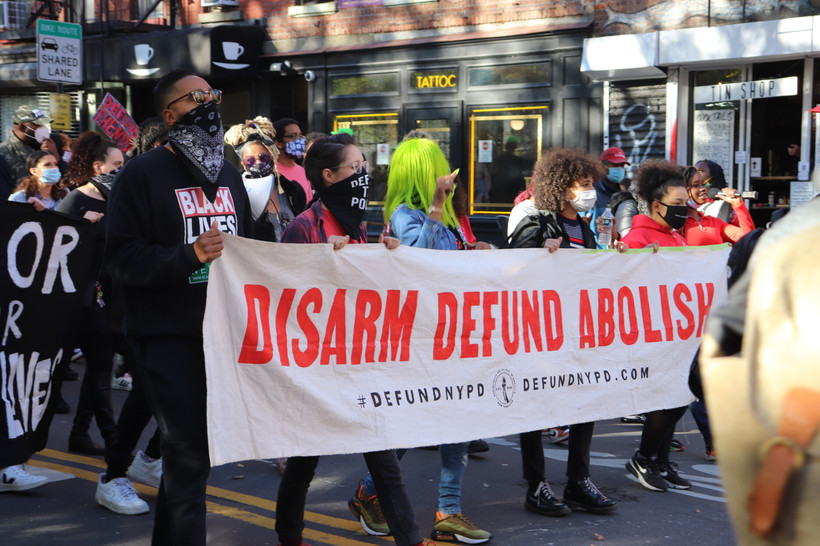
A weekly Black Lives Matter protest celebrating LGBTQ pride marches through Manhattan on November 5, 2020. | Chris Gelardi
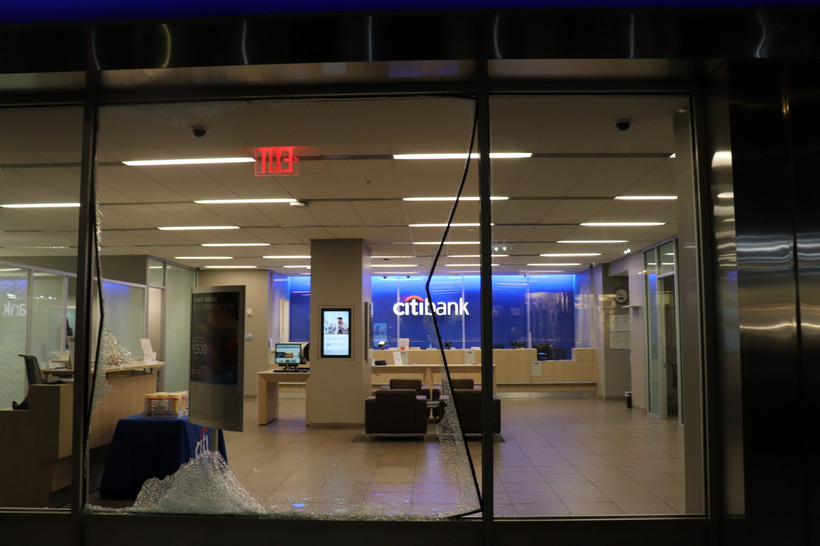

Yet at their heart was anger at the police. Some protesters graffitied NYPD cars, or even set them on fire. Even with such controversial tactics, limited polling suggested that New York state residents approved of the protest movement by a more than two-to-one margin. For the first time in US history, police abolition became a temporary part of mainstream discourse.

Protesters break the windows of a Manhattan branch of Citibank, May 31, 2020. | Chris Gelardi
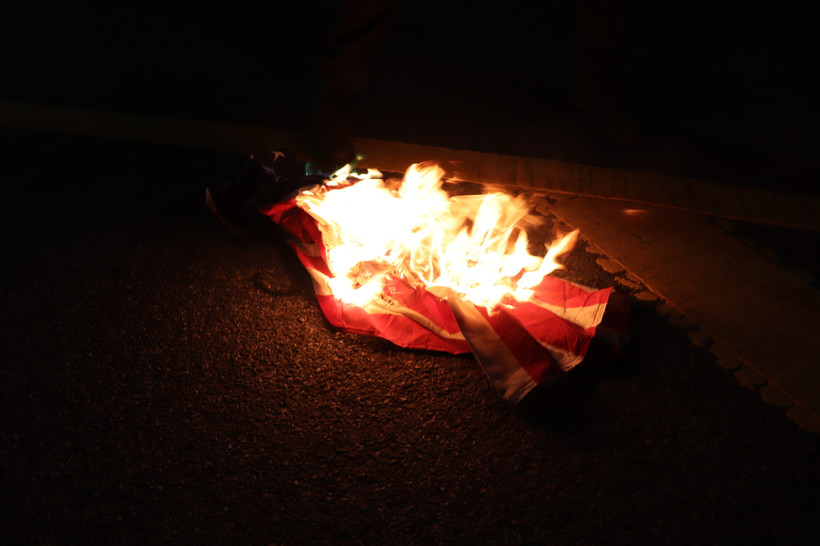
Protesters burn a United States flag on October 27, 2020. | Chris Gelardi
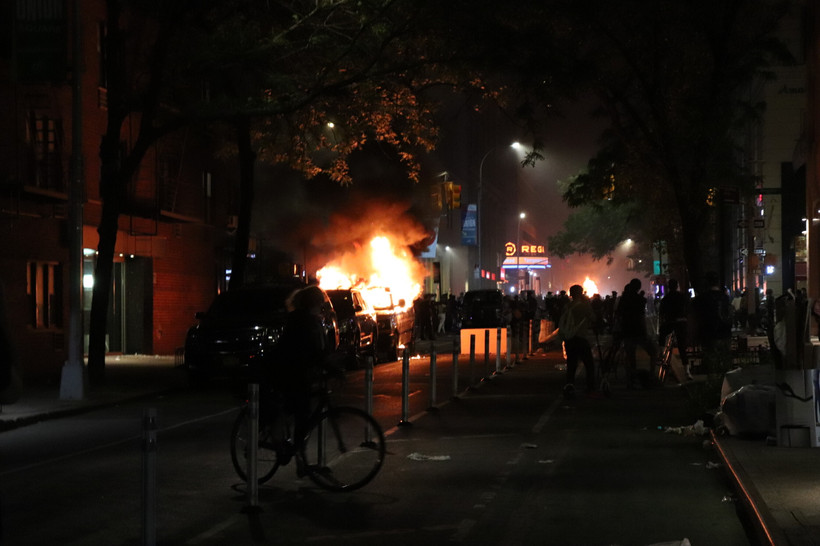
NYPD vans torched by protesters burn on May 30, 2020. | Chris Gelardi
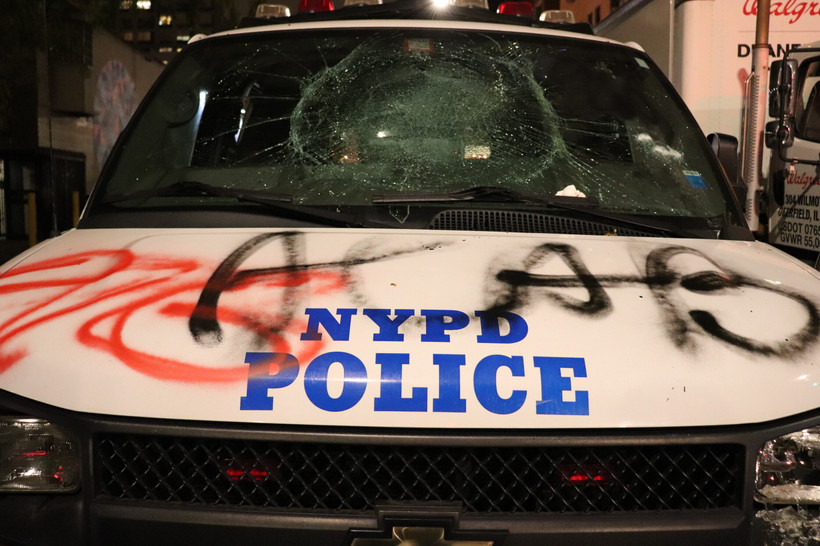
An NYPD van smashed and graffitied by protesters, October 27, 2020. | Chris Gelardi
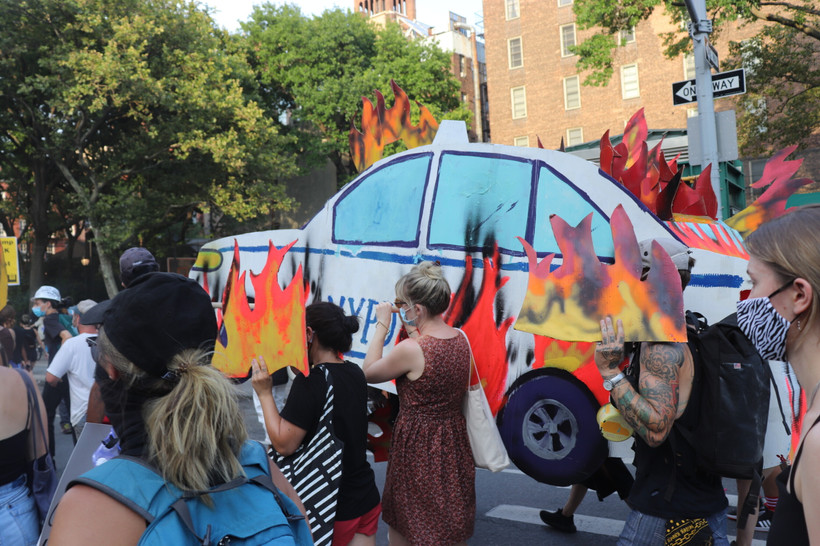
Protesters march with art celebrating recently torched NYPD vehicles on June 13, 2020. | Chris Gelardi
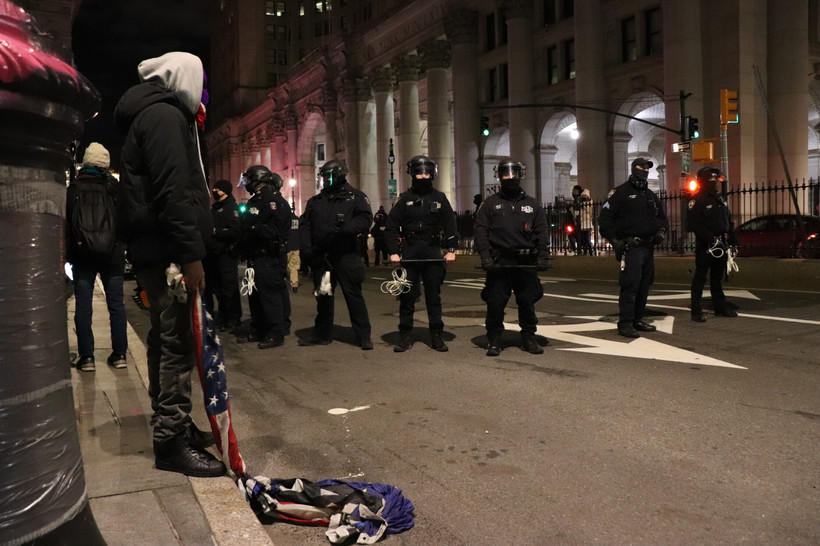
The NYPD responded in kind. In the early weeks of the protests, then-Mayor Bill de Blasio imposed a citywide curfew. The police department began mass arrests, which sometimes turned violent. The city later agreed to pay out a nearly $14 million settlement to victims of NYPD violence during the 2020 protests.

NYPD officers wearing riot gear and carrying zip ties face down protesters on January 18, 2021. | Chris Gelardi
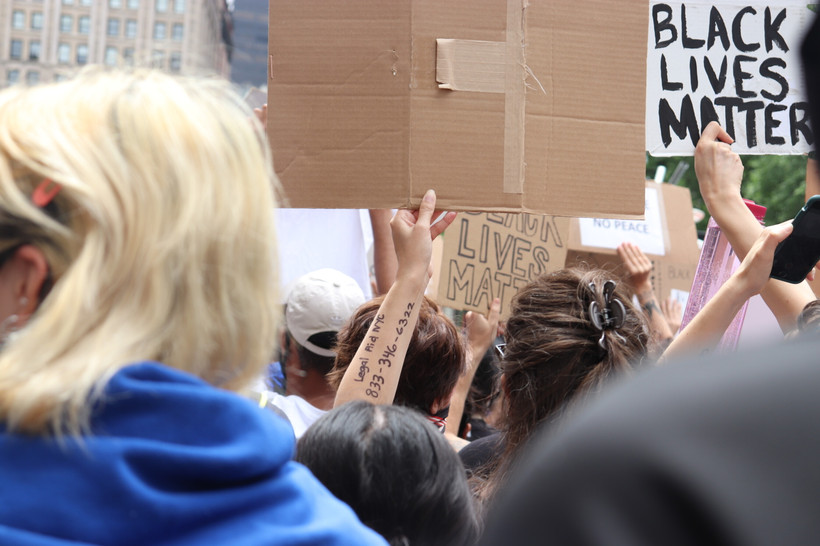
A protester with a defense attorney hotline’s phone number written on their arm, June 2, 2020. | Chris Gelardi
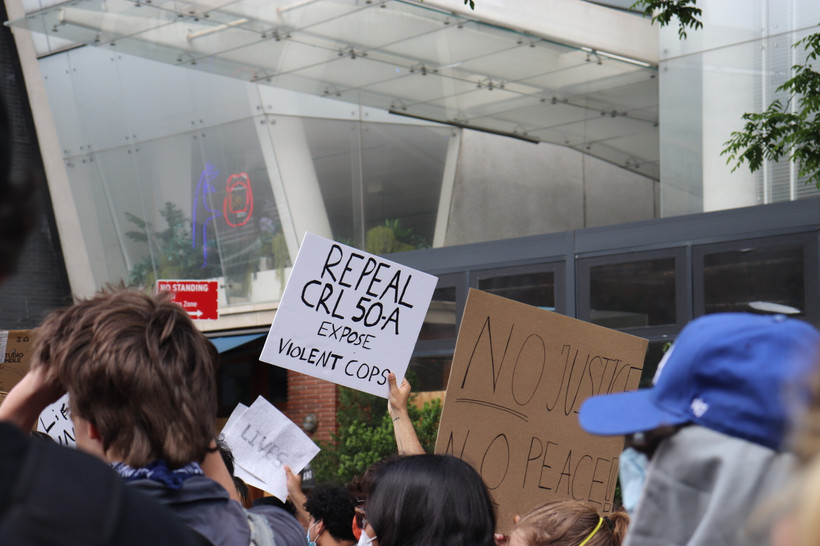
Activists organizing the protests had policy demands. In June 2020, they succeeded in getting the state to repeal a law, commonly known as 50-a, that exempted police discipline records from public disclosure.

The activists also wanted to slash NYPD spending. On June 23 — a week before the city’s annual budget was due — demonstrators erected a protest encampment outside New York City Hall to demand that officials cut $1 billion from the police department’s $6 billion operating budget.

A protester holds up a sign calling for the repeal of 50-a on June 2, 2020. | Chris Gelardi
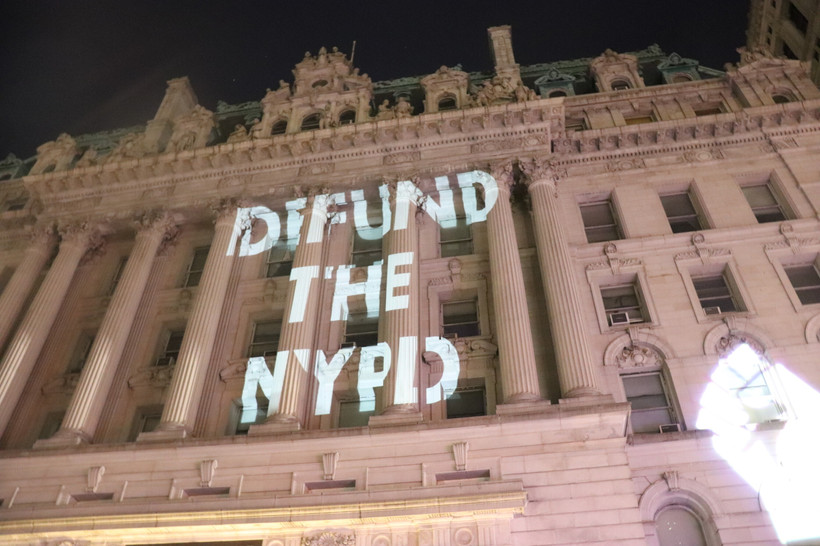
Protesters project a message onto the side of the New York County Surrogate’s Court building on June 24, 2020. | Chris Gelardi
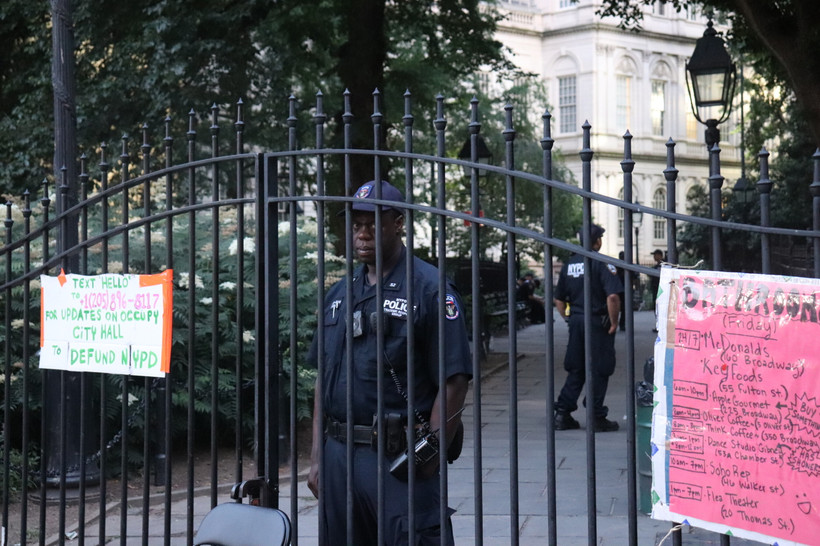
The encampment was built for the long haul. Within hours, protesters had set up water depots, hot food stands, sanitation stations, personal protective equipment stations, a “bodega” for sundries, a charging station, WiFi, and much more.

On the night of the city budget vote, encampment residents watched on an outdoor screen as city officials claimed to have met their main demand. The $1 billion in supposed cuts, however, turned out to be mostly accounting tricks; the NYPD budget remained largely unchanged.

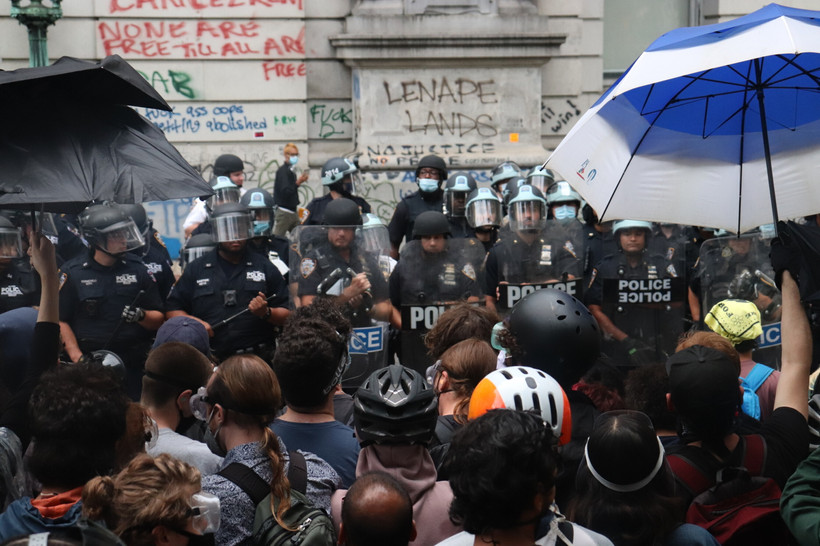
The next morning, police showed up to raid the encampment. The protesters wouldn’t leave; using umbrellas, police barriers, and their bodies, they fought off the cops. The encampment lasted another three weeks, until the NYPD razed it in a surprise overnight raid.

An NYPD officer guarding City Hall looks through a gate at the protest encampment on June 26, 2020. | Chris Gelardi
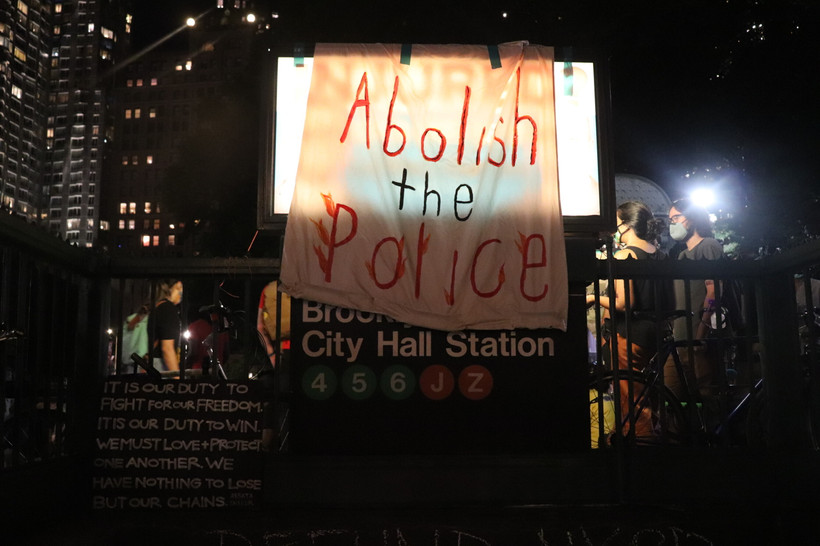
Demonstrators drape a sign over the subway entrance at the City Hall protest encampment, June 24, 2020. | Chris Gelardi
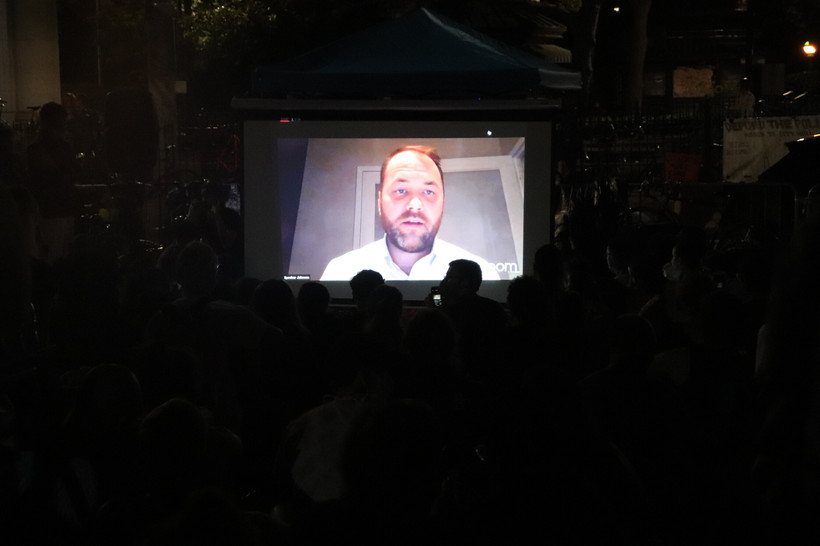
Demonstrators watch the final New York City Council annual budget hearing from the City Hall protest encampment on June 30, 2020. | Chris Gelardi
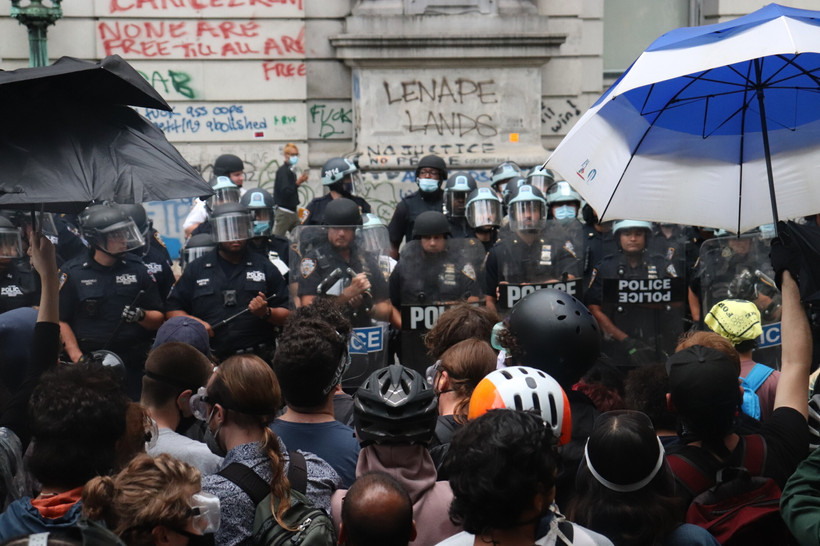
Demonstrators defend the City Hall protest encampment from an NYPD raid during the early morning hours of July 1, 2020. | Chris Gelardi
As the protests tapered off and the US experienced a Covid-era spike in reported crime, nationwide support for the 2020 movement fell — to just over half — according to Pew research. The drop in support coincided with a lack of faith that the movement would bring about change: Over half of Pew respondents in fall 2020 thought the protests would lead to changes that would improve racial inequality, whereas nearly three-quarters responded earlier this year that the protests failed to bring about those changes.

In New York City, little changed when it came to policing, and the NYPD today is operating much as it was before the protests. The department’s operating budget still hovers just shy of $6 billion, while it blows further past its overtime allotment every year; last fiscal year, it spent just shy of $1.1 billion in overtime alone. Stop-and-frisks have sharply risen, meanwhile: Though nowhere near the levels seen in the 2000s and early 2010s, recorded stops have tripled under Mayor Eric Adams, who has also launched his own street policing initiatives like a recent “quality of life” division that’s tasked with ticketing for petty violations.

Protesters hold up a New York City Democratic Socialists of America-branded sign on October 17, 2020. | Chris Gelardi
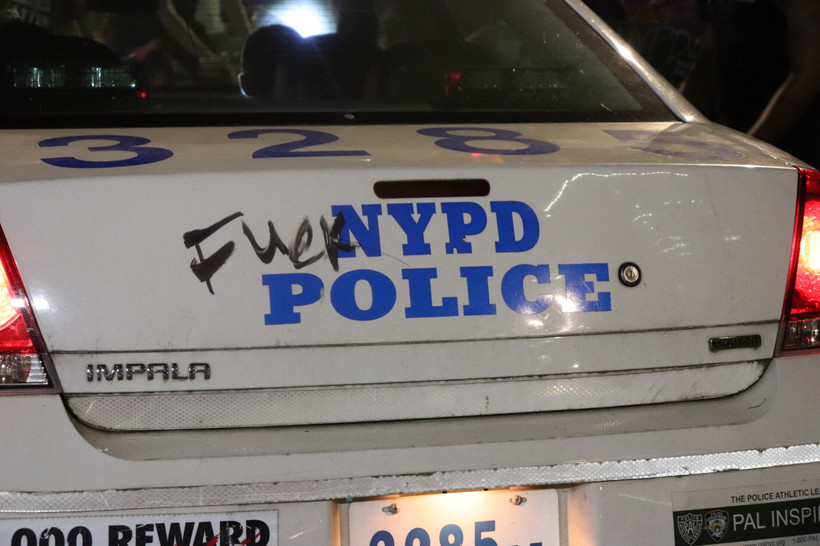
A graffitied NYPD car, August 24, 2020. | Chris Gelardi

BEFORE YOU GO, consider: If not for the article you just read, would the information in it be public?

Or would it remain hidden — buried within the confines of New York’s sprawling criminal-legal apparatus?

I started working at New York Focus in 2022, not long after the outlet launched. Since that time, our reporters and editors have been vigorously scrutinizing every facet of the Empire State’s criminal justice institutions, investigating power players and the impact of policy on state prisons, county jails, and local police and courts — always with an eye toward what it means for people involved in the system.

That system works hard to make those people invisible, and it shields those at the top from scrutiny. And without rigorous, resource-intensive journalism, it would all operate with significantly more impunity.

Only a handful of journalists do this type of work in New York. In the last decades, the number of local news outlets in the state has nearly halved, making our coverage all the more critical. Our criminal justice reporting has been cited in lawsuits, spurred legislation, and led to the rescission of statewide policies. With your help, we can continue to do this work, and go even deeper: We have endless ideas for more ambitious projects and harder hitting investigations. But we need your help.

As a small, nonprofit outlet, we rely on our readers to support our journalism. If you’re able, please consider supporting us with a one-time or monthly gift. We so appreciate your help.

Here’s to a more just, more transparent New York.

Chris Gelardi
Justice Bureau Chief
A photo of Chris Gelardi
As New York Focus’s justice bureau chief, Chris Gelardi reports and edits work on the state’s criminal-legal and immigration systems. His writing on cops, jails, ICE, and the US military has appeared in more than a dozen other outlets, most frequently The Intercept… more
Also filed in Criminal Justice

It’s unclear whether the Correctional Association of New York will have to scale back its nascent reform initiatives.

The legislation comes after months of haggling over how best to protect New Yorkers from President Trump’s immigration crackdown.

Footage published by New York Focus sparked a debate over deputies’ practice of calling Border Patrol on Spanish-speaking drivers.

Also filed in New York City

Resorts World is floating legislation to avert more than $500 million in payments to the horseracing industry.

Some of the city’s new aid will be canceled out by pension boosts.

The Department of Justice has terminated more than 100 immigration judges since last year as it has pressured courts to order more deportations.