Now may be an especially bad time to get laid off in New York.
Now may be an especially bad time to get laid off in New York. ·  View in browser
NEWSLETTER
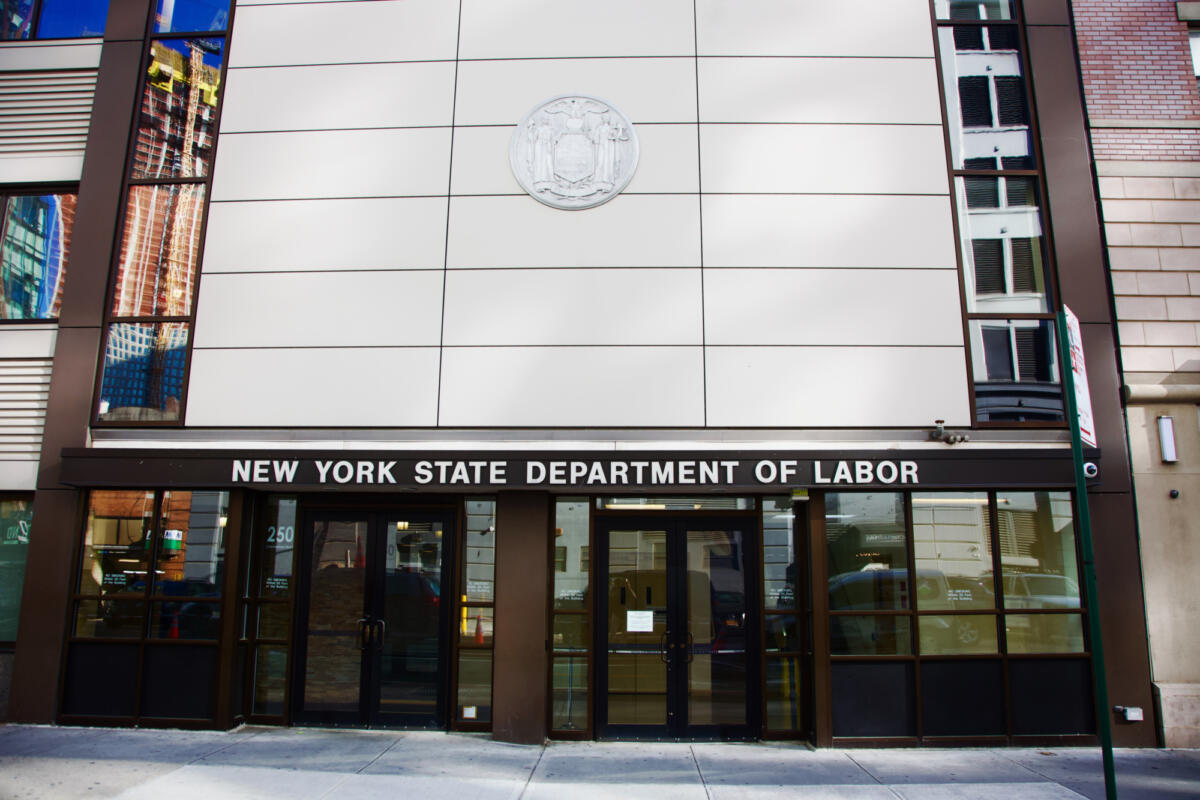
The New York State Department of Labor office in Brooklyn, New York. Maxwell Parrott
The compromise would reduce business taxes and raise the benefit level, but leave the program inadequately funded.
By Julia Rock

It is never a good time to lose your job — but now may be an especially bad time to get laid off in New York.

That’s because the state’s unemployment benefit has been frozen for six years, so the maximum weekly payment is $504. That’s less than a full-time salary at the state’s minimum wage, and also lower than the benefit in neighboring Massachusetts, New Jersey, Connecticut, and Pennsylvania.

In every state across the country, unemployment benefits are funded by a payroll tax on businesses. And even though New York’s benefit is low, businesses complain that the tax is too high.

New York borrowed billions of dollars from the federal government to sustain its unemployment system during the Covid-19 pandemic, and it’s still paying that money back. That means higher taxes for businesses — to pay off the debt — and fiscal pressure that keeps the benefit rate for workers frozen.

Last week, the Assembly proposed paying off the entire more than $6 billion employment debt using the state’s reserves.

“Let’s use those funds,” said Assembly Labor Committee Chair Harry Bronson, who is championing the proposal. “If we don’t do anything now, we are going to have even more serious problems when the economy goes downward,” he said, referencing predictions of a possible recession this year and what Bronson said is economic uncertainty caused by “what is happening at the federal level.”

Recent Stories

Akash Mehta, Colin Kinniburgh and Bianca Fortis sit at the conference table at the New York Focus office in Brooklyn. Alex Arriaga
A peek behind the curtain of how our reporters were able to analyze hundreds of pages of complicated budget documents (without losing their minds).
By Alex Arriaga

If you’ve kept up with us this week, you might have noticed that with the onset of state budget negotiations, this is the busiest time of the year for state government reporting.

Our team of reporters dug into the differing state proposals, and I asked a few of them about their process ...

The biggest winners from the proposed break make well above New York’s median income.
By Sam Mellins

At the center of Governor Kathy Hochul’s agenda this year is what she bills as a “middle-class tax cut” — but about half of those cuts will go toward New Yorkers who by some measures aren’t considered middle class.

According to an analysis shared with New York Focus by the liberal think tank Fiscal Policy Institute, the top 20 percent of earners statewide would receive the largest share of the tax cut’s benefits. More than half of the savings for joint filers would go to households making over $154,000 — nearly twice the state’s median household income. A commonly cited income cutoff for middle-class households, meanwhile, is just under $163,000.

“This is much more valuable for higher income households,” said Nathan Gusdorf, executive director of FPI. “It’s really an upper middle class tax cut, even though it’s been billed as something for working people.”

Renay Lynch of Buffalo, New York, was exonerated on January 5, 2024. Photo taken February 6, 2025. Brandon Watson / New York Focus
In New York, half of CIU exonerations involve prosecutorial misconduct, but DAs rarely acknowledge who got it wrong.
By Ryan Kost and Oishika Neogi

The call came one morning last year as Renay Lynch sat alone in her living room, organizing papers from her more than 25 years in prison for a memoir she hoped to write. Now Lynch had an ending.

“You are fully exonerated,” her lawyer said.

Lynch had been waiting to hear those words in the months since her defense team began negotiating with the Erie County District Attorney’s Office over a motion to reverse her decades-old murder and robbery convictions.

A reinvestigation of her criminal case, conducted by the DA’s conviction integrity unit and Lynch’s attorneys, identified previously undisclosed evidence pointing to Lynch’s innocence and raised questions about the original prosecutor’s conduct.

Speaking with her lawyer from her Buffalo home, Lynch broke down in tears. “It was unbelievable because we had fought and fought … and it was like nothing was happening,” she recalled.

But the deal came at a price. The DA agreed to back Lynch’s motion for exoneration on one condition: She had to abandon any claims of prosecutorial misconduct.

New York Focus and Columbia Journalism Investigations (CJI) have spent a year digging into the state’s 17 conviction integrity units, or CIUs. The investigation revealed a model that has failed to deliver on its promise: Nearly half of units have yet to produce a single exoneration, investigators have sometimes bowed to pressure to protect their colleagues, and at least 27 defendants whose convictions were denied help by CIUs had them overturned by the courts.

Copyright © New York Focus 2024, All rights reserved.
Staying Focused is compiled and written by Alex Arriaga
Contact Alex at alex@nysfocus.com

Feedback? Tips? Pitches? Contact us at: editor@nysfocus.com

Support our work!

Interested in sponsoring these emails? Get in touch! Email editor@nysfocus.com.

This email was sent to *|EMAIL|*

unsubscribe from this list  ·  update subscription preferences

New York Focus · *|HTML:LIST_ADDRESS_HTML|* · USA