
New York DAs rarely acknowledge prosecutorial misconduct in wrongful convictions.
| Source: National Registry of Exonerations, public statements, and media reports | Analysis: New York Focus and CJI | Chart: Leor Stylar
'I Stand in My Innocence'

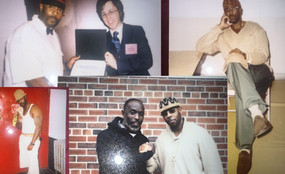
Photos of Renay Lynch before her 1998 wrongful murder conviction, February 6, 2025.
| Brandon Watson / New York Focus
‘Newly Discovered’ or ‘Previously Withheld’?
“As a lawyer, it’s so hard to tell innocent people to swallow these pills, and that the truth doesn’t matter.”
—Jane Fisher-Byrialsen, Renay Lynch's attorney


Renay Lynch with her grandsons LeMoyne Hill (left) and Raymar Moss (right), February 6, 2025.
| Brandon Watson / New York Focus
‘This Is a Bridge Too Far.’
An ‘Entirely Inappropriate’ Deal
“If you don’t make a record on this stuff and bring it out — ‘Look, there are Brady violations by this office’ — then they can continue to lie to the next person.”
—James Henning, Eric Smokes and David Warren's lawyer
A Lack of Accountability

George Bell (back left, with arm raised), Rohan Bolt (second from front), and Gary Johnson (front of photo) outside of the Queens Criminal Courthouse on the day of their exoneration in 2021.
| Klaus Enrique
The More Outside Scrutiny, ‘the Better’
“The idea any DA would say, . . . ‘No, we can’t support this if you’re going after one of our own,’ that, to me, is exactly like the blue wall of silence.”
—Steven Zeidman, City University of New York School of Law

Renay Lynch on the day of her exoneration, with her son Rinaldo Moss (right) and daughter Kito Hill (left).
| Courtesy of Rinaldo Moss