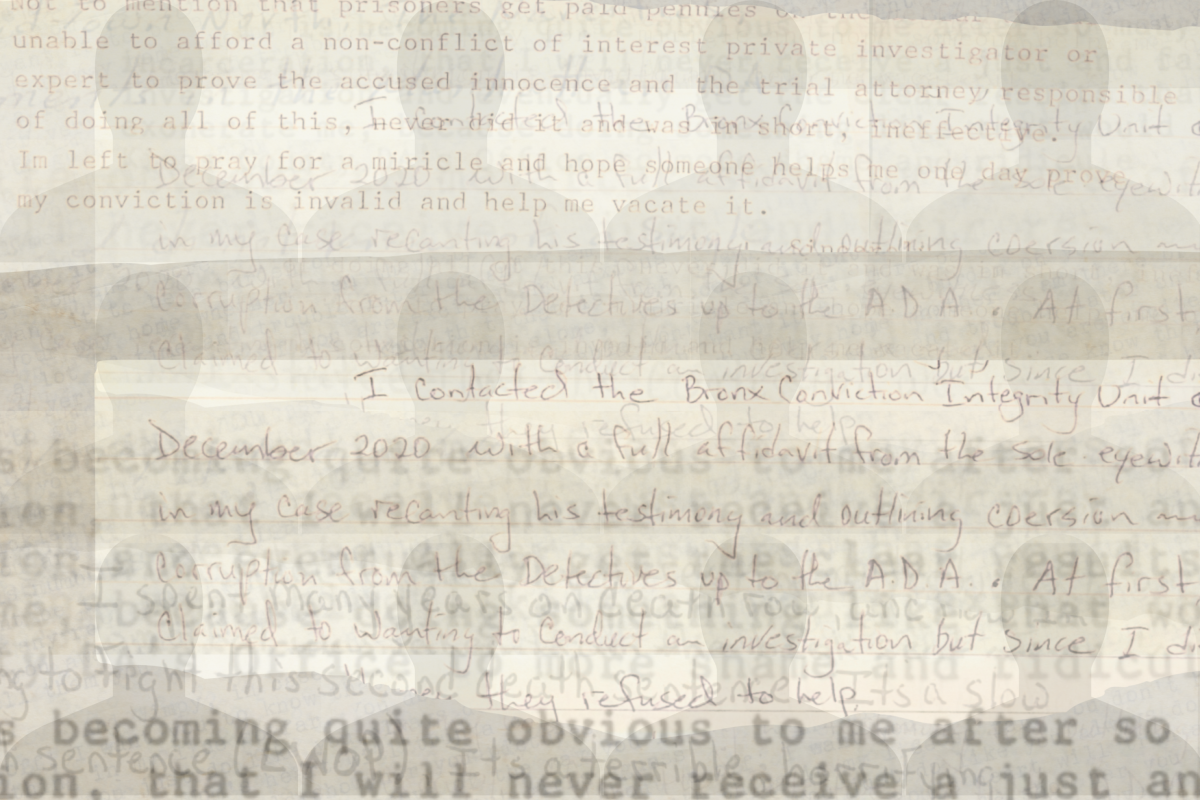
The letters paint a picture of a CIU process rife with roadblocks, especially for applicants who didn’t have lawyers.
The letters paint a picture of a CIU process rife with roadblocks, especially for applicants who didn’t have lawyers. ·  View in browser
NEWSLETTER

Funding local news is more important than ever, and it will take a village to succeed. Join us in our work to rebuild local journalism as a pillar of democracy in New York. From now until the end of the year, your gift will be matched and tripled.

Fifty-five people wrote to New York Focus and CJI about their experiences with CIUs. The letters paint a picture of a process rife with roadblocks. Letters: Respondents to New York Focus and CJI prison newsletter ad | Illustration: Leor Stylar
The letters paint a picture of a CIU process rife with roadblocks, especially for applicants who didn’t have lawyers.
By Oishika Neogi and Curtis Brodner

Terrell Eleby, a Brooklyn native incarcerated in New York’s Shawangunk Correctional Facility, wrote to a conviction review unit in Kings County in 2013, asking it to reinvestigate his murder and assault convictions. He claimed in part that police had threatened witnesses to keep them from testifying in his favor.

A decade would pass before he learned the unit rejected his application.

Chad Richards, currently behind bars at the same facility for possessing and selling cocaine, sought a conviction review from a similar unit in Ulster County in 2019. It promised to follow up with him in the “near future.”

Richards has yet to hear back.

And Luis Cherry, another incarcerated New Yorker, contacted a conviction integrity unit in Suffolk County in 2024, when he learned his accomplice’s attorney was disbarred for witness tampering after bribing Cherry to lie on the stand. Cherry claimed the incident had tainted his conviction.

Cherry hasn’t heard back, either.

None of the men had legal representation when they applied to a conviction integrity unit, or CIU. Like many incarcerated people, they either couldn’t afford to hire a lawyer or couldn’t convince one to take on their wrongful conviction claims. They applied on their own — what the justice system calls “pro se.” Without legal aid, they saw their county CIUs as one of their best shots at a fair reinvestigation into their cases.

They’d soon learn that the CIU system can be just as opaque and complex as the system that convicted them in the first place. Navigating the CIU process alone, Eleby, Richards, and Cherry were left wondering basic questions: Had the unit received their application? Was it reinvestigating their case? What was the outcome?

Recent Stories

The state, represented by the office of Attorney General Letitia James, argued that the typos created a “jurisdictional defect” in the case. Illustration: Hell Gate
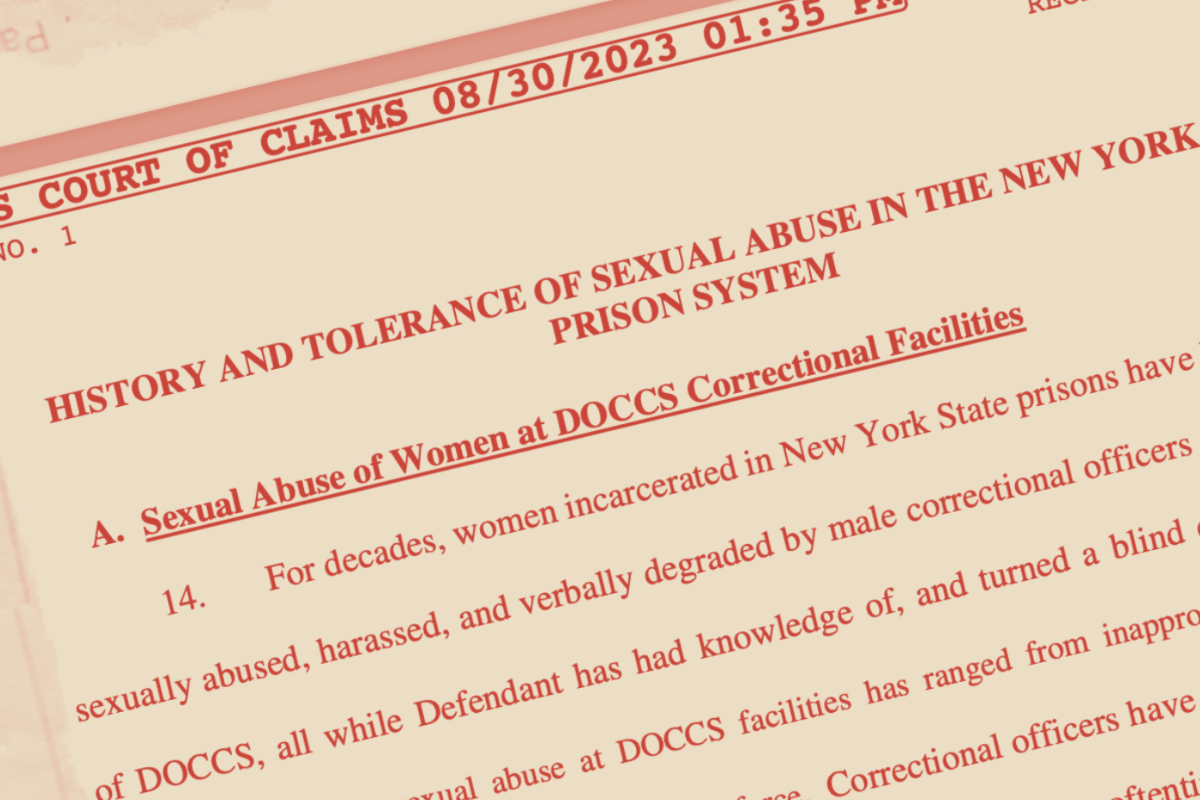
The state plans to ask a court to dismiss some 500 prison sexual assault lawsuits for not strictly abiding by filing requirements.
By Chris Gelardi and Jessy Edwards

Ernastiaze Moore knew the name of the state prison guard who he alleges sexually assaulted him on two separate occasions at Sullivan Correctional Facility, where he was incarcerated. He remembered the dates of the abuse and the rooms where the attacks took place. His lawyers obtained video of one of the assaults and internal prison reports of both incidents.

His case seemed like exactly the type that the Adult Survivors Act was created for. The 2022 state law temporarily allowed sexual assault victims to bring civil suits against their alleged abusers outside of the typical statute of limitations, which would have required Moore to begin filing within 90 days.

In November 2023, Moore’s lawyers filed his lawsuit. But a judge dismissed his case before it could get off the ground. The reason: The complaint misstated the year the alleged abuse took place.

Moore’s lawyers were taken aback. The errors were mere typos, they said. A guard had made the same mistake in two of the state prison agency’s internal reports about the incidents, miswriting the date of one as January 2022, rather than 2023. The attorneys asked the judge to let them amend the complaint, a common practice in lawsuits, but the state, represented by the office of Attorney General Letitia James, argued (in a filing that misspelled the judge’s name) that the typos created a “jurisdictional defect.” Court of Claims Judge Catherine Schaewe agreed.

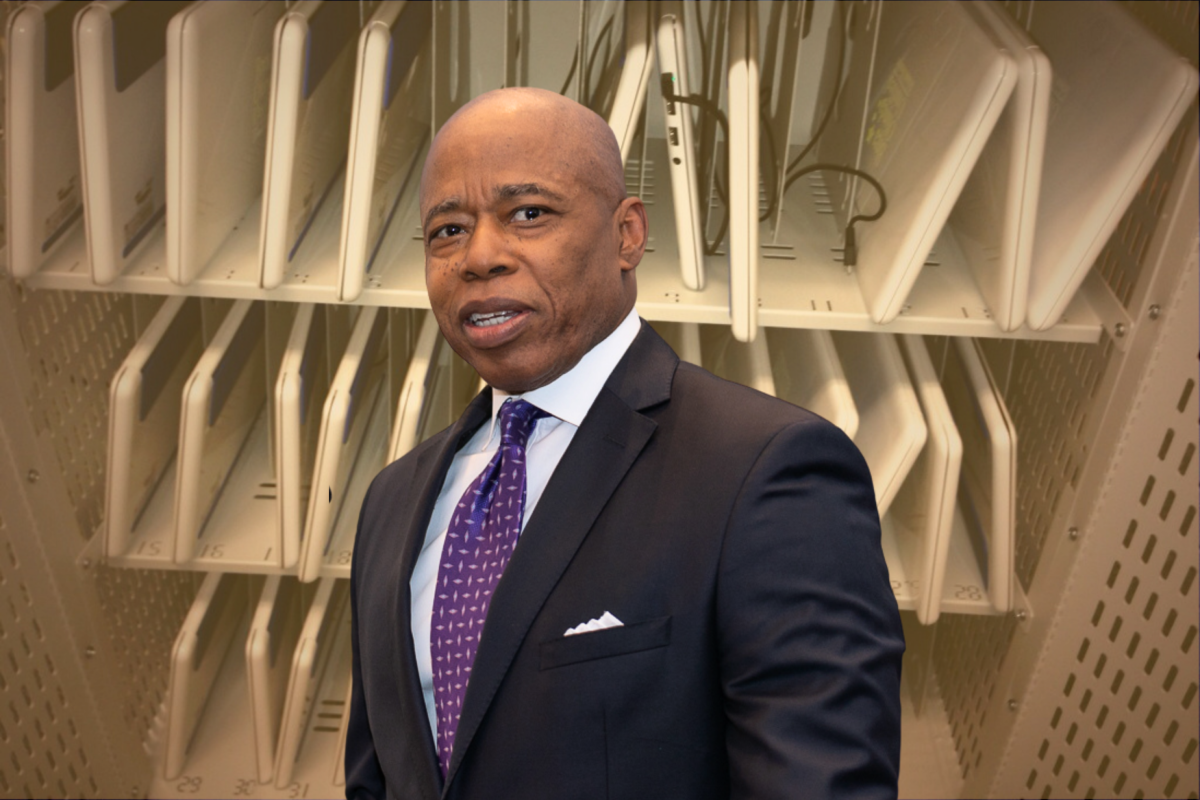
The effects of school-provided Chromebooks on student learning have been hotly debated. Photos: Alice Keeler, NYC Mayor's Office | Illustration: Leor Stylar
The Adams administration is shelling out north of $320 million to give public school students Chromebooks that connect to the internet through cell service. Most already have internet at home.
By Zachary Groz
Renewables projects face key hurdles, including New York state’s new wetlands rules, as developers race to beat President Trump’s quickly approaching federal subsidy deadline. Photos: Office of Governor Kathy Hochul; Jim Patrick/Pexels | Illustration: Leor Stylar
Recently adopted environmental regulations have added months to New York’s already yearslong energy permitting process, colliding with new deadlines for federal subsidies.

By Colin Kinniburgh

If you didn’t know better, you might think you were looking at a patch of tall grass.

But it might actually be a wetland — an increasingly rare ecosystem and buffer against flooding.

For the dozens of solar developers rushing to qualify for federal subsidies that President Donald Trump is phasing out next year, finding out the answer could make the difference between building a project or not.

Copyright © New York Focus 2024, All rights reserved.
Staying Focused is compiled and written by Alex Arriaga
Contact Alex at alex@nysfocus.com

Feedback? Tips? Pitches? Contact us at: editor@nysfocus.com

Support our work!

Interested in sponsoring these emails? Get in touch! Email editor@nysfocus.com.

This email was sent to *|EMAIL|*

unsubscribe from this list  ·  update subscription preferences

New York Focus · *|HTML:LIST_ADDRESS_HTML|* · USA