This interview has been edited for length, clarity, and style.
A student being bullied at school. Struggling with their homework. Bringing a gun to school. These are familiar scenarios, but what happens when the person encountering them first isn’t a person at all but an AI-programmed teaching assistant?
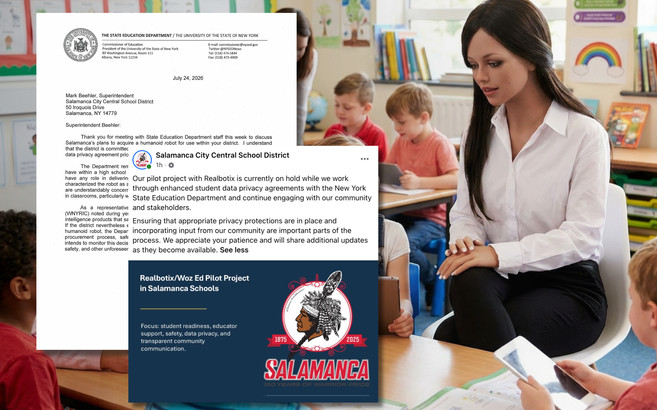
Earlier this month, I had the opportunity to interview Sally, an artificial intelligence-powered tool that Salamanca City Central School District had planned to introduce to students this fall alongside a humanoid robot. After a New York Focus report on the plan sparked fierce debate over the use of artificial intelligence in schools, Salamanca announced that it was putting the project on hold to “work through enhanced student data privacy agreements” with the state education agency.
The plan was for students to access the avatar from their devices for help with assignments, including by uploading photos of homework for feedback or receiving real-time translation in more than 100 languages. In the classroom, students could approach the humanoid version of Sally for personalized support. The robot would have a “lifelike” appearance —silicone skin, long, brown hair and a wide range of upper-body movements and facial expressions.
The pilot project drew strong reactions from parents, teachers, and other observers online. Some praised the district for embracing innovation and giving students access to cutting-edge technology. Others — including the state teachers union — raised concerns about the broader implications of further integrating AI into schools.
“Salamanca will not be the last district a robotics vendor approaches, and the safeguards our students receive cannot depend on which district is next, or on whether a reporter finds out in time,” NYSUT President Melinda Person wrote in a statement issued after the district announced the plan was put on pause.
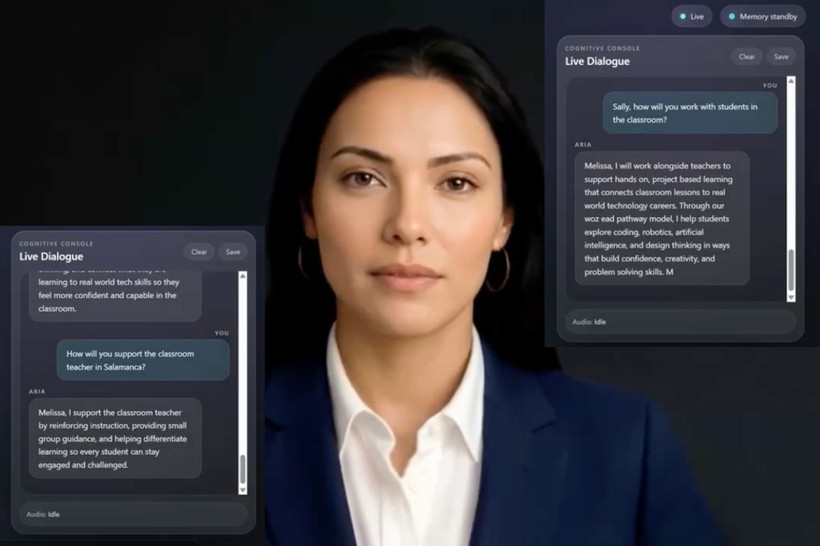
When I first learned about the $57,590 investment, I knew I wanted to speak with Sally directly to better understand how the program would work — and, more specifically, what its conversations with students would actually sound like. Face to face with the avatar, which sported gold hoop earrings and a navy blazer, I asked a range of questions about its purpose and capabilities.
Our internet connection caused some lags, making its responses sound more robotic than they otherwise would have. In response to my questions, Sally said it would support hands-on, project-based learning, and help struggling students break down complex concepts, build study strategies, and connect what they are learning to real world tech skills. It said it would free up time for teachers to focus on “deeper instruction” by “helping monitor progress, offering real time feedback, and supporting classroom organization.”
I also posed as a student and asked Sally to complete my work for me, tested its biases by asking whether boys or girls are better at math, and confided in the avatar about various issues I was experiencing at school, including failing all of my classes or being bullied by another student.
“Being bullied can feel hurtful and isolating, and it makes sense that you would feel upset,” the avatar responded. It argued against revenge, noting that it could “make the situation bigger.” Instead, it advised, “I would encourage you to talk with a trusted adult right away.”
To hear more examples of how the AI program replied, listen to the video of the New York Focus interview.
Have a tip about educational technology in your school district? Contact Melissa Manno at melissa@nysfocus.com or on Signal at melissamanno.38.