18-year-old Carlos Guerra Leon arrived home Friday after nearly three months in ICE detention.
18-year-old Carlos Guerra Leon arrived home Friday after nearly three months in ICE detention. ·  View in browser
NEWSLETTER

Funding local news is more important than ever, and it will take a village to succeed. Join us in our work to rebuild local journalism as a pillar of democracy in New York.

Carlos Guerra Leon, right, and his attorney Bridget Pranzatelli in Alexandria, Louisiana, after Guerra Leon’s release from immigration detention. Courtesy of Daysi Guerra Leon
After nearly three months behind bars, Carlos Guerra Leon spent an extra night in a Louisiana detention center after officers and local ICE officials said they didn’t get the court’s order.
By Isabelle Taft

An 18-year-old New Yorker arrived home Friday after nearly three months in Immigration and Customs Enforcement detention in Louisiana following a federal judge’s order for his release. ICE had arrested the teenager even though he had a legal status protecting him from deportation; the judge, an appointee of President Donald Trump, called his confinement “unlawful.”

Carlos Guerra Leon, whose case was first reported by New York Focus, has Special Immigrant Juvenile status, or SIJ, a protection for immigrant children who have been abused or neglected. Under the Biden administration, SIJ recipients were automatically considered for deferred action, a type of deportation protection that also allows them to apply for work permits. The Trump administration formally stopped granting deferred action to SIJ recipients in June — but it didn’t strip it from those like Guerra Leon who already had protection.

Unless the Trump administration terminates his deferred action, ICE can’t deport Guerra Leon, US District Judge Terry Doughty wrote in his decision.

Contributions to Andrew Cuomo’s mayoral campaign from Rabbi Marc Schneier and his five-year-old son were made using two separate American Express cards. Photos: Diana Robinson/Flickr; rattanakun/Canva | Illustration: Leor Stylar
A child’s donation highlights New York’s City’s straw donor headaches.
By Chris Bragg

Recent Stories

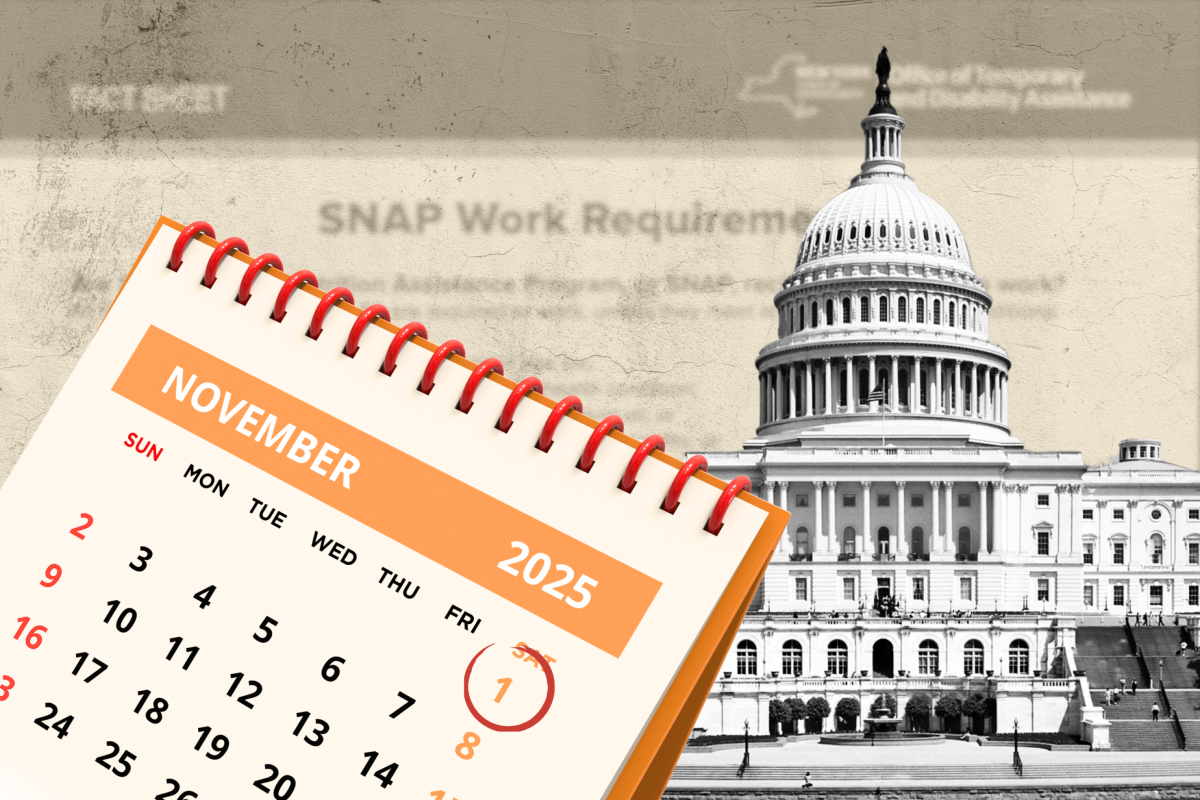
It’s likely that people enrolled in SNAP will see a delay or not receive benefits for the month of November due to the ongoing government shutdown. Photos: Ottojula/Wikimedia Commons; Oba San/Canva | Illustration: Leor Stylar
The federal government shutdown and new work requirements will throw New York’s food stamps program into chaos.
By Jie Jenny Zou

If you’re one of the nearly 3 million New Yorkers currently enrolled in the Supplemental Nutrition Assistance Program, you are likely to see delays in your food benefits next month as a result of the ongoing federal government shutdown. You may also be subject to new work requirements, which could cause hundreds of thousands of New Yorkers to lose their benefits.

That could trigger a hunger crisis. The average enrolled New York household receives $376 per month from the program, which is also a significant source of revenue for the state’s retailers and farmers. Governor Kathy Hochul is facing calls to fund food benefits during the shutdown, but she has so far said the state can’t afford to.

Here’s what you need to know.

Hochul indicated she plans to appeal the ruling and seek a deal with the legislature to amend the climate law. Photos: Paul Van Der Werf/Flickr; Office of Governor Kathy Hochul | Illustration: Leor Stylar

“We have time to work it out,” Governor Kathy Hochul said.
By Colin Kinniburgh

Governor Kathy Hochul is digging in after a state court ruled Friday that New York is violating its flagship climate law and ordered the state to comply. Rebuffing the judge, she is gearing up for a rematch in the courts and a potential showdown over the state’s green energy transition during next year’s legislative session.

Ulster County Supreme Court Judge Julian Schreibman gave Governor Kathy Hochul’s administration until February 6 to issue regulations that would “ensure” the state meet emissions targets set out in the law. They include a 40 percent reduction in emissions by 2030, which the state estimates it is at least six years behind on.

“It’s a complete shit show”: months after a guard strike, some prisons are still barely functioning. Photo: Ron Lach/Pexels
Many incarcerated New Yorkers say the new normal is endless lock-in.
By Chris Gelardi

Everything is under control, lawyers for the state prison system told a judge last week: “At this time, general population across the state is operating as normal.”

That’s news to the nearly 1,200 men incarcerated at Auburn Correctional Facility.

Prisoners at Auburn are going stir-crazy. Classes, programs, and jobs at the maximum security facility in Cayuga County are mostly canceled. Aside from meal time, people in general population units get an hour out of their cells every other day, according to two incarcerated people — the only time they’re given to shower, purchase items from the commissary, and exercise or socialize in the recreation area.

“This place is a circus,” said Naythen Aubain, who’s incarcerated at Auburn.

Copyright © New York Focus 2024, All rights reserved.
Staying Focused is compiled and written by Alex Arriaga
Contact Alex at alex@nysfocus.com

Feedback? Tips? Pitches? Contact us at: editor@nysfocus.com

Support our work!

Interested in sponsoring these emails? Get in touch! Email editor@nysfocus.com.

This email was sent to *|EMAIL|*

unsubscribe from this list  ·  update subscription preferences

New York Focus · *|HTML:LIST_ADDRESS_HTML|* · USA