Prison officials are using a novel legal reading of the HALT Solitary Confinement Act to argue that it doesn’t apply to units where most people are incarcerated.
Prison officials are using a novel legal reading of the HALT Solitary Confinement Act to argue that it doesn’t apply to units where most people are incarcerated. ·  View in browser
NEWSLETTER

Funding local news is more important than ever, and it will take a village to succeed. Join us in our work to rebuild local journalism as a pillar of democracy in New York.

Prison commissioner Daniel Martuscello appeared to be taking some aspects of a solitary confinement law more seriously — until the guards went on strike. Screenshot: Department of Corrections and Community Supervision; Photo: Pixhook/Getty Images | Illustration: Leor Stylar
Prison officials are using a novel legal reading to argue that the HALT Solitary Confinement Act doesn’t apply to units where most people are incarcerated.
By Chris Gelardi

Zohran Mamdani made history, romping to a decisive victory over former Governor Andrew Cuomo in New York City’s mayoral election. In January, he will become New York’s first Muslim mayor, first immigrant mayor in 50 years, and youngest mayor in a century.

His election has captured attention far beyond New York City. We want to hear from our readers across the state. What do you want to know about the incoming mayor?

Recent Stories

Nearly 3 million New Yorkers are enrolled in SNAP, with the average household receiving $376 per month in benefits. Photo: Atstock / Canva | Illustration: Leor Stylar
Hundreds of thousands of New Yorkers could lose their food benefits due to new SNAP work requirements, after the Trump administration phased them in months earlier than expected.
By Jie Jenny Zou

Strained social service departments across the state are scrambling to implement new work rules that suddenly went into effect this month for New Yorkers who rely on food assistance.

The requirements — which were enacted as part of a sweeping federal bill passed in July, but went into effect months earlier than expected — could result in hundreds of thousands of New Yorkers losing their access to the Supplemental Nutrition Assistance Program, also known as SNAP or food stamps.

The rushed rollout comes at a chaotic time for food assistance.

NESE is set to be New York’s first new gas pipeline in at least a decade, and by far the state’s largest expansion of fossil fuel infrastructure since passing its flagship climate law. Photo: Courtesy of Governor Kathy Hochul | Illustration: New York Focus
The Northeast Supply Enhancement pipeline had been rejected by environmental regulators three times but was revived this spring after talks between Hochul and Trump.
By Colin Kinniburgh

New York environmental regulators on Friday approved a major Trump-backed underwater gas pipeline in a U-turn for state energy policy.

The state Department of Environmental Conservation issued crucial water permits for the Northeast Supply Enhancement project, which it had rejected three times in the past.

At the same time, the DEC announced that the even larger Constitution pipeline, slated to cross New York into New England, would not move ahead. Both pipelines were priorities for President Donald Trump, who railed against Governor Kathy Hochul on social media earlier this week for moving too slowly on the projects.

Hochul said she stood by the DEC’s decisions.

“We need to govern in reality,” she said in a statement Friday. “We are facing war against clean energy from Washington Republicans, including our New York delegation, which is why we have adopted an all-of-the-above approach that includes a continued commitment to renewables and nuclear power to ensure grid reliability and affordability.”

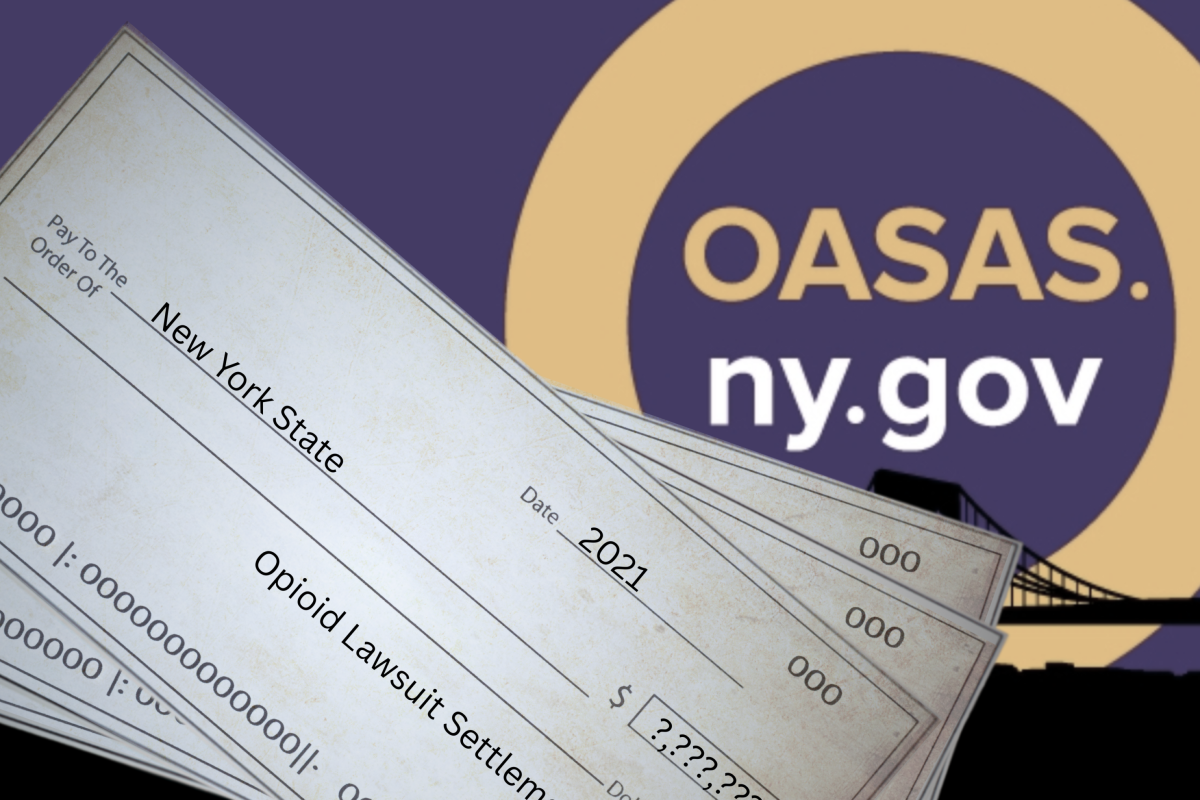
Members of the Opioid Settlement Fund Advisory Board say the state Office of Addiction Services and Supports, which administers the settlement funds, has been slow to respond to data requests. Logo: OASAS; Check: Billion Photos | Illustration: Leor Stylar
The board overseeing opioid lawsuit settlements is raising the alarm that New York could use the funds, which are meant to expand substance abuse initiatives, to backfill federal cuts.
By Jie Jenny Zou

The board advising New York on how to spend huge sums from opioid lawsuit settlements pressed Governor Kathy Hochul for greater transparency and faster action in its annual report released this week.

The state has received over $500 million from settlements reached with drug manufacturers for their role in the opioid crisis and is set to receive much more, including from a record $7.4 billion deal announced in January. The settlement funds consist of a complex mix of different pots of money, large portions of which the Opioid Settlement Fund Advisory Board oversees under state law.

But board members say the state Office of Addiction Services and Supports, which administers the funds, has been slow to respond to repeated requests for basic data, like how much of the money has made it to providers. Members have also been frustrated with the state’s routine rejection of their recommendations with little explanation.

“We don’t get any clear answers from the state,” said Ashley Livingston, a board member who has requested spending data since the body’s founding. “We’ve been asking for the same thing since June of 2022.”

Copyright © New York Focus 2024, All rights reserved.
Staying Focused is compiled and written by Alex Arriaga
Contact Alex at alex@nysfocus.com

Feedback? Tips? Pitches? Contact us at: editor@nysfocus.com

Support our work!

Interested in sponsoring these emails? Get in touch! Email editor@nysfocus.com.

This email was sent to *|EMAIL|*

unsubscribe from this list  ·  update subscription preferences

New York Focus · *|HTML:LIST_ADDRESS_HTML|* · USA