Plus: What has changed in the five years since the uprising against the NYPD?
Plus: What has changed in the five years since the uprising against the NYPD? ·  View in browser
NEWSLETTER

Funding local news is more important than ever, and it will take a village to succeed. Join us in our work to rebuild local journalism as a pillar of democracy in New York.

For years, Rochester police and city officials have attempted to conceal information about police violence and misconduct, including in the case of Daniel Prude’s death. Photo: Tiero / Canva | Illustration: Leor Stylar
A Monroe County judge stripped the PAB of its power to investigate and report incidents of police misconduct.
By Nathan Porceng

For years, Rochester police and city officials have attempted to conceal information about police violence and misconduct, including in the case of Daniel Prude’s death.

City residents voted to create the Police Accountability Board to improve police transparency and accountability.

But political winds have shifted in the half-decade since the Rochester board’s formation, the police killings of Prude and George Floyd, and the nationwide push for change that followed.

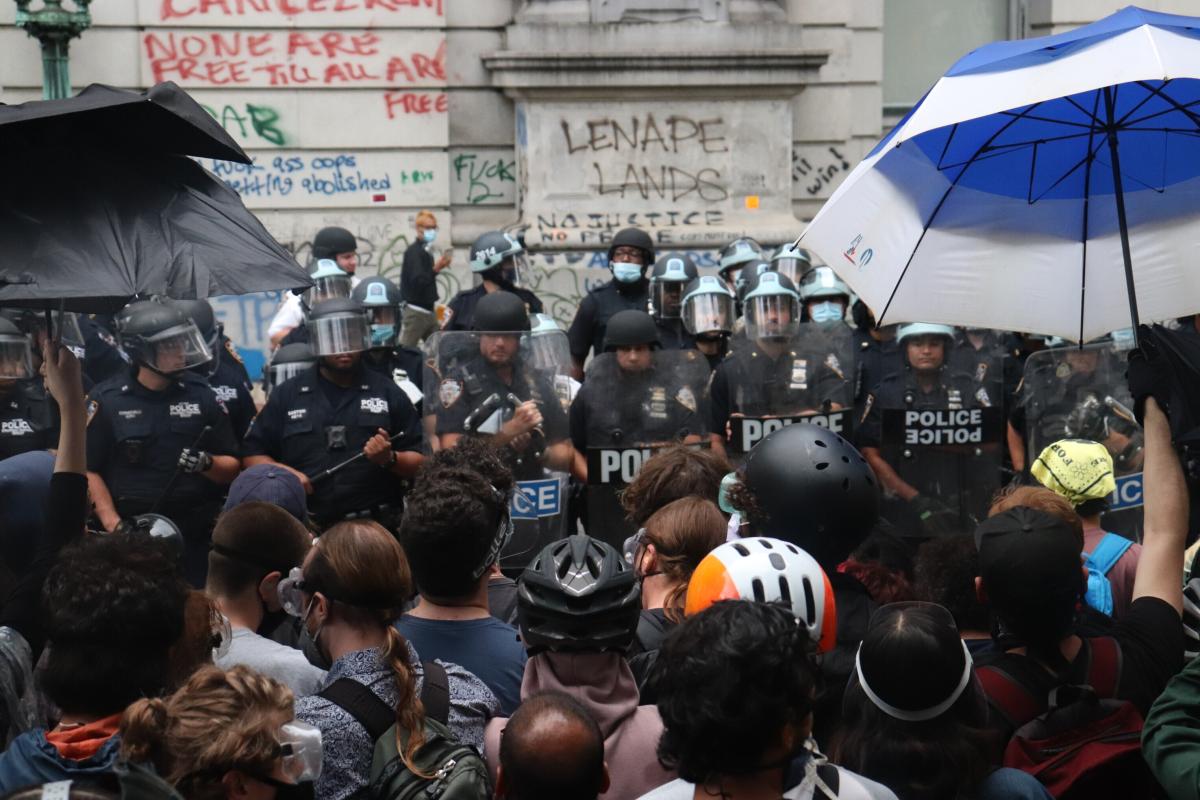
Demonstrators protect a protest encampment against an NYPD raid outside New York City Hall on July 1, 2020. Chris Gelardi
Previously unpublished photos and video show how protesters set up encampments, burned police vehicles, and marched almost daily. Today, the NYPD operates much as it did before the movement.
By Chris Gelardi

On May 28, 2020, in the midst of the worst pandemic in a century, tens of thousands of people began flooding onto the streets of New York City. They joined millions across the country who’d risen up to protest Minneapolis cops’ killing of George Floyd and demand smaller, less violent, more accountable police forces.

Five years later, New York City’s mayor is a former cop, and the New York City Police Department eats up as many resources as it did before the protests. Though it’s a mayoral election year, no candidate has pledged to alter that.

Previously unpublished photos and video offer a look back at New York City’s role in the 2020 Black Lives Matter protest movement — one of the largest in United States history.

Has anything changed?

Recent Stories

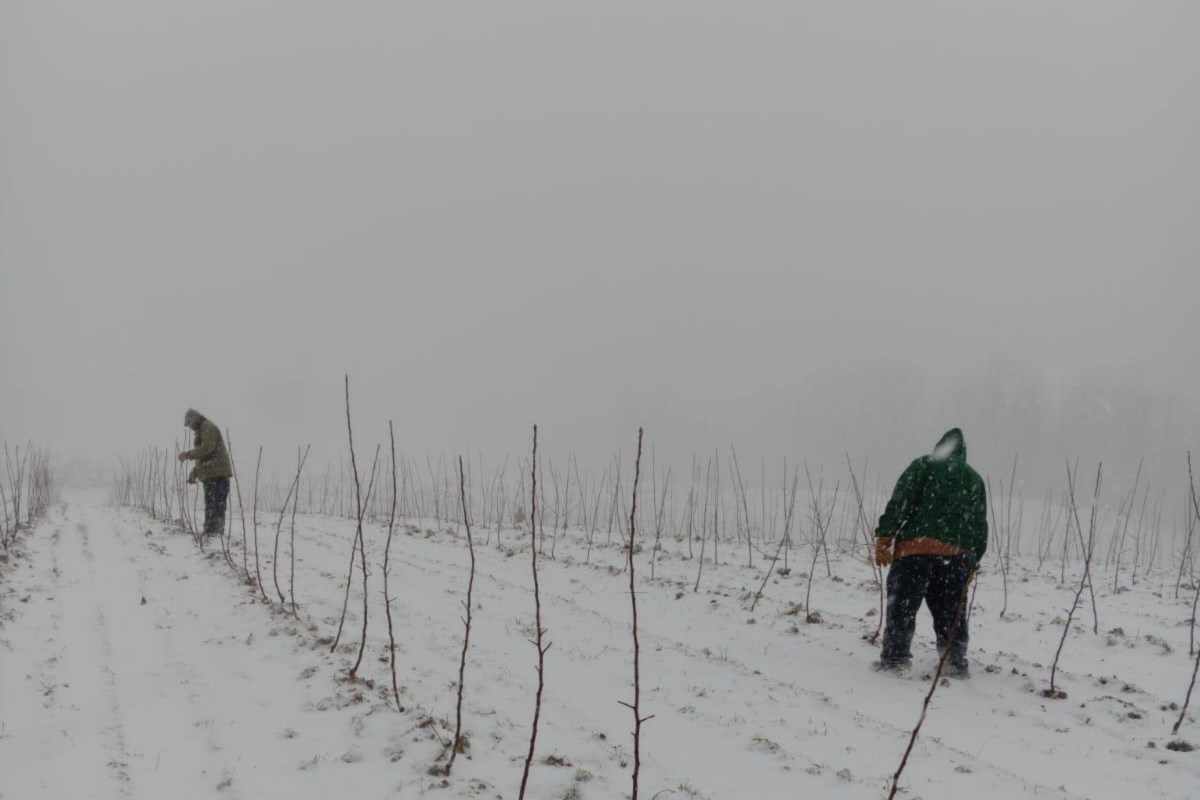
Workers cultivate seedlings at Wafler farms. Courtesy of a Wafler Farms worker
New York’s farm labor law was meant to transform life for agricultural workers. One apple farm shows how hard that may be.
By Julia Rock

Earlier this month, about a dozen workers arrived in Wolcott, a small town halfway between Rochester and Syracuse, to grow apple trees. At this time of year, farmworkers are grafting and budding — farmer-speak for fusing trees together — and planting long rows of seedlings.

They traveled to Wafler Farms, an apple orchard and fruit tree nursery, from Jamaica. Some have been making the journey for many years, living on the farm for up to three seasons and earning money to support their wives and send their children to school back home. It’s a precarious arrangement: They can only return to the farm, and therefore to the US, if their boss brings them back.

“Sometimes you have to see something being done wrong and shut your mouth — you can’t say nothing. Because if you say something, you just might not come back next year,” said Christopher, a seasonal worker who has been returning to the farm for a decade. (Four Wafler Farms workers spoke with New York Focus and asked to have their names changed to protect them from retaliation.)

Things were supposed to be different this year. A long-awaited union contract took effect in April, granting workers benefits including higher pay and the right to return each year if there is work for them.

So far, the contract is not being followed, according to the farmworkers.

Wafler Farms never agreed to the contract. The family-run farm refused to bargain with the union, which was formed in 2022 by a majority of the approximately 90 people working there during the peak of the harvest, and is affiliated with the United Farm Workers of America, a national labor union. So negotiations were moved to an independent arbitration process, as stipulated by state law. Wafler declined to participate in that process, as well, and a contract was finalized without the employer’s input.

It’s among the first few union contracts that farmworkers have won in New York since 2019, when the state legislature granted them collective bargaining rights as part of a package of landmark protections for agricultural workers. They are excluded from unionizing under federal law — a legacy of New Deal-era racial politics.

The fruit farm is now a testing ground for what workers can achieve under New York’s law, and how far the state will go to help them.

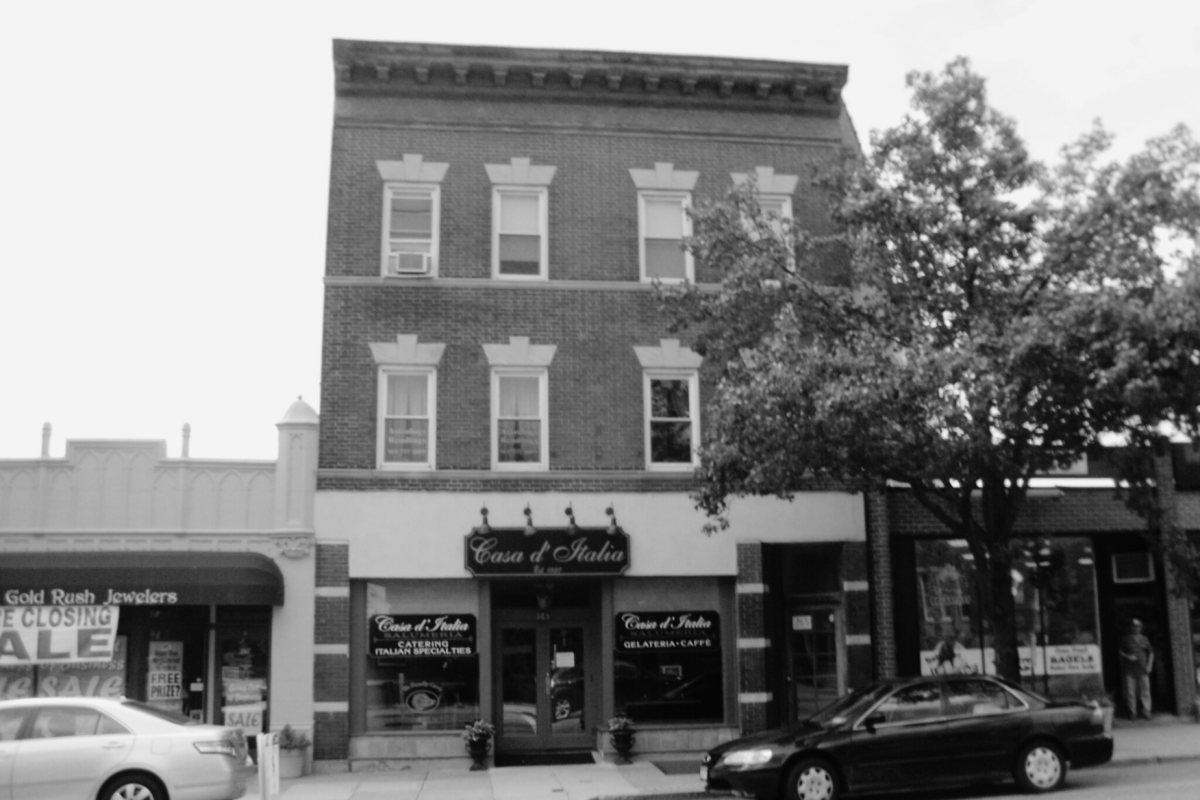
Richard Dionisio participated in multiple votes related to a controversial rezoning effort without publicly disclosing his financial interest.
By Chris Bragg

A Westchester County town’s top elected official helped advance a rezoning law that significantly increased the value of land he owned — then sold that land to a developer for nearly $3 million, reaping a substantial personal profit.

Records reviewed by New York Focus show Harrison Supervisor and Mayor Richard Dionisio participated in multiple votes related to a controversial rezoning effort without publicly disclosing his financial interest. He stepped aside from one key vote, but other actions potentially violate town ethics rules and raise conflict-of-interest concerns that have galvanized public opposition to the project.

Even before this revelation, a proposed housing project in the rezoned area had sparked pushback in Harrison, an affluent suburban town and village of about 30,000 that lies roughly 30 minutes northeast of The Bronx, with residents questioning the plan to build a six-story, 140-apartment tower in the midst of a floodplain.

Copyright © New York Focus 2024, All rights reserved.
Staying Focused is compiled and written by Alex Arriaga
Contact Alex at alex@nysfocus.com

Feedback? Tips? Pitches? Contact us at: editor@nysfocus.com

Support our work!

Interested in sponsoring these emails? Get in touch! Email editor@nysfocus.com.

This email was sent to *|EMAIL|*

unsubscribe from this list  ·  update subscription preferences

New York Focus · *|HTML:LIST_ADDRESS_HTML|* · USA