Rochester Police Accountability Board Loses Investigatory Powers

A Monroe County judge stripped the PAB of its power to investigate and report incidents of police misconduct.

Nathan Porceng   ·   May 28, 2025
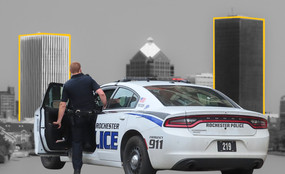
For years, Rochester police and city officials have attempted to conceal information about police violence and misconduct, including in the case of Daniel Prude’s death. | Photo: Tiero / Canva | Illustration: Leor Stylar

Sign up for Staying Focused, our newsletter keeping readers up to speed on New York politics.

Rochester’s all-civilian Police Accountability Board has had a rough go of it. After facing years of intense opposition from the local police union and city leadership, the board finally released its first investigative reports last fall, detailing misconduct by Rochester Police Department officers.

The board found officer wrongdoing in 22 of the misconduct incidents covered in its first round of reports, which included sustained complaints of wrongful arrests, unlawful searches, excessive force, illegal political activity, and falsifying records.

The PAB released the reports over four years after Daniel Prude died when Rochester police officers restrained him during a mental health crisis, sparking widespread protests in the city. Local advocates heralded the reports as a win for police transparency. But not everyone was happy with the development.

Rochester’s police union promptly filed a lawsuit in state court, arguing that the board doesn’t have the power to investigate complaints of officer misconduct, let alone publish its findings. Last month, Justice Joseph Waldorf of the Monroe County Supreme Court sided with the union.

“We’re very disappointed in the court ruling,” said Wanda Wilson, who helps lead the PAB Alliance, a coalition of community organizations supporting the board. She called the police union’s lawsuit “a tactic to make the PAB toothless.”

For years, Rochester police and city officials have attempted to conceal information about police violence and misconduct, including in the case of Prude’s death. City residents voted to create the PAB to improve police transparency and accountability. But political winds have shifted in the half-decade since the Rochester board’s formation, the police killings of Prude and George Floyd, and the nationwide push for change that followed. The PAB’s defeat signals that reformers still have a ways to go. Despite mounting public criticism, the RPD itself has done little to rein in and discipline abusive officers since then, advocates say.

“We’re not in a good place,” said Wilson. “This court ruling takes the city backwards.”

Captain Gregory Bello, the RPD’s public information officer, told New York Focus that the PAB’s reports “violated all kinds of law and policy” but declined to comment further. The city’s police union also declined to comment. The City of Rochester did not respond to New York Focus’s requests for comment.

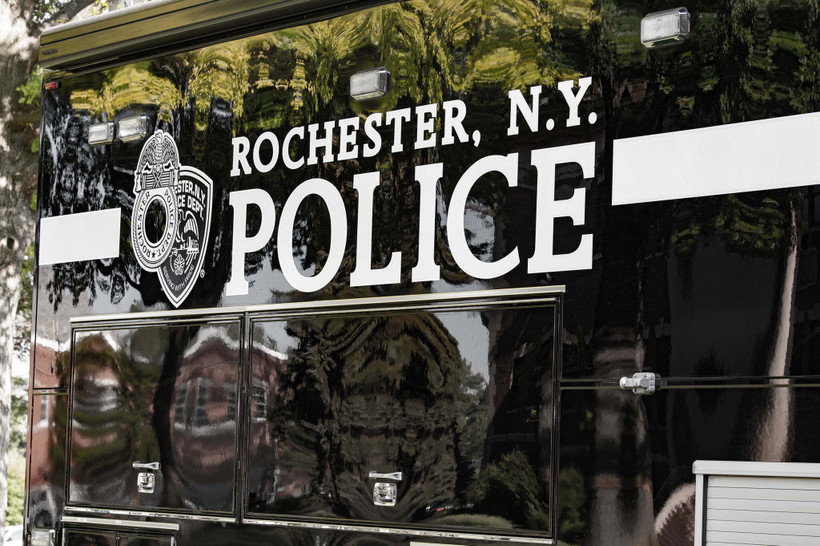
According to Police Scorecard, a national database evaluating police violence, bias, and accountability, the RPD’s internal investigators only found wrongdoing in 7 percent of the 417 civilian complaints the department received between 2016 and 2021. | Photo: Rochester NY Police Department


In 2019, after decades of police abuse and ineffective reforms, the Rochester city council passed legislation creating the PAB, which was approved later that year by public referendum. Victims of police abuse could file complaints directly with the board, which had the authority to investigate them, review evidence (such as body camera footage), and discipline officers for misconduct. Several New York municipalities have similar civilian oversight bodies with independent investigatory authority — including New York City and Albany — but the Rochester board’s disciplinary power was unique.

Rochester’s police union has strongly opposed the PAB since before its inception. When lobbying city lawmakers failed to stop its creation, the union pursued a legal campaign to eliminate the board’s authority to discipline officers. In 2023, the union’s lawyers convinced the Court of Appeals, New York’s highest court, to do just that. Despite the setback, the board stated it would still investigate misconduct allegations and recommend disciplinary measures to the RPD.

“Knowledge is absolutely power.”

—Lesli Myers-Small, Rochester Police Accountability Board

The police union later argued that was off limits, too. On November 1, the police union filed another lawsuit against the city, contending that the PAB does not have the authority to issue public reports on specific incidents of misconduct.

Rochester’s lawyers argued the union’s new lawsuit was “a transparent attempt to gain a second bite at the apple.”

The chief disagreement centered on how to interpret the court’s decision in the 2023 case, which ruled that the board couldn’t discipline officers but did not specify exactly what it could still do.

The union argued that the Court of Appeals had prohibited the PAB from any activities related to officer discipline — including investigating allegations of misconduct, issuing investigatory reports, and recommending disciplinary measures.

On April 28, Waldorf, the state court judge, agreed. The PAB could no longer investigate allegations of police misconduct nor publish investigatory reports.

“The PAB has essentially been stifled from doing their job,” said Jalil Muntaqim, a Rochester-based activist with Citizen Action of New York, a grassroots social justice organization that supported the PAB’s creation. “The courts are protecting the police and their abuse.”

At the time of the decision, the PAB had issued 43 investigative reports. In response to the ruling, the board removed the reports from its website (some were preserved by the Internet Archive’s Wayback Machine).

Rochester’s lawyers are appealing Waldorf’s decision.

If they wanted to, state lawmakers could intervene and perhaps end the PAB’s legal battles once and for all. Chief Judge Rowan Wilson, who dissented in the Court of Appeals’s 2023 decision, suggested that the state legislature could pass a bill overturning the decision. “If Rochester’s desire to establish an independent disciplinary commission is in fact consistent with state policy, the legislature may easily correct our error,” he wrote.

One such bill, sponsored by Assemblymember William Magnarelli, was introduced in 2021 but never made it out of committee. Diana Abdella, Magnarelli’s chief of staff, told New York Focus in an email that “there are no plans to reintroduce” it.

When the pab released its first reports last fall, Halima Aweis read them all. “I was horrified,” said Aweis, an activist with Free the People Roc, a police and prison abolition group.

The board had sustained misconduct claims in 22 incidents between 2020 and 2024, and recommended disciplinary measures in each instance — ranging from written reprimands to termination. Officer names were redacted.

In one report, the board sustained an allegation that an RPD officer performed an unwarranted “stop and frisk” search on a Black man in the Clifford Food Market. The man objected to the pat down, the report says, and insisted to the officer and their RPD partner that he had done nothing wrong. One of the officers announced to onlookers in the store, “You know what? Here’s what we’re going to do. We’re going to let all criminals go free, we’re going to stop looking for people, and then it will be a community problem.”

“I’m unsure, at least at the city level, if anything will change unless the people in the positions of power change.”

—Mary Lupien, Rochester City Council
In another, the board found that two police captains and one investigator engaged in illegal political activity on behalf of Republican politician and former RPD chief La’Ron Singletary during his 2022 congressional campaign. Singletary had resigned from the department two years earlier following accusations that he covered up the circumstances of Daniel Prude’s death.

The reports show that even seemingly minor incidents of police misconduct can have serious “snowballing” effects, Aweis said. She pointed to a report that describes the consequences of the RPD’s failure to document the recovery of a reportedly stolen vehicle. The report says that Maryland State Troopers later pulled the car over and, believing it stolen, allegedly handcuffed the driver at gunpoint, traumatizing children inside the car. An RPD officer later falsified a report to try and cover up the mistake.

Advocates commended the board for bringing police misconduct into the public eye. According to Police Scorecard, a national database evaluating police violence, bias, and accountability, the RPD’s internal investigators only found wrongdoing in 7 percent of the 417 civilian complaints the department received between 2016 and 2021.

The PAB’s reports prove “the community is not delusional” when it raises concerns about police abuse, Muntaqim said. But he doubts the RPD will actually discipline officers based on the board’s findings.

After years of setbacks and black eyes, PAB leadership hailed the reports as a meaningful step forward. Lesli Myers-Small, the board’s executive director, told New York Focus that informing the Rochester community about RPD misconduct is a crucial first step to reforming the department. “Knowledge is absolutely power,” she said.

But for now, the PAB’s power to investigate and report misconduct is gone.

The board has faced intense opposition not only from the city’s police union, but also Rochester Mayor Malik Evans.

City Councilmember Stanley Martin suggested to New York Focus that Evans — who supported the PAB’s creation during his time on the council — has prioritized protecting the city from lawsuits over police accountability. Police officer violence has been expensive for the city. In December, Rochester settled a $1.75 million lawsuit arising from the police response to the protests following Prude’s death. According to the PAB, the police department has paid $25 million in claims since 2012. The PAB’s reports could bolster future legal claims against the city.

Rochester’s corporation counsel Patrick Beath — an Evans appointee and the administration’s top lawyer — began pressuring the board to hold its reports in January 2024, according to Vanessa Cheeks, the PAB’s spokesperson at the time. She said Beath suggested the PAB could face an ethics inquiry if they did not comply.

The pressure continued into the fall, records show. Just before the PAB issued its first reports, Beath sent a letter to Myers-Small, the board’s executive director, with a similar warning. In the letter, obtained by New York Focus through a public records request, Beath said that Rochester’s charter permits the board to publish only data and statistical reports — the same argument the police union would soon use in its lawsuit (due to a conflict of interest, a hired law firm, not Beath, is representing Rochester in that case). He also said publishing the reports would violate a city code of ethics provision prohibiting the unauthorized disclosure of nonpublic information.

The PAB went ahead and published its reports anyway, prompting the city to issue a statement condemning the action and file a complaint with Rochester’s Office of Public Integrity. The city said that the release of misconduct allegations — whether or not they’ve been sustained by the board — “is dangerous” and could have “lasting impacts” on officers’ “personal and professional lives.” Paul Dondorfer, the police union’s executive vice president, told reporters at the time that the reports could place police officers, their neighbors, and children in physical danger.

“The PAB has essentially been stifled from doing their job. The courts are protecting the police and their abuse.”

—Jalil Muntaqim, Citizen Action of New York

Cameron McEllhiney, executive director of the National Association for Civilian Oversight of Law Enforcement, an organization that studies police accountability boards nationwide, told New York Focus that she’s not aware of any attacks on police officers or others resulting from independent misconduct reports. “That just really has not been something that we have seen.” Brianna Milon, a PAB spokesperson, told New York Focus there has been no violent backlash against RPD officers in the eight months since the board issued its first reports.

The PAB continued issuing reports. Meanwhile, another court ruling undercut the city’s claims. The Court of Appeals ruled this February in a separate case between Rochester and the New York Civil Liberties Union that even unsubstantiated police misconduct records are public.

After that ruling, the PAB voted to begin releasing unredacted reports moving forward, including officer names. But the victory was short-lived. Two months later, Waldorf stripped the board of its authority to investigate and report incidents of officer misconduct.

Now, the PAB once again faces an uncertain future.

City Councilmember Mary Lupien told New York Focus that the city council is focused on appealing Waldorf’s decision and restoring the PAB’s investigatory powers. If the appeal fails, she said the council will explore other options.

“We’re not in a good place. This court ruling takes the city backwards.”

—Wanda Wilson, PAB Alliance
“I’m unsure, at least at the city level, if anything will change unless the people in the positions of power change,” said Lupien. To that end, Lupien is challenging Evans in Rochester’s 2025 mayoral election. But she noted that reform-minded local lawmakers now need to contend with a national political climate that has shifted hard against police accountability since city residents first voted to create the PAB.

The same day Waldorf handed down his decision, the Trump administration released an executive order aimed at further shielding police from accountability. Among other measures, the order directed the Attorney General to provide legal resources to law enforcement officers, possibly including pro bono assistance from the elite private firms that have cut deals with the Trump administration. Trump’s order also threatened local officials who “willfully and unlawfully direct the obstruction of criminal law.”

Police reformers have faced backlash at the state level, too, where Governor Kathy Hochul has prioritized cracking down on gun violence and retail theft over police accountability. According to the Brookings Institution, a nonprofit think tank, New York enacted less than 3 percent of police reform legislation proposed between 2020 and 2024 (compared to 38 percent in California and 68 percent in Utah).

Half a decade after the PAB’s formation and Prude’s death, advocates say Rochester has failed to make real progress on policing. But Wilson says she and her allies “were not naive” when they started their work, and they always knew reform would be a struggle. “We still want the PAB to do the work they’re able to do and hang in there and fight.”

While the appeal is pending, Myers-Small has said the PAB has suspended all investigative activities, but will continue to recommend policy reforms and monitor complaints of police misconduct.

BEFORE YOU GO, consider: If not for the article you just read, would the information in it be public?

Or would it remain hidden — buried within the confines of New York’s sprawling criminal-legal apparatus?

I started working at New York Focus in 2022, not long after the outlet launched. Since that time, our reporters and editors have been vigorously scrutinizing every facet of the Empire State’s criminal justice institutions, investigating power players and the impact of policy on state prisons, county jails, and local police and courts — always with an eye toward what it means for people involved in the system.

That system works hard to make those people invisible, and it shields those at the top from scrutiny. And without rigorous, resource-intensive journalism, it would all operate with significantly more impunity.

Only a handful of journalists do this type of work in New York. In the last decades, the number of local news outlets in the state has nearly halved, making our coverage all the more critical. Our criminal justice reporting has been cited in lawsuits, spurred legislation, and led to the rescission of statewide policies. With your help, we can continue to do this work, and go even deeper: We have endless ideas for more ambitious projects and harder hitting investigations. But we need your help.

As a small, nonprofit outlet, we rely on our readers to support our journalism. If you’re able, please consider supporting us with a one-time or monthly gift. We so appreciate your help.

Here’s to a more just, more transparent New York.

Chris Gelardi
Justice Bureau Chief
A photo of Chris Gelardi
Nathan Porceng is a writer and journalist living in New York City. His work has appeared in Balls & Strikes, Grist, The Daily Beast, and more. Nathan grew up in Central New York and spent five years as a submarine officer in the… more
Also filed in Criminal Justice

It’s unclear whether the Correctional Association of New York will have to scale back its nascent reform initiatives.

The legislation comes after months of haggling over how best to protect New Yorkers from President Trump’s immigration crackdown.

Footage published by New York Focus sparked a debate over deputies’ practice of calling Border Patrol on Spanish-speaking drivers.

Also filed in New York State

State leaders are expected to pass a bill that avoids resolving how much Resorts World New York City needs to pay.

New York state has pumped millions of taxpayer dollars into an online portal that vowed to make life easier for Rochester’s neediest, but critics say it’s fallen short.

Resorts World is floating legislation to avert more than $500 million in payments to the horseracing industry.