An ICE raid shocks a small town — and highlights just how much NY's key industries depend on immigrant workers.
An ICE raid shocks a small town — and highlights just how much NY's key industries depend on immigrant workers. ·  View in browser
NEWSLETTER
The K-12 school in Sackets Harbor, New York, where three students and their mother were detained by immigration authorities last month. April 5, 2025. Photo: Julia Rock | Illustration: Leor Stylar
The detention of three children and their mother shocked the town. It also highlighted just how much the region’s key industries depend on immigrant workers.
By Julia Rock

Residents of Sackets Harbor, a small New York town that looks at Canada across Lake Ontario, have been reeling since federal immigration enforcement agents raided a dairy farm there last month. Agents detained three students enrolled in the town’s 400-student K-12 school — a third grader, tenth grader, and eleventh grader — along with their mother.

The raid “shocked” Jaime Cook, the school principal. Cook grew up in California’s agriculture-heavy Central Valley, where many workers are immigrants and circumstances like this were more familiar, she said. “It’s so shocking that it happened here,” she told New York Focus. “We’re not an immigration hub.”

Sackets Harbor may not be an immigration hub, but it is in farm country — and more specifically, dairy country. More than half of the workers on New York’s dairies are foreign-born, some experts estimate.

The raid there has foregrounded a fragile reality, which is that employers in some of the region’s key industries consider immigrant workers essential to their operations, but many are not legally authorized to work. While immigration enforcement has always loomed large over the industry, some farmers are anticipating a heightened threat to their workforces — and therefore to their businesses.

Recent Stories

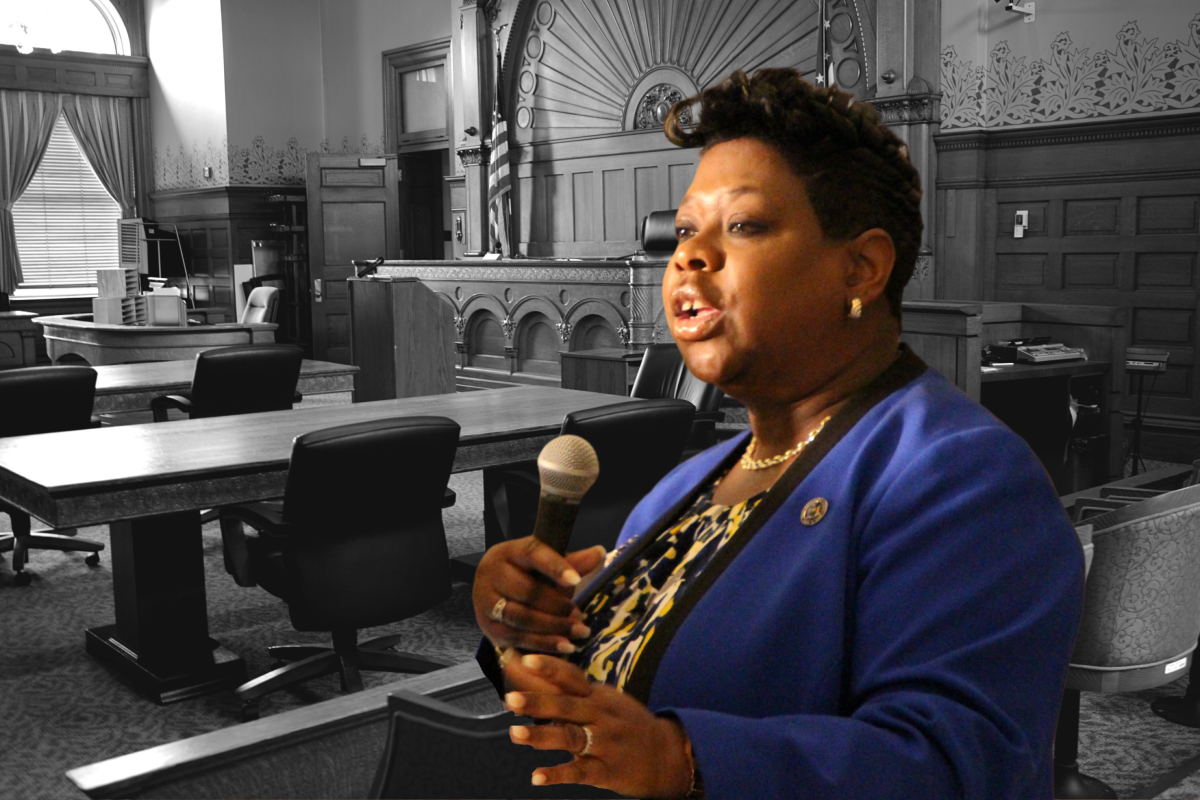
Judge Peter Kelly has ​run the Queens Surrogate’s Court for over 14 years. ​ Screenshot: New York state Assembly
A Queens court’s failure to reveal a romance has sparked accusations of bias.
By Chris Bragg

The young man had a key to unlock the suburban Nassau County home. That much was clear to the private investigator watching outside.

The key soon unlocked something else: a secret. It was exactly the kind of evidence the investigator’s client, Shannon Hynes, was looking for.

Hynes felt something was amiss in Queens Surrogate’s Court, where she was locked in an inheritance dispute with her brother. The judge overseeing her case kept taking actions that Shannon — a seasoned trial lawyer by trade — considered unusual. So she hired the investigator, who that day discovered the “smoking gun.”

The young man with the key was Zachary Zayas, principal law clerk to Judge Peter Kelly — the same judge overseeing Shannon’s case. And the key opened a house owned by Cheryl Katz — the attorney representing Shannon’s brother in the inheritance dispute.

Katz and Zayas were dating and living together. Neither the judge, nor the law clerk, nor the attorney disclosed this to Shannon.

Adding another layer of intrigue: the law clerk’s last name.

Joseph Zayas, Zachary’s father, is the state court system’s chief administrative judge — the highest-ranking administrative position within the sprawling state judiciary. He runs the daily operations of the state Office of Court Administration (OCA), overseeing a $3.7 billion annual budget, 3,300 judges, and 15,000 non-judicial employees. If Zachary were to be investigated for not disclosing his relationship, it would likely be by a court official appointed by his dad.

This was a clear violation of ethics rules governing state attorneys and judges, according to Cynthia Godsoe, a professor at Brooklyn Law School who specializes in both family law and professional ethics.

“There absolutely should have been disclosure by Katz and the judge,” Godsoe said. “It couldn’t be clearer. I’m just sort of astonished.”

Negotiations over the budget, which was due April 1, are ongoing, and the governor’s discovery rollbacks have been one of the biggest sticking points. Photos: Ruben Diaz Jr. / Flickr; ftwitty / Getty Images | Illustration: Leor Stylar
Hochul’s proposed rollbacks are one of the major sticking points in this year’s budget negotiations. One prosecutor’s support rested on a faulty anecdote.
By Ryan Kost

A New York City district attorney gave inaccurate testimony about one of the state’s most contentious political issues during a February legislative hearing, according to court documents recently reviewed by New York Focus.

Bronx DA Darcel Clark was testifying about discovery law, which governs the process by which prosecutors and defense attorneys share evidence with each other ahead of criminal trials. Governor Kathy Hochul proposed changes to the law in January that would water down some aspects of New York’s 2019 criminal justice reforms.

Clark and other district attorneys have supported Hochul’s proposal, claiming that since the reforms, judges have been throwing out strong criminal cases and overturning convictions on minor technicalities.

LIHEAP faces an uncertain future following drastic cutbacks announced last week by the Trump administration. Photos: Jupiterimages, natatravel / Canva | Illustration: Leor Stylar
Drastic cutbacks coupled with skyrocketing utility costs put seniors and other vulnerable households at greater risk for severe illness and death.
By Jie Jenny Zou

A program New Yorkers have long relied on to keep their homes warm in the winter and cool in the summer could be on the chopping block, putting vulnerable households at increased risk for severe illness or death amid soaring utility costs.

The national Low Income Home Energy Assistance Program (LIHEAP) faces an uncertain future following drastic cutbacks announced last week by the Trump administration. The program’s entire federal staff was laid off last week as part of a massive restructuring at the Department of Health and Human Services, leaving the status of pending and future funding unclear.

“How could there be any program moving forward?” asked Laurie Wheelock of the Public Utility Law Project of New York, a nonprofit that advocates for energy affordability across the state. “That’s really worrisome.”

Copyright © New York Focus 2024, All rights reserved.
Staying Focused is compiled and written by Alex Arriaga
Contact Alex at alex@nysfocus.com

Feedback? Tips? Pitches? Contact us at: editor@nysfocus.com

Support our work!

Interested in sponsoring these emails? Get in touch! Email editor@nysfocus.com.

This email was sent to *|EMAIL|*

unsubscribe from this list  ·  update subscription preferences

New York Focus · *|HTML:LIST_ADDRESS_HTML|* · USA