
Top New York Judge’s Son, and His Boss, At Center of Ethics Dispute

A Queens court’s failure to reveal a romance has sparked accusations of bias.

Chris Bragg   ·   April 9, 2025
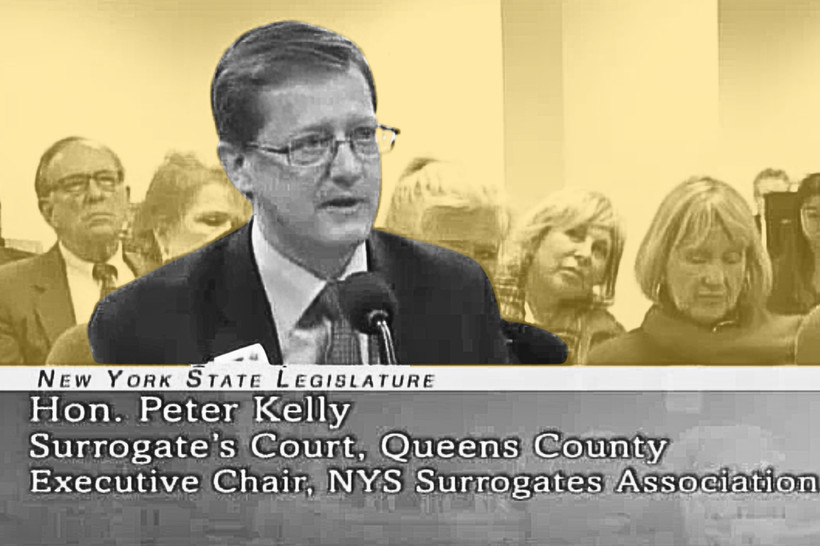
Judge Peter Kelly has ​run the Queens Surrogate's Court for over 14 years. ​ | Screenshot: New York state Assembly
  • A top judge failed to disclose that his key legal advisor was romantically involved with an attorney arguing cases in his courtroom.
  • The apparent conflict of interest extends to the highest levels of New York's court system, as the law clerk's father is the state's chief administrative judge — who recently gave appointments to both the judge (his son's boss) and the attorney (his son's girlfriend).
  • The case is the latest example of alleged favoritism in New York's courts, particularly in Surrogate's Courts that handle inheritance disputes worth millions of dollars.

Sign up for Staying Focused, our newsletter keeping readers up to speed on New York politics.

The young man had a key to unlock the suburban Nassau County home. That much was clear to the private investigator watching outside.

The key soon unlocked something else: a secret. It was exactly the kind of evidence the investigator’s client, Shannon Hynes, was looking for.

Hynes felt something was amiss in Queens Surrogate’s Court, where she was locked in an inheritance dispute with her brother. The judge overseeing her case kept taking actions that Shannon — a seasoned trial lawyer by trade — considered unusual. So she hired the investigator, who that day discovered the “smoking gun.”

The young man with the key was Zachary Zayas, principal law clerk to Judge Peter Kelly — the same judge overseeing Shannon’s case. And the key opened a house owned by Cheryl Katz — the attorney representing Shannon’s brother in the inheritance dispute.

Katz and Zayas were dating and living together. Neither the judge, nor the law clerk, nor the attorney disclosed this to Shannon.

Kelly, who’d run the court for 14 years, had known for at least five months that his law clerk was dating Katz, according to comments Kelly made last year. And during that time, he issued several rulings favoring Katz’s client, while keeping Shannon in the dark about the relationship.

This was a clear violation of ethics rules governing state attorneys and judges, according to Cynthia Godsoe, a professor at Brooklyn Law School who specializes in both family law and professional ethics.

“There absolutely should have been disclosure by Katz and the judge,” Godsoe said. “It couldn’t be clearer. I’m just sort of astonished.”

Godsoe added that Zachary Zayas was likewise “absolutely required” to disclose the relationship — and that such court attorneys, who perform tasks ranging from conducting research to drafting judicial opinions, can play a “huge” role in cases.

Even after becoming aware of the relationship, Kelly kept appointing Katz to represent clients in other cases in his courtroom, records show.

Adding another layer of intrigue: the law clerk’s last name.

Joseph Zayas, Zachary’s father, is the state court system’s chief administrative judge — the highest-ranking administrative position within the sprawling state judiciary. He runs the daily operations of the state Office of Court Administration (OCA), overseeing a $3.7 billion annual budget, 3,300 judges, and 15,000 non-judicial employees. If Zachary were to be investigated for not disclosing his relationship, it would likely be by a court official appointed by his dad.

In March 2024, Joseph Zayas appointed his son’s girlfriend, Katz, to be a member of the “prestigious statewide Surrogate’s Court Advisory Committee,” according to Katz’s biography on her law firm’s website.

The committee makes recommendations to Joseph Zayas concerning Surrogate’s Court practices. While the positions are unpaid, serving on the body can help attorneys attract new legal clients.

Last month, the senior Zayas appointed Kelly — his son’s boss — to co-lead the same committee. (Kelly was first appointed to the body by a predecessor of Joseph, but had not been co-chair.) That recent appointment came as Kelly has faced conflict of interest allegations in three separate Surrogate’s Court cases, including the one directly involving Joseph’s son.

New York Focus asked Joseph Zayas about his appointments of his son’s girlfriend and boss.

An OCA spokesperson responded that there would be “no comment in light of the pending litigation” between the Hynes siblings.

“There absolutely should have been disclosure by Katz and the judge.”

—Cynthia Godsoe, Brooklyn Law School

Since at least the 1960s, Surrogate’s Courts in New York City have had a reputation as bastions of patronage and nepotism. Two decades ago, then–Chief Judge Judith Kaye tried to curb the practices. The public needed faith that state courts “operate free of favoritism and partiality,” she argued.

Yet the patronage persists. And in this case, allegations of unequal justice touch a family at the system’s summit.

Citing ongoing litigation, Kelly and Katz declined to answer most questions. Katz categorically denied “any allegations of wrongdoing or unethical conduct.” Zachary Zayas did not respond.

The feud between the Hynes siblings has grown heated. According to Shannon Hynes, her brother burned her personal property, as well as items of sentimental value to Shannon, owned by their deceased parents. This video still is from a trail camera on their parents' property. | Courtesy of Shannon Hynes

Shannon and her brother, Sean Hynes, have fought for five years in Queens Surrogate’s Court over the estate of their father, who died in 2019. Katz represented Sean from the beginning of the case through last year.

In comments from the bench last May, Kelly said that Zayas informed him in late 2023 that Zayas and Katz were moving in together. That was about five months before Shannon discovered the relationship. In his comments, Kelly did not mention ever having learned about the romance at any earlier point.

But in a sworn affirmation last June, Katz stated the relationship was immediately disclosed to Kelly when it began in June 2023 — 11 months before Shannon’s investigator found out. This six-month discrepancy remains unaddressed in subsequent court filings, and all three declined to answer questions from New York Focus about the accounts.

“His title was junior court attorney, whatever the heck it might be. And so he was not involved in anything here.”

—Judge Peter Kelly
Either way, Kelly — while knowing about the relationship between Katz and his principal law clerk — issued three substantive rulings in January 2024 that favored Katz’s client.

That same month, Katz described a conversation she said she’d had with Kelly in his chambers in an email to Shannon’s real estate attorney.

Katz claimed the judge told her that if Shannon continued to refuse to be “reasonable” in settlement discussions, he was thinking of personally “filing a grievance” against her.

“He is fed up,” Katz wrote in the email. “As am I.”

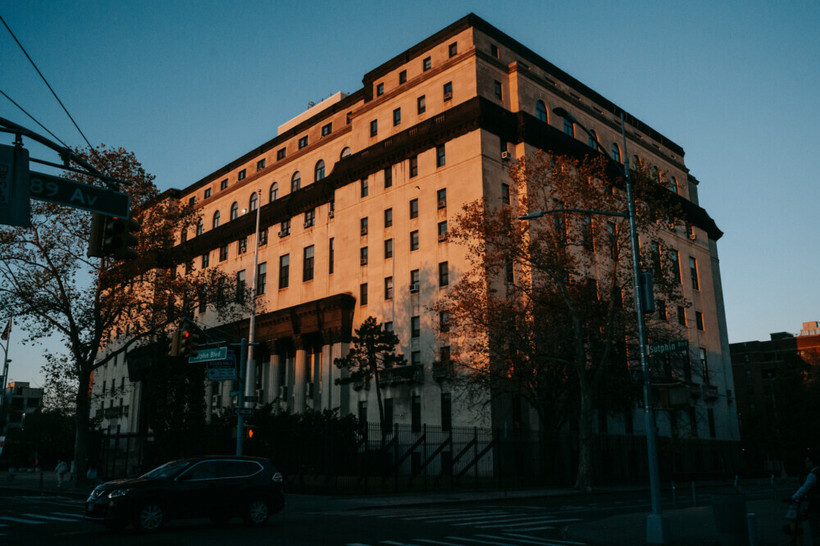
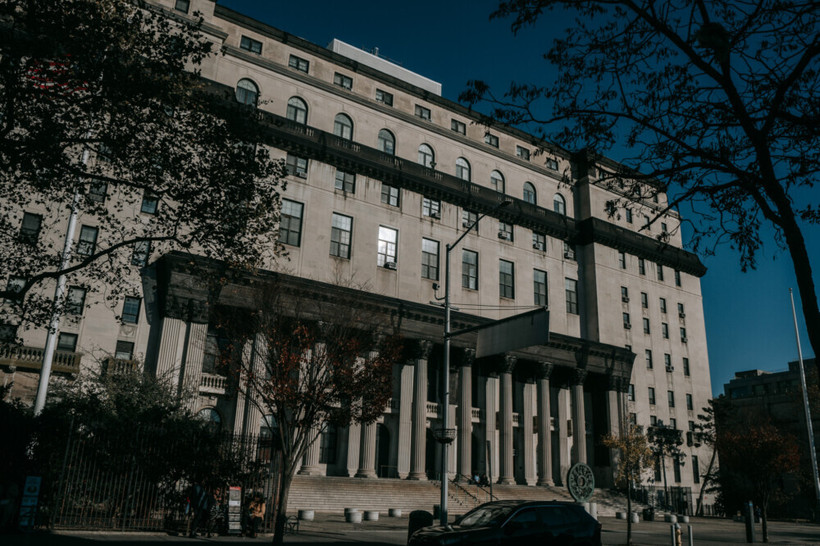
The Queens Supreme Courthouse houses the Surrogate's Court, which Judge Peter Kelly has overseen for 14 years. | Olga Fedorova

Shannon’s main attorney in the case, John Newman, was present for Kelly’s comments, according to Katz’s email.

In an email the following month, Katz asked Newman if he’d informed his client about Kelly’s statement that the judge was “going to file a grievance against [Shannon] if she kept this up.”

Although Shannon is a trial lawyer, she does not specialize in estate law and was not representing herself; Newman was her attorney in this matter. Yet, according to Katz, the judge was still considering seeking a professional reprimand against her.

That would be “incredibly unusual,” according to Godsoe, the legal ethics professor.

“You don’t file a disciplinary complaint against someone [who’s an attorney] if they’re not representing themselves,” Godsoe said.

Katz’s account of the conversation could not be confirmed. Newman has “no recollection of the judge ever making this threat,” Shannon told New York Focus.

In Shannon’s mind, this leaves two possibilities. One is that Kelly made this threat during a private conversation with Katz — a prohibited “ex parte” communication. The other, Shannon said, is that Katz “fabricated the contents of her email for purposes of leverage in the lawsuit.”

Newman told New York Focus that he “can’t comment on a closed-door conference with Surrogate Kelly.”

In response to questions, Kelly told New York Focus that multiple entities had instructed him that he was “absolutely prohibited from discussing any substantive information” regarding the case, due to pending appeals.

“That includes observations, timelines, actions and even statements attributed to me by others,” Kelly said.

For the same reason, Kelly said, he’d instructed Zachary Zayas not to respond to questions.

What’s not in dispute is that Katz had enjoyed a string of courtroom successes before Kelly.

Katz noted them in her January 2024 email to Shannon’s attorney, stating that, in this case, Shannon had lost “every single proceeding/allegation that she has ever commenced.”

Following the private investigator’s discovery, Shannon filed a notice seeking Kelly’s recusal last May. Kelly did indeed recuse himself, stepping aside from making future rulings.

A week later, Kelly held a court conference to explain his decision from his longtime bench in Queens Surrogate’s Court, offering varying explanations for his recusal, including that he was tired of dealing with the warring Hynes siblings.

Kelly told New York Focus that he stepped aside because “Zachary was now my principal court attorney” and “the prior methods of doing business would not work.”

In his comments last year, Kelly noted that Zayas had only been promoted to senior law clerk on Jan. 1, 2024. Before that, he was an assistant law clerk.

“His title was junior court attorney, whatever the heck it might be,” Kelly said. “And so he was not involved in anything here.”

Yet by the time Kelly recused himself, Zachary had been the judge’s principal court attorney for five months. Kelly stepped aside only after Shannon discovered Zachary’s romantic relationship with the opposing attorney.

In his comments last year, Kelly said that most of the case had been decided before he learned of the relationship.

“I did a computer run of all of the proceedings we’ve had here, and the majority of this was all done in 2020, 2021, the probate matter was decided in early 2023,” Kelly said. “I don’t know how any of that is affected by anything.”

Kelly also issued three substantive rulings in January 2024:

  • On January 2, he denied Shannon’s motion to remove her brother as executor of the estate, while issuing a ruling paving the way for Sean to sell a family property in Schoharie County.

  • On January 3, he ruled against Shannon’s motion to dismiss a motion brought by her brother, which sought to force Shannon to repay $325,000 to a bank account, as well as $60,000 in rent.

  • On January 24, he dismissed Shannon’s motion seeking to force Sean to repay over $500,000 he allegedly owed to the estate.

By the time of these rulings, Zayas was Kelly’s principal law clerk — and by his own account, Kelly knew that Zayas and Katz were living together.

Shannon does not believe Zayas was walled off from the case. During the period when Zayas was dating Katz, Shannon recalls Zayas sitting in on the case’s court appearances and conferences.

Zayas’s resume details his experience clerking for Kelly since 2021 and describes extensive responsibilities, including drafting decisions and conducting conferences between opposing attorneys.

“You don’t file a disciplinary complaint against someone [who’s an attorney] if they’re not representing themselves.”

—Cynthia Godsoe, Brooklyn Law School
After she learned of the relationship, Shannon retained Chris McDonough, an attorney who specializes in the ethics of professional responsibility and previously served as assistant counsel to the attorney grievance committee for New York’s Tenth Judicial District.

McDonough wrote an expert affidavit on the implications of the romantic relationship, which Shannon has used as evidence. McDonough argued that Katz, Zayas, and Kelly all had clear legal obligations to disclose the relationship to all parties in the case, including Shannon.

McDonough noted a State Bar Association opinion concerning a judge’s law assistant who was married to an attorney. The opinion determined that both the law assistant and the attorney were required to report the relationship to the other parties in the case.

By failing to reveal the relationship, Zayas and Katz engaged in “significant rule violations” and conduct “prejudicial to the administration of justice,” McDonough wrote.

Kelly had a similar obligation to disclose, McDonough said, citing the New York Bar Association’s Rules of Judicial Conduct.

“There is no question that where there is a close relationship between a judge’s law clerk and an attorney appearing before the judge, the relationship between the law clerk and an attorney must be revealed to all parties and the law clerk must be insulated from all involvement in the case,” McDonough wrote.

The lack of disclosure in this case created a “high likelihood” that the proceeding had been “ruinously tainted,” McDonough concluded.

Godsoe said she agreed with McDonough’s analysis.

Whether Kelly needed to recuse himself is more complicated.

Since this matter did not involve a blood relative of Kelly, state law doesn’t explicitly prohibit him from issuing rulings. As a result, Kelly said during the May 2024 court appearance, his recusal was “discretionary.”

Judge Peter Kelly’s reign over the Queens Surrogate’s Court ended last year, and he is now a full-time state Supreme Court justice. Following his recusal, Shannon’s case was transferred to Surrogate’s Court on Staten Island, where it is ongoing. | Olga Fedorova

There is another, albeit vaguer standard in state law: A judge must recuse themself from a case if their impartiality might “reasonably” be questioned.

In Godsoe’s view, Kelly should have stepped aside upon first learning of the relationship. On appeal, she believes Kelly’s failure to initially recuse would be found to be “an abuse of discretion.”

It’s not the only time such allegations have arisen in Kelly’s courtroom. Kelly has also faced conflict of interest allegations in two other recent cases, as New York Focus detailed in January.

Kelly’s reign over the Queens Surrogate’s Court ended last year, and he is now a full-time state Supreme Court justice. Following his recusal, Shannon’s case was transferred to Surrogate’s Court on Staten Island, where it is ongoing.

Last year, Shannon sought to have all of Kelly’s rulings vacated, arguing they were tainted by bias. But in January, Staten Island Surrogate Matthew Titone ruled against her, finding Shannon had failed to produce evidence of “actual bias” in Kelly’s rulings — or to specify which decisions she sought to vacate.

Last month, Shannon filed a motion to reargue whether Kelly’s rulings should be vacated, which included more details. Titone will hear oral arguments in April. This time, Shannon is arguing that Kelly, Katz, and Zayas engaged in misconduct and fraud, and seeks to vacate Kelly’s rulings in the “interest of substantial justice.”

The case, Shannon argues, is a “textbook example of misconduct, preferential treatment, cronyism and unfair tactical advantage — the very issues that erode public trust in the judiciary.”

Katz says her relationship with Zayas was not a secret.

In a sworn affirmation filed last June, Katz said that “countless members of the downstate New York Trusts and Estates Bar are aware” of her relationship with Zayas, since, as a couple, they had attended several events sponsored by the court or state bar association.

And according to Katz, private investigators had stalked, videotaped, and photographed her in her home and office, “leading to calls to the police, and even a ‘chase’ on the Southern State Parkway.”

“Apparently, because both the law and the facts are against her, [Shannon] was reduced to going after me — her brother’s counsel — personally,” Katz stated.

Katz declined to elaborate on the alleged car chase. For her part, Shannon told New York Focus that she had nothing to do with the alleged incident and believes Katz’s allegation was fabricated. It took an investigator only three days to uncover the relationship, she said. (The investigator has passed away, according to Shannon, so New York Focus could not get his side of the story.)

Katz declined to answer questions from New York Focus, citing the pending litigation. She said that Titone, the judge in the Staten Island case, had “already thoroughly examined Ms. Hynes’ arguments” and “found that they lack merit.”

“All of my actions and conduct have been carried out in full compliance with the law and ethical standards governing the legal profession,” Katz said in an emailed statement. “It cannot be ignored that these allegations are being made by an adversary in the context of ongoing litigations.”

The long-running litigation has been lucrative for Katz.

Kelly issued a ruling in early 2023 making Shannon’s brother the sole executor of the roughly $2 million estate, allowing him to use estate funds to pay for his attorneys. According to recently filed court documents, Sean paid $423,000 to three law firms where Katz worked between 2020 and 2024. Through the end of last year, Sean had spent a total of $658,000 on legal fees, and in a recently filed document, sought approval to spend $250,000 more from the estate.

The Hynes estate case isn’t the only instance in which Katz has represented clients in the courtroom where her boyfriend clerked.

Katz, Kelly, and the OCA declined to provide a full list of Katz’s clients. But available public records show that in at least a handful of instances, Kelly proactively placed Katz in his courtroom while knowing of her relationship with Zayas.

These cases, known as Part 36 appointments, have a long history of being awarded to politically connected lawyers in Queens Surrogate’s Court. Over seven years, Kelly gave Katz 41 of these appointments to represent parties in estate cases and get paid out of the private estate at issue.

Kelly granted 10 of those appointments after June 2023, when Katz says Kelly learned of the relationship.

By Kelly’s account, he learned Katz and Zayas were moving in together in late 2023. Under this timeline, Kelly granted his clerk’s girlfriend five appointments while knowing about the relationship.

After his May 2024 recusal in Shannon’s case, records show, Kelly continued rendering decisions in other matters involving his senior law clerk’s girlfriend — awarding her more than $78,000 for her work representing court-appointed clients in seven estate cases.

New York Focus could not find any record in the cases’ online dockets of Kelly or Katz disclosing the romantic relationship, and neither responded to questions about whether they did so.

But an estate attorney involved in two of these cases, Oshrie Zak, recalled that Katz did disclose the relationship to the other parties. In those two cases, Zak and Katz had represented different clients before Judge Kelly.

Zak told New York Focus that he could not recall if Katz had disclosed the relationship before or after May 2024 — the month the romance came to light in Shannon’s case. Unlike the Hynes estate case, these two cases were “non-adversarial,” Zak recalled.

In one of these cases, Kelly issued a July 2024 ruling citing Katz’s “experience, ability and reputation” in awarding her a $37,128 payment from an estate. That was by far the largest amount Kelly awarded Katz for her work on a single case.

In her affirmation last year, Katz stated she was “not aware of any cases where I or my law firm are counsel of record” where her significant other had “any decision-making involvement or any authority or influence whatsoever.”

When she first raised the conflict of interest issue in a court filing, Shannon omitted Zachary Zayas’s name, referring to him simply as “the Court Attorney.”

The reason, Shannon later stated, was “out of respect for Mr. Zayas and his father, who is the second most prominent and highest-ranking judge in New York State.”

If Zachary Zayas were to be investigated in this matter, the action would likely be initiated by the inspector general of the Office of Court Administration, Kay-Ann Porter Campbell, who was appointed to that post two years ago by Zachary’s father, Joseph Zayas.

In 2021, Zachary began working in Queens Surrogate’s Court, where the Queens Democratic Party machine has long exerted influence.

Joseph Zayas has ties to that party. In 2016, the Queens Democrats selected Joseph as their nominee to be a State Supreme Court judge. With the party’s backing, he won election easily. Between 2013 and 2017, Joseph gave 12 campaign donations to the Queens Democratic Party, totaling $3,250.

In Queens, one law firm exerts significant influence over the Democratic Party’s nomination process. And in New York, party insiders — not voters — select party nominees for state Supreme Court judgeships.

Still, in an op-ed last year, Joseph described winning the Queens Democratic Party nomination in 2016 through a process that was not insider driven.

He had unsuccessfully sought the party nomination three times prior. Zayas wrote that in 2016, he won the nomination by first gaining support from the grassroots, meeting with community groups from diverse neighborhoods across the borough. That eventually led to his gaining support from party district leaders, who successfully pitched his candidacy to party leadership, he wrote.

In 2021, then-Governor Andrew Cuomo appointed him as a state appellate court judge, and in 2023, Chief Judge Rowan Wilson tapped Joseph for his current post.

During law school, Zachary Zayas interned for Kelly, and then, through a Bar Association fellowship, spent an additional summer working in Queens Surrogate’s Court, according to his resume. After graduating in 2021, Zachary got the junior law clerk position in Kelly’s courtroom.

About a year ago, Shannon filed a complaint about Kelly with the state Commission on Judicial Conduct, a body charged with investigating alleged wrongdoing by state judges.

Shannon’s initial complaint questioned Kelly’s actions and decisions in her case. But at that time, Shannon was unaware of the relationship between Zayas and Katz.

After Shannon learned of the relationship, she filed a supplemental complaint last June.

Over nine months, Shannon tried three times to get the commission to confirm that it had received the new information about the relationship. In late March, the body finally confirmed having received the new facts.

New York Focus asked Kelly whether he was aware of any investigation having been conducted by the OCA or the commission. He responded that New York Focus had inquired about “information concerning investigations of myself” which may “require disclosure of confidential information.”

The Commission on Judicial Conduct declined comment.

BEFORE YOU GO, consider: If not for the article you just read, would the information in it be public?

Or would it remain hidden — buried within the confines of New York’s sprawling criminal-legal apparatus?

I started working at New York Focus in 2022, not long after the outlet launched. Since that time, our reporters and editors have been vigorously scrutinizing every facet of the Empire State’s criminal justice institutions, investigating power players and the impact of policy on state prisons, county jails, and local police and courts — always with an eye toward what it means for people involved in the system.

That system works hard to make those people invisible, and it shields those at the top from scrutiny. And without rigorous, resource-intensive journalism, it would all operate with significantly more impunity.

Only a handful of journalists do this type of work in New York. In the last decades, the number of local news outlets in the state has nearly halved, making our coverage all the more critical. Our criminal justice reporting has been cited in lawsuits, spurred legislation, and led to the rescission of statewide policies. With your help, we can continue to do this work, and go even deeper: We have endless ideas for more ambitious projects and harder hitting investigations. But we need your help.

As a small, nonprofit outlet, we rely on our readers to support our journalism. If you’re able, please consider supporting us with a one-time or monthly gift. We so appreciate your help.

Here’s to a more just, more transparent New York.

Chris Gelardi
Justice Bureau Chief
A photo of Chris Gelardi
A photo of Chris Bragg.
Chris Bragg is the Albany bureau chief at New York Focus. He has done investigative reporting on New York government and politics since 2009, most recently at The Buffalo News and Albany Times Union.
Also filed in Criminal Justice

A bill awaiting the governor’s signature would relax restrictions on who can qualify for victim compensation.

In May, state lawmakers passed a $269 billion budget after haggling for months over thousands of line items and policies affecting New Yorkers.

The legislation would make it easier for currently and formerly incarcerated people and child victims to sue the state over allegations of past abuse.

Also filed in New York City

The Department of Housing Preservation and Development has vowed to go after negligent landlords, but it’s wrestling with a huge backlog of complaints.

A lawsuit accuses federal officials of ignoring evidence that the boy, born in Mexico, held US citizenship through his mother.

City budget gaps and an ambitious affordability agenda may require pressing Albany again for taxes and aid.