Bill Stalled in Assembly Could Determine Fate of Hundreds of Sexual Assault Cases

The legislation would make it easier for currently and formerly incarcerated people and child victims to sue the state over allegations of past abuse.

Chris Bragg   ·   June 5, 2026
A black and white photo of the New York state Capitol Buildling over a yellow-tinted background.
The state Senate has passed a bill that would lift some requirements in cases involving allegations of sexual assault, but the Assembly has failed to advance it. | Photo: Warren LeMay | Illustration: Leor Stylar

Sign up for Staying Focused, our newsletter keeping readers up to speed on New York politics.

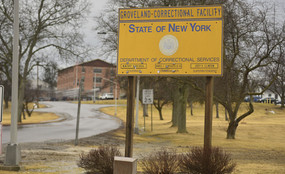
As Governor Kathy Hochul’s administration fights more than 1,600 lawsuits alleging sexual abuse in New York prisons, it has sought to dismiss certain cases based on strict court filing requirements. Legislation now pending in Albany could change that — but it’s been stalled during the legislative session set to end this week.

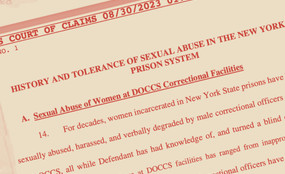
When someone sues the state government, they must bring their case to the Court of Claims. Yet to file a case there, they need to know the exact date, time, and place where a state official harmed them. For the second year in a row, the state Senate has passed a bill that would lift those requirements in cases involving allegations of sexual assault, while the Assembly has failed to advance it.

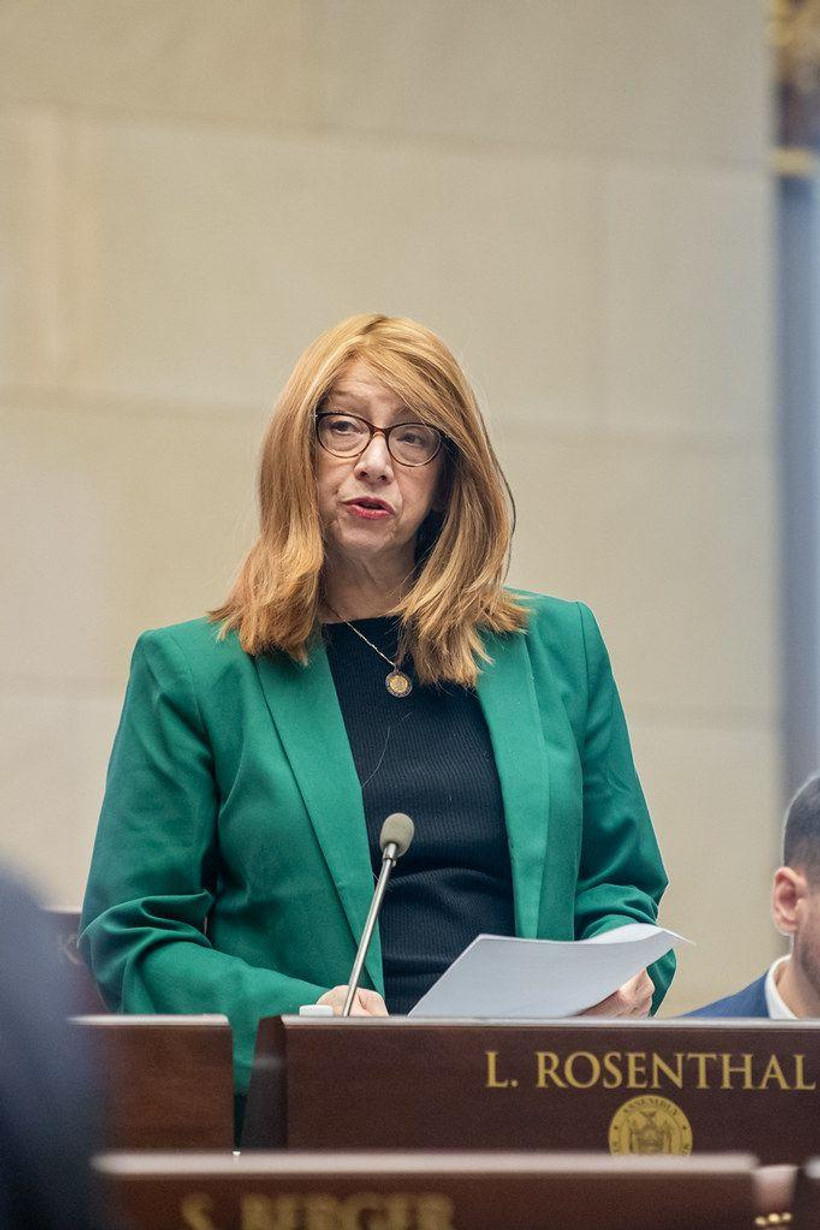
At a press conference Tuesday, Assemblymember Linda Rosenthal, its prime Assembly sponsor, urged lawmakers to pass the bill. 

“This is not something that should wait until next year, because people are suffering now,” she said. “People’s cases are going to vanish.”

Photo of Assemblymember Linda Rosenthal standing and speaking.
Assemblymember Linda Rosenthal | New York State Assembly Majority


The 1,600 cases stem from the Adult Survivors Act, a law that temporarily opened the statute of limitations for lawsuits alleging sexual abuse against adults. An earlier law, the Child Victims Act, opened a similar window for people allegedly abused as children. Lawmakers involved with the passage of those bills say they never meant for filing requirements to stymie cases.

In other civil courts — like the state’s supreme courts, where hundreds of women have filed Adult Survivors Act suits against New York City over sexual abuse by Rikers Island jail staff —  claimants can initiate cases by providing limited details, then gather more evidence through discovery. But in cases filed against New York state, judges have ruled that they need to share more information at the outset. 

“Everything we know about the psychology of sexual abuse and rape trauma is that survivors actively suppress the memories of the abuse, and that they have difficulty recalling small details about it,” said Konstantin Yelisavetskiy, a partner at the law firm Slater Slater Schulman, which represents about 1,200 of the claimants suing the state. It’s also inherently difficult, he said, for any incarcerated person to keep precise track of time in prison. 

“When you take those two things and you put them together,” he added, it’s an even greater burden. “So to not remove this harsh, inhumane requirement is effectively blocking their ability to attain justice,” he said.

In a consequential decision last year, the Court of Appeals, New York’s highest court, ordered the Court of Claims to dismiss a case filed under the Child Victims Act because the claimant could not provide a precise date for alleged abuse. The case set the bar for how to apply the strict requirements to the thousands of old cases filed under the two laws.

The proposed state law, which passed the Senate last month by a 57–3 margin, would remove those requirements for pending cases and apply retroactively to cases dismissed under the current filing requirement that are subject to potential appeal. 

Last year, Assembly Speaker Carl Heastie’s office expressed concerns over the degree to which the bill would relax pleading standards, and about changing the law in a way that would impact pending cases, according to a person familiar with the discussions. Heastie’s office, which has remained noncommittal about the bill this year, did not immediately respond to a request for comment.

During a court conference last October, attorneys for the Department of Corrections and Community Supervision said the state was planning to ask judges to throw out 500 cases based on the filing requirements, according to Yelisavetskiy and another attorney, who collectively represent hundreds of women in the cases. Attorney General Letitia James’s office, which represents DOCCS, has sought dismissal of cases based on the Court of Claims filing requirements. Her office did not immediately respond to a question about whether she supports the bill.

Hochul’s office said the governor “remains committed to supporting victims and survivors of sexual assault and will review all legislation that passes both houses of the state legislature.” 

Meanwhile, DOCCS, a Hochul administration agency represented by James’s office, has sought to use the current filing requirements to its legal advantage.

In one case, for instance, James’s office convinced a judge to throw out a case because the claim included the wrong date of the alleged abuse — a mistake also included in the prison agency’s own records, leading James’s office to withdraw its request.

In another, James’s office asked a judge to toss a case because DOCCS could not locate a record of an alleged abuser — even though New York Focus was able to quickly locate the record, leading James’s office to withdraw its request.

Last year, the legislature passed a bill relaxing the pleading standard for sexual assault cases going forward. But it did not apply retroactively, so it did not cover cases filed under the Child Victims and Adult Survivors laws.

BEFORE YOU GO, consider: If not for the article you just read, would the information in it be public?

Or would it remain hidden — buried within the confines of New York’s sprawling criminal-legal apparatus?

I started working at New York Focus in 2022, not long after the outlet launched. Since that time, our reporters and editors have been vigorously scrutinizing every facet of the Empire State’s criminal justice institutions, investigating power players and the impact of policy on state prisons, county jails, and local police and courts — always with an eye toward what it means for people involved in the system.

That system works hard to make those people invisible, and it shields those at the top from scrutiny. And without rigorous, resource-intensive journalism, it would all operate with significantly more impunity.

Only a handful of journalists do this type of work in New York. In the last decades, the number of local news outlets in the state has nearly halved, making our coverage all the more critical. Our criminal justice reporting has been cited in lawsuits, spurred legislation, and led to the rescission of statewide policies. With your help, we can continue to do this work, and go even deeper: We have endless ideas for more ambitious projects and harder hitting investigations. But we need your help.

As a small, nonprofit outlet, we rely on our readers to support our journalism. If you’re able, please consider supporting us with a one-time or monthly gift. We so appreciate your help.

Here’s to a more just, more transparent New York.

Chris Gelardi
Justice Bureau Chief
A photo of Chris Gelardi
A photo of Chris Bragg.
Chris Bragg is the Albany bureau chief at New York Focus. He has done investigative reporting on New York government and politics since 2009, most recently at The Buffalo News and Albany Times Union.
Also filed in Criminal Justice

It’s unclear whether the Correctional Association of New York will have to scale back its nascent reform initiatives.

The legislation comes after months of haggling over how best to protect New Yorkers from President Trump’s immigration crackdown.

Footage published by New York Focus sparked a debate over deputies’ practice of calling Border Patrol on Spanish-speaking drivers.

Also filed in New York State

State leaders are expected to pass a bill that avoids resolving how much Resorts World New York City needs to pay.

New York state has pumped millions of taxpayer dollars into an online portal that vowed to make life easier for Rochester’s neediest, but critics say it’s fallen short.

Resorts World is floating legislation to avert more than $500 million in payments to the horseracing industry.