The move comes a day after our investigation into a disputed calculation method following foreclosure sales.
The move comes a day after our investigation into a disputed calculation method following foreclosure sales. ·  View in browser
NEWSLETTER

Funding local news is more important than ever, and it will take a village to succeed. Join us in our work to rebuild local journalism as a pillar of democracy in New York. From now until the end of the year, your gift will be matched and tripled.

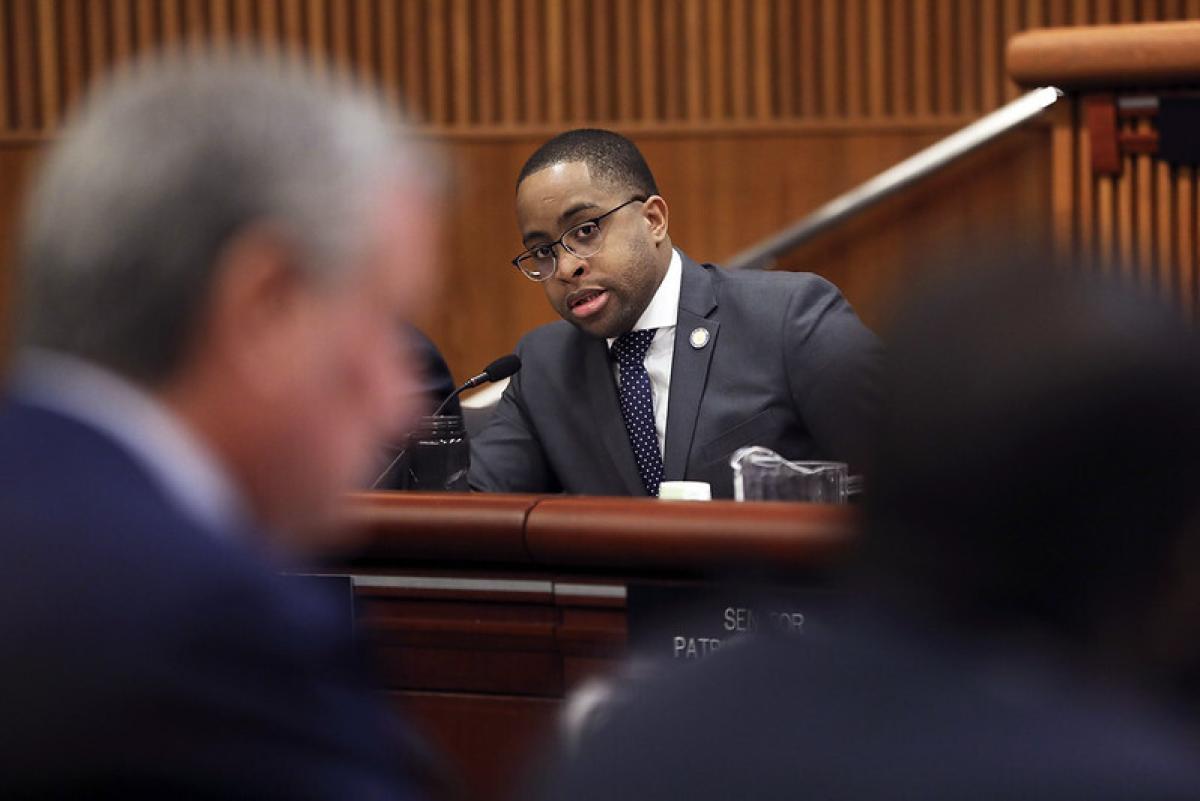
New York State Senator Zellnor Myrie has introduced a bill meant to prevent vulnerable homeowners who have fallen on hard times from “the double whammy of not just losing their home, but losing out on compounded interest that appears to be in contravention to what our current law states.” NY Senate Photo
In response to reporting by New York Focus and Gothamist, State Senator Zellnor Myrie has introduced a bill to standardize debt calculations.
By Chris Bragg and David Brand

New York state Senator Zellnor Myrie has introduced new legislation to impose consistent standards on foreclosure auction sales following a New York Focus and Gothamist investigation into widespread irregularities that can cost former homeowners thousands of dollars while boosting lenders’ profits.

The investigation, which was based on interviews and an independent review of thousands of state court records, found some lenders, their attorneys and court-appointed referees routinely used a disputed calculation method to increase debts owed by former homeowners following foreclosure sales. The method, which charges interest on top of interest, contradicts state court system guidance. Former homeowners allege in federal lawsuits that the practice also violates a state law prohibiting compound interest on residential loans and has gone unchecked by judges, referees and state court officials.

“At minimum, we need uniformity and transparency in this foreclosure auction process,” said Myrie, a Democrat representing parts of Central Brooklyn.

Recent Stories

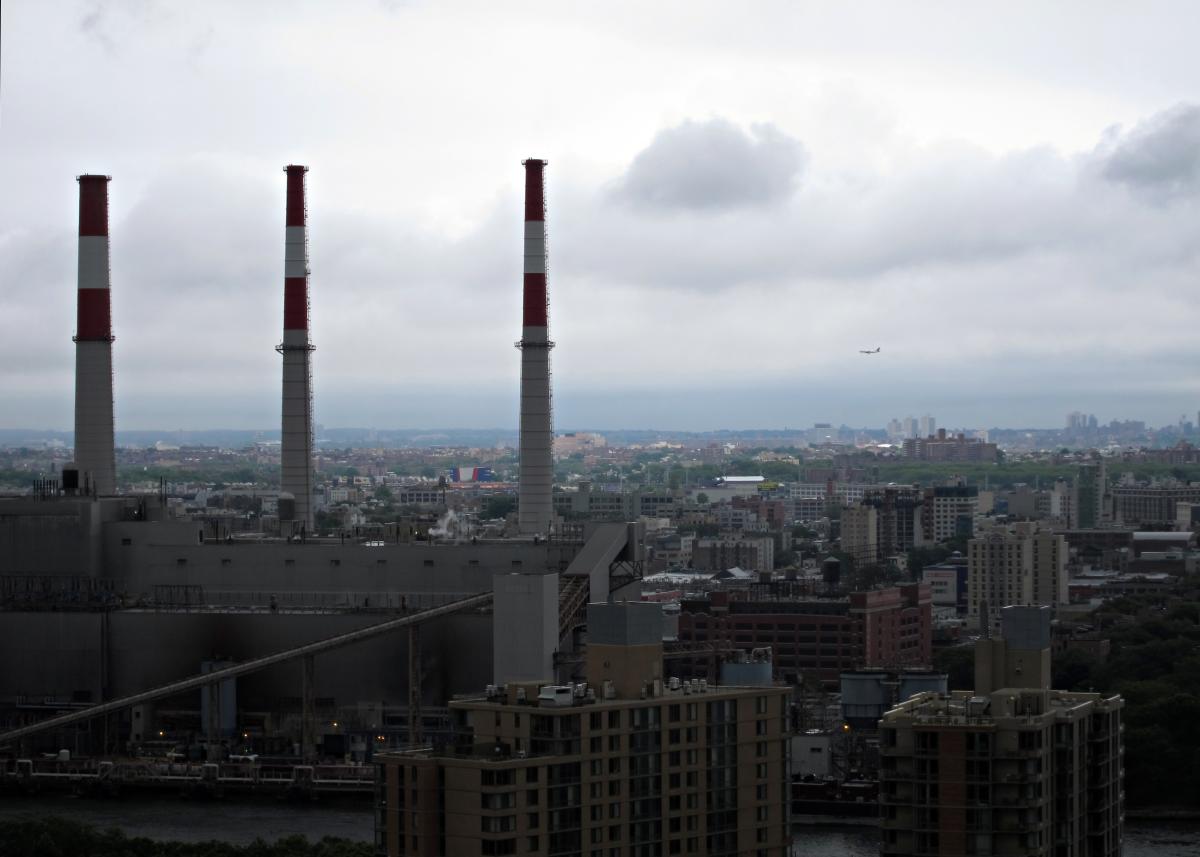
New York finalized rules to guide how major polluters report their greenhouse gas emissions Monday. schizoform / Flickr
New York is ready to collect data on emissions, but is fighting a court order to cut them.
By Colin Kinniburgh

After a year of walking back its major climate commitments, New York moved an inch forward on Monday, when the Department of Environmental Conservation finalized rules to guide how major polluters report their greenhouse gas emissions.

Governor Kathy Hochul’s administration announced the rules just after filing an appeal last week in a lawsuit brought by climate groups over her decision to shelve an ambitious carbon pricing program, called “cap and invest,” earlier this year. She’d once described the program as a cornerstone of her climate agenda, but the DEC’s reporting rules now look like all that remain of it.

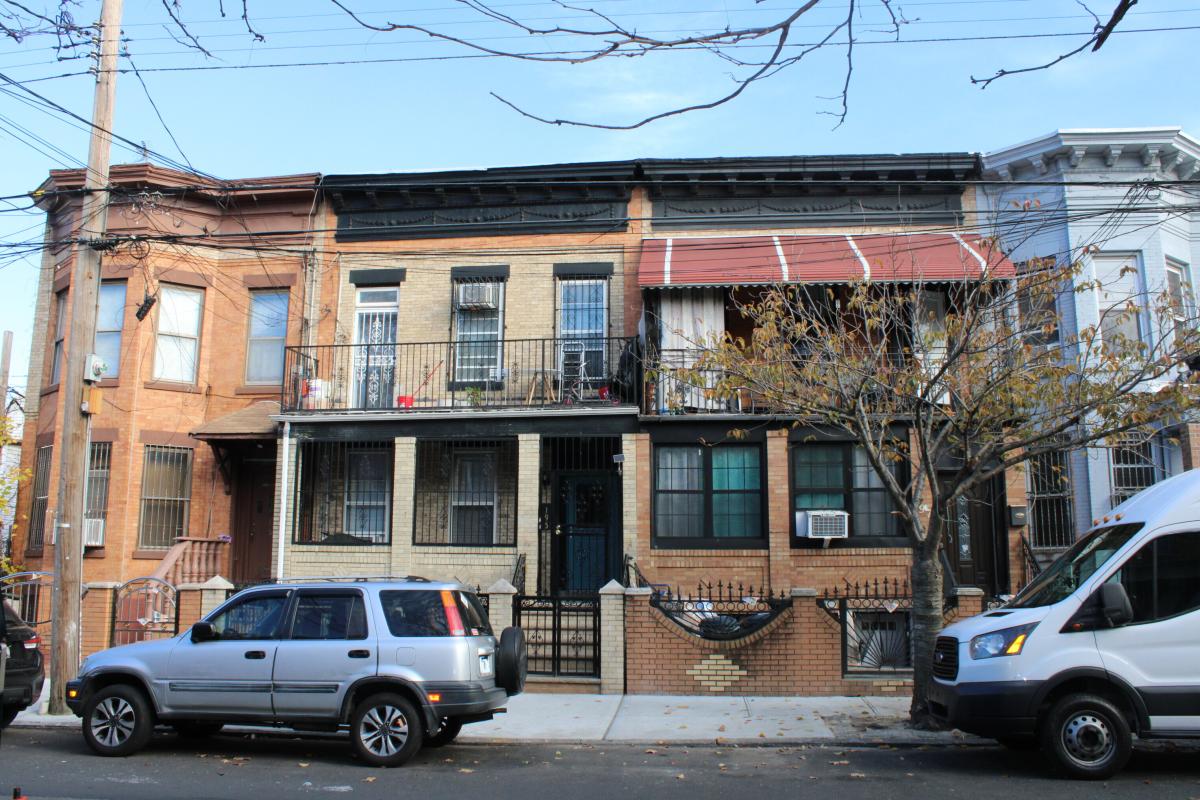
Yamilet Salty’s former home. Salty was shorted over $1,500 in foreclosure proceedings. Photo: Gothamist
An investigation by New York Focus and Gothamist found lenders are using a disputed method of calculating debts in thousands of foreclosures and taking money from hundreds of former homeowners.
By Chris Bragg and David Brand

For years, Barbara Small fought to hold onto her house in Flatbush, Brooklyn, after it fell into foreclosure. On the day it finally went up for auction, she sobbed on the train ride to the Supreme Court building in Downtown Brooklyn. The outcome would mean forfeiting her nest egg. She wasn’t required to attend the sale but she was determined to show up anyway.

She had purchased the narrow, three-story brick home on Linden Boulevard in 2005 with her father, a former transit worker who’d emigrated from Barbados via London in the 1970s. The house was a place for him to live out his retirement as well as an investment for Small and her children once she retired from the U.S. Postal Service.

Fourteen years later, her father was dead and she had lost the property after a series of financial setbacks, including a tenant who stopped paying rent. In her case, the mortgage was owned by a group of investors and managed by the Bank of New York Mellon and a loan servicer named Shellpoint.

A group of strangers lined up at the courthouse to bid on the building. Like most homes in foreclosure auctions, it sold in just a few minutes. The price: a little more than $1.3 million. A court-appointed referee named Jeffrey Dinowitz — who is also an influential state assemblymember from the Bronx — calculated what the lender was owed. After creditors and attorneys took their cut, Small said she was left with around $100,000, a fraction of the property’s true market value.

“ My dad tried to help me create a legacy for myself and my kids and now I have nothing really to give them,” Small said in an interview. “Generational wealth, it’s not for me.”

But Small, 67, could have been entitled to even more money. The attorney representing BNY Mellon and the mortgage servicer had used a disputed method for tabulating interest — one that contradicts the court system’s own guidance for referees — increasing the amount they took from her by tens of thousands of dollars.

The calculation, which applied interest to a higher overall amount than Small’s existing loan, benefited the mortgage’s investors but was also a potential violation of state law.

New York Focus and Gothamist conducted an independent analysis of state court records. It shows that the method has been used in thousands of foreclosure cases like Small’s. Collectively, the result has either deprived New Yorkers of millions of dollars in additional money when they lose their homes, or burdened them with higher levels of debt. Small’s attorney Mark Anderson has sued a group of lenders and their law firms, accusing them of “systematic fraud and theft” to boost profits at the expense of former homeowners.

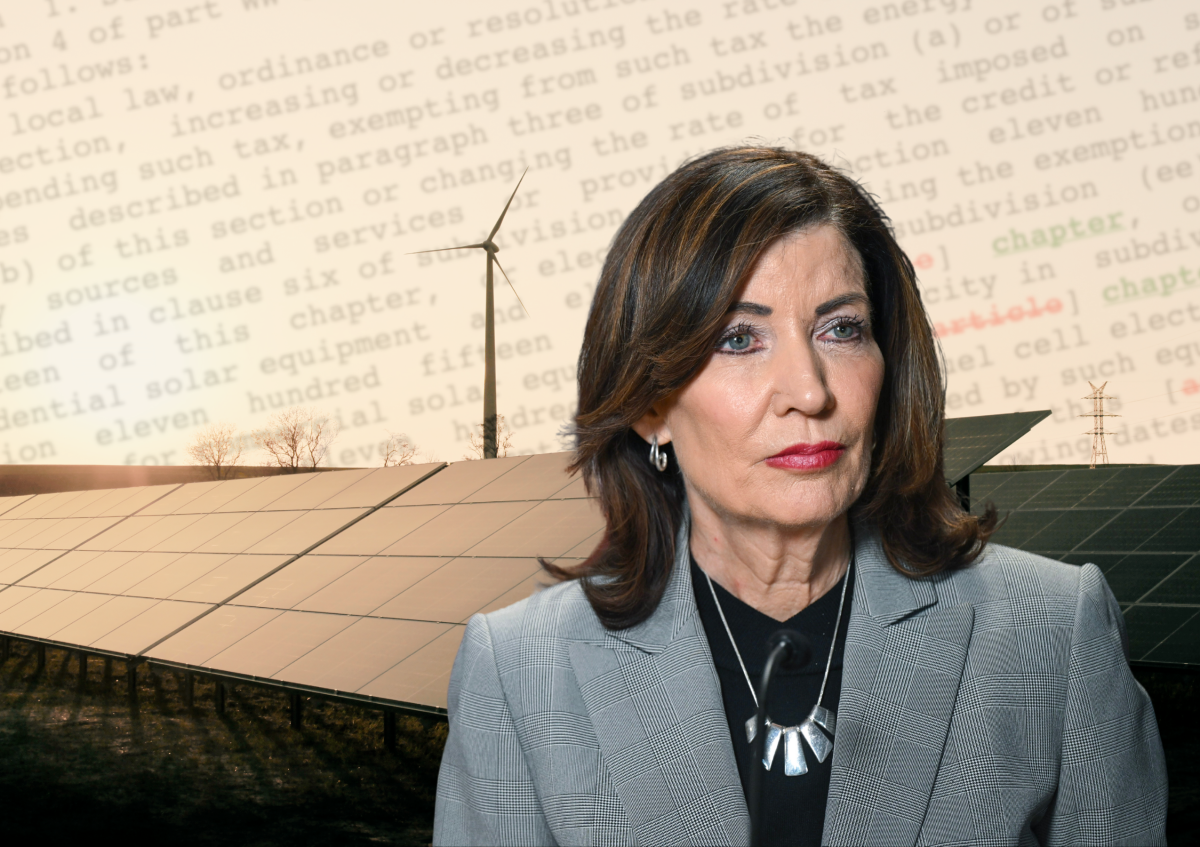
Wind and solar developers have until Thursday, December 4, to bid for state contracts under an expedited timeline Hochul announced in September. Photos: Office of Governor Kathy Hochul; Text: New York state Senate | Illustraton: New York Focus
New Yorkers will pay more for wind and solar if Hochul doesn’t sign property tax legislation in the coming days, the industry says.
By Colin Kinniburgh

A bill pending with Governor Kathy Hochul could shape how much New Yorkers pay for renewable energy for years to come — but she only has a few days left to sign it and deliver the full savings promised, the bill’s supporters say.

Wind and solar developers have until Thursday, December 4, to bid for state contracts under an expedited timeline Hochul announced in September. It may be the last chance for the companies to secure contracts in time to build projects with federal tax credits, which they’ve relied on for decades and which are set to expire next year under legislation signed by President Donald Trump.

When developers submit a bid, they have to include an estimate of how much a project will cost to build and operate over the long term, including land, materials, financing, and property taxes. The lower the cost, the more likely it is that the state will approve the bid — and the less it will cost New Yorkers whose energy bills pay for the project.

Copyright © New York Focus 2024, All rights reserved.
Staying Focused is compiled and written by Alex Arriaga
Contact Alex at alex@nysfocus.com

Feedback? Tips? Pitches? Contact us at: editor@nysfocus.com

Support our work!

Interested in sponsoring these emails? Get in touch! Email editor@nysfocus.com.

This email was sent to *|EMAIL|*

unsubscribe from this list  ·  update subscription preferences

New York Focus · *|HTML:LIST_ADDRESS_HTML|* · USA