Hochul Buys Time on Pollution Rules

New York is ready to collect data on emissions, but is fighting a court order to cut them.

Colin Kinniburgh   ·   December 3, 2025
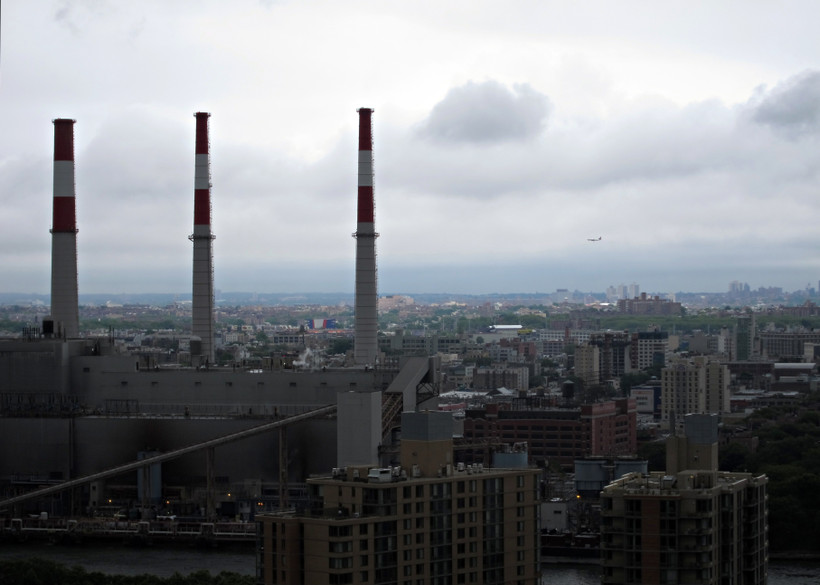
New York finalized rules to guide how major polluters report their greenhouse gas emissions Monday. | schizoform / Flickr

Sign up for Staying Focused, our newsletter keeping readers up to speed on New York politics.

The Reporters’ Notebook features bite-sized stories and updates from New York Focus reporters on the topics they cover.

After a year of walking back its major climate commitments, New York moved an inch forward on Monday, when the Department of Environmental Conservation finalized rules to guide how major polluters report their greenhouse gas emissions. 

Governor Kathy Hochul’s administration announced the rules just after filing an appeal last week in a lawsuit brought by climate groups over her decision to shelve an ambitious carbon pricing program, called “cap and invest,” earlier this year. She’d once described the program as a cornerstone of her climate agenda, but the DEC’s reporting rules now look like all that remain of it.

A judge ruled against the state in October, finding that the state was violating its climate law by failing to issue regulations that would actually reduce emissions. (Cap and invest was designed to satisfy that requirement.) He ordered the state to issue such regulations by February 6. At the time, Hochul immediately fired back, promising to appeal the ruling and seek a deal with the legislature to amend the climate law.

The appeal automatically puts the judge’s order on hold until the higher court considers it, buying Hochul time to weigh next steps. In the recent filings, state regulators laid out a detailed timeline for all the work they say they need to do to enact a new emissions reduction program. (They acknowledge that they already did much of this work in 2023–24, but argue that it would need a wholesale update to reflect President Donald Trump’s sweeping changes to federal climate policy.)

The timeline they laid out adds up to at least a year, and possibly much more. That would punt the program’s adoption until after Hochul’s reelection bid. The filing suggests, however, that draft rules for such a program could be ready by the summer — potentially putting cap and invest back in the spotlight just as the governor’s race is heating up.

Rachel Spector, an attorney representing the climate groups who brought the suit, said her side was reviewing the state’s filings and would respond later this week.

“The goal of the groups that brought this case is to see regulations to implement the climate law as quickly as possible,” said Spector, of the environmental law nonprofit Earthjustice. “We’re going to continue to work to make that happen on the fastest timeline we can.”

If Hochul were to amend the climate law, it could change the game, but the governor has not elaborated on when or how she might seek to do that. Reached on Tuesday, her office declined to say more about cap and invest or her plans for next year.

Spokesperson Ken Lovett highlighted the reporting rules issued Monday as a ballast against Trump’s plans to eliminate federal emissions reporting. “The reporting will help guide the state in developing affordable strategies to reduce air pollution, improve health outcomes, and ensure cleaner air for all,” he said.

For now, climate groups are half-heartedly cheering the new state rules, calling them a necessary but insufficient step.

“Reporting is not a substitute for regulating pollution,” said Kate Courtin, a state climate policy advocate at the Environmental Defense Fund, in a statement. “As the Trump administration obstructs clean energy projects and doubles-down on expensive fossil fuel infrastructure, New York must lead.”

She urged the state to move ahead immediately with cap and invest, now known as the “Clean Air Initiative.”

More than half of the 3,000 people who submitted comments on the emissions reporting rules earlier this year urged much the same, according to DEC’s official response to the comments.

The agency’s retort: “This comment is in relation to subject matter that is outside the scope of this rule making.”

I hope this article helped you better answer the question that guides all of our journalism: Who runs New York? Before you click away, please consider supporting our work and making more stories like this one possible.

New York state is standing at a crossroads for climate action. After passing one of the nation’s most ambitious climate laws in 2019, the state is lagging far behind on its targets, struggling to meet deadlines to build renewable energy and clean up its buildings and roads. Other states are closely watching our progress, making decisions about their own climate plans based on New York’s ability to implement this legislation.

As New York’s only statewide nonprofit news publication, we’ve been scrutinizing the state’s climate progress. Our journalism exists to unpack how power works in New York, analyze who’s really calling the shots, and reveal how obscure decisions shape ordinary New Yorkers’ lives.

But we can't do this work without your help. We rely on reader donations to help sustain our outlet, and every gift directly allows us to publish more pieces like this.

Our work has already shown what can happen when those with power know that someone is watching, with my reporting prompting a state investigation and fine for a major corporation. I have more story ideas than I can count, but only limited resources to pursue all the leads that come across my desk.

If you’re able, please consider supporting our journalism with a one-time or monthly gift. Even small donations make a big difference.

Thank you for reading.

Colin Kinniburgh
Climate and Environmental Politics Reporter
A photo of Colin Kinniburgh.
Colin Kinniburgh is a reporter at New York Focus, covering the state’s climate and environmental politics. He has worked in media for more than a decade, across print, television, audio, and online news, and participated in fellowship programs at CUNY’s Graduate School of Journalism… more
Also filed in New York State

The last-minute influx, the biggest ever for a legislative primary, is boosting her opponent, Jessica González-Rojas.

City budget gaps and an ambitious affordability agenda may require pressing Albany again for taxes and aid.

A bill awaiting the governor’s signature would relax restrictions on who can qualify for victim compensation.

Also filed in Climate and Environment

The citizens assembly model, used for public decision-making around the world, is gaining traction in New York.

A lobbyist who has been romantically linked to Assembly Speaker Carl Heastie led a rally opposing the legislation a week before the speaker declined to bring it to a vote.

In May, state lawmakers passed a $269 billion budget after haggling for months over thousands of line items and policies affecting New Yorkers.