Judge Skewers Hochul Administration Over New York’s Climate Law Delays

The judge suggested he’ll rule that the state is violating its climate law.

Colin Kinniburgh   ·   July 29, 2025
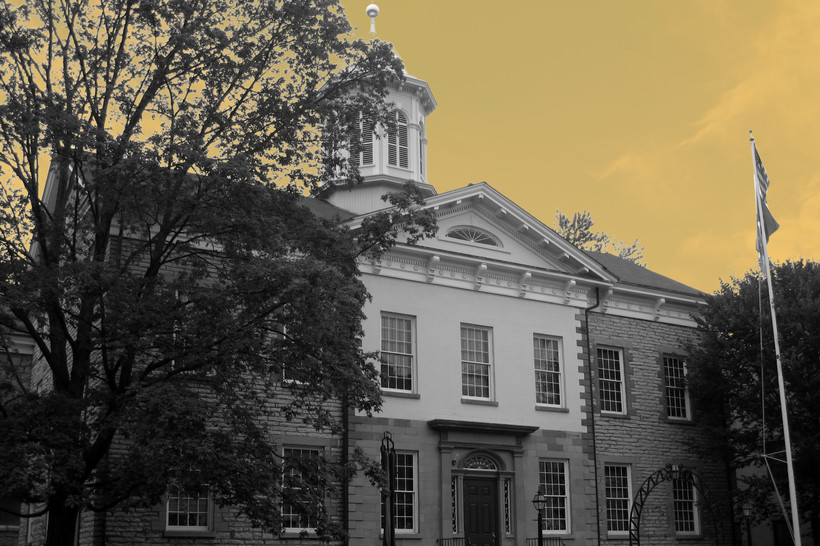
"I don’t understand how the agency can just say, 'We decided that this can’t work right now,'" said judge Julian Schreibman, of Ulster County. | Photo: Wally Gobetz/Flickr | Illustration: New York Focus

Sign up for Staying Focused, our newsletter keeping readers up to speed on New York politics.

A judge indicated Friday that he will likely rule that New York is breaking its climate law.

Ulster County Supreme Court Justice Julian Schreibman on Friday skewered a lawyer for the state Department of Environmental Conservation (DEC) who argued that the state could not issue required regulations to cut greenhouse gases any time soon.

“It seems to me that the core of your argument is that we’re living in a time of change and uncertainty, and DEC needs to be given some leeway to accommodate that,” Schreibman said.

“That’s correct, your honor,” replied Meredith Lee-Clark, of the New York State Attorney General’s office, who was representing DEC.

“I don’t know that I’ve ever lived in a time that wasn’t one of change and uncertainty, so I don’t know how that is a governable standard,” the judge continued.

Schreibman went on to say that the most relevant cases in the record “almost compel” him to side with the plaintiffs: four climate justice groups who sued the state for violating its climate law by failing to issue regulations needed to meet it.

However, he suggested that he is unlikely to force the state to take action on the kind of timeline the plaintiffs’ lawyer suggested in the hearing — as little as 30 days to issue draft regulations and 100 days to finalize them.

The four climate groups sued the state in March, following Governor Kathy Hochul’s decision in January to slam the brakes on what was expected to be her signature policy to implement New York’s climate law: cap and invest.

The policy was crafted to meet one of the climate law’s key requirements, namely that the state issue regulations by 2024 to achieve steep emissions cuts starting this decade. Regulators were preparing to issue cap and invest rules, belatedly, at the start of this year, but Hochul unexpectedly shelved them.

In court, her administration argued that the state has been forced to hold off on launching the carbon pricing program — which could reshape the state’s economy — in the face of post-pandemic economic disruption and new resistance from the federal government. Lee-Clark called climate change a “generational problem that DEC is working its hardest to solve” and listed a variety of efforts the state has made to address it, including a new $1 billion fund the governor put in this year’s budget.

Schreibman remained skeptical.

“It’s not my role to give anyone a gold star for how well they’re doing. The issue here is compliance” with the climate law, he said.

Lee-Clark leaned heavily in oral arguments on the federal government’s sharp turn against climate action under President Donald Trump. But that occurred more than a year after DEC’s climate regulations were due, the judge pointed out. He noted that the legislature had had opportunities to revise climate law deadlines, but had chosen not to, and said it was not up to him to grant the agency more time.

“I don’t understand how the agency can just say, ‘We decided that this can’t work right now,’” Schreibman said.

Asked to react to Friday’s hearing, DEC and the attorney general’s office did not immediately respond. DEC has previously said it does not comment on pending litigation.

Rachel Spector, a lead attorney for the plaintiffs at the environmental law group Earthjustice, said she was encouraged by how it went.

“We feel good coming out of the argument,” she said. “The judge, I think, saw that the law is on our side here.”

It’s unclear how strict of an order the judge might impose if he comes down on the plaintiffs’ side. He said it was “highly unlikely” that he would force the state to act before it could appeal the case to a higher court.

If the state were to appeal, the case could drag on for months or more, potentially pushing the fight past Hochul’s reelection bid and as far as 2027 — around the time DEC has suggested that it might be ready to reopen the carbon pricing discussion.

In the hearing, Lee-Clark said the administration was still “committed to creating an economy-wide emissions-reducing system” and suggested it would involve some form of carbon pricing, like cap and invest — but that the details and timeline remained “unclear.”

“As things get messier, it is even more important that DEC is given the time it needs to get things right,” Lee-Clark said, referring to the Trump administration and other headwinds.

Spector said she recognized the obstacles, but noted that one of the key aims of New York’s climate law — passed in 2019, during Trump’s first term — was to set the state out as a leader in a time of federal retrenchment.

“I don’t want to minimize the practical difficulties that the federal administration is creating for climate action. Those are real,” she said. “That doesn’t mean DEC gets to opt out of the state climate law.”

I hope this article helped you better answer the question that guides all of our journalism: Who runs New York? Before you click away, please consider supporting our work and making more stories like this one possible.

New York state is standing at a crossroads for climate action. After passing one of the nation’s most ambitious climate laws in 2019, the state is lagging far behind on its targets, struggling to meet deadlines to build renewable energy and clean up its buildings and roads. Other states are closely watching our progress, making decisions about their own climate plans based on New York’s ability to implement this legislation.

As New York’s only statewide nonprofit news publication, we’ve been scrutinizing the state’s climate progress. Our journalism exists to unpack how power works in New York, analyze who’s really calling the shots, and reveal how obscure decisions shape ordinary New Yorkers’ lives.

But we can't do this work without your help. We rely on reader donations to help sustain our outlet, and every gift directly allows us to publish more pieces like this.

Our work has already shown what can happen when those with power know that someone is watching, with my reporting prompting a state investigation and fine for a major corporation. I have more story ideas than I can count, but only limited resources to pursue all the leads that come across my desk.

If you’re able, please consider supporting our journalism with a one-time or monthly gift. Even small donations make a big difference.

Thank you for reading.

Colin Kinniburgh
Climate and Environmental Politics Reporter
A photo of Colin Kinniburgh.
Colin Kinniburgh is a reporter at New York Focus, covering the state’s climate and environmental politics. He has worked in media for more than a decade, across print, television, audio, and online news, and participated in fellowship programs at CUNY’s Graduate School of Journalism… more
Also filed in New York State

The last-minute influx, the biggest ever for a legislative primary, is boosting her opponent, Jessica González-Rojas.

City budget gaps and an ambitious affordability agenda may require pressing Albany again for taxes and aid.

A bill awaiting the governor’s signature would relax restrictions on who can qualify for victim compensation.

Also filed in Climate and Environment

The citizens assembly model, used for public decision-making around the world, is gaining traction in New York.

A lobbyist who has been romantically linked to Assembly Speaker Carl Heastie led a rally opposing the legislation a week before the speaker declined to bring it to a vote.

In May, state lawmakers passed a $269 billion budget after haggling for months over thousands of line items and policies affecting New Yorkers.