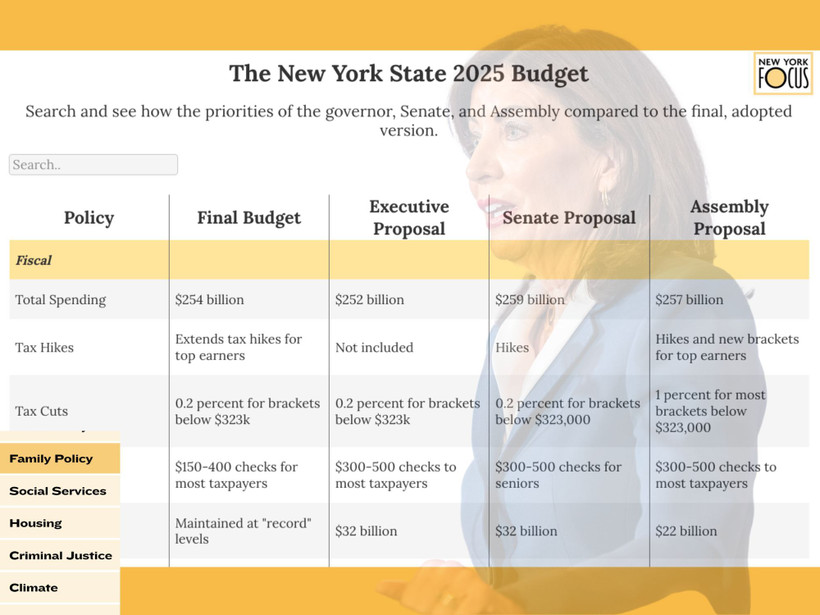
Nearly four months after Governor Kathy Hochul unveiled her proposed budget, lawmakers yesterday passed a $254 billion final agreement — after having just a few days to comb through thousands of pages of fine print and the hundreds of billions of dollars at stake for New Yorkers.
The largest budget in state history came in a couple billion dollars higher than Hochul had proposed in January, but several billion less than the Senate and Assembly suggested in their one-house proposals.
This year’s budget avoids increasing personal income taxes but does raise taxes on large New York City businesses to fund the Metropolitan Transportation Authority’s massive capital plan. Middle-income households will see small rate cuts. The child tax credit for parents with kids under four will also go up. Most residents will get a one-time inflation rebate check from $150-$400.
Two of the budget’s biggest sticking points — rolling back discovery reforms and expanding involuntary commitment — made it through, as did a provision to restrict mask-wearing in public.
The legislature avoided deep cuts to social service programs — which are likely to be first on President Donald Trump’s federal chopping block. The state will tap $8 billion from its record-high reserves to bail out the unemployment system. Parents will see a bump in the child tax credit.
However, there’s also a lot missing: cap and invest, the NY HEAT Act, and a solar tax credit expansion. Zoning reform and a ban on rent-setting software were left on the table, as was funding for first-time homebuyers.
Budget negotiations in New York are opaque, even for the people who participate in them. This year’s process drew particular ire from legislators and advocates alike: State Senator James Skoufis blasted the governor for running “roughshod over a legislature that is effectively relegated to making suggestions and pleading for scraps.” Yet lawmakers did grant Hochul significant leeway to slash funding if the federal axe drops.
The long delay in approving this year’s budget means legislators have just 18 days left this year to address ... everything else.
Here’s New York Focus’s breakdown of the big topics in this year’s budget:
Total Spending
The final budget is $254 billion, a middle ground between Hochul’s smaller, initial proposal and the higher sums first proposed by the Senate and Assembly.
Tax Hikes
While individual income taxes won’t go up, the budget does raise taxes on companies in the New York City area that have payrolls larger than $10 million a year. That money will be used to fund the Metropolitan Transportation Authority, which operates trains, subways, and buses in and around New York City.
Middle Class Tax Cuts
Households with incomes below $323,000 will see their taxes cut by 0.2 percent, fulfilling a pledge that Hochul made when she unveiled her “affordability agenda” in January.
In March, New York Focus reported that the top fifth of taxpayers will see the largest share of savings from this cut.
Inflation Rebate:
In an effort from Hochul to fight the effects of inflation, most New York taxpayers will be sent “inflation rebate” checks of $150 to $400.
Conservative and liberal budget watchdogs have criticized the plan, calling it a one-time benefit that will cost the state billions of dollars. That didn’t stop the legislature from signing on.
Reserves
After building up its savings to record levels in recent years, the state will use $8 billion from its rainy day fund to pay off its debt to the federal government for unemployment checks New Yorkers received during the Covid pandemic. It’ll also put some of that money into the unemployment trust to make it solvent.
That will lower the reserves to an estimated $23.4 billion, though precise numbers haven’t yet been published.
MTA Funding
The MTA’s plan for repairs and upgrades over the next five years has a price tag of $68 billion. Coming up with that money, which the agency says it needs to maintain New York City’s subways, buses, and commuter trains, has been a point of contention in this year’s budget process.
Lawmakers say they’ve solved the problem, though the details aren’t clear. The plan may require the MTA to increase its already heavy debt burden. Much of the funding will come from a tax hike on New York City’s largest companies. The remainder will rely on federal, state, and city funds, as well as cost savings that the state expects the MTA to achieve.
This plan could run into trouble if the Trump administration makes good on its threats to pull funding for the MTA due to New York’s refusal to terminate congestion pricing in Manhattan.
Child Care Workforce
For the past two years, New York’s child care workers — among the lowest-paid employees in the state — received a small bonus from Albany, paid for with federal pandemic funds. This year, the state has decided not to provide a bonus.
New York is facing a shortage of child care workers, caused in part by low pay and poor benefits. Advocates and legislators say the shortage is partially to blame for the low availability of child care in the state. Less state investment in the workforce also drives up costs for parents.
Child Care Assistance Program
The state budget will partially close a funding shortfall for child care vouchers. New York City had an estimated shortfall of $900 million, and the rest of the state had a gap of more than $200 million.
Along with NYC, more than a dozen counties across the state have set up waitlists for new parents attempting to enroll in the program, which covers almost the full cost of child care for poor and low-income families.
New York Focus first reported on the funding shortfall in February, when the city warned it would have to start removing thousands of parents from the program every month absent new money from the state.
The budget will partially ameliorate the problem. It will increase funding to New York City by $350 million, but there’s a major caveat: The city has to put in an equal amount of its own money to receive the state funds. If the city doesn’t put in $350 million, the remaining money will be made available to other counties.
The budget also boosts funding for the rest of the state by $50 million, with no matching requirement.
Substitute Teacher Pool
When child care workers call in sick, parents are often turned away at drop off because providers must maintain strict worker-to-child ratios set by the state.
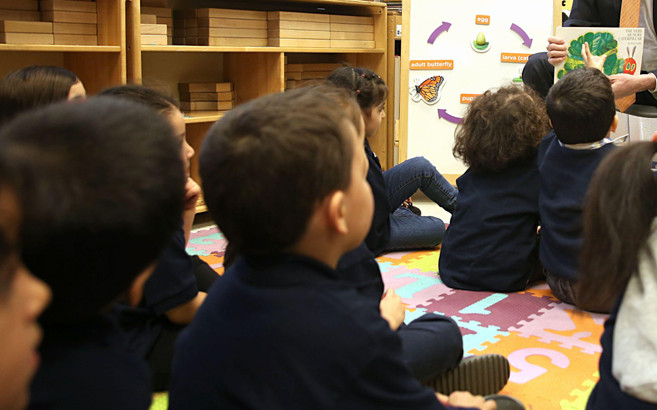
The budget attempts to tackle that problem with $3 million to create a substitute caregiver pool — a registry of pre-vetted child care workers who providers can call in a pinch. The idea was proposed by the state’s Child Care Availability Task Force last year.
Family Tax Credits
This year, families with kids under four will see the maximum child tax credit they can receive tripled, from $330 to $1,000 per kid.
Starting next year, families with kids aged four through 16 years old will see a small bump up to $500.
Birth Allowances
The budget establishes an allowance of $1,800 upon birth of a child for parents who are receiving public assistance. It is the “first program of its kind in the nation,” said Steph Silkowski, director of policy and strategic initiatives for the Bridge Project, which advocates to end child poverty.
Zoning Reform
As expected, this year’s budget did not include any significant measures to address the statewide housing shortage.
Many areas across the state, particularly in New York City’s suburbs, use restrictive zoning codes to limit or ban new housing. Suburban lawmakers have fiercely resisted attempts to shift this status quo, and it doesn’t look like Albany is planning to take on the issue any time soon.
Help For First-Time Homebuyers
In January, Hochul proposed creating a $50 million fund to help first-time homebuyers afford mortgages. Both houses of the legislature had initially signed on to this idea, and it appeared set to pass — but it was dropped from the final budget.
Private Equity Restrictions
The final budget includes a measure, first proposed by Hochul, to ban private equity firms and other institutional investors from bidding on single- or two-family homes until they’ve been on the market for 90 days. The budget also bars large investors from accessing some tax benefits associated with home ownership.
These provisions are meant to make home ownership more accessible to regular households by removing competition and bringing down prices.
Banning Rent-Setting Software
A proposed ban on algorithmic software used to set rents did not make it into the final budget after both chambers rejected it. Some housing experts and the US Department of Justice have claimed that such software functions as a monopoly and inflates prices for tenants.
The Senate said that it wants to return to the issue during the remainder of the legislative session.
A New Fund for New Housing
The budget will allocate $50 million for low-interest loans to developers who include affordable housing in new buildings outside of New York City. The money is intended to be recycled: Once a developer pays it back, it can be lent out again. Other states and counties across the country have successfully implemented this model in recent years.
New Housing Vouchers
The budget sets aside $50 million to create a new housing voucher program that will help homeless individuals and families rent apartments, and also offer assistance to those at risk of homelessness. This has been a top goal of tenant and homeless advocates for years. They sought to win $250 million for the program, but still claimed this year’s measure as a partial victory.
Discovery Reform Rollbacks
This budget season, Hochul once again prioritized rolling back one of the state’s major criminal justice reforms. She targeted the process — known as discovery — by which prosecutors share the evidence they have against criminal defendants.
Her initial proposal would have given prosecutors more leeway to decide what to share, and made it harder for judges to dismiss cases over discovery violations. Neither the Assembly nor Senate included discovery changes in their budget counterproposals.
Negotiations over the changes significantly held up the budget this year. While Hochul ultimately did win some changes in the final agreement, budget language indicates that her victory was less sweeping than how her administration characterized the deal last week.
Involuntary Commitment
The final budget includes a version of another of Hochul’s criminal justice priorities this year. Under state law, police are allowed to take someone experiencing a mental health crisis to the hospital against their will if officers assess that the person poses a risk to themselves or others.
Hochul pushed to expand those parameters, and though she faced resistance from the legislature, the final budget does allow involuntary commitment if a person is “at substantial risk of harm due to their inability to meet basic needs like food, shelter, or medical care.”
The legislature did alter Hochul’s proposal so that ambulances — not police – transport those committed to a hospital. The changes also require hospitals to provide more assistance upon a person’s release.
Prison Closures
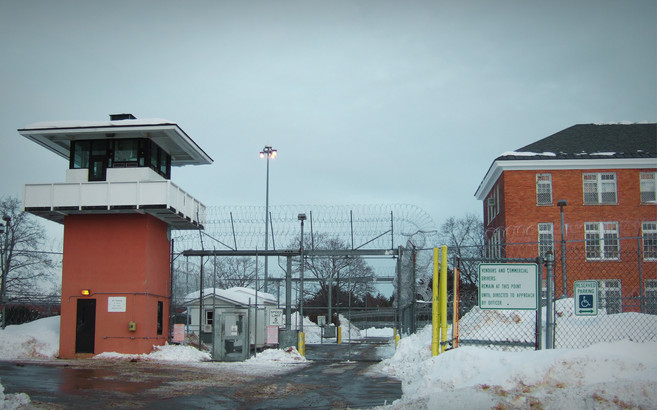
New York can close up to three prisons over the next year.
In her January proposal, Hochul reupped a provision passed in last year’s budget that allowed the state to close up to five prisons over the following year. It’s part of the state’s attempts to remedy a prison staffing crisis by consolidating its diffuse incarcerated population.
State Commission of Correction Expansion
The State Commission of Correction is a little-known agency with wide legal authority to regulate jails and prisons. But it rarely takes action.
The budget adopted measures to add to SCOC’s responsibilities, including by requiring staff to inspect every county jail and state prison once a year.
Prison Body-Worn Cameras
The governor and both chambers proposed requiring corrections officers to wear body cameras and turn them on when interacting with incarcerated people. The final agreement requires corrections officers and security supervisors to wear body cameras — and make sure they’re on — “at all times” on duty.
Climate funding
For the first time ever, New York is devoting a meaningful sum from its general budget — $1 billion — to fighting climate change. About half of the money will go toward cutting pollution from buildings, with an emphasis on “thermal energy networks,” which allow electrification of heating and cooling at a neighborhood scale. Shovel-ready projects at public universities are high on the list.
Another $250 million or so will help local governments and businesses pay for electric vehicles and the charging infrastructure needed to support them — especially school buses, trucks, and other heavy-duty vehicles. And $200 million will go toward grid upgrades and public renewable energy projects, including those from the New York Power Authority and municipalities. That leaves about $100 million for the Hochul administration to move around as it sees fit, with some oversight from legislative leaders.
Many of the line items represent hard-fought wins for advocates, especially the funding for thermal energy networks at SUNY, a rare shared priority for green groups and building trades unions.
But the one-time infusion of funds still looks to many like a consolation prize after Hochul slammed the brakes on cap and invest, her longstanding plan to put a price on pollution and raise billions per year for climate action. That program is now tied up in court, where green groups hope a judge will force the state to revive it ASAP.
NY HEAT Act
For the third year running, the flagship climate legislation known as the NY HEAT Act failed to make it into the budget. The Senate was alone in pushing to include it this year, and it did not gain much traction in budget talks.
The legislation, which would allow the state to gradually transition homes off fossil fuels, remains a top priority for green groups, who will be pushing hard to pass it in the remaining five weeks of session.
Clean Water Funding
For the seventh year straight, New York will put $500 million toward cleaning up its drinking water. That money will help fund a broad swath of projects, including upgrades at local sewage treatment plants, replacing leaky pipes, testing for “forever chemicals,” and managing road salt. The Senate and Assembly both tried to increase the total funding — in part by dedicating $100 million to replacing lead pipes — but were rebuffed.
Environmental Protection Fund
Another flagship program, the Environmental Protection Fund, will get a slight boost this year — to $425 million, up from the $400 million it’s been funded at since 2022. It’s a smaller increase than the Senate and Assembly had sought, but still means the state will have a record amount to spend on conserving its lands and waters.
Solar tax credits
New York’s $5,000 credit for homeowners who install solar took effect in the late 1990s and has not seen an increase since 2006. The Assembly and Senate wanted to change that in this budget by increasing the maximum credit to $10,000 and making it easier for co-op and low-income residents to receive it.
The reforms did not make it into the final budget. (Similar reforms to tax credits for geothermal heating systems — doubling them to $10,000 and making them refundable — did make the cut.) Solar backers are confident that the measure can still pass before the end of the legislative session, since both chambers of the legislature have signaled their support. To date, New York’s solar subsidies have gone disproportionately to high-income homeowners, and advocates say the reforms would go a long way toward making them more equitable.
Green Pre-Electrification (GAP) Fund
Over the last few years, New York has budgeted hundreds of millions of dollars to help homeowners pay for energy efficiency upgrades and home electrification. But there was a catch: Many homes face hazards like lead or mold contamination, or other issues that prevent residents from safely undertaking green retrofits. New York’s 2022 climate plan recommended the state create a fund to help low-income households remediate those issues, and green groups have since been pressing the state to act on that recommendation.
This year, it did, after both the Assembly and Senate acknowledged the need in their budget proposals. At just $2 million, the fund is not likely to help many homeowners this year, but climate and affordability groups are pleased to see it get off the ground.
Foundation Aid
The state has allocated about $36 billion for education, on par with last year’s budget. Of that, $26.4 billion will go toward Foundation Aid, the formula the state uses to distribute most aid to schools. That’s an increase of more than $1 billion from last year.
The budget also updates the formula for the first time since its implementation in 2007 by changing how student poverty is measured and adding more funding for English Language Learners.
Universal Free School Meals
Students across New York will have access to free breakfast and lunch, thanks to a statewide universal free meals program in this year’s budget.
Senator Michelle Hinchey and Assemblymember Jessica González-Rojas had pushed for a universal meals program during several budget cycles. As a result, about 90 percent of students were covered this school year. Hochul took up the fight and the program will now cover the remaining 10 percent of students.
Free Community College
Under the New York Opportunity Promise Scholarship, students aged 25 to 55 who do not have a college degree can now attend community college for free if they enroll in certain programs among high-demand fields, such as technology, cybersecurity, nursing, and teaching.
CUNY Funding
The budget includes $6.6 billion for the City University of New York, which has more than a quarter-million students and is the largest urban university system in the US. Both the Assembly and the Senate had pushed for increased funding in their one-house budgets, but the final number is closer to Hochul’s original $6.4 billion proposal.
SUNY Funding
The State University of New York, another massive system of public colleges and universities, is set to receive $15.7 billion, a slight increase over Hochul’s January proposal of $15.3 billion. The Senate had initially proposed a bigger boost — $21.8 billion — to go mostly toward capital projects.

Unemployment Insurance Deficit
The state will spend $8 billion of its reserves to pay off New York’s unemployment insurance debt and boost unemployment benefits for the first time in six years.
New York owed the money after borrowing from the federal government to cover pandemic-era unemployment claims. As a result, the weekly benefit for workers has been capped at $504 since 2019.
The maximum weekly benefit will increase to $869 this year.
The budget will also increase how much of a worker’s wages employers are required to pay payroll tax on by a few thousand dollars, a measure meant to provide additional funding to the unemployment system.
Economists and policy experts say that increase isn’t enough and that there’s still a risk of the state going into debt and freezing benefits during the next recession.
Medicaid
TBD
Targeted Inflationary Increase
The nonprofits that deliver the bulk of New York’s social services were hoping for a funding bump of nearly 8 percent from this year’s budget. They’ll have to settle for a more modest increase of 2.6 percent. The raise does come with a caveat that it must go toward recruiting and retaining support staff instead of boosting executive salaries.
NYSSHP (New York State Supportive Housing Program)
Reimbursement rates for New York’s oldest supportive housing program have remained nearly unchanged since 1987. Many of its 20,000 supportive housing units have fallen into disarray and are in desperate need of repairs, but low reimbursement rates have made updates unaffordable.
The budget allocates $71.4 million for the program, part of which will go toward higher reimbursement rates.
Energy Affordability Program (EAP)
This year, the Senate and Assembly had hoped to greatly expand the Energy Affordability Program, which provides monthly utility discounts for low- to moderate-income New Yorkers. Each chamber had initially proposed boosting the program by $200 million, but the final budget excluded the sum.
Unmet Needs (In-home services for seniors)
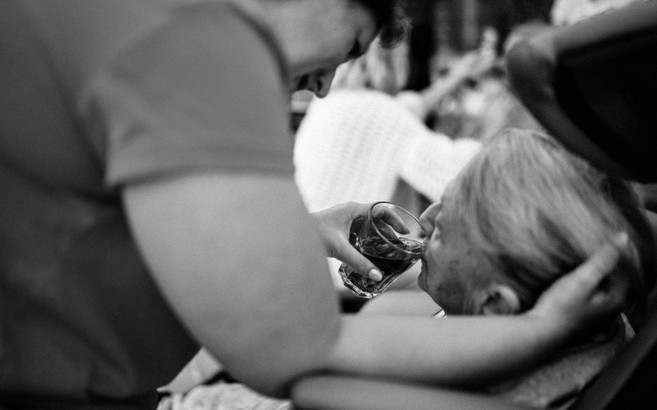
The budget allocated $53 million for unmet needs, a sizable investment and an increase from last year. The program provides an array of services to homebound seniors across the state who are not eligible for Medicaid and would otherwise wind up in a nursing home. The AARP called it a victory for seniors and caregivers across the state.