'Your benefits could be taken at any moment.'
'Your benefits could be taken at any moment.' ·  View in browser
NEWSLETTER

Funding local news is more important than ever, and it will take a village to succeed. Join us in our work to rebuild local journalism as a pillar of democracy in New York.

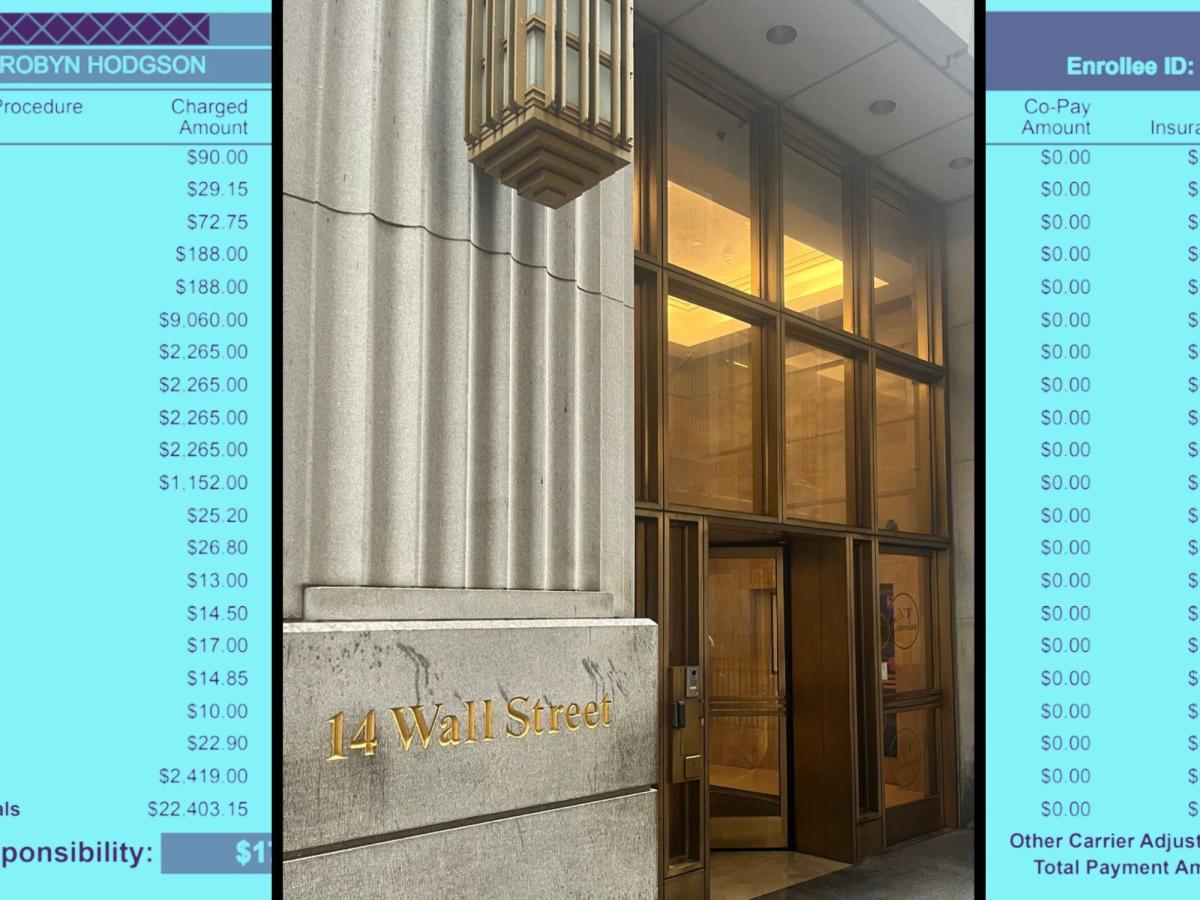
The state has left defrauded food stamp recipients to fend for themselves. Internal agency emails point to a long-simmering effort riddled with delays.
By Jie Jenny Zou

It took nearly four months for New York to return $318.83 in stolen food assistance benefits to Anna Gelman. The day after she was finally refunded, her benefits were stolen again.

The 90-year-old from Brooklyn is now out $409.05, and due to congressional inaction, refunds are also no longer an option.

Gelman is among the thousands of New Yorkers who rely on the Supplemental Nutrition Assistance Program, or SNAP, to fill up their grocery carts only to discover that their benefits have been depleted by the time they get to checkout. She is also one of eight plaintiffs named in a federal lawsuit filed Thursday against the New York State Office of Temporary and Disability Assistance, which oversees SNAP across the state.

“I’m very angry, I don’t understand why the state doesn’t do anything,” said Gelman.

New York has been a target for a practice called skimming, in which thieves place hidden devices at registers to compromise payment cards. Emails obtained by Focus show the state has for years been considering a tech upgrade that could curb skimming, but has failed to take action.

Related: A Simple Fix Could Stop Millions in Food Stamp Theft. Will New York Commit?

Recent Stories

State Senate Majority Leader Andrea Stewart-Cousins delivers closing remarks at the end of her chamber’s legislative session in Albany. June 13, 2025. NYS Senate
The bill package will now head to Governor Kathy Hochul’s desk, and she could either sign, veto, or scale it back through amendments to the legislation.
By Chris Gelardi

Amid one of the most chaotic years for New York’s prison system in recent memory, the state legislature passed a limited omnibus prison reform bill Thursday night, hours before one of its chambers closed out its lawmaking for the year.

The bill is the legislature’s response to the state prison agency’s mounting scandals. In December, body-worn cameras captured corrections officers taking turns beating a handcuffed incarcerated man named Robert Brooks, who died hours later. The killing sparked nationwide outcry and served as a backdrop for months of tumultuous events that followed, including a three-week corrections officers strike, another alleged killing at the hands of prison guards, and two contentious legislative hearings.

Prison reform-minded lawmakers compiled a 23-bill package to address what they described as systemic issues underlying Brooks’s death. State Senate and Assembly leaders then picked seven of them, plus three other prison reform bills, to include in the omnibus. Both chambers passed that bill Thursday night, shortly before the Senate ended its annual legislative session early Friday morning. (The Assembly has delayed the end of its session to next week.)

Most of the provisions in the omnibus legislation center on beefing up prison oversight and transparency.

Related: As Dust Begins to Settle on Prison Chaos, Reformers Hold Somber Hearing

Leading Edge routinely underpays doctors and hospitals and passes the cost on to patients, sometimes leaving them with thousands of dollars of debt. Photo by Sam Mellins; Illustration by New York Focus
The little-known company recently won a huge taxpayer-funded contract. It has a record of not paying doctors and leaving patients on the hook for the bills.
By Sam Mellins

Over the past few months, New York Focus has been investigating the health insurance company Leading Edge Administrators. The company has little public footprint, but on May 1 became the default insurer for the hundreds of thousands of New Yorkers who work for the state-funded home health care program known as Consumer Directed Personal Assistance Program (CDPAP).

That makes it one of the largest health insurers in New York state, and a huge recipient of taxpayer money.

We found that Leading Edge, which sometimes goes by the name Omni Advantage, routinely underpays doctors and hospitals and passes the cost on to patients, sometimes leaving them with thousands of dollars of debt. To do so, the company employs practices virtually unheard of in the insurance industry that lead to frequent lawsuits against it.

In the course of our investigation, we spoke with doctors, patients, health insurance experts, and six of Leading Edge’s former employees. We also reviewed hundreds of pages of court records and insurance documents.

Here are five takeaways from our ongoing investigation.

Related: Have You Been Sued for Credit Card Debt? Your Fake Relative Might Know.

To keep their tax-exempt status, nonprofit hospitals must provide free or discounted health care to patients who fall under certain income limits. Photos: xtberlin / pixabay | Illustration: Leor Stylar
Nonprofit hospitals are required to help those struggling with medical debt, but critics say their policies are poorly advertised and underutilized.
By Jie Jenny Zou

On a recent Tuesday afternoon, a team of volunteers armed with laptops helped New Yorkers shave hundreds or even thousands of dollars off their hospital bills by tapping into a little-known program called “charity care.”

Rose Gasner, a retired health care attorney who organized the free clinic at the central branch of the Brooklyn Public Library, called charity care a “best-kept secret.”

To keep their tax-exempt status, nonprofit hospitals must provide free or discounted health care to patients who fall under certain income limits. In New York, those who earn up to 400 percent of the federal poverty level are eligible — this year, that’s $62,600 for an individual or $128,600 for a family of four. Some hospitals go further, providing discounts to those who earn up to twice as much. Immigration status cannot be considered during the application process and both insured and uninsured patients are eligible.

The catch? Figuring out charity care exists in the first place.

Related: Need Help Paying Medical Bills? Here’s How Charity Care Works in New York.

Lobbying groups representing Wall Street firms are mounting an eleventh-hour push to stop proposed legislation that would limit creditor lawsuits against countries that default on their debt payments. Photo: kevinjeon00 / Getty Images | Illustration: Leor Stylar
Four lobbying groups representing Wall Street firms are trying to block the bill from passing in the final days of the legislative session.
By Julia Rock and Chris Bragg

Lobbying groups representing Wall Street firms are mounting an eleventh-hour push to stop proposed legislation that would limit creditor lawsuits against countries that default on their debt payments. Those lawsuits are often brought by hedge funds that are not satisfied with the debt repayment terms that other creditors, like governments, accept in restructuring negotiations.

The bill was developed by community groups after Puerto Rico defaulted on its debt and New Yorkers watched as friends and family in the territory faced school and hospital closures and lost their pensions.

The legislation passed the state Senate last week, and the bill’s Assembly sponsor, Jessica González-Rojas from Queens, was optimistic that it would pass her chamber as well.

But now, four groups are pressing the Assembly to stop the bill in its tracks.

Related: Amid Global Debt Crisis, Albany Advances Bill to Rein In Hedge Funds Suing Poor Countries

Documents reviewed by New York Focus show that half a dozen county sheriffs’ offices, as well as state-level agencies, have recently included a discredited syndrome called excited delirium in their training. Logo: New York State Division of Criminal Justice Services | Illustration: New York Focus
Documents show that six county sheriffs’ offices and two state agencies have recently included excited delirium in their training.
By Chris Gelardi

State and local agencies across New York train law enforcement officers on a condition that much of the medical establishment has disavowed as unscientific and a catalyst for police violence, newly unearthed documents show.

The condition, known as excited delirium syndrome, is said to turn people into erratic, super-strong aggressors and can supposedly lead to cardiac arrest. It dates to largely debunked research from the 1980s, which cited it as an alternate explanation for deaths at the hands of cops.

New York authorities, however, have continued to train officers on the discredited syndrome. In 2023, New York Focus revealed that the New York City Police Department was training its recruits to tase and pepper spray suspected excited delirium sufferers.

Now, documents obtained by the police reform group Campaign Zero and shared with New York Focus show that half a dozen county sheriffs’ offices, as well as state-level agencies, have also recently included excited delirium in their training.

Related: Rochester Cops Were Offered Training on Discredited Diagnosis Connected to Daniel Prude’s Killing

Copyright © New York Focus 2024, All rights reserved.
Staying Focused is compiled and written by Alex Arriaga
Contact Alex at alex@nysfocus.com

Feedback? Tips? Pitches? Contact us at: editor@nysfocus.com

Support our work!

Interested in sponsoring these emails? Get in touch! Email editor@nysfocus.com.

This email was sent to *|EMAIL|*

unsubscribe from this list  ·  update subscription preferences

New York Focus · *|HTML:LIST_ADDRESS_HTML|* · USA