This ‘Best-Kept Secret’ in Health Care Can Shave Down Your Medical Debt

Nonprofit hospitals are required to help those struggling with medical debt, but critics say their policies are poorly advertised and underutilized.

Jie Jenny Zou   ·   June 12, 2025
To keep their tax-exempt status, nonprofit hospitals must provide free or discounted health care to patients who fall under certain income limits. | Photos: xtberlin / pixabay | Illustration: Leor Stylar

Sign up for Staying Focused, our newsletter keeping readers up to speed on New York politics.

On a recent Tuesday afternoon, a team of volunteers armed with laptops helped New Yorkers shave hundreds or even thousands of dollars off their hospital bills by tapping into a little-known program called “charity care.”

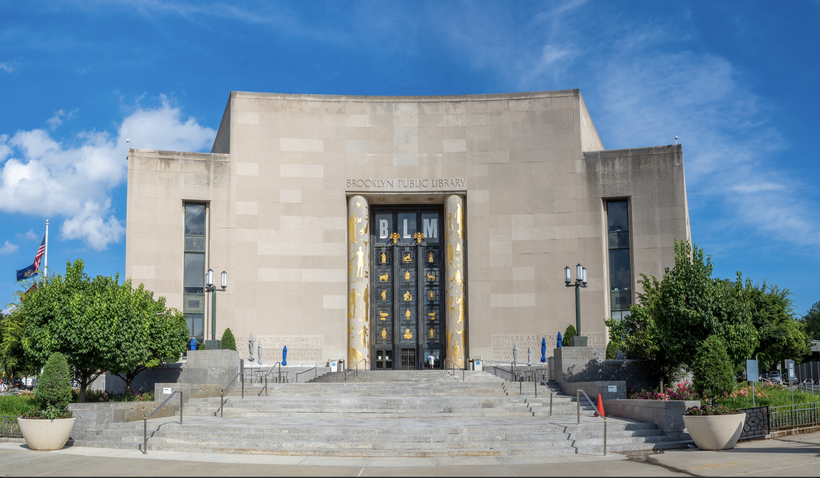
Rose Gasner, a retired health care attorney who organized the free clinic at the central branch of the Brooklyn Public Library, called charity care a “best-kept secret.”

To keep their tax-exempt status, nonprofit hospitals must provide free or discounted health care to patients who fall under certain income limits. In New York, those who earn up to 400 percent of the federal poverty level are eligible — this year, that’s $62,600 for an individual or $128,600 for a family of four. Some hospitals go further, providing discounts to those who earn up to twice as much. Immigration status cannot be considered during the application process and both insured and uninsured patients are eligible.

The catch? Figuring out charity care exists in the first place.

More than half of patients surveyed in a 2023 poll said they didn’t receive information about financial assistance from their hospitals, and 51 percent of those likely eligible did not apply.

People are often thrown off by the word “charity,” said Gasner, and either assume they’re not eligible or worry about dipping into a limited pool of resources that could take away from others in need.

But the pool is far from limited: 42 percent of nonprofit private hospitals in New York state received far more in tax breaks than they spent on community benefits like charity care, according to a recent study by the Lown Institute, a health care think tank.

The gap is particularly pronounced in New York City. The report found top facilities like NYU Langone Health’s Tisch Hospital and New York-Presbyterian Hospital receive millions more in tax savings than they spend on charity care or community health programs, like primary care clinics and Covid-19 testing.

“What’s striking to me about New York is it’s the best of times and worst of times,” said Vikas Saini, a cardiologist and president of the Lown Institute. Overall, New York hospitals spent more on community investments than any other of the 19 states studied by the institute. But the range for charity care spending at facilities across New York was wide, running from a low of 0.1 percent to a high of 5 percent of total spending. “Some hospitals are providing a lot more financial assistance than others.”

“All of the burden right now with charity care is on the patient to find out about the program.”

—Jared Walker, Dollar For

The Greater New York Hospital Association, a lobbying powerhouse representing 280 hospitals across the metropolitan area, bristled at the institute’s methodology and called it “a bogus analysis that suits their anti-hospital agenda” in an email to New York Focus.

“New York’s hospitals take their charity care obligations very seriously, including making sure patients are aware of available charity care programs,” the association wrote. It attached a copy of its own analysis from earlier this year showing New York City hospitals spent an average of nearly 18 percent of their operating expenses on community benefits such as health care training and research — exceeding the national average of roughly 10 percent.

Much of the disagreement over how to crunch a hospital’s contributions to the community depends on which programs are counted and how. Saini and other public health advocates argue that programs like charity care represent the most direct benefits to communities and should take prominence over other forms of spending, like corporate sponsorships of sports teams or the fundamental requirements of running a hospital, like staff training. The hospital association’s report found financial assistance programs like charity care accounted for an average of 1 percent of spending at city hospitals.

At least 740,000 New Yorkers had some form of medical debt as of 2023, according to recent estimates. Nationwide, Black and Latino Americans are especially hard-hit.

And experts predict medical debt will only deepen if Congress moves forward with a controversial plan to slash Medicaid funding to pay for a new round of tax cuts for corporations and the wealthy. Estimates suggest as many as 15 million Americans could lose their coverage or become uninsured over the next decade under the current proposal circulating in Washington.

A recent clinic to assist people with medical debt took place at the Central Branch of the Brooklyn Public Library. | Rhododendrites / Wikimedia Commons

Rachel, a 23-year-old aspiring doctor and recent New York City arrival, was among the volunteers at the Brooklyn debt clinic. Not long ago, she needed help navigating hospital bills herself following an unexpected trip to the emergency room. (Rachel continues to negotiate her outstanding medical bills while also applying to medical schools and asked to be identified by her first name only.)

The experience “was just really scary because I had only been living here a month — no savings, family in another state. New York is expensive as it is,” she said.

In the fall, Rachel met Gasner, who helped her apply for financial assistance and encouraged her to get in touch with the hospital’s billing department, trimming down what could have been several thousands in debt to a more manageable $700. Rachel’s predicament inspired Gasner to host the clinic.

“This personal experience has really fueled me to make sure this doesn’t happen to other people,” said Rachel. “Everyone is deserving of health care.”

In a small room at the library’s business center, Rachel sat down with a 61-year-old breast cancer patient and helped tally up a long list of bills buried in a patient portal account.

Out of work and living on short-term disability payments, the patient said she had been “bounced around” by the billing department of a major New York City hospital system and couldn’t make sense of what had already been paid and what was still owed. She said she continues to receive a stream of confusing bills stemming from an outpatient surgery in December.

“Everyone who touched my body needs to get paid,” she said with a laugh. (She asked not to be named due to her ongoing billing case and medical privacy concerns.) Still in active cancer treatment, she said she was struggling not only to keep track of bills but to also care for her aging mother suffering from dementia.

“The last thing you want to do is get on the phone,” she said of decoding medical bills following a day in radiation therapy. “There’s aid out there, but it’s a lot of work.”

After about an hour of sifting through various documents, Rachel was able to submit the patient’s application using Dollar For, a nonprofit set up to help patients eliminate or reduce medical debt. If approved, the patient could see her bills forgiven or discounted in as little as a few weeks.

“No one had ever heard of it and no hospital had ever told these patients.”

—Jared Walker, Dollar For

It took years for Dollar For founder Jared Walker to discover charity care.

Walker started the organization as a crowdfunding operation in Portland to help families pay medical bills. Years later, he met an attorney who brought up charity care — which convinced Walker to pivot Dollar For’s mission toward helping Americans access the program nationwide.

“I was so annoyed because I realized I had been paying medical bills for low-income families that all would have been eligible,” Walker said of charity care. “No one had ever heard of it and no hospital had ever told these patients.”

Since 2021, Dollar For has helped patients nationwide eliminate almost $93 million in medical debt, including over $2 million for nearly 300 New Yorkers. The organization said that of the total number of applications they’ve been able to fully track, 42 percent were approved.

Walker said the majority of hospitals across the country have done little to bridge the knowledge gap or smooth their application processes, with some still requiring applicants to fax documents. “I think these programs are hard and difficult by design,” said Walker. “If a hospital can squeeze a little bit of money out of even their poorest patients, they’re going to try.”

By comparison, New York’s law governing charity care — which many health policy advocates consider one of the most favorable to patients — has strengthened over time. In October, several changes, including expanded eligibility and a requirement that hospitals use a standardized form, took effect. A 2023 state law also prohibits health care providers, including hospitals, from reporting medical debt to credit agencies.

‘All of the Burden’

At the end of the debt clinic, Gasner, Rachel and the other volunteers gathered to discuss the day. The event was a pilot that Gasner hopes can serve as a springboard for future clinics or a training model for other community groups to take up on their own.

One of the volunteers, Aviva Goldstein, a retired nonprofit professional from the public health sector, noted that the application process itself — no matter how streamlined — is a barrier for most Americans.

“I was working with this woman who was extremely organized,” she said of her patient who arrived with a stack of medical bills. “Most people can’t do that.”

Goldstein also noted that she would like to see charity care and other forms of financial assistance baked into the existing patient experience as part of the care they receive. “They shouldn’t have to go to a separate person for every little problem.”

“What’s striking to me about New York is it’s the best of times and worst of times.”

—Vikas Saini, Lown Institute

Walker agrees. “The idea that we have to have a nonprofit organization [Dollar For] that exists to tell patients about a program that the hospitals are legally required to have is embarrassing,” he said.

“All of the burden right now with charity care is on the patient to find out about the program, to navigate the program, to apply the program, to fight the hospital for the program. And that just shouldn’t be the case.”

Walker said that equation could change if hospitals were required to screen patients for charity care before billing them. States like Illinois, Maryland, and Oregon have adopted forms of presumptive eligibility, automatically screening patients for charity care if they already receive public assistance or are charged more than a certain amount.

New York City is among several localities that have teamed up with Undue Medical Debt, a nonprofit that cuts medical debt by purchasing it directly from hospitals or collection agencies in large bundles at a steep discount — eliminating the need for applications entirely.

The city’s three-year partnership with the nonprofit has set a goal of eliminating $2 billion in medical debt for New York City residents using $18 million in city funds. So far, the initiative has cancelled $80 million in debt for 35,000 New Yorkers. Unlike charity care, patients do not need to take any action — they simply receive notices in the mail notifying them that their debts have been forgiven.

“We eliminate medical debt for those who need relief the most,” said Courtney Werpy Story, vice president of government initiatives at Undue Medical Debt. “Reducing barriers to receiving assistance is the best thing we can do.”

For many patients, the bureaucracy of medical debt — billing departments and collection agencies and even forgiveness programs — exerts its own toll.

On the day of the debt clinic, Rachel received an unexpected message: She still owes a portion of the medical debt she thought she had cleared months earlier.

At New York Focus, our central mission is to help readers better understand how New York really works. If you think this article succeeded, please consider supporting our mission and making more stories like this one possible.

New York is an incongruous state. We’re home to fabulous wealth — if the state were a country, it would have the tenth largest economy in the world — but also the highest rate of wealth inequality. We’re among the most diverse – but also the most segregated. We passed the nation’s most ambitious climate law — but haven’t been meeting its deadlines and continue to subsidize industries hastening the climate crisis.

As New York’s only statewide nonprofit news publication, our journalism exists to help you make sense of these contradictions. Our work scrutinizes how power works in the state, unpacks who’s really calling the shots, and reveals how obscure decisions shape ordinary New Yorkers’ lives.

In the last two decades, the number of local news outlets in New York has been nearly slashed in half, allowing elected officials and powerful individuals to increasingly operate in the dark — with the average New Yorker none the wiser.

We’re on a mission to change that. Our work has already shown what can happen when those with power know that someone is watching, with stories that have prompted policy changes and spurred legislation. We have ambitious plans for the rest of the year and beyond, including tackling new beats and more hard-hitting stories — but we need your help to make them a reality.

If you’re able, please consider supporting our journalism with a one-time gift or a monthly gift. We can't do this work without you.

Thank you,

Akash Mehta
Editor-in-Chief
A photo of Akash Mehta.
A photo of Jie Jenny Zou.
Jie Jenny Zou covers social services and public benefits for New York Focus. She previously worked as an investigative reporter at the Los Angeles Times and the Center for Public Integrity where she delved into topics ranging from environmental health and worker safety… more
Also filed in New York State

A lobbyist who has been romantically linked to Assembly Speaker Carl Heastie led a rally opposing the legislation a week before the speaker declined to bring it to a vote.

In May, state lawmakers passed a $269 billion budget after haggling for months over thousands of line items and policies affecting New Yorkers.

Millions in outside spending was a boon to Gov. Kathy Hochul’s 2022 opponent, Lee Zeldin, and influenced down-ballot races.

Also filed in Health

Despite last-ditch efforts by a coalition of lawmakers, the state failed to avert a health coverage cliff coming this summer.

160,000 injured New Yorkers seek workers’ compensation each year — but in recent years, regulators have tilted the scales towards employers and insurers.

Amid abortion bans and rising digital surveillance, Albany lawmakers are revisiting an effort to stop companies from selling sensitive health information.

Also filed in New York City

The citizens assembly model, used for public decision-making around the world, is gaining traction in New York.

Resorts World is floating legislation to avert more than $500 million in payments to the horseracing industry.

Some of the city’s new aid will be canceled out by pension boosts.

Also filed in Explainers

We’ve compiled information for SNAP recipients in New York on the changing work requirements.

We answer your questions on the state’s notoriously opaque budget process.

Unions want state leaders to sweeten their retirement packages. What would it cost, and what would it achieve?

Also filed in Social Services

New York state has pumped millions of taxpayer dollars into an online portal that vowed to make life easier for Rochester’s neediest, but critics say it’s fallen short.

The Hochul administration now has a chance to relax New York’s child care staffing ratios — among the country’s strictest — after 26 years. But will it?

New rules could result in thousands of New Yorkers losing their food benefits this summer.