The last special session took place in 2022 ... when lawmakers convened to give themselves raises.
The last special session took place in 2022 ... when lawmakers convened to give themselves raises. ·  View in browser
NEWSLETTER

Funding local news is more important than ever, and it will take a village to succeed. Join us in our work to rebuild local journalism as a pillar of democracy in New York.

Neither top legislators nor Governor Kathy Hochul have laid out a clear vision for addressing impending federal cuts. Photos: Visual Field/Getty; Matt H. Wade/Wikimedia Commons | Illustration: Leor Stylar
Fiscal advocates warn the governor and state lawmakers against punting a difficult discussion on how to deal with imminent cuts.
By Jie Jenny Zou

Top lawmakers don’t seem to be in a rush to figure out how to handle impending federal cuts.

On July 4, President Donald Trump signed the One Big Beautiful Bill Act into law, enacting over $1 trillion in historic cuts to Medicaid and the Supplemental Nutrition Assistance Program (SNAP) and forcing states like New York to rethink their largest and oldest safety net programs.

So far, neither top legislators nor Governor Kathy Hochul have laid out a clear vision for what comes next. New York Focus spoke to fiscal advocates to get their take on how the state should move forward.

Recent Stories

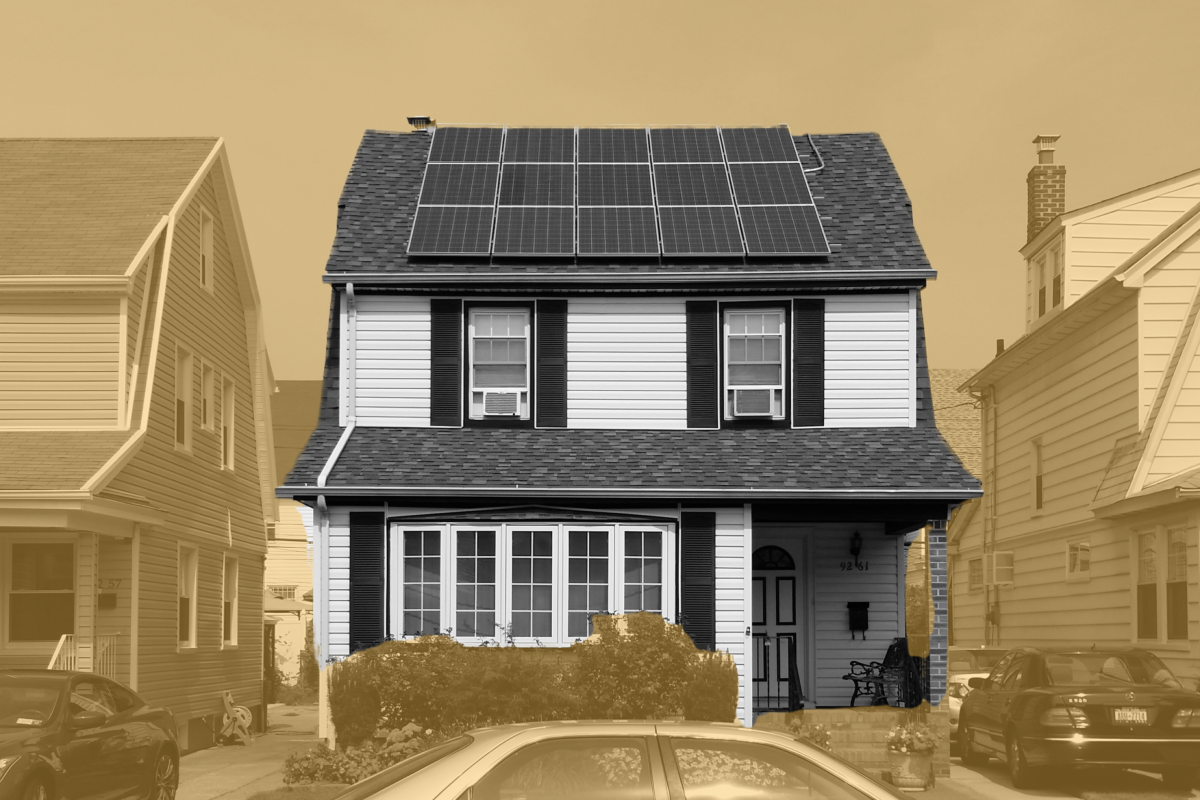
A residential home with rooftop solar panels in Queens Village, NY. Photo: Matt Green/Flickr | Illustration: Leor Stylar
Attyx, formerly known as SUNCo, is set to lose its license to operate in the state over what regulators called “false and misleading” sales pitches.
By Colin Kinniburgh

A rooftop solar company with a vexed history could soon be out of business in New York.

On Tuesday, utility regulators moved to strip Attyx, formerly known as SUNco, of its license to operate in the state unless it can prove within 30 days why it should be allowed to stay in business.

Regulators accused the company of “misleading or deceptive” marketing that led homeowners to sign up for solar under the false pretext that they would get their roofs replaced for free, thanks to generous government incentives.

Tuesday’s order from the Public Service Commission, the seven-member panel that regulates New York energy companies, said the state had received numerous customer complaints about Attyx’s practices.

Thousands of New York state corrections officer positions remain unfilled, and the agency has struggled to resume normal operations. Screenshot: NYS Department of Corrections and Community Supervision | Illustration: New York Focus
The prison agency’s security ranks are 4,700 corrections officers and sergeants short of what it says it needs to run every program and housing area effectively.
By Chris Gelardi

In February, thousands of New York state prison guards walked off their jobs. With no officers to watch over daily operations, officials locked incarcerated people in their cells for days at a time. Governor Kathy Hochul deployed 6,000 National Guard troops, who assisted skeleton crews in trying to keep more than 30,000 prisoners fed and showered. At least seven incarcerated people died amid the chaos.

The wildcat strike ended after three weeks. Yet four months later, thousands of officer positions remain unfilled, and the state prison agency has struggled to resume normal operations, recent court records show.

Offering hard-to-use benefits instead of cash could help two state-funded companies dodge a 2011 law meant to boost care workers’ pay.
By Sam Mellins

Two health care companies are positioned to keep tens of millions of dollars that are meant to benefit the army of low-wage home health aides who care for disabled and elderly New Yorkers.

The first company, Public Partnerships, LLC (PPL), recently took over New York’s state-funded home health program. The second, health insurer Leading Edge Administrators, was hired by PPL to provide insurance and other benefits to the hundreds of thousands of workers — mostly women and immigrants — who provide the home care. The new coverage began in May.

A New York Focus investigation has found that Leading Edge has championed a business model allowing the employers they work with to keep money that should legally go to their workers.

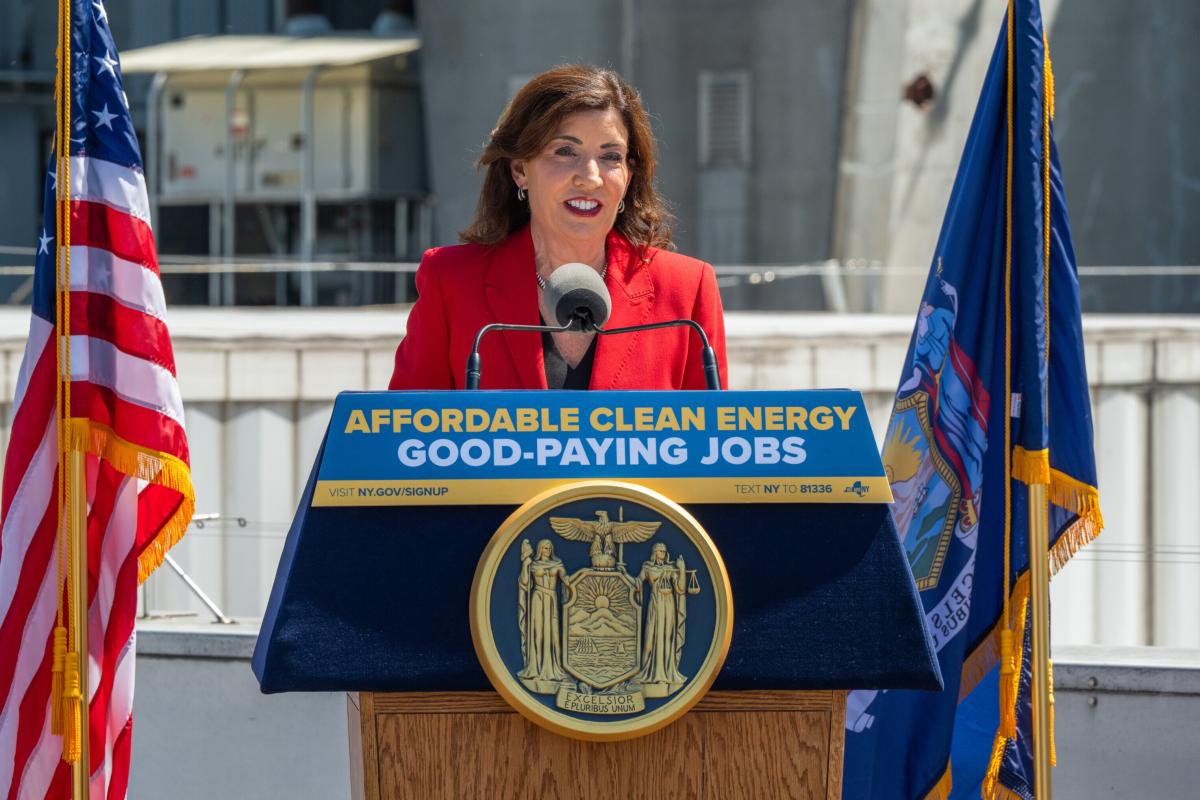
Hochul’s administration is slashing an energy affordability program that was once a priority for the governor. Darren McGee / Office of Governor Kathy Hochul
Empower+ helps thousands of New Yorkers afford energy efficiency upgrades. The state is planning to slash funding by nearly two-thirds in two years.
By Colin Kinniburgh

Governor Kathy Hochul has made energy affordability a centerpiece of her political platform this year, blasting proposed utility rate hikes and even promising to “slow down” implementation of the state’s climate law over the concern that the clean energy transition is costing New Yorkers too much.

But Hochul’s administration is slashing an energy affordability program that was once a priority for the governor, New York Focus has learned.

The Empower+ program was designed specifically to help low- and moderate-income households “save energy and money” through energy efficiency upgrades. Since 2023 — at Hochul’s initiative — it has been New York’s one-stop shop to help residents take advantage of green building upgrades they might not otherwise be able to afford, like better insulation and replacing old boilers.

Copyright © New York Focus 2024, All rights reserved.
Staying Focused is compiled and written by Alex Arriaga
Contact Alex at alex@nysfocus.com

Feedback? Tips? Pitches? Contact us at: editor@nysfocus.com

Support our work!

Interested in sponsoring these emails? Get in touch! Email editor@nysfocus.com.

This email was sent to *|EMAIL|*

unsubscribe from this list  ·  update subscription preferences

New York Focus · *|HTML:LIST_ADDRESS_HTML|* · USA