The Reporters’ Notebook features bite-sized stories and updates from New York Focus reporters on the topics they cover. It’s our way of keeping readers updated about the subjects they care about between the time it takes to publish our longer, more in-depth articles.
Top lawmakers don’t seem to be in a rush to figure out how to handle impending federal cuts.
On July 4, President Donald Trump signed the One Big Beautiful Bill Act into law, enacting over $1 trillion in historic cuts to Medicaid and the Supplemental Nutrition Assistance Program (SNAP) and forcing states like New York to rethink their largest and oldest safety net programs.
So far, neither top legislators nor Governor Kathy Hochul have laid out a clear vision for what comes next. New York Focus spoke to fiscal advocates to get their take on how the state should move forward.
THE TIMELINE
The law’s first wave of Medicaid cuts takes effect in January, and new SNAP requirements are projected to take effect in March. State officials estimate the initial funding loss at a conservative $750 million — a figure small enough to be absorbed by a special reserve fund, which would spare the state from having to implement any midyear budget cuts.
But starting April 1, that shortfall will balloon into a recurring, multibillion-dollar hole that fiscal experts say can’t be resolved by stopgap measures and will require the state to take decisive action: slash spending, raise revenue, or both.
WHAT IS A SPECIAL SESSION?
Despite the massive scale of the cuts, several lawmakers have said they don’t plan to reconvene this year to address the funding loss and instead will take up the matter in January as part of the state’s regular budget process. However, that timeline coincides with the start of federal cuts, and could prove to be unwieldy for a legislature that struggled to deliver a budget on time earlier this year.
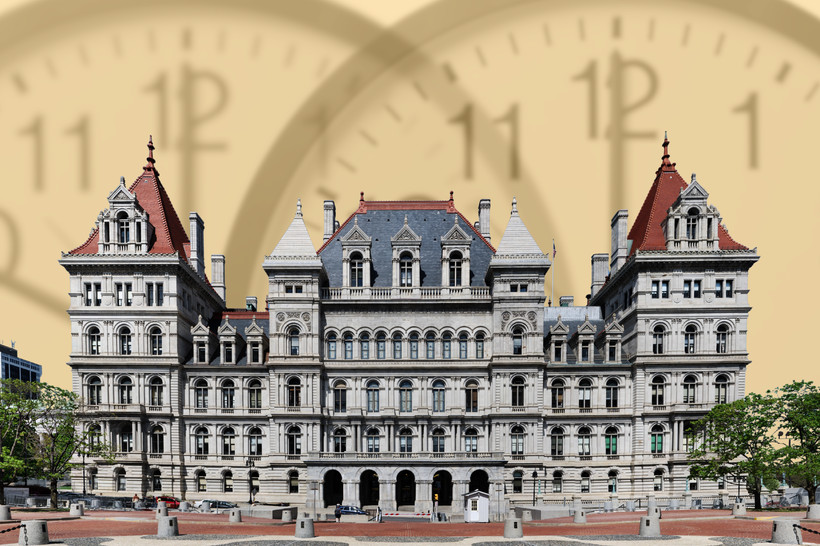
The legislature closed its doors for the year in June, but it can call a special session at any time to address any issue it deems urgent. New York is among 37 states where special sessions can be called by either the governor or the legislature. There are no limits on how many special sessions can be convened per year or for what purpose.
The last special session took place in 2022, just days before Christmas, when lawmakers convened to give themselves raises that made them the country’s highest paid state legislators with a base salary of $142,000. That same year, Hochul convened a special session in June to discuss gun safety in response to a Supreme Court decision.
SHOULD A SPECIAL SESSION BE CALLED?
YES
Advocates at the Fiscal Policy Institute, a left-leaning think tank, are urging leaders to host a special session before a time crunch makes spending cuts all but inevitable.
“I think they would like people to believe that nothing can be done and so there’s no point in having a big debate on how to manage the situation,” said Nathan Gusdorf, the institute’s executive director. “If they’re going to manage these funding cuts entirely through reducing benefits and services, it’s probably easier to get that done through the chaos of the annual budget session.”
Last week, Gusdorf proposed a variety of tax reform changes to help the state avoid cutting benefits by raising revenue or cutting future costs — all measures that could be discussed in a special session.
He said he was concerned by several state lawmakers echoing Hochul’s claim that the state is not in a financial position to backfill the federal funding losses. “We’ve always pointed out that’s not true,” he said.
NO (but it couldn’t hurt)
Patrick Orecki, director of state studies at the fiscally conservative Citizens Budget Commission, was less insistent about the need for a special session, but said budget talks next year should be the “latest” the state starts cobbling together a comprehensive, long-term plan for how to deal with the larger, looming cuts.
“The state has a runway right now, the cuts don’t all happen overnight,” he said. Instead, lawmakers should begin strategizing now — ensuring that they are amply prepared come January, he said. A special session could help speed up complicated discussions, Orecki said, but isn’t strictly necessary.
WHAT KINDS OF CHANGES COULD THE STATE MAKE TO OFFSET THE CUTS
- Raise Taxes: The Fiscal Policy Institute estimates raising taxes by one percent on New Yorkers earning over $250,000 or imposing a one percent sales tax on services could each generate $5 billion annually. Revising the state’s corporate tax code to ensure “pass-through” businesses are treated like corporations could generate $9 billion. These proposals could offset a large share of the federal cuts announced in July, and could provide the state with greater flexibility to address future federal cuts.
- Don’t Raise Taxes: The Citizens Budget Commission is against any tax increases but urges the state to consider other cost-cutting changes, like reforming how the state delivers aid to schools or retooling its economic development subsidy program. Hochul recently vocalized her opposition to any tax raises on wealthy New Yorkers. Orecki notes that the state’s budget is based on conservative revenue projections and that new, soon-to-be-released data will sharpen the state’s true financial picture.
- Where They Agree: Both Gusdorf and Orecki agree that the state should cancel Hochul’s inflation refund checks — a $2 billion rebate program that is slated to deliver one-time checks to 8.2 million New Yorkers starting in October. Orecki noted it’s a change Hochul could likely make unilaterally without legislative action.