Half-Billion Dollar Casino Rescue Plan Hinges on Boom. Analysts Predict Bust.

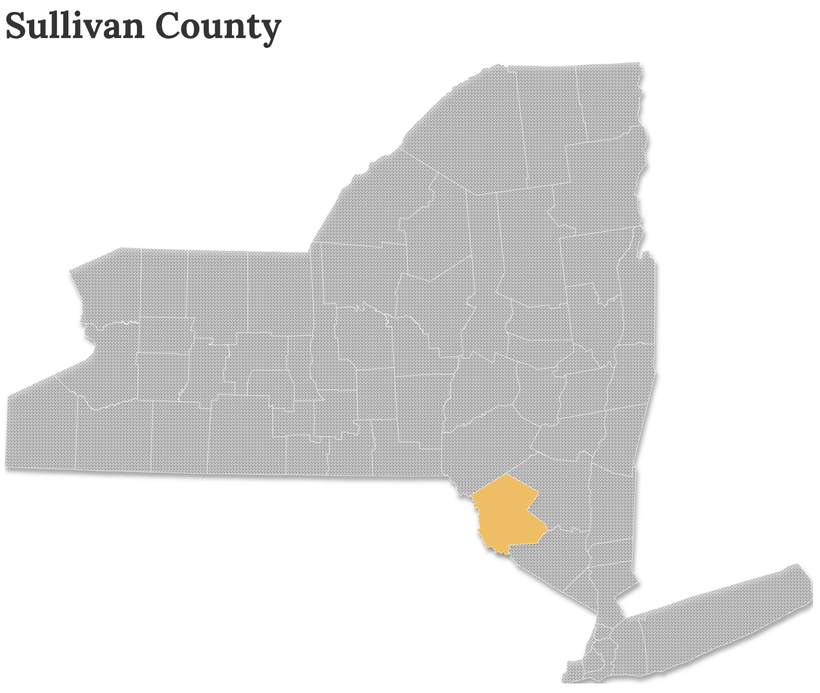
Sullivan County is telling investors there will be massive growth at a Catskills casino resort, but its own consultants predict decline.

Chris Bragg   ·   September 25, 2025
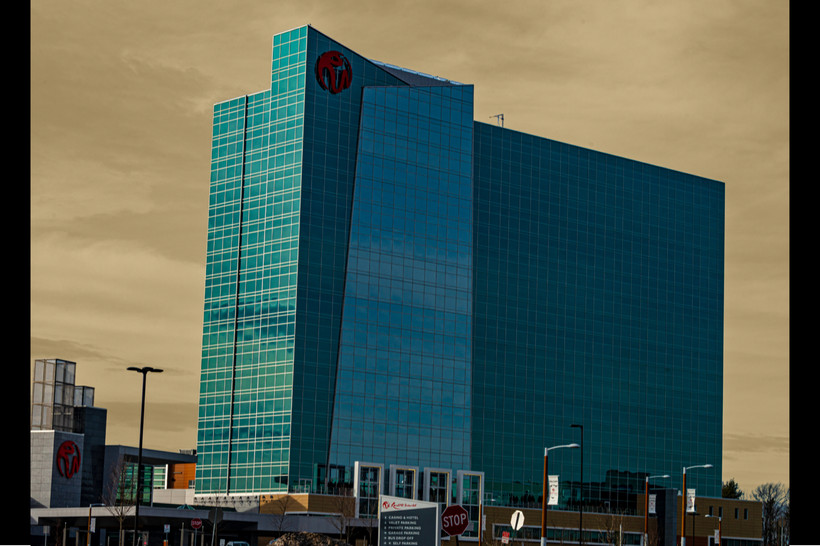
Local and county officials have predicted that newer downstate casinos will draw customers away from the Resorts World Catskill casino resort. | Photo: Daniel Case/Wikimedia Commons | Illustration: New York Focus

Sign up for Staying Focused, our newsletter keeping readers up to speed on New York politics.

Sullivan County is asking investors to ​lend ​more than half a billion dollars​ to rescue the struggling Resorts World Catskills​, touting rosy predictions that the casino resort will soon be flooded with visitors and make dramatically more money — even though its own consultants predict the opposite.

Here’s the county’s pitch. Investors would buy up to $585 million in bonds from the county’s newly-formed local development corporation, spun out of its Industrial Development Agency, or IDA. The corporation would buy two hotels, a golf course, and an event venue — almost everything except the casino itself — from the current owner, Empire Resorts, Inc. The cash infusion could enable Empire Resorts to invest in the property and to pay off $300 million in debt due next year, helping it stave off possible bankruptcy.

The non-casino properties, the development corporation assures investors, will soon become a cash cow. Because the parent company of Empire Resorts is a heavy favorite to win a casino license in Queens, the corporation reasons, Empire Resorts will soon have a database with a million new table game customers. It will be able to entice some of them to travel to the Catskills, with its lower gaming tax rates, and to stay in the resort there. By 2029, hotel room occupancy will increase nearly 16 percent, non-gaming revenue will climb a whopping 80 percent, and the investors will make a tidy profit.

The problem? Two studies prepared for the county came to very different conclusions.

Local and county officials have long predicted that three new downstate casinos will draw customers away from Resorts World Catskill, as New York Focus reported in 2023, and analysts have agreed.

The consulting firm Cushman & Wakefield prepared an appraisal of the non-gaming assets which forecasted that the Catskills hotel occupancy will drop to 60 percent by 2029, rather than rising to the 86.5 percent predicted in the bond pitch. (The Cushman & Wakefield analysis is attached to the investor pitch, which does not explain the contradictory findings. Cushman & Wakefield was retained by the firm the development corporation picked to underwrite the bond offering.)

Another firm, Capacity Consulting, prepared a separate analysis for the county finding downstate casinos could cause Resorts World Catskills revenue to plummet up to 76 percent and negatively impact tax revenues from related businesses — such as the resort’s hotels. Yet the investor pitch predicted an 80 percent revenue increase for those businesses by 2029.

The IDA’s executive director, Jennifer Flad, declined to explain these discrepancies.

“I am not in a position to respond to some of your questions,” she wrote.

So what happens if the corporation can’t pay investors back?

The proposed bond offering stipulates that taxpayers aren’t on the hook for investor losses. Matt McPhillips, the chair of the Sullivan County Legislature’s economic development committee, told Radio Catskill that taxpayers “have no stake in this deal.”

“There’s no collateral that the county or its taxpayers are responsible for,” McPhillips said. “This is more to allow the casino to reconsolidate, reposition itself, and really invest in this property.”

But at the request of interested buyers, the local development corporation recently brought in lawyers to analyze ways to protect investors in the case of default.

A default could create political pressure for the state or county to intervene. Resorts World Casino plays a major role in the local economy and employs over a thousand people, its developers received more than $50 million in local tax breaks, and it regularly asks Albany for deeper subsidies.

A default could also harm the county’s reputation and increase its future borrowing costs, according to David Brittenham, a Sullivan County resident and retired partner at a major law firm whose practice focused on corporate financing deals.

“A default could potentially be taken into account by credit agencies in evaluating the county itself — and its borrowing capacity,” Brittenham said. “It’s at least going to be a black eye.”

It’s not clear whether Sullivan County consulted independent bond ratings agencies, such as Fitch, Moody’s, or Standard & Poor’s, about the implications of a default for the county. No rating agency has given the investment opportunity a formal grade.

Brittenham said allowing Empire Resorts to go into bankruptcy could have been a better path for Sullivan County — and wouldn’t necessarily have involved layoffs.

“It’s not clear to me they got expert investment banking advice about their options,” he said. “Bankruptcy, to me, should have been evaluated seriously, because under our bankruptcy law, the idea is to rehabilitate the business, not simply to wind it up. And there are plenty of companies that go through bankruptcy, sometimes more than once, with little or no loss of jobs.”

The county was shaken by the shuttering of a Frito-Lay plant in Liberty this spring that cost nearly 300 jobs.

It’s not clear whether Resorts World threatened layoffs, prompting the county’s $585 million venture. A company spokesperson did not respond to questions. The undertaking has played out almost entirely behind closed doors; McPhillips, the county legislator, did not respond to questions either.

The bailout isn’t yet a done deal, and the formal bond offering continues to face delays.

At New York Focus, our central mission is to help readers better understand how New York really works. If you think this article succeeded, please consider supporting our mission and making more stories like this one possible.

New York is an incongruous state. We’re home to fabulous wealth — if the state were a country, it would have the tenth largest economy in the world — but also the highest rate of wealth inequality. We’re among the most diverse – but also the most segregated. We passed the nation’s most ambitious climate law — but haven’t been meeting its deadlines and continue to subsidize industries hastening the climate crisis.

As New York’s only statewide nonprofit news publication, our journalism exists to help you make sense of these contradictions. Our work scrutinizes how power works in the state, unpacks who’s really calling the shots, and reveals how obscure decisions shape ordinary New Yorkers’ lives.

In the last two decades, the number of local news outlets in New York has been nearly slashed in half, allowing elected officials and powerful individuals to increasingly operate in the dark — with the average New Yorker none the wiser.

We’re on a mission to change that. Our work has already shown what can happen when those with power know that someone is watching, with stories that have prompted policy changes and spurred legislation. We have ambitious plans for the rest of the year and beyond, including tackling new beats and more hard-hitting stories — but we need your help to make them a reality.

If you’re able, please consider supporting our journalism with a one-time gift or a monthly gift. We can't do this work without you.

Thank you,

Akash Mehta
Editor-in-Chief

A photo of Akash Mehta.
A photo of Chris Bragg.
Chris Bragg is the Albany bureau chief at New York Focus. He has done investigative reporting on New York government and politics since 2009, most recently at The Buffalo News and Albany Times Union.
Also filed in New York State

A lobbyist who has been romantically linked to Assembly Speaker Carl Heastie led a rally opposing the legislation a week before the speaker declined to bring it to a vote.

In May, state lawmakers passed a $269 billion budget after haggling for months over thousands of line items and policies affecting New Yorkers.

Millions in outside spending was a boon to Gov. Kathy Hochul’s 2022 opponent, Lee Zeldin, and influenced down-ballot races.