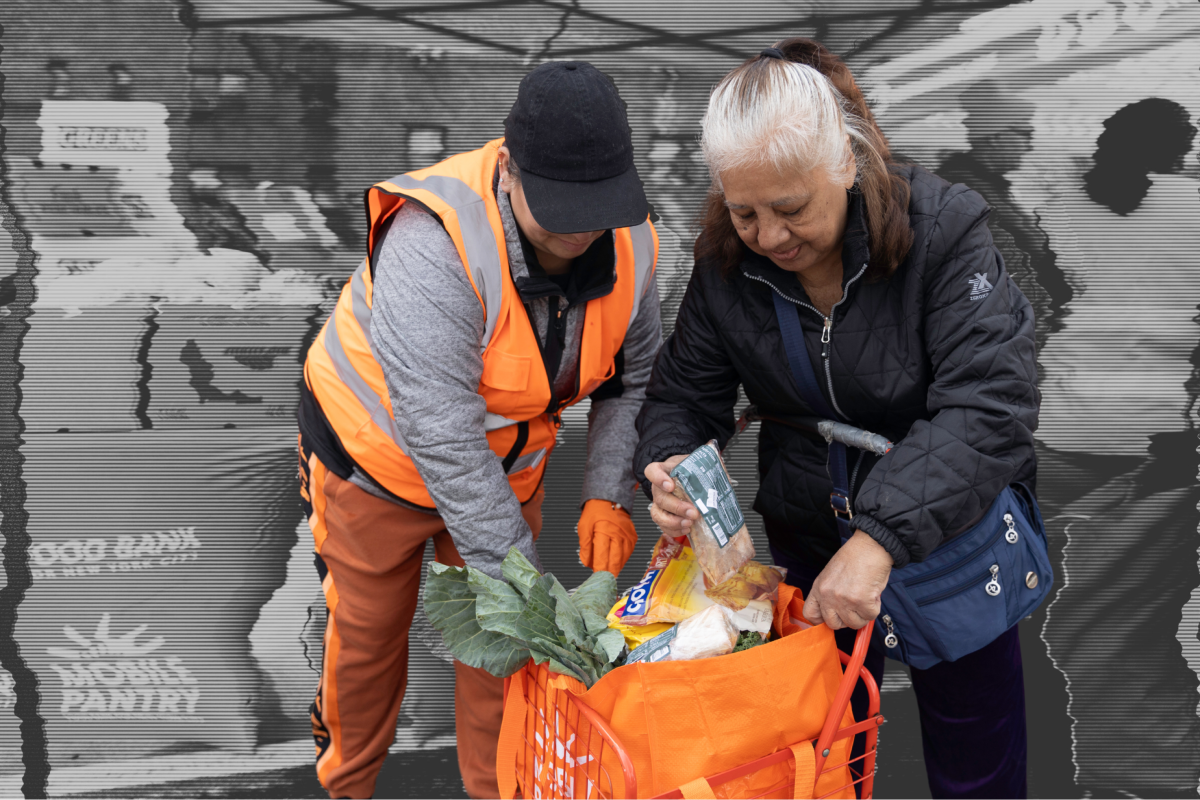
The Trump administration has dealt a blow to the state’s food bank network, which supports around 3 million New Yorkers.
The Trump administration has dealt a blow to the state’s food bank network, which supports around 3 million New Yorkers. ·  View in browser
NEWSLETTER
The Trump administration has dealt a blow to the state’s food bank network, which supports around 3 million New Yorkers.
By Jie Jenny Zou

A tiny storefront in Bensonhurst, Brooklyn, has been a lifeline for Marco Ramirez and his family of four.

Three years ago, the 56-year-old began visiting the food pantry operated by Reaching-Out Community Services after his hours as a restaurant cook were cut. Every two weeks, he stops by to select items from a computer kiosk and waits for staff to wheel out his order, free of charge.

On a recent Wednesday afternoon, Ramirez packed his bags with staples like rice, meat, cooking oil and juice. Without the pantry’s help, he said, his family wouldn’t be able to afford pricey items like eggs.

The pantry is part of a vast network supported by the Food Bank for New York City, which recently lost 75 tractor trailer loads of food — 2.5 million meals — due to cancelled shipments from the US Department of Agriculture following President Donald Trump’s abrupt cancellation of over $1 billion in nutrition funding in March.

For food banks across New York state, the state of emergency that began with the pandemic in 2020 never ended.

Recent Stories

There are nearly 4,000 outstanding claims currently in a queue that stretches back more than a decade.
By Bianca Fortis

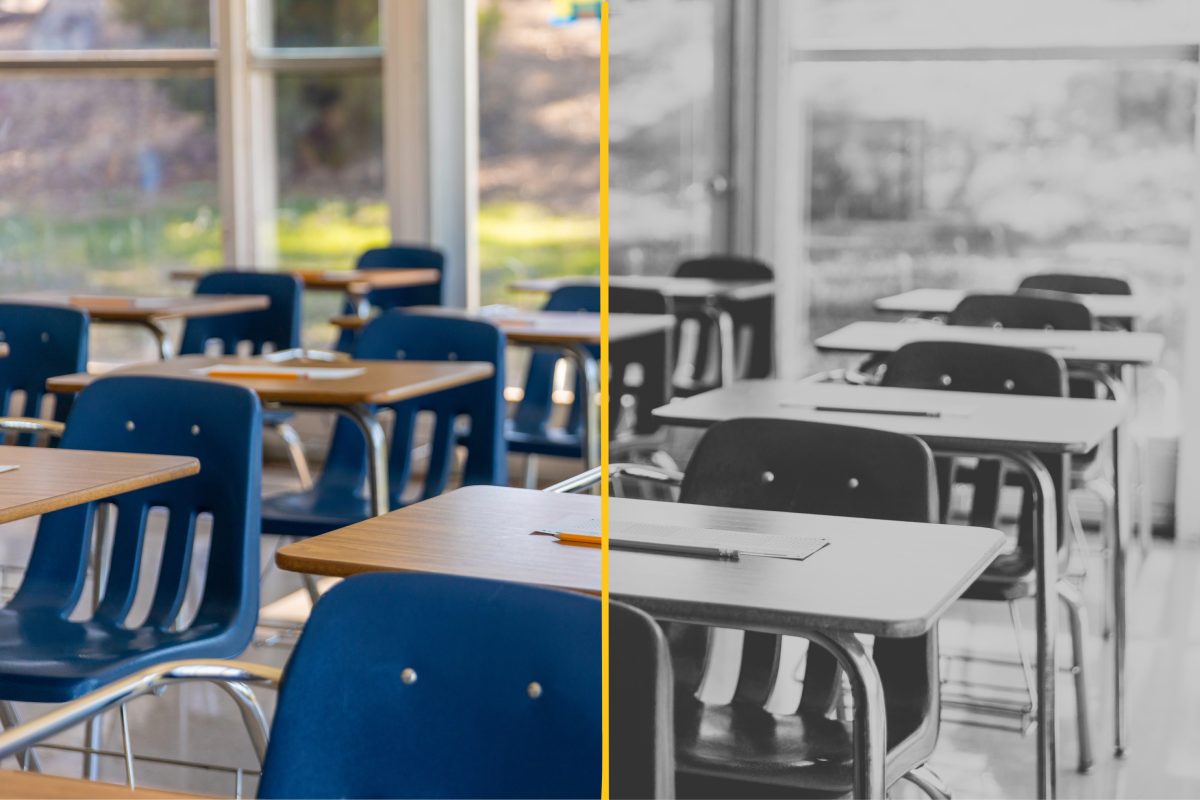
In mid-February, 390 school districts around the state received an unwelcome letter from the state Education Department: They were about to lose $25 million combined from their next state aid payments.

Those districts had been overpaid between the 2011-12 and 2017-18 school years, and the state was taking its money back. The payments were for services for special education students.

Another 255 districts learned that they had been underpaid by the state during that same time period — about $11 million total, according to an analysis by the Association of School Business Officials. In fact, New York state owes more than $300 million to schools statewide in outstanding claims.

But those districts won’t receive the money any time soon. That’s because of an accounting practice called “prior year adjustments.”

Search or scroll through our interactive database that shows what the Assembly, Senate, and governor agreed to fund in the 2025 New York state budget. Flickr: Governor Kathy Hochul / Illustration: New York Focus
Our searchable database breaks down what was proposed and what made it in this year’s budget among key topics like education, family policy, criminal justice, climate, and more.
By New York Focus

Nearly four months after Governor Kathy Hochul unveiled her proposed budget, lawmakers yesterday passed a $254 billion final agreement — after having just a few days to comb through thousands of pages of fine print and the hundreds of billions of dollars at stake for New Yorkers.

The largest budget in state history came in a couple billion dollars higher than Hochul had proposed in January, but several billion less than the Senate and Assembly suggested in their one-house proposals.

This year’s budget avoids increasing personal income taxes but does raise taxes on large New York City businesses to fund the Metropolitan Transportation Authority’s massive capital plan. Middle-income households will see small rate cuts. The child tax credit for parents with kids under four will also go up. Most residents will get a one-time inflation rebate check from $150-$400.

Two of the budget’s biggest sticking points — rolling back discovery reforms and expanding involuntary commitment — made it through, as did a provision to restrict mask-wearing in public.

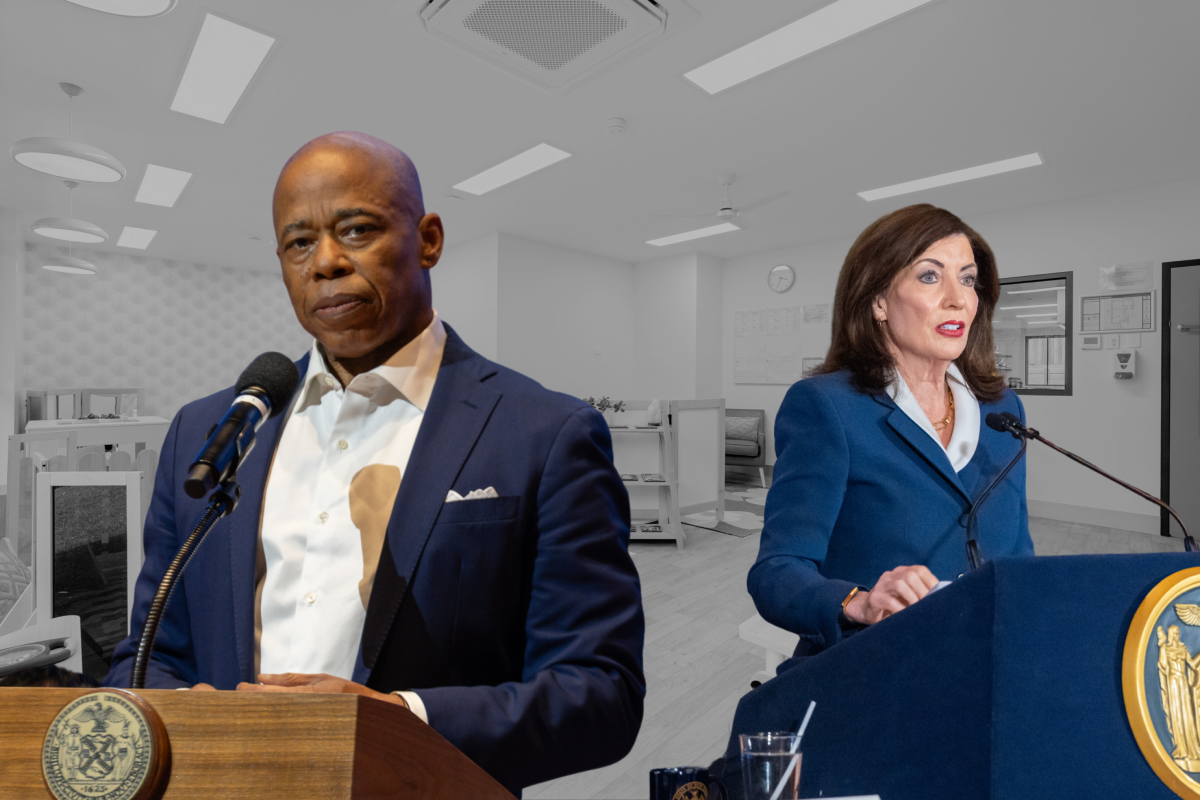
The state is raising the minimum amount that New York City must spend on the program to $328 million a year. Photos: Benny Polatseck/Mayoral Photography Office; Darren McGee/ Office of Governor Kathy Hochul | Illustration: Maha Ahmed
The state budget, finalized this week, increased the spending requirement on the city for the first time since the 1990s.
By Julia Rock

The state budget approved by legislators this week gives $350 million in additional funding to help New York City continue providing child care vouchers to low-income families — if the city throws in the same amount of its own money.

There’s another major caveat buried in the fine print: The state is raising the minimum amount that New York City must spend on the program to $328 million a year. Even if the city doesn’t want to pay to get the matching funds, the new requirement could force it to.

Right now, New York City contributes just under $53 million to the Child Care Assistance Program, which is largely funded by the federal and state governments and covers almost the entire cost of child care for low-income families. That means the state is mandating the city increase its spending more than sixfold.

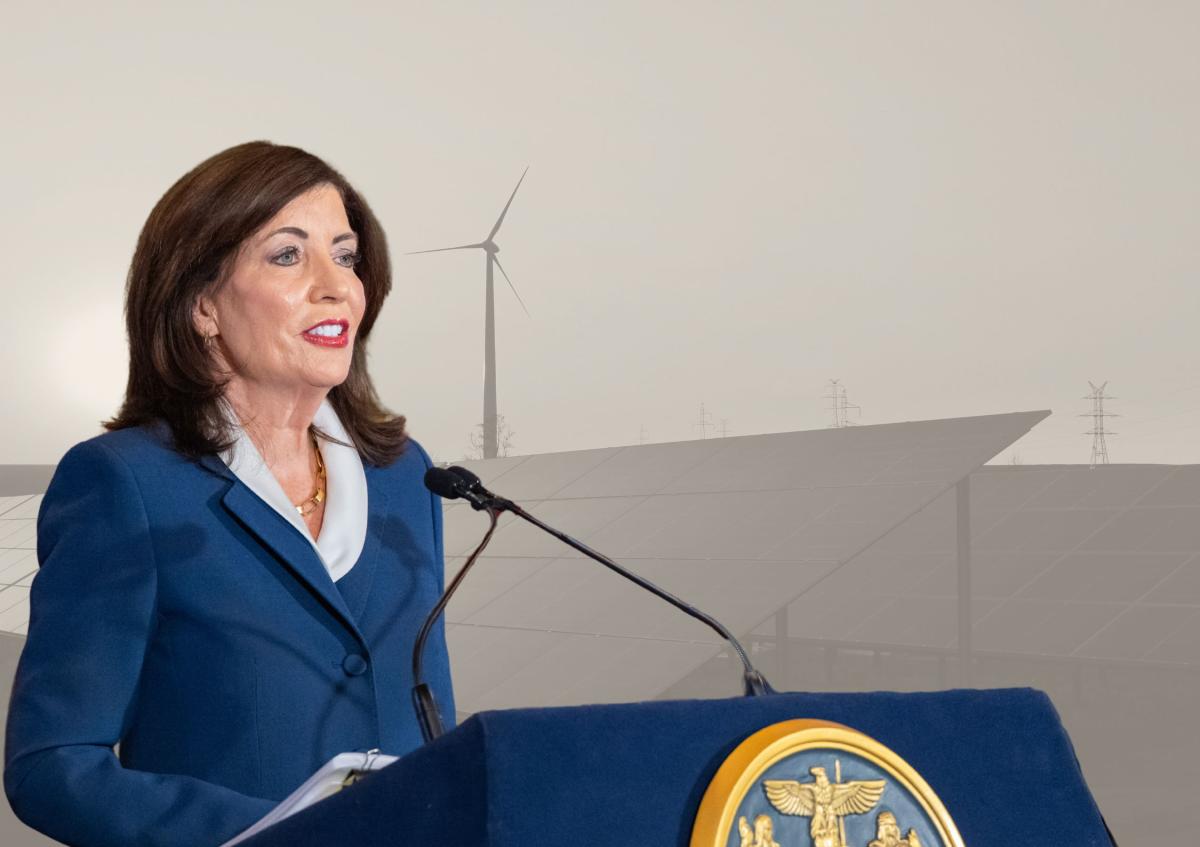
Governor Kathy Hochul has touted the budget’s “historic” $1 billion for climate action, but the one-time funding falls short of what the state has been promising for years. Photo: Office of Governor Kathy Hochul | Illustration: New York Focus
New York’s budget includes $1 billion for climate action — a record amount, but less than the state was supposed to raise by charging polluters.
By Colin Kinniburgh

It’s often said that a budget is a declaration of values. So how much do New York lawmakers value fighting climate change?

About 0.4 percent, according to the newly approved state budget.

For the first time ever, New York’s budget this year includes a dedicated climate action fund: $1 billion, which will go mostly toward greening buildings and transportation. That includes more than $200 million for “thermal energy networks,” which can allow entire neighborhoods to switch to efficient, electric heating and cooling. Shovel-ready projects at public universities are high on the priority list — a hard-fought win for green groups and building trades unions who have demanded funding to clean up state buildings for the last two years.

Governor Kathy Hochul has touted the sum as “historic.” But her spokesperson Paul DeMichele told New York Focus the fund is intended as a one-off — and in the context of a $254 billion budget, it’s a relatively small one.

Copyright © New York Focus 2024, All rights reserved.
Staying Focused is compiled and written by Alex Arriaga
Contact Alex at alex@nysfocus.com

Feedback? Tips? Pitches? Contact us at: editor@nysfocus.com

Support our work!

Interested in sponsoring these emails? Get in touch! Email editor@nysfocus.com.

This email was sent to *|EMAIL|*

unsubscribe from this list  ·  update subscription preferences

New York Focus · *|HTML:LIST_ADDRESS_HTML|* · USA