State Budget Goes Small On Climate

New York’s budget includes $1 billion for climate action — a record amount, but less than the state was supposed to raise by charging polluters.
Colin Kinniburgh   ·   May 9, 2025
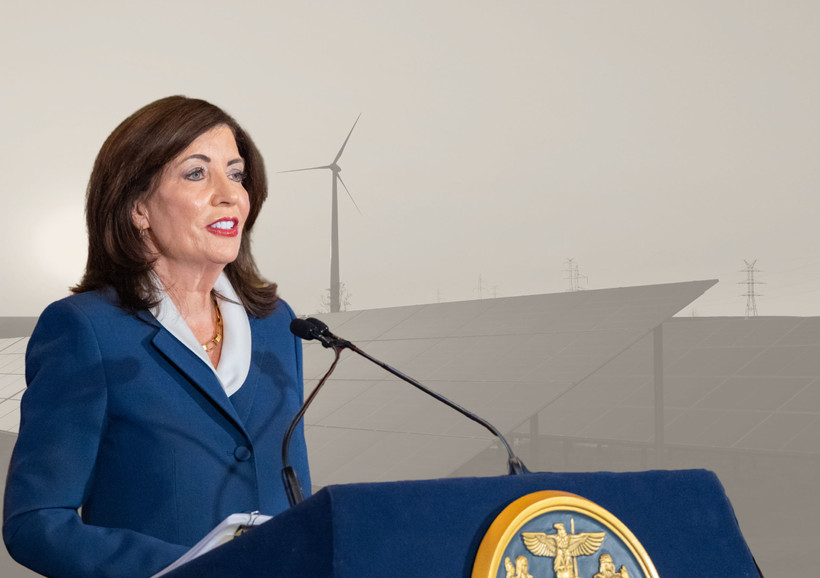
Photo montage showing NY Governor Kathy Hochul speaking on April 28 against a greyed-out backdrop of solar panels and a wind turbine.
Governor Kathy Hochul has touted the budget’s “historic” $1 billion for climate action, but the one-time funding falls short of what the state has been promising for years. | Photo: Office of Governor Kathy Hochul | Illustration: New York Focus

Sign up for Staying Focused, our newsletter keeping readers up to speed on New York politics.

It’s often said that a budget is a declaration of values. So how much do New York lawmakers value fighting climate change?

About 0.4 percent, according to the newly approved state budget.

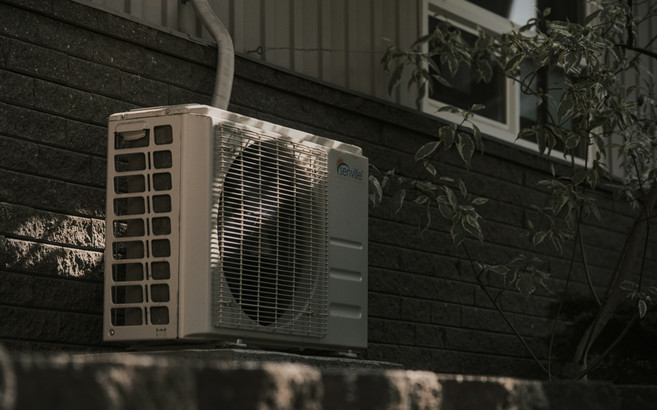
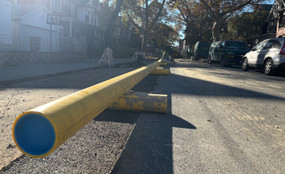
For the first time ever, New York’s budget this year includes a dedicated climate action fund: $1 billion, which will go mostly toward greening buildings and transportation. That includes more than $200 million for “thermal energy networks,” which can allow entire neighborhoods to switch to efficient, electric heating and cooling. Shovel-ready projects at public universities are high on the priority list — a hard-fought win for green groups and building trades unions who have demanded funding to clean up state buildings for the last two years.

Governor Kathy Hochul has touted the sum as “historic.” But her spokesperson Paul DeMichele told New York Focus the fund is intended as a one-off — and in the context of a $254 billion budget, it’s a relatively small one.

It’s smaller, notably, than the billions the state was hoping to raise every year through cap and invest, a program that would have charged companies for the pollution they generate and redistributed the proceeds to climate initiatives. Hochul’s administration came within inches of releasing the program rules this January, only for the governor to back down at the last minute. The Senate demanded in March that she put the program back on track, but the message had little bearing on budget negotiations. The fight over cap and invest is now tied up in court.

That leaves the state relying heavily on utility bills to fund its transition toward clean energy — an approach that, many critics charge, disproportionately burdens low-income New Yorkers, who spend a larger share of their incomes on energy than the well off.

The budget was also short on policy items that have long been on climate groups’ wishlists, including legislation known as the NY HEAT Act, which aims in part to cap how much New Yorkers spend on energy. The bill’s broader aim is to chart a course toward widespread use of electrified home heating, by allowing regulators to gradually shift entire neighborhoods off gas.

Only the Senate pushed for the HEAT Act to be included in this year’s budget, and the bill did not make much headway in negotiations. It is high on climate advocates’ — and many lawmakers’ — agendas for the remaining five weeks of the legislative session.

The Senate and Assembly had sought reforms to subsidies for rooftop solar, including increasing the tax credits and making them more accessible to low-income and co-op or condo residents. But that push fell short in final negotiations. (Similar reforms to tax credits for geothermal heating systems did make the cut.)

Lawmakers did find room in the budget to grant school districts an extension on meeting electric bus mandates, easing a transition that rural districts in particular have complained is being rushed.

While state leaders aren’t boosting climate efforts as much as many had hoped for this year, existing programs should at least be spared the federal axe that hangs over other key parts of New York’s budget. Roughly 40 percent of the state’s revenue comes from the federal government, with most of it going toward health, education, and social services.

The newly approved budget assumes that New York will continue to receive similar levels of federal funding over the next year, but lawmakers have given Hochul significant leeway to revise it if major cuts come down from Washington, as is increasingly likely.

The state’s environmental and climate agencies are relatively insulated from those cuts, a New York Focus review found.

The Department of Environmental Conservation receives a little over $90 million from the federal government, mainly to fight air and water pollution and to protect wildlife. That represents about 15 percent of the agency’s total budget, and covers the salaries of about 270 staff, out of more than 3,300 agency-wide. Even wholesale cuts, though damaging, likely wouldn’t cripple the agency’s work.

“There are things in this budget that will help us, but the bottom line is, it doesn’t move the needle enough.”

—Liz Moran, Earthjustice

The Department of Public Service, which regulates utilities, and the state’s energy research and development arm, NYSERDA, are both counting on the federal government for less than 4 percent of their budget for the next year, New York Focus found.

The New York Power Authority, for its part, funds itself mostly like a regular utility, selling electricity and borrowing from investors to upgrade and expand its network. It doesn’t generally rely on federal support, although it is counting on federal tax credits to build new renewables.

And the state has yet to use most of the $4.2 billion that voters approved in the 2022 Environmental Bond Act, leaving some $3.7 billion available over the coming years for clean water, land conservation, and climate efforts.

There are key areas where New York’s climate work remains vulnerable to federal cuts. A repeal of renewable tax credits from the Inflation Reduction Act would be a major blow to the industry nationwide and cost New York billions. Federal clean water grants, which fund hundreds of millions of dollars’ worth of lead pipe replacements, among other infrastructure upgrades, are also in danger. And the state receives billions in disaster assistance grants from the Federal Emergency Management Agency and other federal agencies, portions of which the Trump administration has already sought to withhold.

But for the most part, New York is already in charge of funding its climate and environmental agenda — and if it wants to catch up on meeting its climate targets, lawmakers need to decide how to pay for it from the state’s own pockets. For now, with budget season over, they’re largely limited to policies that don’t have an immediate price tag.

“We know that our climate law targets are in jeopardy. There are things in this budget that will help us, but the bottom line is, it doesn’t move the needle enough,” said Liz Moran, Northeast policy advocate at the environmental advocacy group Earthjustice. “There’s a month left of session. A lot of this falls on the legislature to be leaders here.”

I hope this article helped you better answer the question that guides all of our journalism: Who runs New York? Before you click away, please consider supporting our work and making more stories like this one possible.

New York state is standing at a crossroads for climate action. After passing one of the nation’s most ambitious climate laws in 2019, the state is lagging far behind on its targets, struggling to meet deadlines to build renewable energy and clean up its buildings and roads. Other states are closely watching our progress, making decisions about their own climate plans based on New York’s ability to implement this legislation.

As New York’s only statewide nonprofit news publication, we’ve been scrutinizing the state’s climate progress. Our journalism exists to unpack how power works in New York, analyze who’s really calling the shots, and reveal how obscure decisions shape ordinary New Yorkers’ lives.

But we can't do this work without your help. We rely on reader donations to help sustain our outlet, and every gift directly allows us to publish more pieces like this.

Our work has already shown what can happen when those with power know that someone is watching, with my reporting prompting a state investigation and fine for a major corporation. I have more story ideas than I can count, but only limited resources to pursue all the leads that come across my desk.

If you’re able, please consider supporting our journalism with a one-time or monthly gift. Even small donations make a big difference.

Thank you for reading.

Colin Kinniburgh
Climate and Environmental Politics Reporter
A photo of Colin Kinniburgh.
Colin Kinniburgh is a reporter at New York Focus, covering the state’s climate and environmental politics. He has worked in media for more than a decade, across print, television, audio, and online news, and participated in fellowship programs at CUNY’s Graduate School of Journalism… more
Also filed in New York State

State leaders are expected to pass a bill that avoids resolving how much Resorts World New York City needs to pay.

New York state has pumped millions of taxpayer dollars into an online portal that vowed to make life easier for Rochester’s neediest, but critics say it’s fallen short.

Resorts World is floating legislation to avert more than $500 million in payments to the horseracing industry.

Also filed in Budget

Our searchable database breaks down the most consequential decisions Albany politicians made on climate, immigration, housing, schools, taxes, and more.

It’s unclear whether the Correctional Association of New York will have to scale back its nascent reform initiatives.

Advocates welcomed the additional funding but said it falls short of need and doesn’t do enough to support workers.

Also filed in Climate and Environment

Governor Kathy Hochul was successful in her bid to upend the Climate Leadership and Community Protection Act after legislators caved to finalize an overall budget deal.

The leader of Reinvent Albany discusses a data center subsidy in Rockland County that flew under the radar for years.

No other project in the country has gotten such a large subsidy to create so few jobs, according to watchdogs.