Hundreds of New Yorkers’ Lives Could Be Saved Each Year Under New Program

Following New York Focus’s reporting, the state health department is moving to implement a law meant to boost kidney donations.

Sam Mellins   ·   April 10, 2025
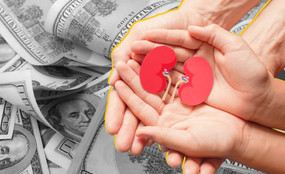
| Photos: Science Photo Library, Spiderplay / Getty Images | Illustration: Leor Stylar

Sign up for Staying Focused, our newsletter keeping readers up to speed on New York politics.

James Urtel desperately needs a kidney. His own failed in 2012 — when he was 42 years old, working as a horse trainer — and he went through eight years of dialysis before being matched for a transplant. But his new kidney was heavily scarred and doctors told him it likely wouldn’t last longer than a year.

Urtel is still relying on that kidney nearly five years later, despite a vigorous publicity campaign that included a billboard adorned with a photo of his cat. He’s seeking a living donor, since their organs last longer and are rejected by the recipient’s body less often. But dozens of potential matches have failed, and Urtel is at risk of becoming one of the hundreds of New Yorkers who die each year waiting for a kidney transplant.

“I’ve been fighting now for 13 years,” Urtel, who lives in Genesee County, told New York Focus. “It’s so tough to get a living donor.”

His trials may be nearing their end: He recently matched with a donor and is expecting to receive a new kidney in June.

New York could soon see more of such vital donations. A life-saving but long-stalled program to reimburse kidney donors will start within a few months, New York Department of Health officials said at a meeting on Wednesday. New York is set to be the first state to implement such a program, which the health department estimates could be used by as many as 500 New Yorkers a year.

The program will allow New Yorkers who donate a kidney to fellow New York residents to be reimbursed up to $14,000 for medical expenses, lost wages during recovery, and other costs associated with the procedure, such as travel.

The law was supposed to take effect in mid-2023, but the health department failed to implement it, citing budget constraints and staff shortages.

Following recent reporting from New York Focus on the agency’s continued failure to follow the law, Department of Health Commissioner James McDonald told lawmakers in February that the program would begin operating by the end of 2025 — the first time the department had committed to a timeline.

In the time since McDonald’s testimony, department staff has finished drafting regulations for running the program, and plans to begin taking public feedback within the next two weeks. If no changes are needed after the public weighs in, the program could begin accepting applications as soon as June, said Eugene Heslin, the health department’s deputy commissioner and chief medical officer.

“I know it’s taken a long time to get to this point,” Heslin said at the meeting. “We’re taking active steps and we wanted to get this right.”

The reimbursement will also be available to people who donated a kidney after April 1, 2023 — the date the law was supposed to take effect. Those individuals must apply within three months of the program’s start date, according to the agency.

This year’s state budget, which should be finalized soon, is likely to include another boost to organ donation: a tax credit of up to $10,000 to reimburse donors. The measure was initially proposed by Governor Kathy Hochul, and it was included in the budget proposal of both legislative houses — generally a sign that a measure is headed for passage. Donors will not be eligible to claim money from both the tax credit and the Department of Health’s program.

New York Focus has been tracking the law, and the delays in its implementation, since 2022.

Now, the big day appears to be near.

“I think it’s wonderful that New York is taking the lead,” said Lewis Teperman, a transplant surgeon at Long Island’s North Shore University Hospital, who chairs the council overseeing the state’s transplant program. “It’s a fantastic program, it’s just taken a little time to get going.”

At New York Focus, our central mission is to help readers better understand how New York really works. If you think this article succeeded, please consider supporting our mission and making more stories like this one possible.

New York is an incongruous state. We’re home to fabulous wealth — if the state were a country, it would have the tenth largest economy in the world — but also the highest rate of wealth inequality. We’re among the most diverse – but also the most segregated. We passed the nation’s most ambitious climate law — but haven’t been meeting its deadlines and continue to subsidize industries hastening the climate crisis.

As New York’s only statewide nonprofit news publication, our journalism exists to help you make sense of these contradictions. Our work scrutinizes how power works in the state, unpacks who’s really calling the shots, and reveals how obscure decisions shape ordinary New Yorkers’ lives.

In the last two decades, the number of local news outlets in New York has been nearly slashed in half, allowing elected officials and powerful individuals to increasingly operate in the dark — with the average New Yorker none the wiser.

We’re on a mission to change that. Our work has already shown what can happen when those with power know that someone is watching, with stories that have prompted policy changes and spurred legislation. We have ambitious plans for the rest of the year and beyond, including tackling new beats and more hard-hitting stories — but we need your help to make them a reality.

If you’re able, please consider supporting our journalism with a one-time gift or a monthly gift. We can't do this work without you.

Thank you,

Akash Mehta
Editor-in-Chief

A photo of Akash Mehta.
A photo of Sam Mellins.
Sam Mellins is senior reporter at New York Focus, which he has been a part of since launch day. His reporting has also appeared in The San Francisco Chronicle, The Intercept, THE CITY, and The Nation. Reach him on Signal: mellins.613
Also filed in New York State

State leaders are expected to pass a bill that avoids resolving how much Resorts World New York City needs to pay.

New York state has pumped millions of taxpayer dollars into an online portal that vowed to make life easier for Rochester’s neediest, but critics say it’s fallen short.

Resorts World is floating legislation to avert more than $500 million in payments to the horseracing industry.

Also filed in Health

Despite last-ditch efforts by a coalition of lawmakers, the state failed to avert a health coverage cliff coming this summer.

160,000 injured New Yorkers seek workers’ compensation each year — but in recent years, regulators have tilted the scales towards employers and insurers.

Amid abortion bans and rising digital surveillance, Albany lawmakers are revisiting an effort to stop companies from selling sensitive health information.