New York Focus Honored for Coverage of Prison System

The Legislative Correspondents Alumni Association recognized Chris Gelardi with its award for the year’s best state government reporting — the second year in a row that Focus has earned the honor.

New York Focus   ·   June 10, 2025
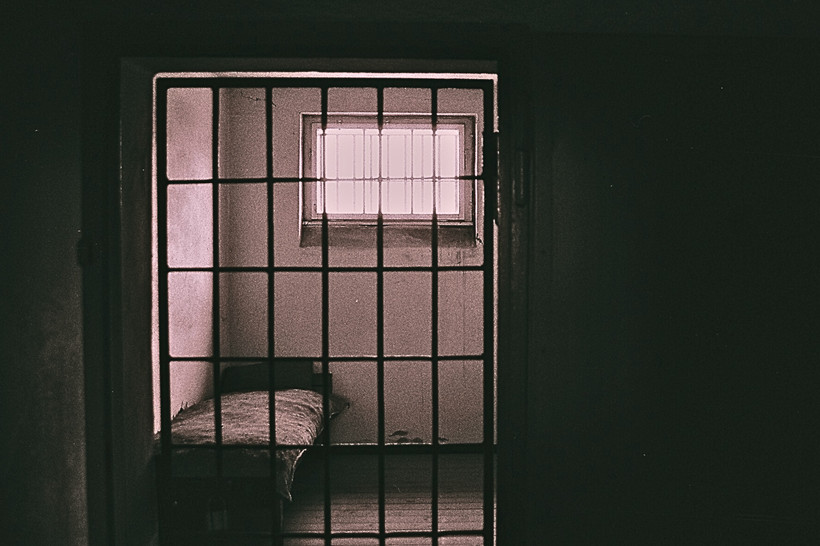
"Internal politics within DOCCS contribute to a lack of urgency in making conditions better." | Photo: hboening / Getty Images via Canva; Illustration: New York Focus

Sign up for Staying Focused, our newsletter keeping readers up to speed on New York politics.

As New York Focus’s criminal justice reporter, Chris Gelardi has spent years investigating New York state’s sprawling prison system. That system exploded into chaos this year after authorities released a video of guards beating an incarcerated man to death and corrections officers staged a three-week-long wildcat strike. Gelardi released a series of features and news stories helping readers make sense of the tumult. He also published an investigation into the family dynasty at the agency’s helm, uncovering its decades-long ascent to power and the many scandals it has weathered along the way.

For this work, the Legislative Correspondents Alumni Association awarded Gelardi the annual Walter T. Brown Award for excellence in coverage of New York state government. (Last year, the award went to Focus’s other Chris — our Albany bureau chief, Chris Bragg — for his reporting on the Assembly Speaker’s romantic relationship with a legislative lobbyist.) Gelardi sat down with New York Focus’s editor-in-chief, Akash Mehta, to talk about the stories.

AM: The centerpiece of your submission for this award was an investigation into the family dynasty that rules the New York prison system. What’s the short version of who the Martuscellos are and why they matter?

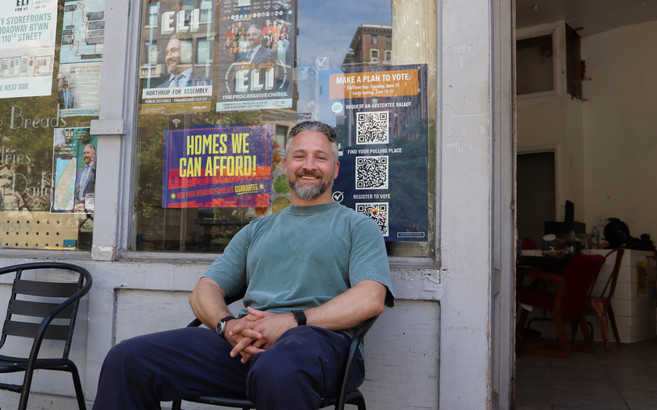
A photo of Chris Gelardi
Chris Gelardi | Elise Swain

CG: The second-generation patriarch of the family, Daniel Martuscello, is now the commissioner. He’s been head of the prison system for two years. His family is all over the Department of Corrections and Community Supervision, stemming back to at least his father, who was a maximum security prison warden and a top administrator. Five of the father’s six kids went to work for DOCCS — most notably Daniel Martuscello, but also his brother Chris Martuscello, who is now an assistant commissioner and helps lead the internal accountability office. Their oldest sister, Catherine, was a longtime prison nurse and now is also an assistant commissioner. So there are Martuscellos all over the DOCCS executive suite, and that’s important in and of itself.

But the story really was about the Martuscellos’ rise to power, starting with their father and going through the 2000s and 2010s and into the early 2020s — how they have established this patronage network that was wheeling and dealing in internal politics and borderline-nepotism, putting all of their favorite people who are loyal to them in cushy or lucrative or powerful posts within DOCCS. It was also about how that patronage and alleged nepotism played a secondary role in a lot of DOCCS’s biggest scandals of the past decade and a half.

AM: This was an epic reporting project that spanned 18 months. Walk us through the different stages of the investigation and how you pulled it off.

CG: It started in early springtime 2023, when Daniel Martuscello — before he was named acting commissioner, before his boss retired — was second-in-command. I had heard a little bit about him having a lot of family in DOCCS. I didn’t know too much, just inklings.

When he became acting commissioner, I used a lot of what was publicly available — payroll records, a couple old clips — and wrote a short profile of the Martuscello family, calling Daniel the “son of the system.” After that, I got a lot of messages, especially from former DOCCS workers — both internal investigators who worked within the office that his brother now helps lead and former correction officers — who said there’s a lot more to the story, that it’s a really corrupt family. So I started digging around a little bit, getting those people to connect me to other people who knew a bit more.

Crucially, I filed some public records requests with the Office of the Inspector General, which had done some old investigations, not into the Martuscellos, but where their family and their nepotism came up as sort of a secondary topic. I also filed requests with the Attorney General’s Office, which ended up doing some criminal prosecution of people who came out of those inspector general investigations.

Through those public records requests, it became more obvious to me why this story hadn’t come up before: The inspector general, whose office I should reasonably be submitting records requests to, gave me very little in terms of documentation from those investigations. But the attorney general gave me thousands of pages, very lightly redacted. I just started getting transcripts upon transcripts and a lot of investigative documents, which led to more leads. At the same time, the dam broke among a couple different social circles of mostly former DOCCS workers, and more people started coming forward. We had so much material, we were able to have our pick of what anecdotes to use in the article and make a whole narrative out of it.

AM: What was the reaction of DOCCS workers to the story?

CG: I was partially surprised and partially unsurprised by the reaction. I had literally dozens of people email me in the days after it was published, thanking me for exposing all the shadowy stuff that has flown under the radar for as long as the Martuscellos have been either in power or close to power. I was a little bit surprised because the article itself, while it exposed all that stuff that DOCCS workers have wanted to expose, was also very critical of the system itself. Through reporting, it was very critical of corrections officers and the way that incarcerated people are treated.

AM: This investigation was published while the system was getting the most scrutiny that it has in years, following both the footage of the killing of Robert Brooks and the corrections officer strike. You’ve been covering New York prisons for years. How did you bring that experience to bear in covering those developments?

CG: DOCCS issues came to the public’s attention because of extremely tragic circumstances. But it’s been a bit refreshing to have commentators, legislators, and the general public really believe what people have been telling me for a long time. A lot of this stuff is hard to prove. Even though the prisons aren’t like what they were like in 1971 when there was the Attica uprising, they still operate as black boxes, where it’s very hard to get medical care, it’s pretty impossible to get anyone who can do anything about it to believe you when you’re abused or beat up by a prison guard, et cetera. I get complaints about this stuff all the time in my email. I have a whole folder for it, and you can only report so much, and oftentimes it takes a long time to prove.

There are many systemic reasons why it never gets addressed. We try to report, especially at New York Focus, on the systems that enable it rather than just the individual cases. So when the shit really hit the fan, I was ready to hit the ground running, because none of it was surprising to me. I’ve been hearing it for so long, and was able to latch on to the likely causes and describe the systemic nature of what people saw on video I think for the first time.

AM: In the past, you’ve reported a lot on conditions within prisons and jails — solitary confinement, violence, censorship, medical care. A lot of your more recent work focuses on the internal politics of the prison agency behind those conditions. Tell us about how the power struggles within the agency and its workforce shape the experience of the 30,000 people it incarcerates.

“A lot of rank-and-file law enforcement officers, especially people who work in big, sprawling departments like DOCCS, know and operate under the assumption that they’re pretty corrupt places.”

CG: There are two answers to that. The first, which is not exclusive to New York at all, is the collective power of corrections officers and their union. Law enforcement as a labor bloc and law enforcement unions operate in a very peculiar way in the United States. It’s often pretty reactionary advocacy for measures that allow for impunity and pushback against efforts to hold abusive officers accountable or create an environment where abuse is more difficult. In New York, that dynamic is very clear and very strong.

Another thing that I think reporting this story made me realize more is the way that internal politics within DOCCS contribute to a lack of urgency in making conditions better. I was talking to a source a while back who studies labor dynamics within law enforcement. She said something that has really stuck with me: Cops and law enforcement’s favorite topic to talk about is retirement, or maybe overtime. And I think it showed just through this family and through their friends, how the main thing on so many of these people’s minds is not really like, “How can we make the prison better? How can I professionalize corrections as a profession?” It’s, “how do I navigate this vast bureaucracy in a way that gets me a lucrative or an easy or a cushy or a powerful position?” I think when that is your main focus in a system that quite literally controls people’s lives and controls very vulnerable people’s lives, it lets the dynamics that enable abuse fly under the radar.

AM: One of the most striking things in the investigation is how the person who runs the prison agency is the brother of the person responsible for investigating misconduct in the prison agency.

CG: One of the most urgent concerns with DOCCS is that that office is both the main and the first mechanism for accountability. Punishing bad corrections officers and making sure that whatever bad thing happened to an incarcerated person doesn’t happen again — that falls under an office controlled by DOCCS itself and that’s traditionally staffed by former corrections officers.

We have a line in the piece, “guards choose the guards who investigate guards.” So you’re a corrections officer, then it’s sort of a promotion to go into this Office of Special Investigations, where you then investigate the people that you used to work with. Some other states do it that way, but a lot of states have very successful outside accountability offices.

And there are outside accountability bodies in our state that are supposed to oversee prison conditions, but those bodies are not the ones that are handling cases, they’re not the ones who receive the complaints. They’re going in to investigate more systemic issues. I think this dynamic is one of the main issues with DOCCS and why we don’t see a lot of this stuff change.

In the article, we create a dichotomy between Daniel Martucscello the commissioner and his brother Chris Martuscello. Dan Martuscello is very savvy. He’s relatively progressive. His brother has been described to me as more gruff, more like what you would think of a prison boss, reactionary. And he’s now the second-in-command of this internal accountability office. And he oversees what is the main branch of the Martuscello friends and family patronage network.

AM: Your dad was a longtime corrections officer. How does that inform your work covering jails and prisons in New York?

CG: My dad and I have talked about this article a lot. He loves it. And I think this goes back to what I was talking about — being surprised at the positive feedback from corrections officers.

I don’t think there’s really a factual disagreement that prisons are brutal places, no matter how you think about law enforcement or prisons. Bad stuff happens there and they’re pretty violent. I think the disagreement comes later — what do you do about that? And whose fault is it? I think one thing that I’ve figured out reporting this, which I should have known just from growing up and talking to my dad about this stuff, is that a lot of rank-and-file law enforcement officers, especially people who work in big, sprawling departments like DOCCS, know and operate under the assumption that they’re pretty corrupt places. Even if they believe in the work they’re doing and are among the few who want to improve conditions for incarcerated people, the institutions that they’re doing it in are pretty rotten. When I talk to my dad about this kind of stuff, that really comes through.

BEFORE YOU GO, consider: If not for the article you just read, would the information in it be public?

Or would it remain hidden — buried within the confines of New York’s sprawling criminal-legal apparatus?

I started working at New York Focus in 2022, not long after the outlet launched. Since that time, our reporters and editors have been vigorously scrutinizing every facet of the Empire State’s criminal justice institutions, investigating power players and the impact of policy on state prisons, county jails, and local police and courts — always with an eye toward what it means for people involved in the system.

That system works hard to make those people invisible, and it shields those at the top from scrutiny. And without rigorous, resource-intensive journalism, it would all operate with significantly more impunity.

Only a handful of journalists do this type of work in New York. In the last decades, the number of local news outlets in the state has nearly halved, making our coverage all the more critical. Our criminal justice reporting has been cited in lawsuits, spurred legislation, and led to the rescission of statewide policies. With your help, we can continue to do this work, and go even deeper: We have endless ideas for more ambitious projects and harder hitting investigations. But we need your help.

As a small, nonprofit outlet, we rely on our readers to support our journalism. If you’re able, please consider supporting us with a one-time or monthly gift. We so appreciate your help.

Here’s to a more just, more transparent New York.

Chris Gelardi
Justice Bureau Chief
A photo of Chris Gelardi
Also filed in Criminal Justice

It’s unclear whether the Correctional Association of New York will have to scale back its nascent reform initiatives.

The legislation comes after months of haggling over how best to protect New Yorkers from President Trump’s immigration crackdown.

Footage published by New York Focus sparked a debate over deputies’ practice of calling Border Patrol on Spanish-speaking drivers.

Also filed in New York State

State leaders are expected to pass a bill that avoids resolving how much Resorts World New York City needs to pay.

New York state has pumped millions of taxpayer dollars into an online portal that vowed to make life easier for Rochester’s neediest, but critics say it’s fallen short.

Resorts World is floating legislation to avert more than $500 million in payments to the horseracing industry.