New York Public Media Will Lose At Least $57 Million in Federal Funds After Congressional Cuts

Nearly $50 million will come specifically from public radio and TV stations, including rural ones that rely heavily on federal money.

Kate Harloe   ·   July 30, 2025
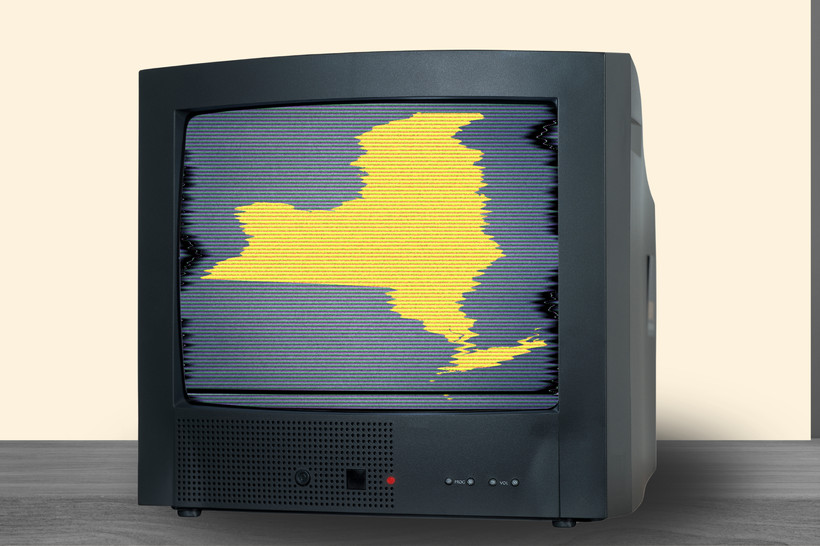
A television showing a staticky, distorted image of New York state.
Rural stations will be hit hard by a bill cancelling $1.1 billion in federal funding for the Corporation for Public Broadcasting. | Photo: Stockbyte | Illustration: Leor Stylar

Sign up for Staying Focused, our newsletter keeping readers up to speed on New York politics.

New York’s public radio and TV stations are facing major blows to their budgets after Congress two weeks ago approved a bill that cancelled over $1 billion in federal funding for the Corporation for Public Broadcasting, or CPB.

Twenty-seven media organizations in New York, including 18 public radio and TV stations, receive funding from the CPB for line items ranging from broadcasting and transmission to content development and community outreach.

In total, the state’s public media organizations stand to lose at least $57 million in federal funding over two years, according to estimates that CPB funding recipients shared with New York Focus. Nearly $50 million of that will come from the budgets of public radio and TV stations, while roughly $7.6 million will come from the budgets of other types of public media organizations.

The cuts will be especially hard on rural communities in the state. Stations serving those areas tend to rely on federal funding more than stations that serve Albany and New York City. Roughly a fifth of rural radio stations nationwide service communities with only one or two other sources of daily news; some communities have no other source of daily or weekly news at all. For many people in rural areas, public media stations are also the lone source of information about weather emergencies, public meetings, elections, and government benefits for individuals, businesses, and community organizations.

New York stations either based in or broadcasting to rural areas will lose roughly $22.7 million — a far greater share of their annual budgets than the $27 million loss New York City stations face.

“This is a devastating outcome,” Mountain Lake PBS, a public TV station based in Plattsburgh that serves a large, rural region of state, wrote in a statement. “[But] let’s be clear, Mountain Lake PBS will not go dark.”

The federal public media funding model — which is actually a public-private partnership — leaves rural stations especially vulnerable. While CPB funds cover a portion of a station’s budget, a station relies on a variety of other sources, including large and small donors, underwriters, commercial sponsors, state funding, and foundations, to cover the rest. In general, rural stations have smaller communities and donor bases to pull from, so their budgets tend to depend more on federal funding.

WNYC, New York City’s public radio station, will lose approximately $3 million a year — or just 4 percent of its annual budget — as a result of the federal cuts. By contrast, WSKG, a public radio and TV station that covers a large, rural part of New York’s Southern Tier region, faces a shortfall of approximately $1.3 million a year — or 21 percent of its annual budget. Mountain Lake PBS stands to lose about $950,000 a year, or about 35 percent of its annual budget.

Twenty-one CPB funding recipients shared an estimate of direct funding they will lose, totaling at least $57 million. Some did not include tangential losses associated with the cuts.

Eighteen recipients are public TV or radio stations. Other types of public media organizations will be affected as well, such as StoryCorps, an oral history nonprofit, and the National Black Programming Consortium, a media production nonprofit known widely as Black Public Media. (The latter is losing more of its annual budget than any other media organization.)

Five recipients, all of which appear to be production-focused media organizations, did not provide estimates or respond to requests for comment. WNYE in New York City said it does not know how much it will lose.

Mountain Lake PBS, whose coverage area includes the Adirondacks and Champlain Valley, was the only outlet to broadcast the city of Plattsburgh’s mayoral debate on TV last year, said Jennifer Kowalczyk, director of marketing and engagement at the station.

“It’s not just that we want to produce coverage, it’s that the people of this region deserve to have local media that covers them and reflects their stories and shows that we are still here,” she said.

North Country Public Radio, or NCPR, a rural radio station that covers the North Country, as well as parts of Vermont and Ontario, Canada, is facing a loss of around $340,000 a year, or about 12–15 percent of its annual budget.

“We have a coverage area the size of Switzerland,” said NCPR station manager Mitch Teich. “It costs a significant amount of time and money to go all around the North Country. Would we potentially look at doing stories in different ways? We might have to.”

NCPR currently has a news staff of six people. The station has historically used CPB funding to buy national programming from places like National Public Radio or American Public Media. Now, it will try to use other sources of income, such as smaller donors, underwriters, and foundations, to fill the gap. Teich expressed optimism that NCPR will succeed, but said that if it couldn’t, it may have to eliminate national programs, defer maintenance on the station’s more than 30 transmitters, cut travel, or consider other options. (New York Focus regularly partners with NCPR and other public radio stations facing cuts.)

“It’s a tough blow, but it doesn’t change what we are here to do.”
—Jennifer Kowalczyk, Mountain Lake PBS

No other TV station or newspaper covers the whole North Country, Teich noted.

WSKG President and CEO Natasha Thompson said that the cuts have already forced hard decisions in their newsroom. “It’s definitely impacted our decision to expand the newsroom into the Oneonta-Cooperstown area, which is our fourth largest market,” Thompson said. As a result of the cuts, they decided not to fill a climate change reporter role, she added.

WSKG covers 22 counties, most of which are in New York; its news staff consists of just three reporters and one managing editor.

Local news organizations in the state had been struggling long before the federal cuts. New York has 13 counties with only one newspaper — and one county with none at all, according to data from the UNC Hussman School of Journalism and Media. The state saw a 40 percent decrease in newspapers between 2004 and 2019, the same research found.

From 2023 to 2024, New York Focus conducted a statewide listening tour to study the state’s local news landscape and found that even in areas where outlets remain, many have skeleton staffs. As a result, community members said they struggle to find basic civic information about public meetings, elected officials, and public benefits.

NCPR, WSKG, and other stations facing cuts are members of the New York Public News Network, a novel collaboration, launched in 2024, through which the newsrooms have shared not only a reporter, but also resources and knowledge. The collaborative approach could help member stations weather the turbulence.

Denise Young, an executive editor of WXXI News in Rochester who helps lead the New York Public News Network, said that the network now sees collaboration as more important than ever.

New York state has long provided funding to its public media stations through the Department of Education. This year, the legislature approved $14 million in funding for public broadcasting, $13 million of which will go to TV. The legislature also increased funding for public radio with a $4 million pot that will be split evenly between 16 stations. Teich said that stations hope lawmakers will make this funding a “permanent part of the equation.”

The state legislature has made other efforts to help some local news outlets. Last year, New York state allocated $90 million in subsidies to help newsrooms hire and retain workers — although it excluded nonprofit outlets, including New York Focus. This year, the state Senate passed a bill to include nonprofits, but it died in the state Assembly.

State-level policy efforts like these represent possible, if imperfect, pathways to alternative forms of public funding for journalism, beyond the CPB’s support of NPR and PBS.

Republican presidents and federal lawmakers have targeted public media funding in the United States for decades, but none have been as successful as President Donald Trump.

US Representative Elise Stefanik, whose district overlaps with the regions that NCPR and Mountain Lake PBS cover, wrote a letter in 2021 to the Internal Revenue Service requesting that it revoke NPR’s tax-exempt status. She has continued to campaign to “defund NPR” for years. In the aftermath of congressional approval for the cuts, Stefanik posted on X: “Goodbye @NPR and @NCPR!”.

But New York’s public newsrooms aren’t backing down. The cuts “will affect every aspect of our organization from our programming to our educational outreach,” Kowalczyk, from Mountain Lake PBS, said. “It’s a tough blow, but it doesn’t change what we are here to do.”

“A lot of people are looking at it as a problem we have to find ways to solve, and we’re going to,” said Teich, from NCPR.

The weekend after Congress approved the federal cuts, Teich appeared on NPR’s “Weekend Edition” to share the perspective of rural stations. He heard from listeners across the country. Some expressed appreciation for public radio; others challenged him over whether NPR deserves federal support at all.

“We have a coverage area the size of Switzerland.”

—Mitch Teich, North Country Public Radio

“I wrote back to all of them and made the point that I wasn’t defending the funding, I’m simply explaining what the impact on a local station is, whose service is about providing more than NPR news,” Teich said.

Many people were shocked to receive a personal message from him and softened in their replies, conceding that “their argument wasn’t with the local stations,” he said.

“As cliche as it is, this tells me that for the situation to get better for stations like ours, we’re going to have to work with people one by one,” he continued. “We can’t afford to take a one size fits all approach.” Which is what, Teich concluded, makes public media, and rural stations in particular, special.

Clarification: August 4, 2025 — The sidebar was updated to clarify that while CPB's financial statements refer to the National Black Programming Consortium, the organization is widely known by its newer name, Black Public Media.

At New York Focus, our central mission is to help readers better understand how New York really works. If you think this article succeeded, please consider supporting our mission and making more stories like this one possible.

New York is an incongruous state. We’re home to fabulous wealth — if the state were a country, it would have the tenth largest economy in the world — but also the highest rate of wealth inequality. We’re among the most diverse – but also the most segregated. We passed the nation’s most ambitious climate law — but haven’t been meeting its deadlines and continue to subsidize industries hastening the climate crisis.

As New York’s only statewide nonprofit news publication, our journalism exists to help you make sense of these contradictions. Our work scrutinizes how power works in the state, unpacks who’s really calling the shots, and reveals how obscure decisions shape ordinary New Yorkers’ lives.

In the last two decades, the number of local news outlets in New York has been nearly slashed in half, allowing elected officials and powerful individuals to increasingly operate in the dark — with the average New Yorker none the wiser.

We’re on a mission to change that. Our work has already shown what can happen when those with power know that someone is watching, with stories that have prompted policy changes and spurred legislation. We have ambitious plans for the rest of the year and beyond, including tackling new beats and more hard-hitting stories — but we need your help to make them a reality.

If you’re able, please consider supporting our journalism with a one-time gift or a monthly gift. We can't do this work without you.

Thank you,


kate (k.e.) harloe is a freelance journalist and writer based in Albany, New York. Over the past decade, she has worked at a range of local and national newsrooms across the country. She often writes about media system reform; she also works with… more
Also filed in New York State

Millions in outside spending was a boon to Gov. Kathy Hochul’s 2022 opponent, Lee Zeldin, and influenced down-ballot races.

The legislation would make it easier for currently and formerly incarcerated people and child victims to sue the state over allegations of past abuse.

State leaders are expected to pass a bill that avoids resolving how much Resorts World New York City needs to pay.