$77 Million for a Single Job: A Q&A with Subsidies Expert John Kaehny

The leader of Reinvent Albany discusses a data center subsidy in Rockland County that flew under the radar for years.

Sam Mellins   ·   April 21, 2026
John Kaehny stands on a stage with a folder in his hands.
John Kaehny, executive director of Reinvent Albany, called the deal the largest per-job subsidy of its kind. | Phot: Courtesy of John Kaehny | Illustration: New York Focus

Sign up for Staying Focused, our newsletter keeping readers up to speed on New York politics.

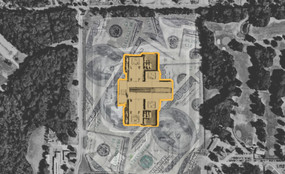
On Monday, New York Focus reported that banking giant JPMorganChase received a $77 million tax break from Rockland County’s industrial development agency, or IDA, for a data center project that will create just one permanent job. The deal, approved in 2024, is the largest per-job subsidy of its kind in the country.

Michael Fusco, a spokesperson for JPMorganChase, noted that the project will provide 150 temporary construction jobs, and that 70 JPMorgan employees are already working at the site. “We turned a long-stalled brownfield site into an active, tax-generating site — investing more than $80 million in environmental remediation and creating hundreds of local construction jobs during the development,” he said.

To learn more, senior reporter Sam Mellins interviewed John Kaehny, executive director of the good government group Reinvent Albany, whose analysis surfaced the deal. They discussed what’s new about this kind of subsidy, what it means for taxpayers, and how agreements like this continue to fly under the radar despite calls for reform. This transcript of their conversation has been edited for length and clarity.
 

SAM MELLINS: You’ve been tracking subsidies for years. How did you come across this one, and how do data centers compare to other economic development deals?

JOHN KAEHNY: I stumbled into this while actually looking at New York clean hydropower subsidies. And I knew that there were lots of data centers in Rockland County. And then I looked at the project description. I thought, ‘Oh, that has to be a typo. That has to be wrong.’ But the project document is just very straight up: It says one full-time job.

The big difference between data centers and conventional subsidies is that so much of the subsidies for data centers are in the form of sales tax, because the data centers employ almost nobody and spend enormous amounts of money. [Historically, IDA subsidies have mostly been property tax breaks.]

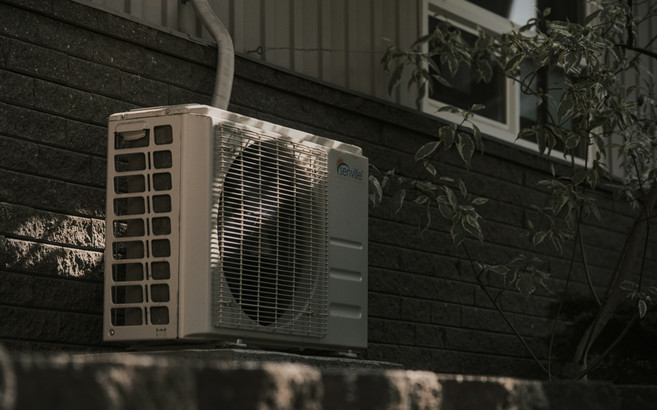
In this case, they’re planning to spend a billion dollars on computers and computer servers and air conditioning, basically. And that’s significant, because the IDA is abating a 4 percent sales tax. So as we point out, that’s $40 million in abated state sales taxes for this one data center. And that’s interesting, because state elected officials are not aware that local IDAs are giving away state taxes. They think they’re giving away local property taxes, mainly.

SMThe IDA claims the expansion project will generate more than 1,400 construction jobs and net over $100 million for the county. What do you make of those numbers?

JK: First, most of the workers are not going to be from Rockland County, because when you mobilize a big workforce to do a project like this, they typically come from the tri-state area, or even nationally, because they’re going from data center to data center to data center. So the math is completely mysterious to us. Because what are they paying? They’re not paying income taxes, and unless the company is in Rockland, they’re not paying payroll taxes to Rockland County. So we don’t understand where they’re coming up with that.

And the other thing is that we thought it was fascinating that the response of the Rockland IDA was, ‘So what, jobs don’t matter at all. You should measure using other criteria.’ Under the state law that establishes IDAs and authorizes them, it says their purpose is jobs. And so for the Rockland IDA rep to say, ‘Oh, jobs don’t matter to us. That’s antiquated, that’s obsolete,’ that’s big. That’s a news flash to us, and to everybody in the state government, because the explicit purpose of IDAs is jobs.

SM: It seems like hardly anyone was aware of this deal. After we published our story, the mayor of a local village reached out. He had never heard of the project, and pointed out that the video of the hearing — in front of an empty room — had gotten 12 views over two years. How common is it for IDAs to make giant decisions that no one hears about, and why does that happen?

JK: It’s extremely common. There’s almost too much democracy and transparency. It’s like if I throw a blizzard of facts and information at you, but what you really want is just one piece of paper that has four bullets on it that say, ‘We’re giving away this much.’ They do lots and lots of process and procedures that go on for hours and hours, but unless you’re an expert, they’re pretty abstruse to the public.

Nobody came in 2024 to this hearing because nobody said, ‘You need to come out, because this is a humongous amount of money that the IDA is going to give away.’ Nobody knew that. So why would they show up? And that happens again and again and again.

SMYour group has argued that IDAs have a “perverse incentive” to approve large subsidy deals because of the fees they get for each project. Can you explain that?

JK: The IDAs are completely conflicted. The IDAs, including their salaries, are literally funded as a percentage commission of the subsidy they give out. So their inclination is going to be to approve and not to apply too much scrutiny. So you should also have an independent evaluator who represents the public interest in not giving out tax dollars. [Steven Porath, executive director of the Rockland County IDA, disputed the idea that his office was motivated by commissions. “I don’t think we’ve ever thought about salaries or anything as far as part of the rationale why we would approve a project,” he said.]

SM: New York gives out $11 billion each year in subsidies. The issue has gotten a bit more attention in Albany in recent years, but proposed reforms have gone nowhere. Why do you think that is, and what would it take to change?

JKThe reason that no one in Albany is interested in subsidies is because it’s a manifestation of having a political system that is driven by special interest and not the public good.

You have special interests that have perfected their game over the last 20 or 30 years [of] milking this money out of the state and out of the state taxpayers. The film and TV industry and labor unions work together to extract $800 million a year in reimbursable tax credits. JPMorgan, they work with contractors who are running around the state, but they’re union, and so they work with AFL-CIO. And the reality is that the public sector unions, which would be the logical opponents of these deals — because that $11 billion is coming out of the tax base in New York state — they’re not putting up much of a fight at all.

And in the absence of that, you have budget watchdogs and the government watchdogs saying, ‘That’s not right, we should have fact-based government!’ And the reality is, that’s not politically compelling. You have to have big dog constituents screaming their heads off, and you don’t. And so hopes for reform really depend on either a popular level revolt, where people start inflaming the minds of all their neighbors, or some of the big dogs stepping off the sideline.

Colin Kinniburgh contributed reporting. 

Update: April 28, 2026 — This story has been updated with a response from JPMorganChase.

I hope this article helped you better answer the question that guides all of our journalism: Who runs New York? Before you click away, please consider supporting our work and making more stories like this one possible.

New York state is standing at a crossroads for climate action. After passing one of the nation’s most ambitious climate laws in 2019, the state is lagging far behind on its targets, struggling to meet deadlines to build renewable energy and clean up its buildings and roads. Other states are closely watching our progress, making decisions about their own climate plans based on New York’s ability to implement this legislation.

As New York’s only statewide nonprofit news publication, we’ve been scrutinizing the state’s climate progress. Our journalism exists to unpack how power works in New York, analyze who’s really calling the shots, and reveal how obscure decisions shape ordinary New Yorkers’ lives.

But we can't do this work without your help. We rely on reader donations to help sustain our outlet, and every gift directly allows us to publish more pieces like this.

Our work has already shown what can happen when those with power know that someone is watching, with my reporting prompting a state investigation and fine for a major corporation. I have more story ideas than I can count, but only limited resources to pursue all the leads that come across my desk.

If you’re able, please consider supporting our journalism with a one-time or monthly gift. Even small donations make a big difference.

Thank you for reading.

Colin Kinniburgh
Climate and Environmental Politics Reporter

A photo of Colin Kinniburgh.
A photo of Sam Mellins.
Sam Mellins is senior reporter at New York Focus, which he has been a part of since launch day. His reporting has also appeared in The San Francisco Chronicle, The Intercept, THE CITY, and The Nation. Reach him on Signal: mellins.613
Also filed in New York State

At a Board of Regents meeting Monday, state officials proposed eliminating credit-based diploma requirements.

The last-minute influx, the biggest ever for a legislative primary, is boosting her opponent, Jessica González-Rojas.

City budget gaps and an ambitious affordability agenda may require pressing Albany again for taxes and aid.

Also filed in Climate and Environment

The citizens assembly model, used for public decision-making around the world, is gaining traction in New York.

A lobbyist who has been romantically linked to Assembly Speaker Carl Heastie led a rally opposing the legislation a week before the speaker declined to bring it to a vote.

In May, state lawmakers passed a $269 billion budget after haggling for months over thousands of line items and policies affecting New Yorkers.

Also filed in Labor

160,000 injured New Yorkers seek workers’ compensation each year — but in recent years, regulators have tilted the scales towards employers and insurers.

The Bronx Democratic Party is gaining power. So is a consulting firm tied to its chair.

The governor, Senate, and Assembly all have different ideas for how to implement this year’s increases for human services contracts.