The state’s universal pre-K funding model is notoriously complex. How does it actually work, and can the governor’s plan fix it?
The state’s universal pre-K funding model is notoriously complex. How does it actually work, and can the governor’s plan fix it? ·  View in browser
NEWSLETTER
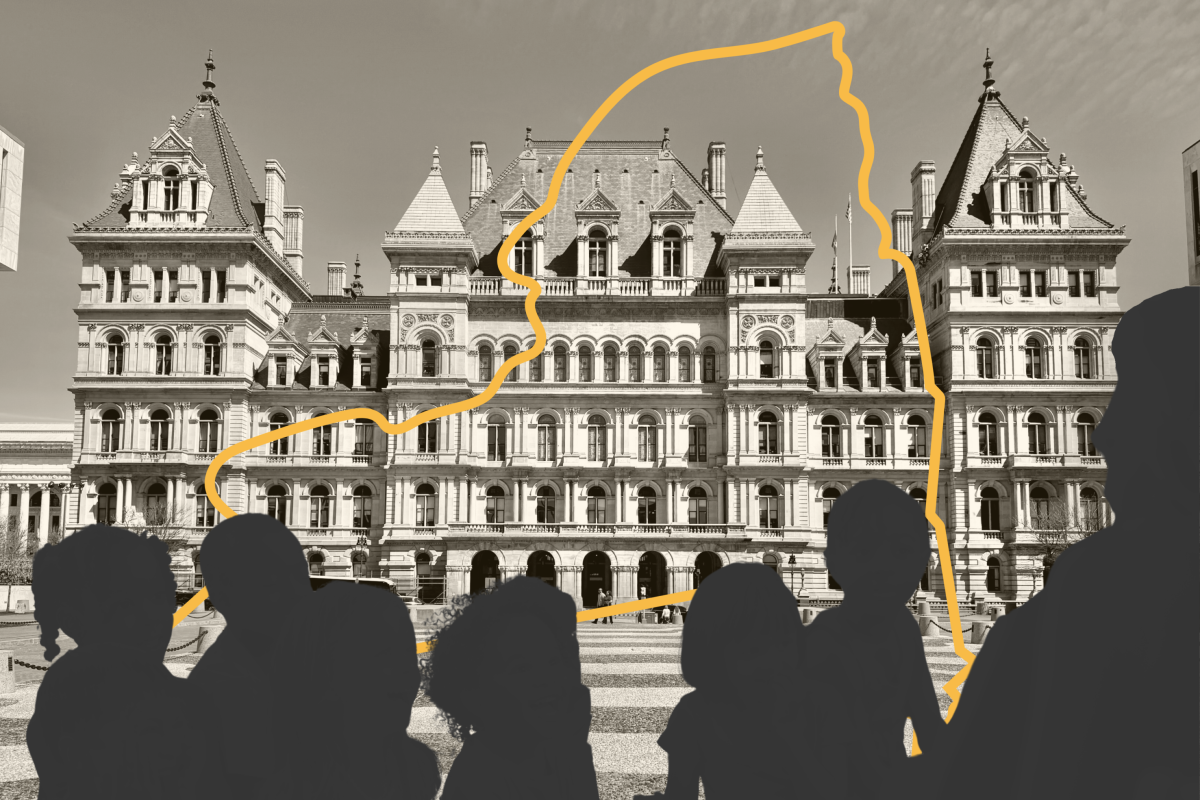
Last week, the state legislature officially backed Governor Kathy Hochul’s plan to offer every 4-year-old in New York a free pre-K seat within the next three years. Photo: Warren LeMay/Flickr; Graphics: Oleksa/Canva, FatCamera/Getty Images | Illustration: Leor Stylar
The state’s universal pre-K funding model is notoriously complex. How does it actually work, and can the governor’s plan fix it?
By Melissa Manno

Last week, the state legislature officially backed Governor Kathy Hochul’s plan to offer every 4-year-old in New York a free pre-K seat within the next three years.

New York’s public pre-K program served three-quarters of eligible 4-year-olds last school year. But thousands of children statewide still lack access because their districts have limited seats or don’t offer it at all, New York Focus reported earlier this month. Last year, 49 districts opted out, many citing insufficient state funding, limited space, or staffing issues.

Hochul’s proposal would nearly double the state’s minimum reimbursement to $10,000 per student, but some district superintendents contend that amount would still not be enough to provide a seat to all applicants by the 2028–29 school year.

Recent Stories

The musical “Lempicka” was awarded a $2.6 million Broadway tax credit after its monthlong 2024 run. Joe Shlabotnik/Flickr
Sold as a pandemic-era emergency program, the state’s theater tax credit has quietly sent hundreds of millions to short-run flops and blockbuster hits.
By Nick Garber

When the musical “KPOP” shut its doors in December 2022 after just 17 performances, it concluded a disappointing Broadway run. The show, which celebrated Korean music and cost about $13 million to make, sold too few tickets to stay open longer than two weeks.

But there was a silver lining for the show’s producers. About a year after “KPOP” closed, the State of New York awarded them $1.9 million. Taxpayers subsidized the show for an amount that comes out to more than $110,000 per performance, thanks to the New York City Musical and Theatrical Production Tax Credit.

The program began as a one-year, $100 million lifeline during the pandemic, which shut Broadway down for 18 months. It has been extended three times since. Now, Governor Hochul is proposing to grow the program by $150 million, bringing the state’s total outlay to $550 million through mid-2027 — even as Broadway attendance and revenues surpass pre-pandemic levels.

Attorney General Letitia James filed a lawsuit against the solar company Attyx and two of its lending partners on Tuesday. Photo: Matt Montagne/Flickr | Illustration: Leor Stylar
Attorney General Letitia James alleges Attyx “built its business by defrauding consumers.”
By Colin Kinniburgh

In fall 2023, Queens homeowner Claver Campbell saw an enticing social media ad promising a new roof and solar panels to qualifying seniors. She called the number listed and, within days, was signed up for the home upgrades — and, unbeknownst to her, a loan totaling $160,000. She tried to back out, but found herself stuck with a contract she could not afford.

Campbell eventually sued the companies responsible with the help of the Legal Aid Society, as New York Focus reported at the time. She recently settled the case for an undisclosed sum. But thousands more New Yorkers are in a situation like hers, according to a new lawsuit filed by Attorney General Letitia James — and the state wants their money back.

James filed the suit against the solar company Attyx and two of its lending partners on Tuesday, alleging that Attyx “built its business by defrauding consumers” and made as much as $275 million in the process. The lawsuit claims that the company routinely used false or exaggerated promises of government incentives and energy bill savings to lure customers into solar contracts, leaving them on the hook for tens or even hundreds of thousands of dollars in loans.

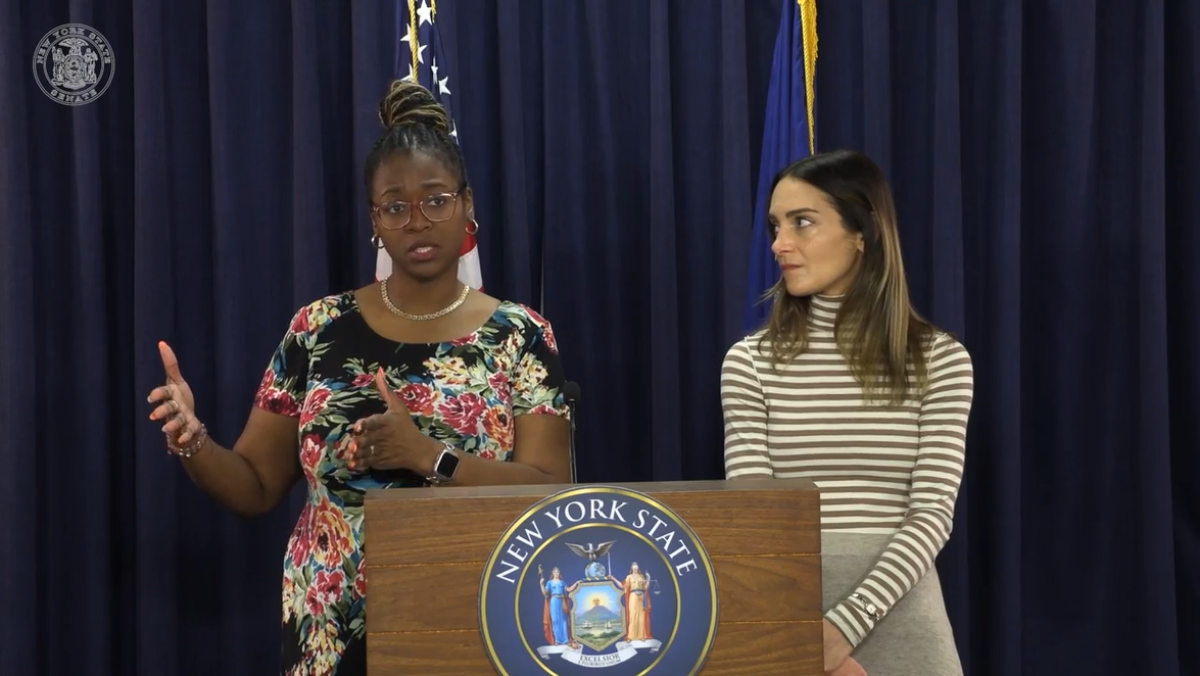
State Assemblymember Phara Souffrant Forrest and Senator Julia Salazar introduced a bill that aims to prevent state prisons from banning visitors based on faulty body scanner readings subject prison employees to security scans. Screenshot: New York state Senate
The bill follows reporting from New York Focus and other news outlets on prison staff mistaking menstrual and contraceptive products for hidden contraband.
By Chris Gelardi and Raina Lipsitz

A new bill unveiled Wednesday aims to prevent state prisons from banning visitors based on faulty body scanner readings. The legislation would also subject prison employees to the same security scans required of visitors who wish to sit in a room with their loved ones. Currently, staff are allowed to opt out of the body scans, which the prison system has deployed to intercept drugs, weapons, and other banned items.

The bill follows New York Focus reporting that showed how prison employees have repeatedly barred people from visiting facilities after mistaking body scanner imaging of tampons, contraceptive products, anatomical features, and other anomalies for hidden contraband. The Department of Corrections and Community Supervision, or DOCCS, started requiring visitors to pass through body scanners when it resumed visitation after a three-week prison guard strike last March.

The body scanner policy was one of the striking officers’ demands, aimed at alleviating what they described as high numbers of visitors smuggling items into prisons. But soon after the department introduced the body scanners, visitors — particularly women — began complaining of being wrongfully kept out based on misread scanner readings, even though staff never recovered the contraband they alleged was being smuggled. In many cases, DOCCS barred the visitors from prisons for several months or indefinitely.


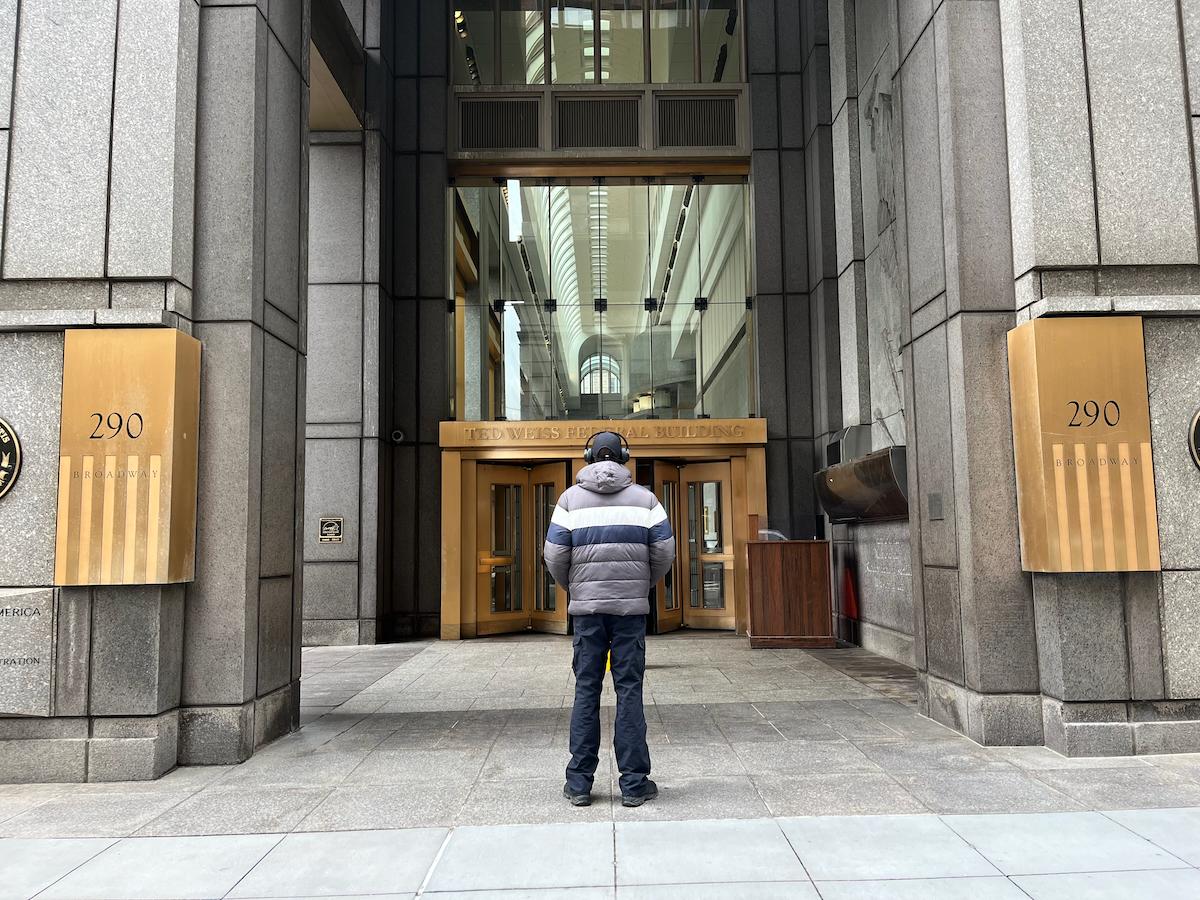
Modou stands in front of the New York federal building where a judge ordered him removed to Uganda, a country he’s never visited. Liv Veazey / New York Focus
Over the last three months, ICE attorneys in New York state have petitioned to send half of the African asylum seekers who had immigration hearings to Uganda.
By Liv Veazey
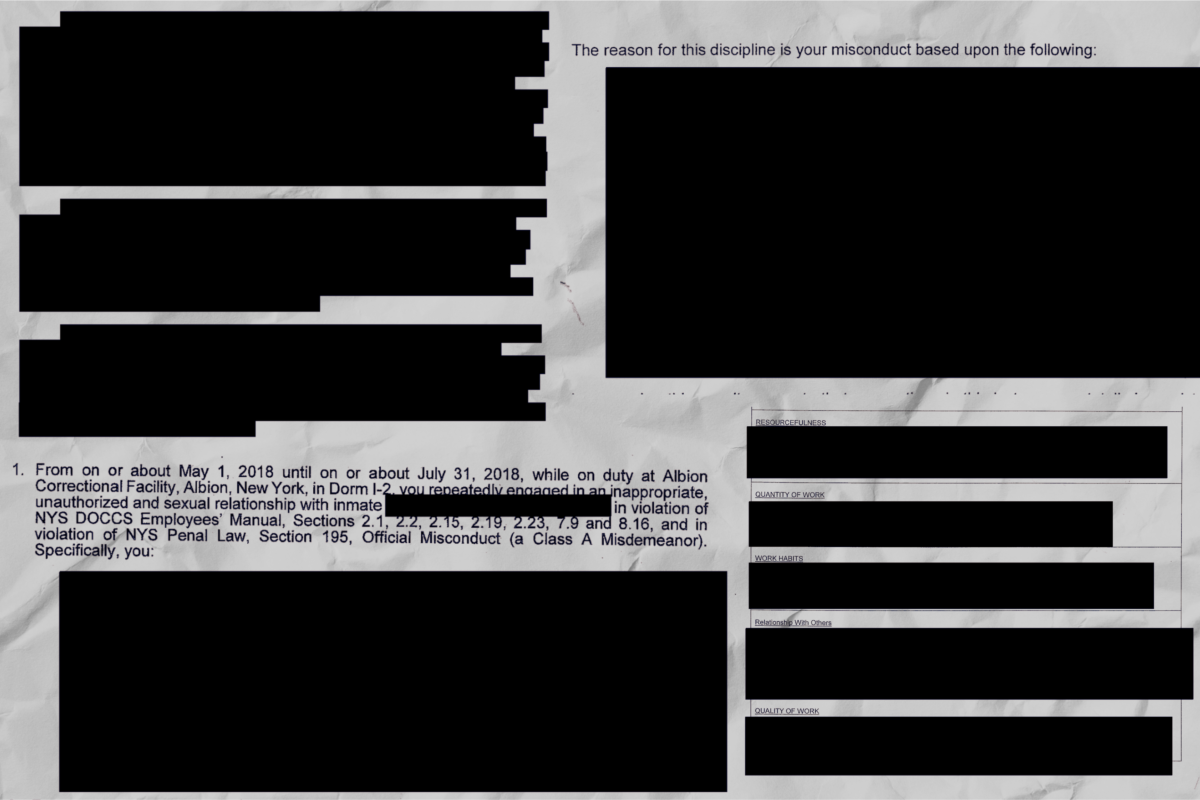
Screenshots of documents the prison system sent in response to New York Focus’s public records requests. Illustration: New York Focus
Prison officials have refused to release crucial records on how the agency handles allegations of sexual abuse.
By Nick Pinto

For the past year, reporters at New York Focus and Hell Gate have been working together to report on the extraordinary number of sexual abuse allegations made by people held in New York prisons in a flood of lawsuits under the Adult Survivors Act, as well as the state government’s efforts to block those lawsuits.

This reporting raises major questions: How seriously do state prison authorites take allegations of sexual abuse by prison staff? What mechanisms are in place to prevent it, investigate it, and protect people in state custody from people found to have committed abuse?

To try to shed some light on those questions, reporters at New York Focus filed public records requests a year ago for the personnel records of prison staff named in the lawsuits, and records of any investigations into their alleged abuse.

But the Department of Corrections and Community Supervision, or DOCCS, which runs the state prisons, has so far stonewalled the requests. Last week, New York Focus, represented by the Cornell Law School’s First Amendment Clinic, sued the agency in state court to get the documents it seeks.

Hell Gate reporter Nick Pinto interviewed Chris Gelardi, New York Focus’s justice bureau chief, and Hell Gate’s Jessy Edwards about the lawsuit, their reporting, and why it matters.

Copyright © New York Focus 2024, All rights reserved.
Staying Focused is compiled and written by Alex Arriaga
Contact Alex at alex@nysfocus.com

Feedback? Tips? Pitches? Contact us at: editor@nysfocus.com

Support our work!

Interested in sponsoring these emails? Get in touch! Email editor@nysfocus.com.

This email was sent to *|EMAIL|*

unsubscribe from this list  ·  update subscription preferences

New York Focus · *|HTML:LIST_ADDRESS_HTML|* · USA