New York Focus Is Suing the State Prison Agency

Prison officials have refused to release crucial records on how the agency handles allegations of sexual abuse.

Nick Pinto   ·   March 17, 2026
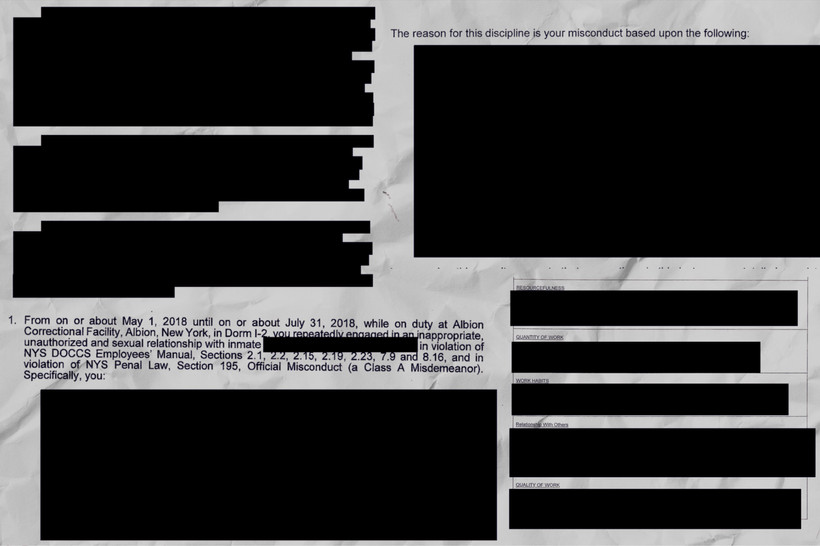
Screenshots of documents the prison system sent in response to New York Focus's public records requests.
Screenshots of documents the prison system sent in response to New York Focus's public records requests. | Illustration: New York Focus

This story was reported in partnership with Hell Gate and supported by the Fund for Investigative Journalism.

Sign up for Staying Focused, our newsletter keeping readers up to speed on New York politics.

For the past year, reporters at New York Focus and Hell Gate have been working together to report on the extraordinary number of sexual abuse allegations made by people held in New York prisons in a flood of lawsuits under the Adult Survivors Act, as well as the state government’s efforts to block those lawsuits.

This reporting raises major questions: How seriously do state prison authorites take allegations of sexual abuse by prison staff? What mechanisms are in place to prevent it, investigate it, and protect people in state custody from people found to have committed abuse?

To try to shed some light on those questions, reporters at New York Focus filed public records requests a year ago for the personnel records of prison staff named in the lawsuits, and records of any investigations into their alleged abuse.

But the Department of Corrections and Community Supervision, or DOCCS, which runs the state prisons, has so far stonewalled the requests. Last week, New York Focus, represented by the Cornell Law School’s First Amendment Clinic, sued the agency in state court to get the documents it seeks.

Hell Gate reporter Nick Pinto interviewed Chris Gelardi, New York Focus’s justice bureau chief, and Hell Gate’s Jessy Edwards about the lawsuit, their reporting, and why it matters.

This conversation has been lightly edited for clarity and concision.

Nick Pinto: How did you end up suing the state prison agency? What’s the backstory that got us to this point?

Jessy Edwards: When state lawmakers decided to pass this legislation that would allow adult survivors of sexual assault a window to file lawsuits outside of the statute of limitations, they have told us they didn’t even anticipate how many of these lawsuits would come out of New York’s prison system, and Rikers Island as well. The act produced this trove of data: 3,000-odd lawsuits were filed, over 1,600 of which appear to be filed against the state by women who were formerly incarcerated in New York prisons, all of whom say that they were sexually assaulted by state employees.

DOCCS has been a real black box on the issue of sexual abuse until recently, though we’ve had national surveys that show that the New York prison system is a place where women report some of the highest rates of sexual assault. These lawsuits shine more of a light on it. There are hundreds of state employees named in these lawsuits. And so it raises the question: What are the circumstances that led to so much alleged sexual abuse in New York prisons?

Chris Gelardi: The records we requested from DOCCS, that we’re now suing for, are all about trying to understand how the agency handles allegations of sexual misconduct by staff. We’ve heard in interviews that there’s a culture of impunity, that corrections officers cover for one another, and that the department itself doesn’t take allegations very seriously or fully investigate them. In order to get to the bottom of that, we need to know exactly how the prison system responds to these issues internally.

Pinto: These records that DOCCS is so far refusing to show you have to do with the personnel files of prison staff and any investigations into their misconduct. Part of what DOCCS is saying is that giving you these documents could hurt the guards’ privacy rights, and even their physical safety. Why is the news media and the public entitled to such sensitive records?

Gelardi: I would point you to what the legislature said six years ago when they repealed section 50-a of the state Civil Rights Law, which specifically exempted law enforcement disciplinary records from disclosure via FOIL [New York’s Freedom of Information Law]. They repealed that because they recognized that these are very crucial to understanding allegations of all types of law enforcement abuse. And, you know, in the years since 50-a was repealed, we’ve seen really aggressive pushback from law enforcement agencies. A lot of people were expecting a flood of records, when it’s really been sort of a trickle, and a lot of lawsuits. This is part of that effort to pry the records free after the state recognized that they are indeed in the public interest.

Edwards: I think a lot of the time when we’re talking about reporting on sexual assault, agencies and organizations will be quick to say, “We can’t release that information because we have to protect the privacy of the victim.” But in this case, we have spoken to many alleged survivors who are willing to waive their privacy rights in order for us to have a clearer view of what is going on inside these prisons.

Pinto: And when you supply the prison administration with these waivers, they turn the records right over, right?

Gelardi: No. One of DOCCS’s main responses to these requests has been to deny records in order to protect the privacy of the officers accused of abuse. So a huge part of what will get litigated in this lawsuit is the question of to what degree they’re allowed to do that when the legislature has asserted that these are records that are in the public interest.

It’s clear at this point that this is a huge, systemic problem, and has been, truly, for decades. So we’re doing the legwork in the reporting to figure out the exact mechanisms by which DOCCS fails to catch this and fails to hold alleged abusers to account.

Pinto: What do we know already about the accountability mechanisms when someone is accused of abusing people in custody?

Gelardi: It’s largely a matter of DOCCS policing itself. There is an internal investigations unit, which is run by DOCCS. One of the top people in the investigative office is the brother of the current commissioner, and the current head of the unit’s sex crimes division is an old friend of those two. So, it gets a little— let’s say it’s a close circle of people who are involved.

Pinto: It’s not all that common to see reporters from different publications collaborating in this way. How did that come together, and how’s it going?

Gelardi: It’s a match made in heaven, baby! New York Focus and Hell Gate have different flavors of the same accountability mission. Jessy’s Adult Survivors Act work on Rikers was really boundary-pushing, the exact thing that we’re trying to bring to the state level with this project. Having her on this investigation, bringing us into this world, has been really valuable. I’ve covered the state prison system for years. I’ve done a lot of reporting on the internal investigations unit, so that subject expertise there. Chris Bragg [New York Focus’s Albany bureau chief], who’s also been working on this, is a public records genius. We have all this complementary expertise, it makes sense to be working together.

Pinto: Why are these records worth suing over? Why does the issue of sexual assault in New York prisons matter?

Gelardi: These people are incarcerated, but they’re people. They were sentenced to prison, as the state puts it, for rehabilitation. Being assaulted is not part of their sentence. That’s very important.

Edwards: Some of the women I’ve spoken to were sent to prison on marijuana offenses. So the idea of severely punishing that crime on the one hand, and then having the state mount this robust defense of a different crime, sexual assault, I think there’s a real hypocrisy there.

Gelardi: I would also say, carceral systems, places like New York prisons, that are punitive by nature and largely hidden from view, can be a place where state violence germinates. It’s where the state is able to abuse its citizens most readily and most easily. Looking at how the state treats people in its custody is something I think we all should care about and pay attention to.

BEFORE YOU GO, consider: If not for the article you just read, would the information in it be public?

Or would it remain hidden — buried within the confines of New York’s sprawling criminal-legal apparatus?

I started working at New York Focus in 2022, not long after the outlet launched. Since that time, our reporters and editors have been vigorously scrutinizing every facet of the Empire State’s criminal justice institutions, investigating power players and the impact of policy on state prisons, county jails, and local police and courts — always with an eye toward what it means for people involved in the system.

That system works hard to make those people invisible, and it shields those at the top from scrutiny. And without rigorous, resource-intensive journalism, it would all operate with significantly more impunity.

Only a handful of journalists do this type of work in New York. In the last decades, the number of local news outlets in the state has nearly halved, making our coverage all the more critical. Our criminal justice reporting has been cited in lawsuits, spurred legislation, and led to the rescission of statewide policies. With your help, we can continue to do this work, and go even deeper: We have endless ideas for more ambitious projects and harder hitting investigations. But we need your help.

As a small, nonprofit outlet, we rely on our readers to support our journalism. If you’re able, please consider supporting us with a one-time or monthly gift. We so appreciate your help.

Here’s to a more just, more transparent New York.

Chris Gelardi
Justice Bureau Chief
A photo of Chris Gelardi
Nick Pinto is a reporter for Hell Gate whose work focuses on police, courts, jails and prisons. He served two tours as a staff writer at The Village Voice, and his reporting has appeared in The New York Times Magazine, Gothamist, The New Republic… more
Also filed in Criminal Justice

The legislation would make it easier for currently and formerly incarcerated people and child victims to sue the state over allegations of past abuse.

It’s unclear whether the Correctional Association of New York will have to scale back its nascent reform initiatives.

The legislation comes after months of haggling over how best to protect New Yorkers from President Trump’s immigration crackdown.

Also filed in New York State

Millions in outside spending was a boon to Gov. Kathy Hochul’s 2022 opponent, Lee Zeldin, and influenced down-ballot races.

State leaders are expected to pass a bill that avoids resolving how much Resorts World New York City needs to pay.

New York state has pumped millions of taxpayer dollars into an online portal that vowed to make life easier for Rochester’s neediest, but critics say it’s fallen short.

Also filed in Inside New York Focus