New York Sues Solar Company, Says It Cheated Thousands

Attorney General Letitia James alleges Attyx “built its business by defrauding consumers.”

Colin Kinniburgh   ·   March 19, 2026
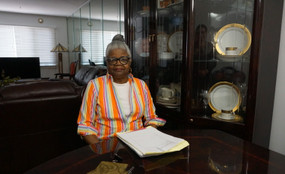
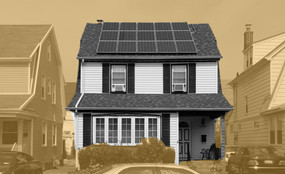
Attorney General Letitia James filed a lawsuit against the solar company Attyx and two of its lending partners on Tuesday. | Photo: Matt Montagne/Flickr | Illustration: Leor Stylar

Sign up for Staying Focused, our newsletter keeping readers up to speed on New York politics.

In fall 2023, Queens homeowner Claver Campbell saw an enticing social media ad promising a new roof and solar panels to qualifying seniors. She called the number listed and, within days, was signed up for the home upgrades — and, unbeknownst to her, a loan totaling $160,000. She tried to back out, but found herself stuck with a contract she could not afford.

Campbell eventually sued the companies responsible with the help of the Legal Aid Society, as New York Focus reported at the time. She recently settled the case for an undisclosed sum. But thousands more New Yorkers are in a situation like hers, according to a new lawsuit filed by Attorney General Letitia James — and the state wants their money back.

James filed the suit against the solar company Attyx and two of its lending partners on Tuesday, alleging that Attyx “built its business by defrauding consumers” and made as much as $275 million in the process. The lawsuit claims that the company routinely used false or exaggerated promises of government incentives and energy bill savings to lure customers into solar contracts, leaving them on the hook for tens or even hundreds of thousands of dollars in loans.

The lawsuit further alleges that the company continued operating under a new name after state regulators ordered it to suspend operations last summer. And it accuses two of Attyx’s lending partners, Solar Mosaic and WebBank, of participating in the company’s fraud, collecting hidden fees and steep interest on loans that customers were encouraged to sign without being given the full terms.

“Attyx preyed on vulnerable and elderly homeowners with false promises and predatory tactics, leaving them with crushing loans they could not afford,” James said in a press release. “My office will fight in court to bring these companies to justice and deliver relief to the thousands of New Yorkers who were ripped off by this illegal scheme.”

A lawyer for Attyx, Hannah Sfameni, said her team was reviewing the attorney general’s filings and declined to comment further.

New York Focus’s attempts to reach Solar Mosaic and WebBank were unsuccessful. (Mosaic went into bankruptcy last year.)

The defendants in the case, and the practices the lawsuit describes, match those in Campbell’s case. The attorney general alleges that Attyx’s business model relied on attracting homeowners like Campbell with social media ads promising “a free roof replacement.” Salespeople would follow up with home visits to close the deal, often asking homeowners to “e-sign” documents by tapping a tablet screen on the spot — only to learn afterward that they’d agreed to “exorbitant” loans, according to the suit.

Attyx “repeatedly targeted elderly, low-income consumers” like Campbell despite knowing that they likely wouldn’t qualify for tax credits that the company promised, the suit says.

The attorney general said her office has received more than 200 customer complaints about Attyx. Altogether, the company and its predecessor SunCo installed more than 4,500 solar systems in the New York City area and earned around $275 million as a result, the AG’s office estimated.

Attyx and SunCo have been sued in state courts by more than two-dozen New York homeowners since 2022, court records show, with the bulk of the cases filed in the last two years. That is in addition to at least five cases filed against the company in federal court.

One New York City lawyer, Gary DeFilippo, has alone filed 10 separate cases against the company on behalf of customers. In a case brought by a Staten Island couple, a judge found Attyx in contempt of court last fall and ordered its president, Grant Young, to appear before a Staten Island court or face arrest. (Young showed up with a check and resolved the case.)

DeFilippo told New York Focus at the time that he has been contacted about Attyx by people as far away as South Carolina. The company now operates in five states, according to its website.

It is no longer allowed to sell solar systems in New York, after the state Public Service Commission revoked its license in November for “misleading marketing” and other violations of state rules for energy companies.

The commission has gone after a number of other solar companies for violations of its rules in recent years, records show, as national scrutiny of the industry has ramped up. The industry often uses door-to-door sales and other aggressive marketing tactics, which put it in the spotlight of the federal Consumer Financial Protection Bureau under President Joe Biden and several state attorneys general.

Solar groups say that bad actors remain the exception in the industry, and that New York has been a leader in deploying rooftop solar while protecting customers. The state energy authority NYSERDA maintains a statewide list of solar companies approved for state subsidies, of which it highlights 35 for consistently good results. Attyx at one point qualified for the subsidies but lost approval several years ago after customer complaints.

In a September filing pleading with the commission to allow it to stay in business, Attyx acknowledged past missteps but said it had taken measures to redress them. It said that it had advanced the state’s climate goals, and that less than 2 percent of its installations had resulted in complaints to the PSC.

“The data show a company that, while not perfect, is functioning at scale with robust controls … and a demonstrated pattern of continuous improvement,” wrote Attyx’s general counsel, Kyle Reeder, in the filing.

Earlier last year, in a video interview, Young said he was focused on doing the “right thing.”

His interviewer, a venture capitalist in whose firm Young and his Attyx partner had invested, observed that the pair were bringing in checks for “half a million dollars” at a time.

“I’m like, are these guys robbing a bank?” the interviewer said.

Young attributed the company’s success to dogged salesmanship and “betting on myself.”

“When you’re doing the right things, it’s like you’re playing with loaded dice,” he said.

I hope this article helped you better answer the question that guides all of our journalism: Who runs New York? Before you click away, please consider supporting our work and making more stories like this one possible.

New York state is standing at a crossroads for climate action. After passing one of the nation’s most ambitious climate laws in 2019, the state is lagging far behind on its targets, struggling to meet deadlines to build renewable energy and clean up its buildings and roads. Other states are closely watching our progress, making decisions about their own climate plans based on New York’s ability to implement this legislation.

As New York’s only statewide nonprofit news publication, we’ve been scrutinizing the state’s climate progress. Our journalism exists to unpack how power works in New York, analyze who’s really calling the shots, and reveal how obscure decisions shape ordinary New Yorkers’ lives.

But we can't do this work without your help. We rely on reader donations to help sustain our outlet, and every gift directly allows us to publish more pieces like this.

Our work has already shown what can happen when those with power know that someone is watching, with my reporting prompting a state investigation and fine for a major corporation. I have more story ideas than I can count, but only limited resources to pursue all the leads that come across my desk.

If you’re able, please consider supporting our journalism with a one-time or monthly gift. Even small donations make a big difference.

Thank you for reading.


A photo of Colin Kinniburgh.
Colin Kinniburgh is a reporter at New York Focus, covering the state’s climate and environmental politics. He has worked in media for more than a decade, across print, television, audio, and online news, and participated in fellowship programs at CUNY’s Graduate School of Journalism… more
Also filed in New York State

In May, state lawmakers passed a $269 billion budget after haggling for months over thousands of line items and policies affecting New Yorkers.

Millions in outside spending was a boon to Gov. Kathy Hochul’s 2022 opponent, Lee Zeldin, and influenced down-ballot races.

The legislation would make it easier for currently and formerly incarcerated people and child victims to sue the state over allegations of past abuse.

Also filed in Climate and Environment

Governor Kathy Hochul was successful in her bid to upend the Climate Leadership and Community Protection Act after legislators caved to finalize an overall budget deal.

The leader of Reinvent Albany discusses a data center subsidy in Rockland County that flew under the radar for years.

No other project in the country has gotten such a large subsidy to create so few jobs, according to watchdogs.