Ad Campaign Funded by Chemical Industry Skirted Campaign Finance Rules

A campaign group run by New York’s business lobby and backed by the American Chemistry Council failed to submit copies of mailers it sent in support of candidates.
Colin Kinniburgh   ·   May 15, 2025
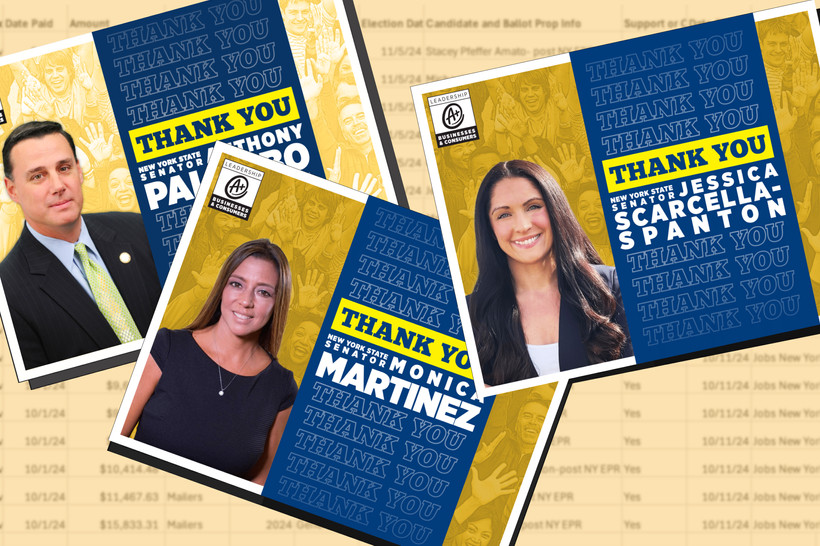
Copies of mailers funded by a national trade group were left out of required campaign filings until New York Focus inquired about them. | Mailers: Business Council | Illustration: New York Focus

Sign up for Staying Focused, our newsletter keeping readers up to speed on New York politics.

The Reporters’ Notebook features bite-sized stories and updates from New York Focus reporters on the topics they cover.

What exactly did the leading trade group for the US chemical industry pay for when it spent a quarter-million dollars backing New York state lawmakers for reelection?

Until now, it wasn’t clear, because the group that ran the effort last fall failed to file campaign mailers with state election officials, as required by law.

New York Focus revealed last week that the American Chemistry Council, which represents major corporations like DuPont, Exxon, and 3M, poured $250,000 into the reelection campaigns of lawmakers across the state, from Long Island to Syracuse.

The Chemistry Council gave the sum to an independent expenditure committee managed by the Business Council, a lobbying group, late last August for “post NY EPR advertisements,” filings show. That tag is an apparent reference to “extended producer responsibility,” a policy that holds companies responsible for handling their products when they’re thrown away.

The committee, called Jobs New York, spent most of the money on mailers in support of nine candidates, largely Democrats, including three senators who voted last June against the packaging EPR bill that is at the center of Albany’s fight over how to tackle waste. The bill passed the Senate at the time but failed to reach a floor vote in the Assembly. It’s now up for a rematch, and Assembly Speaker Carl Heastie has said he expects the bill to come to a vote this year.

State law requires committees to submit copies of any advertisements they spend money on as part of their campaign finance disclosures, but the group failed to do so. Paul Zuber, executive vice president at the Business Council, called the missing disclosures an oversight and said that the group would send them to the Board of Elections in an amended filing. Records show they were submitted to the agency on Tuesday, around the same time New York Focus spoke to Zuber.

Political groups often fail to fully disclose required information on their campaigns and rarely face consequences, even when they’re caught.

In those instances, election officials usually give campaign groups the chance to correct their filings before they issue any penalty, said Rob Galbraith, senior research analyst at the Public Accountability Initiative, a progressive-leaning nonprofit group.

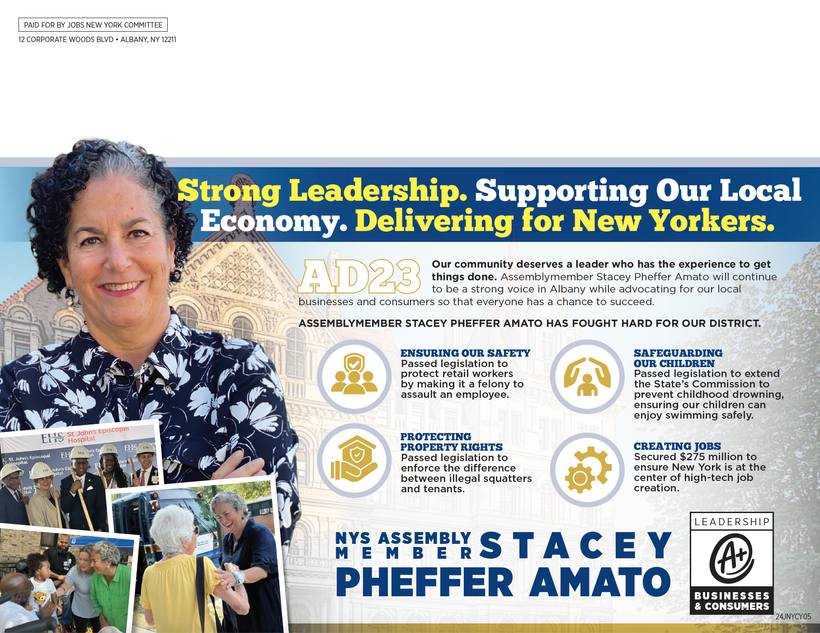
Business Council
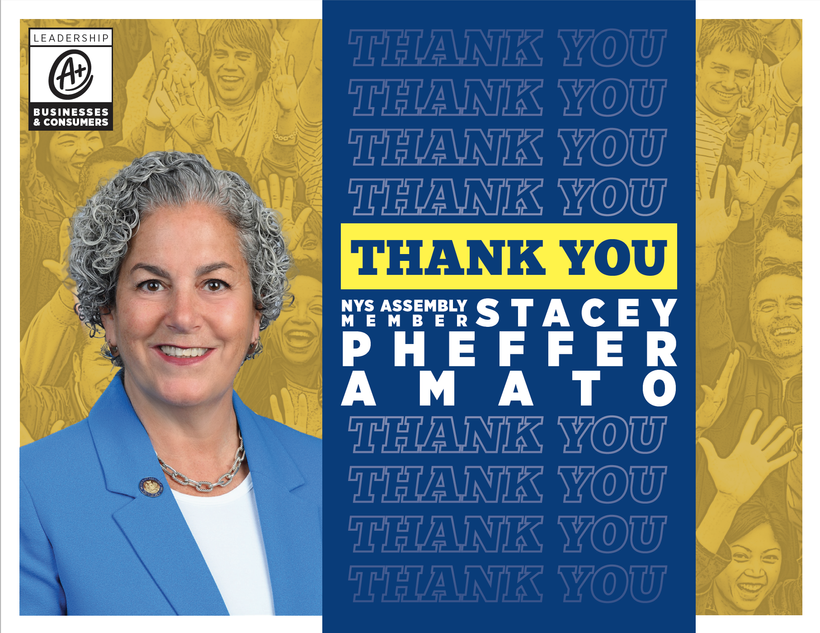
Business Council

The mailers used similar language for each of the nine candidates, touting the incumbents’ “experience to get things done.”

“The incentive is to break the rules, and then apologize later. … There is an affirmative incentive to make these ‘mistakes,’ or to ‘forget’ to submit these things,” Galbraith said. “This lack of transparency is actually very damaging to the political process. It’s damaging to democracy.”

Zuber sent New York Focus samples of the mailers, which tout the candidates as showing “A+ leadership” for businesses and consumers.

“It was intended to say thank you to those members who have had an open mind about at least giving us an opportunity to talk to them about issues,” Zuber said.

He emphasized that none of the mailers specifically mentioned EPR, even though the Chemistry Council paid for them and referred to the policy in campaign filings. Asked how EPR fit into the ad effort, he suggested it was one of many issues where business groups had lost traction with lawmakers since some moderate Democrats, particularly on Long Island, lost their seats in 2022.

“Obviously, EPR folds into that,” Zuber added. He pointed to Senator Monica Martinez as an example of a lawmaker who has kept an open door. She was among the three Democrats who last year voted against the packaging waste reduction bill and is now sponsoring alternative legislation endorsed by business interests, including the chemical industry.

The American Chemistry Council did not respond to a request for comment.

Assembly deputy majority leader Michaelle Solages, of Nassau County, said she hadn’t seen the mailers supporting her.

“While I can’t speak to why any outside group would independently support me, my record is clear: Extended Producer Responsibility is a sensible solution,” Solages told New York Focus over text. “I have consistently supported initiatives aimed at reducing packaging waste.”

She sponsored the longer-standing EPR bill last year but has not yet signed on to it again this year, and did not reply when asked if she would.

I hope this article helped you better answer the question that guides all of our journalism: Who runs New York? Before you click away, please consider supporting our work and making more stories like this one possible.

New York state is standing at a crossroads for climate action. After passing one of the nation’s most ambitious climate laws in 2019, the state is lagging far behind on its targets, struggling to meet deadlines to build renewable energy and clean up its buildings and roads. Other states are closely watching our progress, making decisions about their own climate plans based on New York’s ability to implement this legislation.

As New York’s only statewide nonprofit news publication, we’ve been scrutinizing the state’s climate progress. Our journalism exists to unpack how power works in New York, analyze who’s really calling the shots, and reveal how obscure decisions shape ordinary New Yorkers’ lives.

But we can't do this work without your help. We rely on reader donations to help sustain our outlet, and every gift directly allows us to publish more pieces like this.

Our work has already shown what can happen when those with power know that someone is watching, with my reporting prompting a state investigation and fine for a major corporation. I have more story ideas than I can count, but only limited resources to pursue all the leads that come across my desk.

If you’re able, please consider supporting our journalism with a one-time or monthly gift. Even small donations make a big difference.

Thank you for reading.

Colin Kinniburgh
Climate and Environmental Politics Reporter
A photo of Colin Kinniburgh.
Colin Kinniburgh is a reporter at New York Focus, covering the state’s climate and environmental politics. He has worked in media for more than a decade, across print, television, audio, and online news, and participated in fellowship programs at CUNY’s Graduate School of Journalism… more
Also filed in Elections

The last-minute influx, the biggest ever for a legislative primary, is boosting her opponent, Jessica González-Rojas.

Millions in outside spending was a boon to Gov. Kathy Hochul’s 2022 opponent, Lee Zeldin, and influenced down-ballot races.
Hakeem Jeffries urged Albany to avoid maps that aggressively boosted Democrats, sources told New York Focus.

Also filed in New York State

At a Board of Regents meeting Monday, state officials proposed eliminating credit-based diploma requirements.

City budget gaps and an ambitious affordability agenda may require pressing Albany again for taxes and aid.

A bill awaiting the governor’s signature would relax restrictions on who can qualify for victim compensation.

Also filed in Climate and Environment

The citizens assembly model, used for public decision-making around the world, is gaining traction in New York.

A lobbyist who has been romantically linked to Assembly Speaker Carl Heastie led a rally opposing the legislation a week before the speaker declined to bring it to a vote.

In May, state lawmakers passed a $269 billion budget after haggling for months over thousands of line items and policies affecting New Yorkers.