As the Bronx Democratic Party’s Clout Grows, So Does Its Bottom Line

The party collected record-breaking gifts from Airbnb and Uber, while party operatives lobbied Bronx lawmakers.

Chris Bragg   ·   April 13, 2026
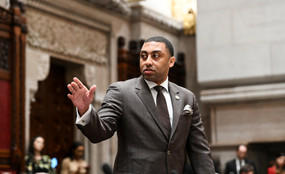
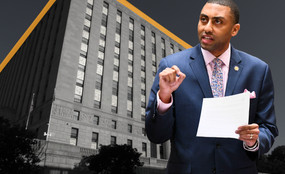
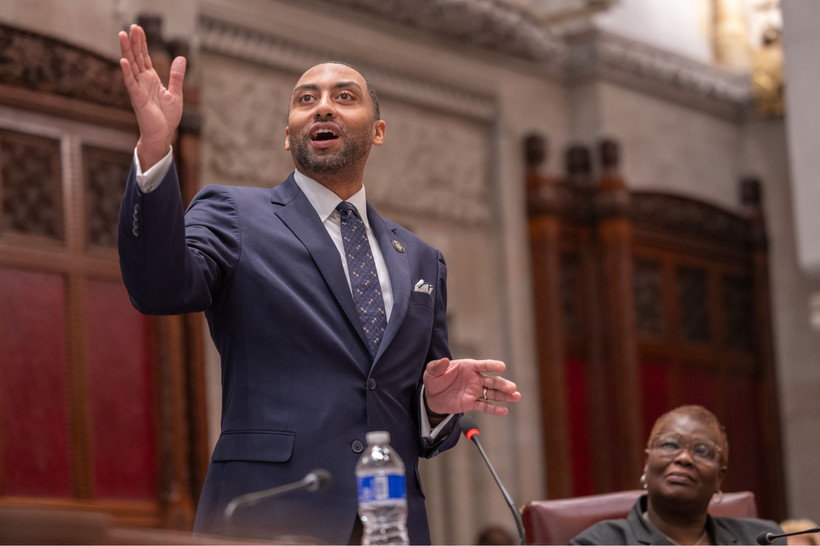
Senator Jamaal Bailey is rumored to be next in line to be Senate majority leader. | NYS Senate Media Services

Sign up for Staying Focused, our newsletter keeping readers up to speed on New York politics.

In the Bronx, where Democratic voters outnumber Republicans nearly 10 to one and incumbents usually cruise to reelection, the local Democratic Party recently had a surprising fundraising streak. 

Over a six-month period late last year, the party’s campaign “housekeeping” account raised ​an unprecedented $812,000 in contributions​, the party’s biggest fundraising haul on record. ​More than half of it came from six-figure gifts from Airbnb, Uber, and the state Laborers’ PAC — the three largest donations to any Democratic party housekeeping account in the state’s most populous counties, according to online records that go back more than two decades.

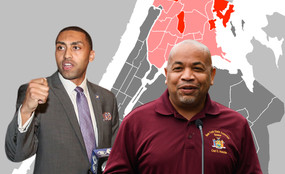
The donors’ largesse could endear them to lawmakers in a growing nerve center of statewide political power. Assembly Speaker Carl Heastie hails from the borough and formerly chaired the Bronx Democratic Party. His protégé, Senator Jamaal Bailey — who now chairs the county party and controls its housekeeping account —  is rumored to be next in line to be Senate majority leader.

For Airbnb and Uber, which gave $250,000 and $100,000 respectively, the amounts appear to be their largest political donations to any party committee or candidate in New York. The Laborers’ PAC, which represents building trades workers and gave $100,000, had made larger donations to the statewide Democratic Party — but never a contribution nearly as large to a county. 

Airbnb did not respond to questions. Uber spokesperson Josh Gold said his company’s donation was meant to broadly bolster a political party playing an “important role in recruiting and supporting candidates who are focused on affordability, economic opportunity, and job creation.” 

NYS Laborers’ PAC Director Vincent Albanese wrote in an email that his group’s donation “reflects the borough’s emergence as a major development hub — and the need for leadership that backs the union construction industry.” 

Some of the donors have ties to London House, a political consulting and lobbying firm founded by a close friend and current campaign aide of Bailey’s, Jason Laidley. London House occupies a dual role: Its employees are paid to run the day-to-day operations of the Bronx Democratic Party, an organization that helps make or break local politicians’ political fortunes. It’s also paid by clients to lobby those same Bronx lawmakers on pressing government business. 

It’s common for Albany lobbying firms, as a means of building influence, to solicit donations from their clients for the benefit of a politician or party. It’s more unusual for a lobbying firm to also be paid by the party itself, allowing its staff to potentially benefit from some of the donations they helped secure. Neither Laidley nor his clients responded to questions about whether he’d solicited donations from them. Bailey and Heastie also did not respond to questions for this article. 

Housekeeping accounts can take donations of any size, including from corporations, but the money must be spent on “party-building” activities, such as paying for staff and headquarters, rather than directly supporting specific candidates in elections. Good government groups have long criticized the accounts as a loosely regulated way for special interests to get around donation limits and curry favor with politicians.

“Housekeeping accounts are a gigantic loophole in New York’s campaign finance rules,” said John Kaehny, executive director of the government reform group Reinvent Albany. “Our groups have been complaining about them for decades because they can do what they’re doing here: Translate special interest money into political influence.”

As Assembly speaker since 2015, Carl Heastie is one of the three most powerful people in Albany. He is also the former chairman of the Bronx Democratic Party and has maintained an interest in its financial success. As New York Focus previously reported, the Assembly Democrats’ campaign committee has directed nearly $700,000 to the Bronx Democrats since 2020, despite the rarity of competitive general elections in the borough. The committee has not given substantial sums to any other county party in recent years.

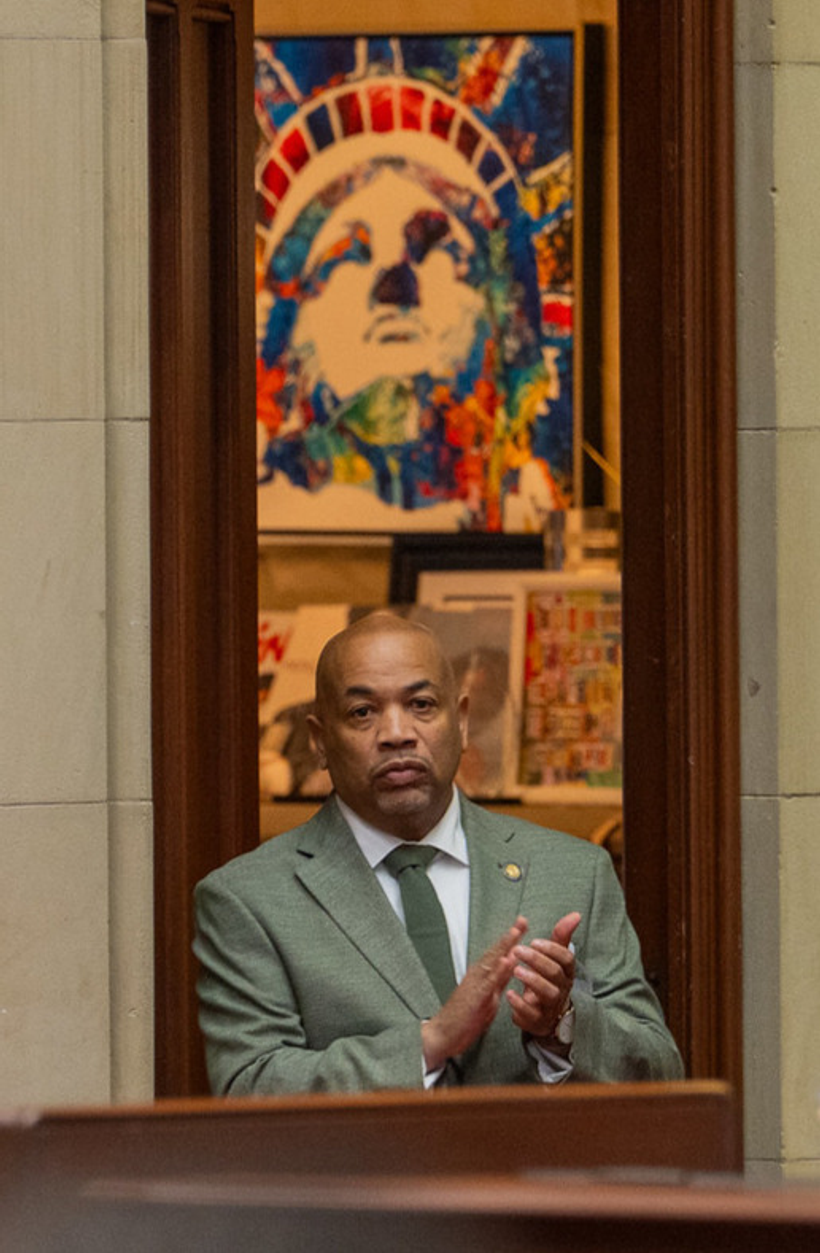
Assembly Speaker Carl Heastie hails from the Bronx and formerly chaired the borough's Democratic Party. | New York State Assembly Majority

Bailey may be in line for a similar ascension.

Senate Majority Leader Andrea Stewart-Cousins will reach the end of an eight-year term limit for the position in December, though Senate Democrats could easily amend the rules to allow her to remain leader. Even if they do, Stewart-Cousins’s deputy leader is retiring, and insiders believe Bailey is well-positioned to replace him and then to take the top position when Stewart-Cousins, age 75, retires herself.

In a race to succeed Stewart-Cousins, Bailey would have the same built-in advantages that helped Heastie win an internal battle in 2015 to become Assembly speaker while serving as Bronx Democratic Party chair. Bailey would have a bloc of votes among Bronx senators and could lean on Bronx Democrats’ longstanding alliance with the Queens Democratic Party, which holds similar sway over senators in that borough. 

If Bailey led the Senate while Heastie led the Assembly, it would mark an unprecedented concentration of power in the Bronx Democratic Party. 

That would also benefit Jason Laidley, founder of London House, who was previously a top aide in Bailey’s office and whose firm is a current campaign consultant for the senator. The Bailey-led Bronx Democratic Party has paid London House hundreds of thousands of dollars in once-hidden consulting fees, New York Focus has reported, and the firm has routinely represented candidates the party has tapped for judgeships.

Over the most recent six-month period, the Bronx Democratic Party housekeeping account paid over $30,000 to London House and an additional $31,000 to Logan Events, a company Laidley founded in 2023, to provide the party with “gala services.”

Arianna Collado, a lobbyist at London House, was paid nearly $50,000 over the last six months to run the party’s day-to-day operations as executive director. 

The party housekeeping account Collado helps oversee spent $440,000 over the period, on expenses including a Netflix account and a number of sizable dining tabs. Housekeeping funds cannot legally be used to cover personal expenses, but may be used in connection with party business. London House did not respond to requests for comment on the expenses.

As London House works for both the party and its chair, its employees also lobby lawmakers they help elect, including Bailey.

Over the past two years, London House’s list of lobbying clients has nearly doubled, and one of them is also the county party’s biggest new donor. Airbnb has retained London House to lobby since late 2024 and pays the firm $15,000 a month.

When the company donated $250,000 to the Bronx Democrats last September, Airbnb and London House were in the midst of a major push in the New York City Council to roll back restrictions on short-term rentals in the city.

Lobbying disclosures show that last year, London House lobbied five Bronx members of the City Council on two proposals pushed by Airbnb, including one that would significantly soften the restrictions.

One bill gained seven co-sponsors, the other gained nine — and for each, four were members of the Bronx Democratic Party. Airbnb’s push gained traction but ultimately died amid heavy pushback from opponents.

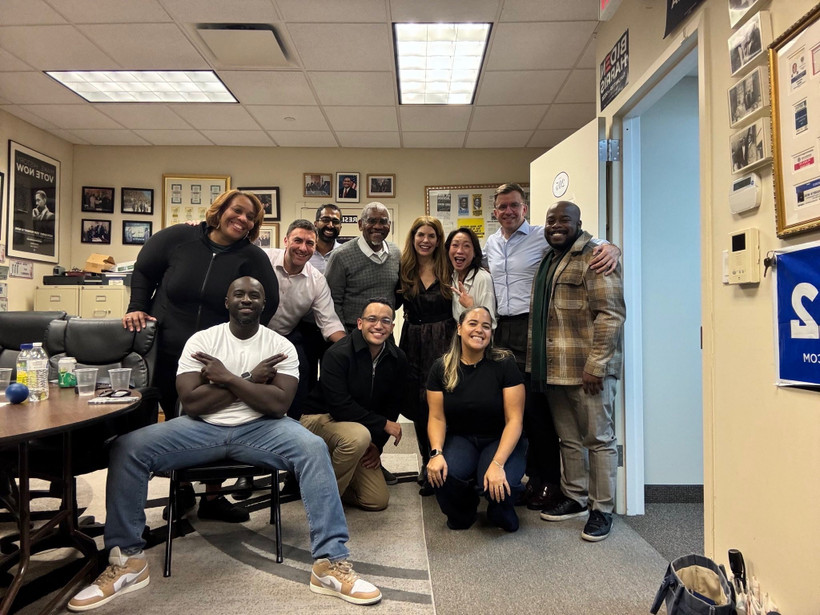
Since the bill’s defeat, a new speaker has assumed the top position in the City Council, and London House played a role in her election. In a celebratory photo taken the November night that Julie Menin wrapped up the support needed among fellow Council members to win the race, Menin is surrounded by a group of 10 allies that helped make her speaker, including Collado and Laidley, who advised Menin as the race unfolded.

New York City Council Speaker Julie Menin, fourth from right in back, on the November night she wrapped up the speaker's race at Queens Democratic Party headquarters. Her key supporters present included Queens Democratic Party chairman and US Representative Gregory Meeks (to Menin's immediate left) and political consultants Jason Laidley (front row, furthest left) and Ariana Collado (front row, furthest right).


The speaker’s race is often decided by Democratic political bosses, who form alliances and convince the Council members in their delegations to come along. In the photo, taken at the headquarters of the Queens Democratic Party, Menin is standing next to the chair of the Queens Democratic Party, US Representative Gregory Meeks — who is also Jason Laidley’s father-in-law. The family ties have further cemented the longstanding alliance between Queens and the Bronx and expanded London House’s sphere of influence.

After rounding up the necessary votes, Menin gave top jobs to Bronx Democrats. She hired Miguelina Camilo, Heastie’s former counsel, as her chief of staff, and a former Heastie aide, Simone Jones, as her deputy chief. 

In response to questions, Menin’s office said the hirings were unrelated to her Bronx backing and were based on the women’s extensive qualifications. Several top Menin officials are not Bronx-connected.

During Menin’s first two months as speaker, Airbnb reported lobbying both Menin and her staff concerning short-term rental laws. In late February, Airbnb hired a lobbying firm founded by Ebony Meeks-Laidley — Meeks’s daughter and Jason Laidley’s wife — for $7,500 a month. Now, both members of the Bronx power couple are poised to push Airbnb’s agenda before a speaker their family played a key role in seating.

Last year, Menin strongly opposed the Airbnb-backed legislation that significantly softened restrictions. Menin has historically had a close relationship with the Hotel and Gaming Trades Council union, which fiercely opposes efforts to loosen short-term rental rules. The bill has not yet been reintroduced this year, so according to the speaker’s office, Menin does not have a position on any possible renewed legislation.

Other Laidley clients who have donated to the Bronx Democrats are focused on Albany, where Bailey runs a key legislative committee overseeing insurance issues.

The car-sharing rental company Turo donated $10,000 to the party late last year, and its director of government affairs, Kenny Montilla, contributed another $20,000.

Last year, before the donations, Bailey co-sponsored a bill dramatically decreasing insurance liability requirements for peer-to-peer car sharing companies like Turo. The bill, boosted by Turo, was signed into law by Governor Kathy Hochul in December.

After the donations, Montilla reported lobbying Bailey on a bill the senator himself introduced in February. It would significantly increase liability coverage requirements for traditional car rental companies, Turo’s competitors.

The ride-sharing giant Uber, which donated $100,000 to the Bronx Democrats in October, is also pressing hard for reductions in auto accident payouts.

Laidley doesn’t work for Uber. But Meeks-Laidley, Laidley’s lobbyist wife, recently inked a $10,000-a-month contract with a lobbying group receiving millions of dollars from Uber, called Citizens for Affordable Rates. The hiring came just after Bailey and fellow Senate Democrats released a budget proposal omitting Hochul’s sweeping plan to narrow insurance company liability for car accidents.

Bailey has been publicly skeptical of Uber’s biggest push in Albany this year, despite the company’s own staff previously lobbying him to support Hochul’s proposal. Uber, Citizens for Affordable Rates, and Meeks-Laidley did not answer a question about whether Meeks-Laidley would now lobby Bailey on the matter.

Bailey did introduce legislation in January that benefits Uber. Mirroring the Turo-backed legislation last year, it would dramatically ease liability limits for car-sharing companies, putting their coverage on par with taxis. Uber has publicly expressed a desire for such a change in New York law.

In the months before Bailey introduced the bill, Uber reported lobbying Bailey on “Insurance and Litigation Reform.” Asked whether Uber had lobbied Bailey to introduce the bill, Gold, the Uber spokesperson, said the company “regularly engages with elected officials and stakeholders on issues affecting our business, including insurance and affordability.” 

In New York Democratic primaries, including in the Bronx, business-friendly incumbents backed by the party are facing stronger competition from an ascendant political left. During the 2025 primaries for New York City Council, Uber spent millions seeking to elect candidates supporting its agenda. The $100,000 donation — made after those primaries were over — is part of a wider strategy in multiple states to support party-building efforts, Gold said, ensuring “a broader and more balanced bench of candidates in the political pipeline.”

At New York Focus, our central mission is to help readers better understand how New York really works. If you think this article succeeded, please consider supporting our mission and making more stories like this one possible.

New York is an incongruous state. We’re home to fabulous wealth — if the state were a country, it would have the tenth largest economy in the world — but also the highest rate of wealth inequality. We’re among the most diverse – but also the most segregated. We passed the nation’s most ambitious climate law — but haven’t been meeting its deadlines and continue to subsidize industries hastening the climate crisis.

As New York’s only statewide nonprofit news publication, our journalism exists to help you make sense of these contradictions. Our work scrutinizes how power works in the state, unpacks who’s really calling the shots, and reveals how obscure decisions shape ordinary New Yorkers’ lives.

In the last two decades, the number of local news outlets in New York has been nearly slashed in half, allowing elected officials and powerful individuals to increasingly operate in the dark — with the average New Yorker none the wiser.

We’re on a mission to change that. Our work has already shown what can happen when those with power know that someone is watching, with stories that have prompted policy changes and spurred legislation. We have ambitious plans for the rest of the year and beyond, including tackling new beats and more hard-hitting stories — but we need your help to make them a reality.

If you’re able, please consider supporting our journalism with a one-time gift or a monthly gift. We can't do this work without you.

Thank you,

Akash Mehta
Editor-in-Chief
A photo of Akash Mehta.
A photo of Chris Bragg.
Chris Bragg is the Albany bureau chief at New York Focus. He has done investigative reporting on New York government and politics since 2009, most recently at The Buffalo News and Albany Times Union.
Also filed in New York State

We’ve compiled information for the 450,000 New Yorkers who will lose health care coverage on July 1.

A lobbyist who has been romantically linked to Assembly Speaker Carl Heastie led a rally opposing the legislation a week before the speaker declined to bring it to a vote.

In May, state lawmakers passed a $269 billion budget after haggling for months over thousands of line items and policies affecting New Yorkers.

Also filed in New York City

The citizens assembly model, used for public decision-making around the world, is gaining traction in New York.

Resorts World is floating legislation to avert more than $500 million in payments to the horseracing industry.

Some of the city’s new aid will be canceled out by pension boosts.