
New York Comptroller Tom DiNapoli Warns Private Equity Against Union Busting

Letters show how the state’s pension funds are enforcing new labor standards for private equity.
Julia Rock   ·   June 23, 2025
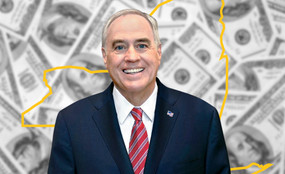
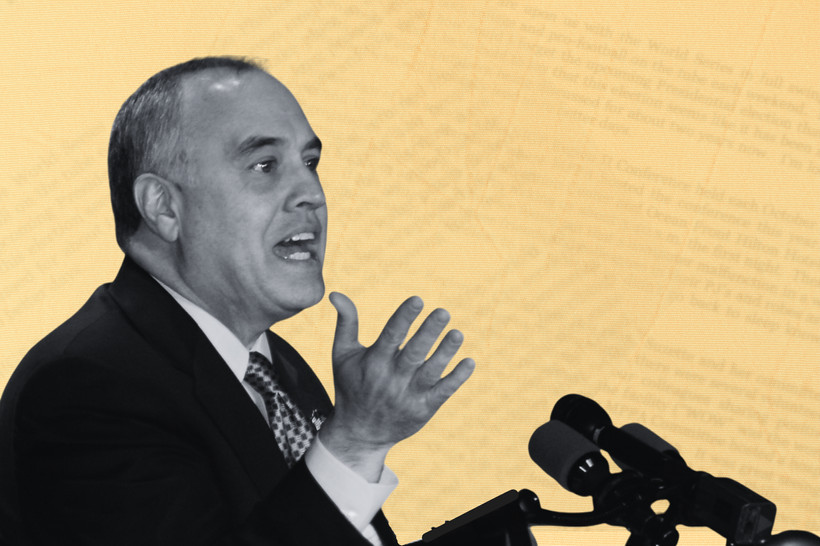
Comptroller Thomas DiNapoli oversees the $275 billion state pension system. | Photo: Thomas Good / Wikimedia Commons | Illustration: Leor Stylar

Sign up for Staying Focused, our newsletter keeping readers up to speed on New York politics.

In the past year, New York’s top financial officer has urged at least three private equity firms responsible for investing billions of state pension dollars to stop anti-union activities among their portfolio companies, according to records obtained by New York Focus.

Last spring, Comptroller Thomas DiNapoli — the steward of the state’s $273 billion pension fund — announced a policy to scrutinize working conditions at private equity-owned companies.

The move was prompted in part by 2022 revelations that a sanitation company owned by the private equity firm Blackstone was employing immigrant children to work the nighttime cleaning shift at meatpacking plants, laboring among heavy machinery and hazardous chemicals. Blackstone financed the sanitation operations in part with state workers’ savings, including New York’s, and the child labor news sent pensions reeling.

The following year, DiNapoli announced that, before investing, the state would examine how private equity firms handled labor and workforce issues in the companies they controlled. The policy encourages firms to ensure their portfolio companies prioritize workers’ rights, protect health and safety, and provide fair compensation and benefits.

Since then, DiNapoli has warned three private equity firms — Blackstone, Carlyle, and KSL Capital partners — about union busting at companies they held stakes in, according to letters obtained by New York Focus. The letters address union campaigns at a resort in Hawaii and at federally funded interpretation services for the deaf, the latter of which employs hundreds of workers in New York.

The records offer a first look at how the state is following through on its new labor standards.

“Making sure that they are actually complying with those standards … has the ability to really change some of the worst management tactics of the private equity-owned firms,” said Justin Flores, director of labor and jobs at the Private Equity Stakeholder Project, a nonprofit watchdog organization. He said that New York’s labor standards are “the strongest out there right now” among pension funds.

However, it is strange that DiNapoli chose to undertake the effort out of the public eye, rather than publishing the letters and their warnings, said Terri Gerstein, director of the Wagner Labor Initiative at New York University. “Part of the benefit of public action is that the broader business community becomes aware of it and takes note, or takes heed.”

“We do a lot of engagement that we do not publicize,” said Matthew Sweeney, spokesperson for the comptroller’s office.

Last September, DiNapoli wrote to KSL Capital Partners, a private equity firm that specializes in “travel and leisure” and owns properties like ski resorts.

His letter said that a KSL-owned hotel in Honolulu called the Outrigger Waikiki Beachcomber Hotel was encouraging workers to vote against joining a union even after KSL promised the New York pension fund that it would remain neutral on the organizing effort.

The pension funds had been “unambiguously assured” that management of the hotel “would not in any way impede a vote” on a union, DiNapoli wrote. “I was therefore shocked and disappointed to see a copy of a letter … [that] lists a number of reasons that workers should vote against unionization and concludes with the line ‘if you are tired of being BULLIED, INTIMIDATED, or LIED TO by those pushing for the union, vote NO.’”

“I was therefore shocked and disappointed to see a copy of a letter ... [that] lists a number of reasons that workers should vote against unionization.”

—comptroller's letter to KSL Capital Partners

The letter said that the anti-union activity “raises great concerns about the investment.” The workers ultimately voted against joining the union, UNITE HERE! Local 5.

The union and KSL did not respond to questions from New York Focus.

In November, DiNapoli sent letters to two other firms, Carlyle and Blackstone, regarding union campaigns and alleged poor working conditions at ZP Better Together and Sorenson Communications — companies that provide video sign language interpretation services for deaf people. While sign language interpretation services are funded by the federal government, they’re privately operated by just a few private equity-backed companies.

“We replied to Comptroller DiNapoli’s letter clarifying that Blackstone sold majority control of Sorenson to another firm three years ago,” a Blackstone spokesperson told New York Focus. “As such, we do not direct decisions of the company.” Carlyle did not comment.

It’s not the first time DiNapoli has weighed in on a labor dispute. In 2017, hundreds of workers at an Apollo Global Management-backed chemical plant in New York went on strike over proposed cuts to their benefits. New York’s pensions were invested in Apollo and another hedge fund that held a stake in the plant, and DiNapoli urged the company to reach a settlement with the striking workers.

“The Comptroller has a long history of engaging managers on labor issues that may impact the Fund’s investments,” said Sweeney, the comptroller spokesperson, in an email. He called the new standards “just another tool to ensure our private equity investment managers understand our position clearly.”

In addition to the letters, the comptroller’s office said in May that it had conducted “nearly ten reviews” of potential investments as part of the process of implementing the new standards.

At New York Focus, our central mission is to help readers better understand how New York really works. If you think this article succeeded, please consider supporting our mission and making more stories like this one possible.

New York is an incongruous state. We’re home to fabulous wealth — if the state were a country, it would have the tenth largest economy in the world — but also the highest rate of wealth inequality. We’re among the most diverse – but also the most segregated. We passed the nation’s most ambitious climate law — but haven’t been meeting its deadlines and continue to subsidize industries hastening the climate crisis.

As New York’s only statewide nonprofit news publication, our journalism exists to help you make sense of these contradictions. Our work scrutinizes how power works in the state, unpacks who’s really calling the shots, and reveals how obscure decisions shape ordinary New Yorkers’ lives.

In the last two decades, the number of local news outlets in New York has been nearly slashed in half, allowing elected officials and powerful individuals to increasingly operate in the dark — with the average New Yorker none the wiser.

We’re on a mission to change that. Our work has already shown what can happen when those with power know that someone is watching, with stories that have prompted policy changes and spurred legislation. We have ambitious plans for the rest of the year and beyond, including tackling new beats and more hard-hitting stories — but we need your help to make them a reality.

If you’re able, please consider supporting our journalism with a one-time gift or a monthly gift. We can't do this work without you.

Thank you,


Julia Rock is a reporter for the Financial Times. She was previously an investigative reporter at New York Focus and The Lever.
Also filed in New York State

In May, state lawmakers passed a $269 billion budget after haggling for months over thousands of line items and policies affecting New Yorkers.

Millions in outside spending was a boon to Gov. Kathy Hochul’s 2022 opponent, Lee Zeldin, and influenced down-ballot races.

The legislation would make it easier for currently and formerly incarcerated people and child victims to sue the state over allegations of past abuse.

Also filed in Labor

160,000 injured New Yorkers seek workers’ compensation each year — but in recent years, regulators have tilted the scales towards employers and insurers.

The leader of Reinvent Albany discusses a data center subsidy in Rockland County that flew under the radar for years.

The Bronx Democratic Party is gaining power. So is a consulting firm tied to its chair.