5 Takeaways From Our Investigation Into the Attorney General’s Conviction Review Bureau

A once-touted statewide conviction review unit lacks independence, authority, and transparency — and Albany hasn’t moved to fix it.

Willow Higgins and Curtis Brodner   ·   September 16, 2025
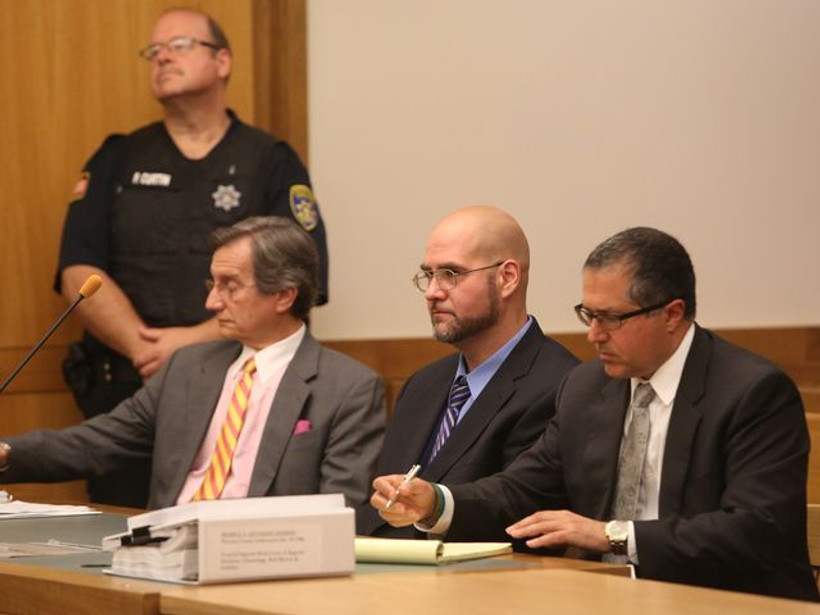
Anthony DiPippo (middle) with attorneys Mark Baker (left) and Marc Agnifilo. | Courtesy of Mark Baker

Sign up for Staying Focused, our newsletter keeping readers up to speed on New York politics.

New York Focus and Columbia Journalism Investigations have been digging into conviction integrity units for more than a year. These programs, typically housed in district attorneys’ offices, are designed to re-examine potential wrongful conviction cases. But as our series shows, CIUs have limitations. DAs rarely overturn their own convictions — and when they do, they seldom acknowledge misconduct.

An alternative model is the statewide CIU, a centralized unit that reviews innocence claims from across the state, independent of local prosecutors. New York embraced this idea in 2012, when then-Attorney General Eric Schneiderman launched a conviction review bureau. His office pledged to assemble prosecutors, defense attorneys, and investigators to “discover the truth about wrongful convictions, and let the chips fall where they may.”

More than 10 years later, the AG bureau has fallen far short of its promise. During our reporting, Attorney General Letitia James’s office scrubbed any mention of the conviction review bureau from its website. Today, it operates entirely in the shadows.

We asked James’s office basic questions, like how many cases the bureau has taken on. The office declined to answer any of them, or to allow us to speak to bureau chief Gail Heatherly. When reached directly, Heatherly called our requests “an intrusion.”

Records requests from across the state yielded over a thousand pages of documents and pointed us to sources and leads. Those files laid the groundwork for months of reporting. Here’s what we found.

1. The bureau does not operate as an independent entity.

The AG bureau was put to the test when Thomas Schellhammer, its first chief and a former homicide prosecutor, took on Ronald Bower’s case. Bower, a security guard and father of two, was arrested days before his 30th birthday in 1991. He maintained his innocence, but he was convicted of sex-related charges in Queens and Nassau counties.

In 2012, Schellhammer made Bower his number one priority, digging deep into the case for more than a year. When Bower was up for parole, he wrote to the parole board his conclusion: “It appears highly unlikely that Bower committed the crimes.” 

When the Nassau DA’s office caught wind of the letter, it complained that it didn’t know about the AG bureau’s reinvestigation and disagreed with its findings. 

About a month later, Schellhammer left the AG’s office. After his departure, a former colleague walked back his findings, saying they weren’t supported by the evidence.

Bower was paroled, but never exonerated. Today, he remains a registered sex offender and lives a quiet life with his cat. 

“I trust animals,” he said. “And that’s basically it.”

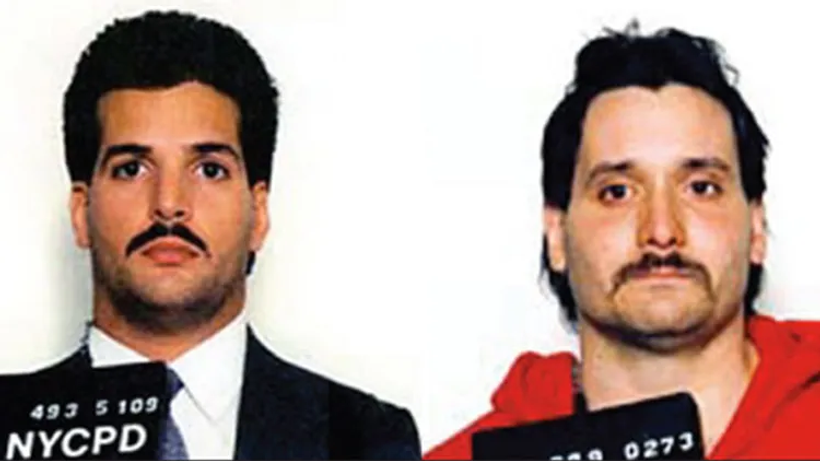
In a mugshot of two men, the one on the left wears a suit and tie; the one of the right wears a red hoodie.
Mugshot of Ronald Bower (right) and Former NYPD Officer Michael Perez, who is said to resemble Bower and has been acquitted of sex offenses similar to those Bower was convicted of. | New York Police Department
2. The AG bureau rarely seeks permission to reinvestigate wrongful conviction claims. Hundreds of people have petitioned for its help, but their applications rarely move forward.

After receiving an innocence claim, the bureau writes to the district attorney who prosecuted the case, alerting them of the application. The bureau also writes to the defendant, in most cases to let them know that they cannot review their case. The letters rarely explain why: The bureau doesn’t have jurisdiction over county-level criminal cases, so when a defendant writes in with a credible wrongful conviction claim, its staff must seek permission from the DA’s office that originally prosecuted the case. In practice, the AG bureau functions more like a mail-forwarding service than a vehicle for justice reform, records show.

Of more than 800 applications, the AG bureau flagged to DAs roughly 16 — less than 2 percent — as meriting a closer look. That puts the application back in the hands of the district attorney’s office that prosecuted the defendant in the first place. It’s up to the local DA whether to review the conviction, and our reporting foundthat county units often fail to back credible claims.

3. When the AG bureau does get involved in a case, it defers to the DA. This is baked into the structure of the unit — and New York law.

Anthony DiPippo, an exoneree from Carmel, New York, experienced this firsthand.

In 2014, DiPippo began communicating with the AG bureau while serving year 17 of his 25-to-life prison sentence for a rape and murder he didn’t commit.

Because DiPippo was prosecuted by Putnam County, he had to convince the DA to invite the AG’s collaboration on his case. He managed to do so, and for more than a year, the reinvestigation seemed productive. The DA, who once told a local newspaper that DiPippo would “take his last breath in that cell,” began to believe in his innocence, records and interviews show. 

But when the DA lost his November 2015 bid for re-election, the collaboration collapsed. The new DA did not agree with the AG bureau’s findings, court records and interviews show, and disinvited the bureau from the reinvestigation. Heatherly’s team retreated, despite the evidence she helped accumulate that built a case for his exoneration.

“If the DA chooses to ignore our conclusions, effectively, we can do nothing further,” her affidavit explained. DiPippo had to wait 10 more months until he was ultimately acquitted by a jury. His co-defendant remained wrongfully convicted for more than six years before he, too, was acquitted.

4. That deference can be a problem even when a DA seeks the help of the AG.

Even when elected DAs invite the AG bureau to reinvestigate a case, critics say the bureau might give in to pressure behind the scenes.

Oswego County DA Gregory Oakes invited the AG bureau to reinvestigate the case of Gary Thibodeau after Thibodeau launched a wrongful conviction motion in 2014 challenging his 1994 kidnapping conviction.

People who believed Thibodeau was innocent took to social media to accuse Oakes of corruption. The DA wrote to Thibodeau’s attorney that he invited the AG “to dispel the notion that we are engaged in some sort of ‘cover up.’”

The conviction relied heavily on a jailhouse informant, who later told a reporter from a local news outlet (who shared his reporting material with New York Focus and CJI) that he never said Thibodeau confessed.

The AG bureau reviewed documents and interviewed the informant, but did not appear to contact Thibodeau or new witnesses accusing three other men of confessing to or implicating themselves in the crime, according to Thibodeau’s attorney. She said she felt the review was “in name only.”

In August 2018, while his attorney was preparing a motion for a rehearing, Thibodeau died in prison at the age of 64. He served 23 years behind bars.

5. Other states are more effective.

New York is one of more than 10 statewide CIUs across the country. But experts said that programs in other states point to a more effective approach to fighting wrongful convictions.

At least three other statewide CIUs can recommend exoneration without the DA’s consent, giving the programs more authority to operate independently. The state legislature could expand the New York AG bureau’s authority to do the same, but doing so could be politically challenging. 

Governor Kathy Hochul already has the authority to grant the AG subpoena power and legal jurisdiction to investigate wrongful conviction claims, but she hasn’t done so. New York Focus and CJI could find no evidence of the AG’s office requesting enhanced powers for its bureau, and Hochul’s office did not respond to requests for comment.

“Prosecutors are not going to want to give up their power,” said Patricia Cummings, the former CIU chief in Philadelphia.

BEFORE YOU GO, consider: If not for the article you just read, would the information in it be public?

Or would it remain hidden — buried within the confines of New York’s sprawling criminal-legal apparatus?

I started working at New York Focus in 2022, not long after the outlet launched. Since that time, our reporters and editors have been vigorously scrutinizing every facet of the Empire State’s criminal justice institutions, investigating power players and the impact of policy on state prisons, county jails, and local police and courts — always with an eye toward what it means for people involved in the system.

That system works hard to make those people invisible, and it shields those at the top from scrutiny. And without rigorous, resource-intensive journalism, it would all operate with significantly more impunity.

Only a handful of journalists do this type of work in New York. In the last decades, the number of local news outlets in the state has nearly halved, making our coverage all the more critical. Our criminal justice reporting has been cited in lawsuits, spurred legislation, and led to the rescission of statewide policies. With your help, we can continue to do this work, and go even deeper: We have endless ideas for more ambitious projects and harder hitting investigations. But we need your help.

As a small, nonprofit outlet, we rely on our readers to support our journalism. If you’re able, please consider supporting us with a one-time or monthly gift. We so appreciate your help.

Here’s to a more just, more transparent New York.

Chris Gelardi
Justice Bureau Chief
A photo of Chris Gelardi
Willow Higgins is a New York City-based reporter who investigates criminal justice and social issues. Her work appears in New York Focus, Texas Monthly, the Texas Observer and the Austin Monitor.
Curtis Brodner is a New York City-based reporter covering criminal justice, housing and metro news. His work has appeared in Hell Gate, Hyperallergic and 1010 WINS.
Also filed in Criminal Justice

It’s unclear whether the Correctional Association of New York will have to scale back its nascent reform initiatives.

The legislation comes after months of haggling over how best to protect New Yorkers from President Trump’s immigration crackdown.

Footage published by New York Focus sparked a debate over deputies’ practice of calling Border Patrol on Spanish-speaking drivers.

Also filed in New York State

State leaders are expected to pass a bill that avoids resolving how much Resorts World New York City needs to pay.

New York state has pumped millions of taxpayer dollars into an online portal that vowed to make life easier for Rochester’s neediest, but critics say it’s fallen short.

Resorts World is floating legislation to avert more than $500 million in payments to the horseracing industry.