Who Do Prosecutors Blame for Wrongful Convictions? Apparently Not Themselves.

Here are the key findings from the second installment of our investigation into New York’s conviction integrity units.
Ryan Kost   ·   April 14, 2025
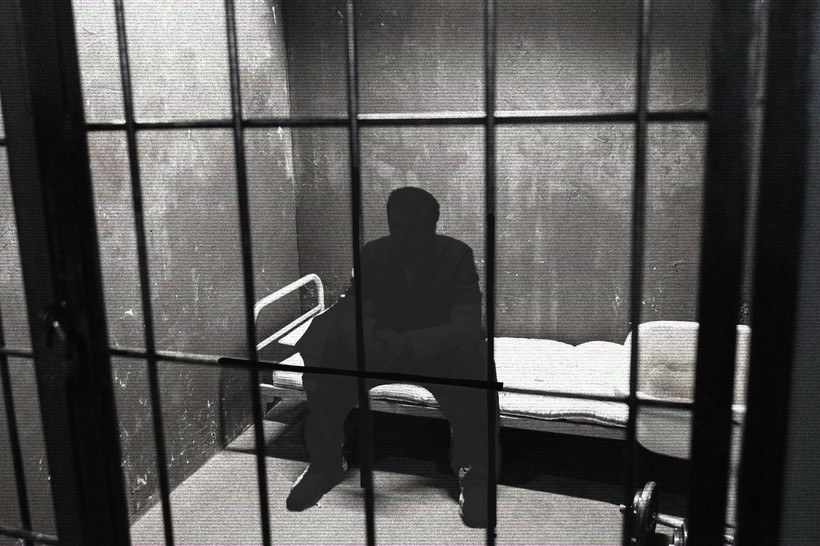
There have been 46 CIU-backed exonerations in New York that have involved credible allegations of prosecutorial misconduct, out of 93 such exonerations total. | Photo: Ron Lach / Pexels | Illustration: Leor Stylar

Sign up for Staying Focused, our newsletter keeping readers up to speed on New York politics.

Sometimes, innocent people go to jail because of junk science or an unreliable witness. More often than not, though, official misconduct is what leads to wrongful convictions, both across the country and in New York. A police officer may have coerced a false confession, or a prosecutor may have withheld important evidence at trial.

Theoretically, counties across New York have a vehicle to correct this kind of misconduct. Conviction integrity units, or CIUs, housed in district attorneys’ offices, are responsible for investigating incarcerated people’s wrongful conviction claims. Advocates and some CIU chiefs have promoted these programs as a way to address the sort of misconduct that contributes to these convictions in the first place. And the state’s District Attorneys Association has cited the units’ existence as a reason why New York doesn’t need an independent commission on prosecutorial misconduct.

In the first installment of our investigative series “Innocence Ignored,” done in collaboration with Columbia Journalism Investigations, we found that the CIU model has failed to deliver on its promises: Nearly half of the state’s 17 units have yet to produce a single exoneration, and investigators have sometimes bowed to pressure to protect their colleagues.

Last month, we published the second installment, which examines the units’ track record on holding prosecutors responsible for their misconduct. Misconduct by police, forensics experts, and other trial participants was a factor in nearly 80 percent of the exonerations CIUs have supported. Prosecutorial misconduct in particular played a role in over half.

Here’s what we found.

DAs rarely acknowledge when prosecutors’ actions led to wrongful convictions.

There have been 46 CIU-backed exonerations in New York that have involved credible allegations of prosecutorial misconduct, out of 93 such exonerations total. When a CIU backs an exoneration, it’s up to the DA to pursue it and hold prosecutors who tried the case accountable. We reviewed every public statement by a DA we could find about each of them — and found that district attorney’s offices publicly acknowledged the potential misconduct in just seven of them.

Often, the offices used vague and passive language to avoid naming prosecutors. In one case, a judge overturned a conviction based on missing photo evidence, but the DA’s office took no responsibility in its public statement, saying only that it was “unclear” whether the evidence had been turned over. In another, an office referred to “miscarriages of justice” but did not identify whose mistakes resulted in them — or even specify what those mistakes entailed.

A DA’s office released a public statement about punishment for prosecutorial misconduct in only one instance we reviewed.

Brooklyn’s CIU is the only unit in New York that regularly prepares reports on their findings. However, even those reports do not name the original prosecutors in a case when criticizing their conduct.

New York DAs rarely acknowledge prosecutorial misconduct in wrongful convictions. | Source: National Registry of Exonerations, public statements, and media reports | Analysis: New York Focus and CJI | Chart: Leor Stylar

Even when CIUs acknowledge their colleagues’ misconduct, they rarely hold them accountable.

When a panelist at a town hall asked Charles Linehan, the Brooklyn CIU’s former chief, about naming names, he said doing so would make it harder to exonerate innocent people. “If I … start blowing up prosecutors’ careers, even if they deserve it, you know how much success I’m gonna have after that?” he asked.

In at least one case, involving the exonerations of three men who’d each spent nearly 25 years behind bars for a double murder, a judge reprimanded a CIU for failing to act on prosecutorial misconduct claims.

The Queens CIU had acknowledged in a filing that the defense had not received exculpatory evidence during the original trial, but tried to assure the court that prosecutors had acted “in good faith and with legally sufficient evidence.”

The judge was not convinced. The Queens DA’s office “completely abdicated its truth-seeking role,” the judge wrote in a March 2021 decision.

His ruling named the prosecutors, whose misconduct led to the wrongful convictions “irrespective of the [prosecutors’] good faith or bad faith.” The judge called the trial prosecutors’ conduct “egregious,” and criticized the Queens CIU for failing to acknowledge it.

DAs are much more likely to blame the police than other prosecutors.

DAs’ offices publicly blamed police misconduct in 60 percent of the prosecutorial misconduct cases we reviewed.

In 2022, a Brooklyn assistant district attorney told a judge that the DA’s office no longer had confidence in the convictions of three men who’d spent years in prison for the murder of a subway token booth clerk.

The ADA blamed the wrongful convictions entirely on the misconduct of two New York City Police Department detectives.

The subsequent CIU report identifies the police officers by name more than 500 times but does not name any prosecutors. An expert hired by the CIU later heavily criticized one prosecutor’s tactics while taking the mens’ statements after a police interrogation.

When asked about the reports, a spokesperson said the Brooklyn DA’s office was not hiding the prosecutors’ names, which he said was “publicly available information that’s accessible to any interested party.” He said our questions were “picking nits” and “a silly attempt to find something to criticize.”

Reform advocates see things differently. Russell Neufeld of Accountability New York, an advocacy group focused on prosecutorial misconduct, argues for naming prosecutors who violate legal and ethical standards.

“The public should know that there are people whose salaries we are paying that are engaging in misconduct,” Neufeld said.

CIUs can misclassify evidence withheld at trial.

When investigating claims of wrongful conviction, CIUs often turn up evidence — eyewitness testimony or DNA samples — that was unknown to one or both sides during the original trial. That evidence can become the basis for overturning a conviction.

How conviction integrity units characterize that evidence can impact an applicant’s claim. That’s because state law distinguishes between evidence discovered after trial and evidence that was known to and withheld by prosecutors or police during trial. The former classification may elide misconduct that has occurred, while the latter can qualify as a Brady violation — misconduct that deprives a defendant of their constitutional right to a fair trial.

Some defense attorneys argue that CIU staff sometimes treat previously withheld evidence as though it were new so that the units can ignore potential misconduct.

Two years ago, the Manhattan CIU backed two men’s exoneration for their 1987 murder convictions. The CIU chief sent a support letter to a judge in which she outlined what she called “newly discovered evidence” that could have resulted in “a more favorable outcome” for the defendants at trial.

The unit had received recent testimony from a person who said a pivotal eyewitness had lied about observing the murder. But the details of this testimony were not new. According to the letter, the witness had spoken with the original prosecutor twice before trial and said the same thing.

The CIU chief wrote that the prosecutor “does not remember the statements one way or another.” The mens’ lawyer, James Henning, argued in his response that the prosecutor had withheld that information at trial, a clear violation of his clients’ right to a fair trial.

The DA’s office urged Henning not to challenge how it had classified the evidence, according to lawsuits filed by Henning’s clients against New York City, but he declined.

When a CIU’s stance is, “‘Maybe the prosecutor didn’t know,’ the next guy doesn’t get out,” Henning said.

DAs can obstruct a defendant’s claims of constitutional rights violations.

It isn’t always easy for defendants to resist the kind of pressure Hennings faced. A DA’s recommendation goes a long way with judges in New York.

We reported on the case of Renay Lynch, who was sentenced to 25-years-to-life for the stabbing death of her landlord in 1998. Decades later, a reinvestigation conducted by the Erie County CIU and Lynch’s attorneys had produced strong evidence of her innocence.

First, the review turned up 14 fingerprints previously withheld from the defense, none of which matched Lynch’s. Second, Lynch’s attorneys believed that the trial prosecutor withheld key information from the jury. Essentially, her attorneys had reason to believe that her alleged accomplice had actually been eliminated as a suspect prior to her trial. (The man had never been arrested or convicted of the crime.)

The revelation, if true, would mean the case against Lynch was built on the falsehood that she had watched the man stab her landlord.

The DA’s office drew a line in the sand when it came time to draw up her exoneration motion. They’d only agree to support her motion if it made no mention of the alleged prosecutorial misconduct. (The DA’s office says there was no evidence of such misconduct.)

In the end, Lynch’s attorneys had a legal and ethical obligation to prioritize her exoneration. Agreeing to the Erie DA’s ultimatum wasn’t easy. “It’s so hard to tell innocent people to swallow these pills, and that the truth doesn’t matter,” one of her attorneys said.

Now back in her Buffalo home, Lynch is trying her best to make up for the years she lost. She believes she deserves answers about whether the prosecutor knew her conviction was based on a false theory.

“Y’all did me wrong,” Lynch said, referring to those who put her in prison. “Because the grave injustice I went through — that you people put me through — someone needs to know.”

Oishika Neogi contributed reporting. 

BEFORE YOU GO, consider: If not for the article you just read, would the information in it be public?

Or would it remain hidden — buried within the confines of New York’s sprawling criminal-legal apparatus?

I started working at New York Focus in 2022, not long after the outlet launched. Since that time, our reporters and editors have been vigorously scrutinizing every facet of the Empire State’s criminal justice institutions, investigating power players and the impact of policy on state prisons, county jails, and local police and courts — always with an eye toward what it means for people involved in the system.

That system works hard to make those people invisible, and it shields those at the top from scrutiny. And without rigorous, resource-intensive journalism, it would all operate with significantly more impunity.

Only a handful of journalists do this type of work in New York. In the last decades, the number of local news outlets in the state has nearly halved, making our coverage all the more critical. Our criminal justice reporting has been cited in lawsuits, spurred legislation, and led to the rescission of statewide policies. With your help, we can continue to do this work, and go even deeper: We have endless ideas for more ambitious projects and harder hitting investigations. But we need your help.

As a small, nonprofit outlet, we rely on our readers to support our journalism. If you’re able, please consider supporting us with a one-time or monthly gift. We so appreciate your help.

Here’s to a more just, more transparent New York.

Chris Gelardi
Justice Bureau Chief
A photo of Chris Gelardi
Ryan Kost is an investigative reporter based in New York City focusing on courts and the criminal justice system. He has been a staff writer for The San Francisco Chronicle, The Oregonian and The Associated Press. His work has also appeared in The… more
Also filed in Criminal Justice

A bill awaiting the governor’s signature would relax restrictions on who can qualify for victim compensation.

In May, state lawmakers passed a $269 billion budget after haggling for months over thousands of line items and policies affecting New Yorkers.

The legislation would make it easier for currently and formerly incarcerated people and child victims to sue the state over allegations of past abuse.

Also filed in New York State

At a Board of Regents meeting Monday, state officials proposed eliminating credit-based diploma requirements.

The last-minute influx, the biggest ever for a legislative primary, is boosting her opponent, Jessica González-Rojas.

City budget gaps and an ambitious affordability agenda may require pressing Albany again for taxes and aid.

Also filed in New York City

A lawsuit accuses federal officials of ignoring evidence that the boy, born in Mexico, held US citizenship through his mother.

We’ve compiled information for the 450,000 New Yorkers who will lose health care coverage on July 1.

The citizens assembly model, used for public decision-making around the world, is gaining traction in New York.