‘We Are Forgotten Here’: As NYC Builds Seawalls, This Queens Community Feels Left Behind

A decade after city officials promised to protect Edgemere against floods, residents say the neighborhood remains just as vulnerable.

Evan Simon   ·   November 18, 2025
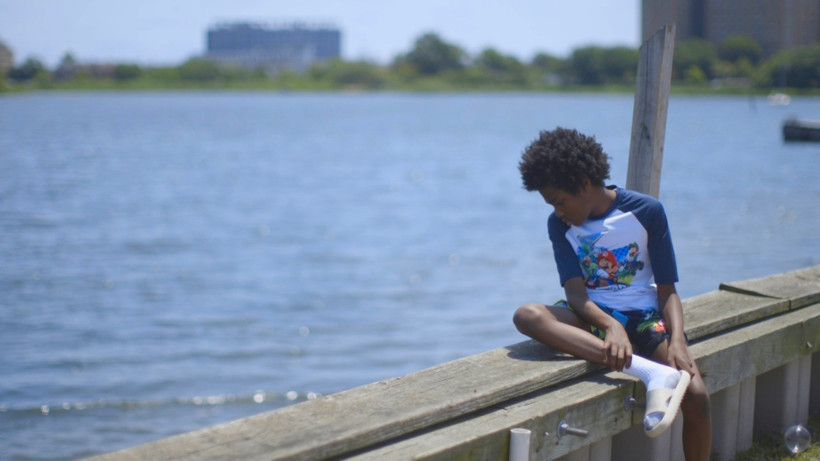
A boy looks out over Jamaica Bay in the Edgemere neighborhood of New York City. The community, which is flanked by the Atlantic Ocean and the bay, is at growing risk of coastal flooding due to sea level rise.
A boy looks out over Jamaica Bay in the Edgemere neighborhood of New York City. The community, which is flanked by the Atlantic Ocean and the bay, is at growing risk of coastal flooding due to sea level rise. | Evan Simon / Floodlight

Sign up for Staying Focused, our newsletter keeping readers up to speed on New York politics.

This article was produced in partnership with Floodlighta nonprofit newsroom that investigates the powers stalling climate action. Sign up for their newsletter here. This article was also co-published by The Guardian.

Baba Ndanani has lived in one of New York City’s most flood-prone neighborhoods for more than 20 years. His two-story home in the coastal, majority-Black community of Edgemere, Queens sits directly beside Jamaica Bay. During high tides, the bay often creeps into his backyard and climbs the steps to his back porch.

In 2012, during Superstorm Sandy, five feet of water surged into Ndanani’s home. He swam across the street to higher ground, riding out the storm in a disabled car surrounded by water.

“I was praying,” Ndanani told Floodlight. “I just wanted to get out, and that was it.”

After the storm, he returned to his wrecked home and spent two weeks sleeping on top of the overturned refrigerator. “I had nowhere else to go,” he said.

In 2015, the city embarked on a flood protection initiative in Edgemere centered on a plan to raise the bayside shoreline. A decade later, Ndanani is still waiting for the project to break ground.

“In the other neighborhoods they’ve done that, so why is Edgemere different?” he asked, referring to the city’s efforts to raise shorelines around Lower Manhattan. “Because we don’t have Wall Street here?”

The city also set up a federally-funded voluntary buyout program designed to relocate residents of Edgemere. But only a handful of residents took the city up on the offer. Despite his harrowing experience, Ndanani loves his neighborhood and has no intention of leaving.

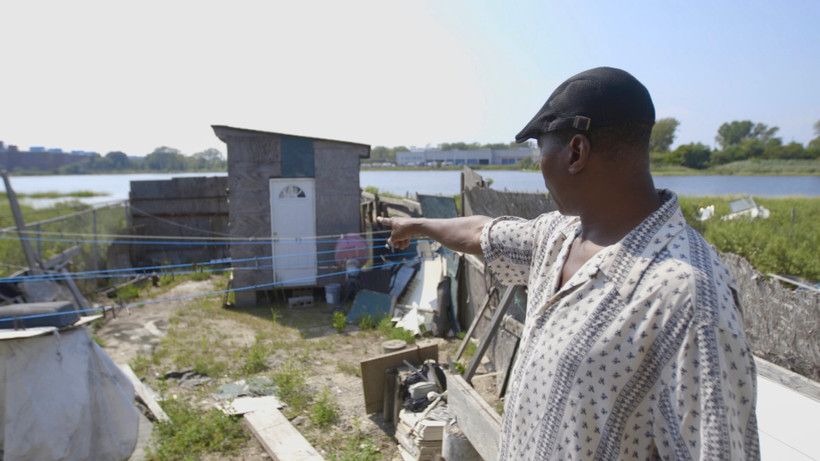
Baba Ndanani has lived in one of New York City's most flood-prone neighborhoods for more than 20 years. During high tides, he often watches with concern as Jamaica Bay creeps into his backyard and climbs the steps to his back porch.
Baba Ndanani has lived in one of New York City's most flood-prone neighborhoods for more than 20 years. During high tides, he often watches with concern as Jamaica Bay creeps into his backyard and climbs the steps to his back porch. | Evan Simon / Floodlight
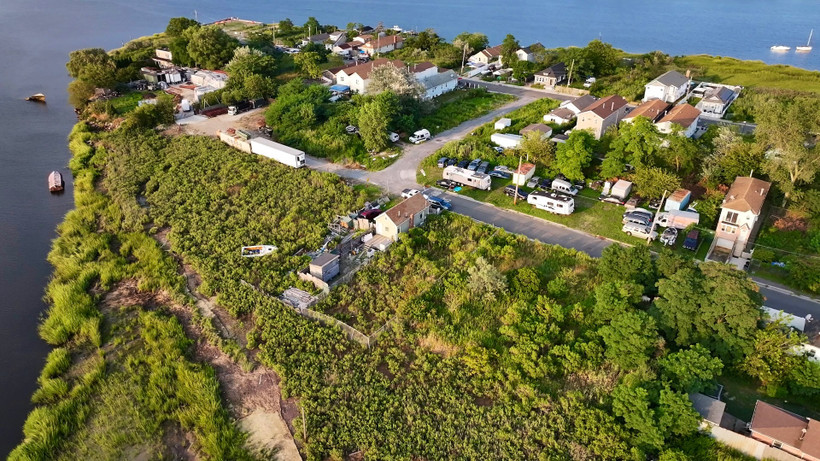
Remnants of the destruction of 2012’s Superstorm Sandy, including debris and a scuttled boat, still lay beside Baba Ndanani’s home on Edgemere’s bayside peninsula. Ten years after city officials pledged to raise Edgemere’s bayside shoreline, the project has yet to break ground.
Remnants of the destruction of 2012’s Superstorm Sandy, including debris and a scuttled boat, still lay beside Baba Ndanani’s home on Edgemere’s bayside peninsula. Ten years after city officials pledged to raise Edgemere’s bayside shoreline, the project has yet to break ground. | Evan Simon / Floodlight

The lack of flood protections in Edgemere, combined with the largely ineffective buyout program, reflects a wider trend among coastal resiliency efforts across America’s cities. In Charleston and Miami and Norfolk, city officials are planning billion-dollar seawalls to protect their wealthy cores, but not the vulnerable communities beyond it.

“Neighborhoods like Edgemere will become more and more frequent,” Veronica Olivotto, a climate adaptation researcher at The New School, told Floodlight.

Edgemere illustrates the collision between the goal of managed retreat from an increasingly uninhabitable coastal America and the many residents who can’t or don’t want to leave, Olivotto said.

“We need to think way more about the land that’s left behind, and the people that are left behind after retreat than we are right now,” she said.

‘We are forgotten here’

Few American cities are more vulnerable to sea level rise than New York City. The city has more than 500 miles of waterfront and about 1.3 million residents who live within or directly adjacent to a floodplain. A recent report estimates more than 80,000 homes could be lost to flooding in the next 15 years. By 2050, city officials estimate that at least 800,000 residents will be living in a high-risk floodplain. By 2080, nearly a third of the city’s landmass could face significant flooding.

New Yorkers got a glimpse of that future in 2012, when Superstorm Sandy flooded 17 percent of the city’s landmass, killing 43 people and causing more than $19 billion in damage.

Officials have been scrambling to make New York more resilient to rising waters ever since. The city has begun raising shorelines and installing massive floodgates around Lower Manhattan as part of the so-called Big U, a 10-mile-long U-shaped system that also includes flood mitigation features to protect the island’s southern tip.

The estimated $2.7 billion project is among the most ambitious coastal protection efforts in the nation. But the city’s working class coastal neighborhoods have not seen comparable efforts.

“Everybody deserves the same amount of protection,” Edgemere resident Jackie Rogers told Floodlight. “If they can invest in other communities, raising up the shorelines, putting berms in the communities that’s along the Lower East Side, as well as the Hudson River, why can’t they do the same thing to Edgemere?”

Flanked by the Atlantic Ocean on one side and Jamaica Bay on the other, Edgemere was among the hardest-hit communities during Superstorm Sandy.

“We were actually in the ocean at the height of Hurricane Sandy,” Edgemere resident Sonja Webber-Bey told Floodlight. “The ocean and the bay were one in the same. So whatever was in your house was the ocean and the bay.”

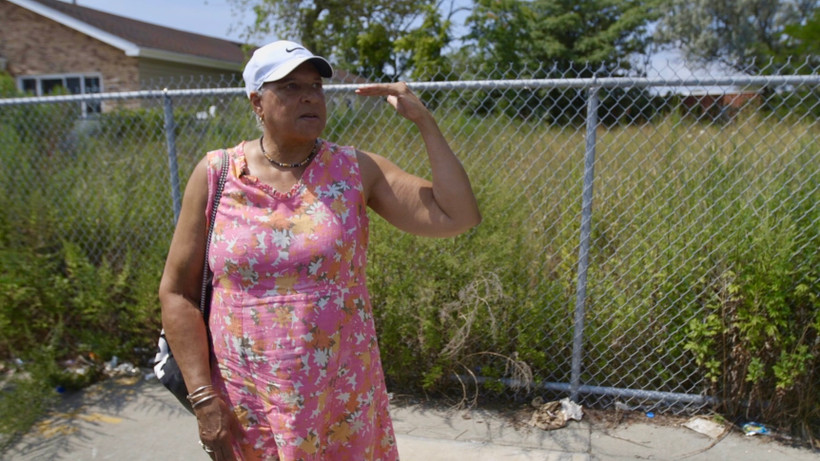
Longtime resident Sonja Webber-Bay shows how high the water reached on the streets of Edgemere during Superstorm Sandy in 2012. “The ocean and the bay were one in the same,” she says. “So whatever was in your house was the ocean and the bay.”
Longtime resident Sonja Webber-Bay shows how high the water reached on the streets of Edgemere during Superstorm Sandy in 2012. “The ocean and the bay were one in the same,” she says. “So whatever was in your house was the ocean and the bay.” | Evan Simon / Floodlight


Yet more than a decade after city officials pledged to fortify Edgemere, residents say little has been done to protect them.

“If a superstorm were to happen next month, the same exact issues would occur in Edgemere as they occurred in Superstorm Sandy,” Olivotto said.

In 2015, the city began working on the Resilient Edgemere Community Planning Initiative to reduce flood risks in the neighborhood. But a decade later, the plan’s major resiliency project has yet to break ground.

The city did upgrade Edgemere’s drainage systems, elevate more than 100 homes, and rebuild the boardwalk. But the centerpiece of the coastal protection plan, a $14 million initiative to raise the shoreline along the bayside, was dropped.

“It’s 13 years since Superstorm Sandy, and yet still no flood mitigation on the bayside,” Rogers said. “We are forgotten here.”

“That money was taken away from Edgemere without Edgemere community members knowing about it and reallocated to another community. We want that money back. We want it reinvested back in our community. We want our shoreline to be raised,” Rogers said.

'Right to be concerned’

Michael Sandler, associate commissioner at the NYC Department of Housing Preservation and Development, says he understands Edgemere residents’ frustration.

“The plan has taken much longer to implement than we would have preferred,” he acknowledged. “We’re coming up on the peak of hurricane season right now, and there isn’t a coastal protection feature, and I think that residents in the neighborhood are right to be concerned about what the future looks like.”

Staffing challenges and pandemic-era funding losses contributed to the delays, he said, and Edgemere remains far too vulnerable.

These images, from the NYC Flood Hazard Mapper, show New York City’s 2015 floodplains compared to projected floodplains by the year 2100.

But the agency is continuing to invest in the neighborhood, and Sandler is confident that “the plan will be a success.”

The city now relies on a federal Army Corps of Engineers project to protect Edgemere’s bayside. But the project has been stuck in the design phase for years, and few residents expect it to move forward anytime soon, especially under President Donald Trump. The Army Corps did not respond to a request for comment.

“It’s not happening,” Edgemere resident Rogers said of the Army Corps project. “Nobody is looking to do anything along this bay to address the constant flooding of Jamaica Bay.”

Sandler says the project has federal funding and is moving forward, but he doesn’t know when it will break ground — and he acknowledges the challenges.

“The city does not have the full resources for all of the coastal protection projects that are necessary to protect the city from climate change,” Sandler said. “And we have a partner in the federal government who is overall pulling back from this work.”

'Nothing came'

Even as flood protection efforts in Edgemere stall, the city has approved construction of new affordable housing towers in the area. One building is completed, and several others are slated to follow. All are in or adjacent to floodplains; sea level rise projections show they could be partially underwater by 2100.

“The fact that Edgemere may be considered as the last bastion of affordable housing in New York City, considering all the flood prone issues that it has, I think is ridiculous,” said Olivotto, the New School researcher.

Officials stress the city’s need for affordable housing and that apartment towers in Edgemere will be less flood-prone than one- and two-story homes. But Olivotto notes Edgemere has only one main road and one subway line for evacuation in the event of a flood.

“If the subway is down and your car is submerged in water, people will not be able to evacuate,” she said. “So your property may be safe because you are in a tower, but you might not be able to have access to services that you need, food, health care, etc. So I think the idea of bringing new homes to Edgemere needs to be rethought.”

Edgemere Commons is among several new affordable housing towers being built in the flood-prone neighborhood. Sea level rise predictions show its location to be partially submerged in water by the year 2100.
Edgemere Commons is among several new affordable housing towers being built in the flood-prone neighborhood. Sea level rise predictions show its location to be partially submerged in water by the year 2100. | Evan Simon / Floodlight
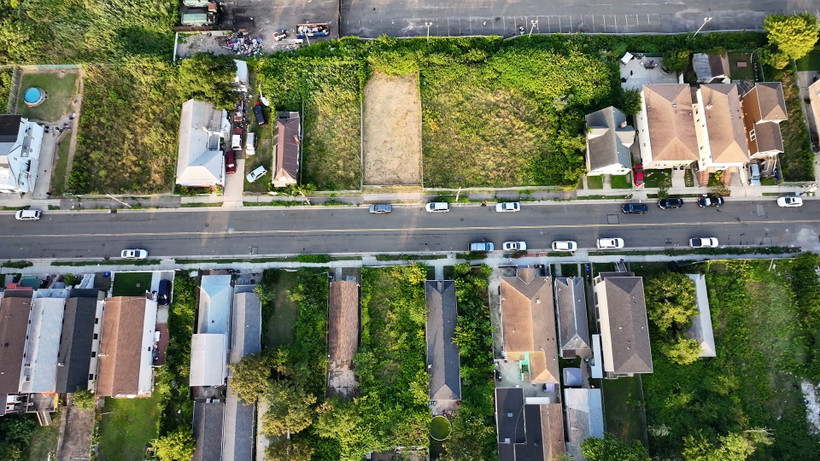

The city has concentrated low-income developments on the city’s periphery since the 1950s, when city planner Robert Moses started buying up swaths of land in Edgemere and bulldozed homes to make way for public housing towers. Some got built, but many of the city lots remain empty, despite multiple urban renewal projects in the ensuing years.

“All of the services that were promised as part of the urban renewal were also not delivered,” Olivotto said. “So, many people moved in the area and were able to access some of this housing, but none of the schools or health care services that a community needs.”

Rogers moved to Edgemere through a city-run affordable housing initiative in 2007. “There were promises of supermarkets, promises of retail stores, shops. Nothing. Nothing came,” she said.

Rogers also says she wasn’t fully informed about the flood risks in the area before moving there. “Nobody ever said that in a couple of years this community would be underwater,” she said.

The lack of services coupled with the voluntary buyout program has sparked concerns that officials are trying to push out Edgemere’s long-time residents.

“They’re developing the whole neighborhood, but I don’t think they’re building for the people that already live here,” said Webber-Bey, who has lived in Edgemere for nearly 50 years. “I think people feel they just want our land and then they’re going to build something that’s three or four times as expensive and build a whole new community on the coast.”

Decades of failed urban renewal projects combined with recent efforts by the city to relocate some residents has left New York City’s Edgemere neighborhood dotted with vacant lots.
Decades of failed urban renewal projects combined with recent efforts by the city to relocate some residents has left New York City’s Edgemere neighborhood dotted with vacant lots. | Evan Simon / Floodlight
'I ain't going no place'
In addition to protecting the neighborhood, the city’s resiliency initiative also aimed to relocate some of Edgemere’s most vulnerable residents through a voluntary buyout program.

“We were really pulling back and trying for the first time in New York City some form of managed retreat from the shoreline,” Sandler said.

The city established a Hazard Mitigation Zone in Edgemere along Jamaica Bay, where it limited development and offered to buy people’s homes in exchange for moving elsewhere. Ultimately, however, only 7 of the roughly 50 eligible homeowners took the city up on the offer.

Despite Edgemere’s vulnerability to flooding and the lack of coastal protections, few of the residents interviewed for this report expressed any interest in leaving.

“It is still one of the hidden gems in New York City, even with all the vacant lots, with all the mosquitoes. It’s quiet. You can hear yourself think at night,” Rogers said.

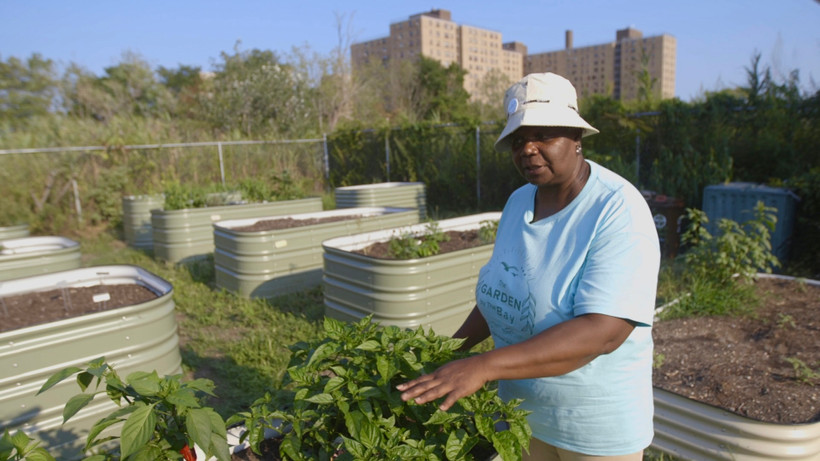
Jackie Rogers runs a community garden in her New York City neighborhood of Edgemere. She says the garden is a place of healing in a place that has suffered from decades of neglect and repeated coastal flooding. “I’m hoping good people with good minds and good hearts look at this community and recognize the potential of what this community can really be,” she says.
Jackie Rogers runs a community garden in her New York City neighborhood of Edgemere. She says the garden is a place of healing in a place that has suffered from decades of neglect and repeated coastal flooding. “I’m hoping good people with good minds and good hearts look at this community and recognize the potential of what this community can really be,” she says. | Evan Simon / Floodlight


Less than 10 percent of Americans who experience a natural disaster decide to relocate, according to one study. Those who move generally do so only after the economic outlook has deteriorated so much — due to rising insurance costs or the loss of jobs — that they feel they have no other choice.

Residents fleeing climate-fueled disasters tend to be younger, higher-income households who can afford to rebuild elsewhere. Their departure can lower the community’s tax base, research shows, leaving the older, lower-income residents who stay with fewer resources to recover and guard against future flooding.

“We live from day to day not knowing what a high tide or hurricane’s going to do to this community. It is very scary,” Rogers said. “But by the grace of God, I ain’t going no place.”

Rogers is president of a community garden, where residents lay down roots, literally.

Rogers installed raised metal beds to fortify the garden against floods. She wants the city to do its part to protect the community, too.

“I don’t believe it’s going to be underwater, even though the scientists say it is,” Rogers said. “And I’m hoping good people with good minds and good hearts look at this community and recognize the potential of what this community can really be.”

I hope this article helped you better answer the question that guides all of our journalism: Who runs New York? Before you click away, please consider supporting our work and making more stories like this one possible.

New York state is standing at a crossroads for climate action. After passing one of the nation’s most ambitious climate laws in 2019, the state is lagging far behind on its targets, struggling to meet deadlines to build renewable energy and clean up its buildings and roads. Other states are closely watching our progress, making decisions about their own climate plans based on New York’s ability to implement this legislation.

As New York’s only statewide nonprofit news publication, we’ve been scrutinizing the state’s climate progress. Our journalism exists to unpack how power works in New York, analyze who’s really calling the shots, and reveal how obscure decisions shape ordinary New Yorkers’ lives.

But we can't do this work without your help. We rely on reader donations to help sustain our outlet, and every gift directly allows us to publish more pieces like this.

Our work has already shown what can happen when those with power know that someone is watching, with my reporting prompting a state investigation and fine for a major corporation. I have more story ideas than I can count, but only limited resources to pursue all the leads that come across my desk.

If you’re able, please consider supporting our journalism with a one-time or monthly gift. Even small donations make a big difference.

Thank you for reading.

Colin Kinniburgh
Climate and Environmental Politics Reporter
A photo of Colin Kinniburgh.
Evan is an investigative producer at Floodlight.
Also filed in New York City

Resorts World is floating legislation to avert more than $500 million in payments to the horseracing industry.

Some of the city’s new aid will be canceled out by pension boosts.

The Department of Justice has terminated more than 100 immigration judges since last year as it has pressured courts to order more deportations.

Also filed in Climate and Environment

Governor Kathy Hochul was successful in her bid to upend the Climate Leadership and Community Protection Act after legislators caved to finalize an overall budget deal.

The leader of Reinvent Albany discusses a data center subsidy in Rockland County that flew under the radar for years.

No other project in the country has gotten such a large subsidy to create so few jobs, according to watchdogs.