Lawmakers Take Another Crack at Protecting New Yorkers’ Health Data

Amid abortion bans and rising digital surveillance, Albany lawmakers are revisiting an effort to stop companies from selling sensitive health information.

Leah Clark and Gabriella Limón   ·   March 26, 2026
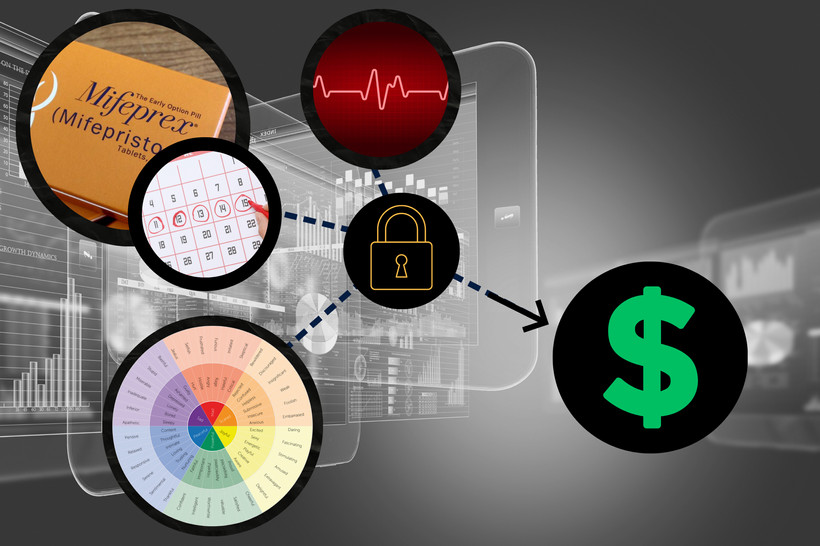
A lock icon stands in between personal health data and a dollar sign representing profit.
The New York Health Information Privacy Act would limit the ability of digital health product companies to collect and sell users' health data without their consent. | Photos: Sergey Nivens, pixelshot, Titima Ongkantong/Canva; Robin Marty/Flickr; Wikimedia Commons | Illustration: Leor Stylar

Sign up for Staying Focused, our newsletter keeping readers up to speed on New York politics.

This story is co-published with Albany: Under the Radar, a new student-powered project from New York Focus and New York University. Each year, the New York state legislature passes more bills than any other — but the vast majority receive no press coverage. This project will start to change that: NYU journalism and law school students will partner to report on undercovered bills and regulations. Sign up here to get future Under the Radar stories in your inbox.

From fitness watches to period-tracking apps, health products are increasingly collecting personal data from everyday activities. The issue has drawn increased attention since the Supreme Court overturned Roe v. Wade, amid reports of data being used to target anti-abortion ads at clinic visitors and to prosecute people seeking gender-affirming care across state lines.

Last year, Albany lawmakers passed a bill to prohibit companies from collecting and selling health data without users’ consent — but business groups argued its provisions were too far-reaching, and Governor Kathy Hochul vetoed it. Now, legislators have introduced a narrower version they hope can make it past the governor’s desk.

What is this?

Senate Bill 9269, called the New York Health Information Privacy Act, would prevent companies from collecting and selling data about a person’s mental and physical health without their consent. The amended bill limits the legislation’s scope and adds new exemptions for data already governed by existing state and federal regulations. It exempts public agencies and governments, and protects only health data collected while someone is in New York state. Under the proposed law, companies that collect or sell health data without a user’s consent could be fined up to $15,000.

“It passed last year, and I’m confident it will pass again,” said Assembly sponsor Linda. Rosenthal. “It’s the discussions with the governor and her team that will be dispositive on what happens to this bill.”

Senator Liz Krueger, who has sponsored the act since 2023, reintroduced it in February.

“Most of us think our healthcare data is protected by federal HIPAA laws, but so much of it is not,” Krueger said. “Our health data is being collected, tracked, and sold to third parties by the very companies that are supposed to be taking care of us, as well as online social platforms, including women’s health apps, mental health apps, TikTok, and even dating apps, monetizing our most intimate information to boost their profits.”

Where did it come from?

The legislation comes as restrictions on reproductive and gender-affirming care are on the rise across the country. Thirteen states have banned abortion since Roe was overturned, and most states have restricted health care for trans youth. Police in some of these states have reportedly used health and location data to prosecute people seeking abortions out of state. In 2024, the location data provider Near Intelligence allegedly tracked and sold data on people’s Planned Parenthood visits to an anti-abortion group’s ad campaign. A year later, officials in Illinois found that Texas police tracked a woman seeking an abortion across state lines using license plate data.

Hochul has signed legislation shielding the information of New York doctors from out-of-state liability for providing gender-affirming care, and last year signed another bill strengthening parallel protections for abortion providers. But these laws do not protect the data that companies collect about those doctors’ patients.

Federal privacy laws preventing the sale of health data primarily apply only to doctors, insurers, and related businesses. They do not cover the consumer health data increasingly collected by private apps and services. Fitness wearables, period tracking apps, and therapy sites have all reportedly collected and sold health data without their users’ knowledge. At least 11 states have enacted health privacy laws since 2018. Washington enacted the My Health My Data Act in 2023, allowing people to withdraw their consent to be surveilled and request that their data be deleted.

Who’s for and against it?

New York Civil Liberties Union, which endorsed the bill last year, contends that the legislation is necessary to protect individuals seeking gender-affirming and abortion care in New York.

Allie Bohm, the group’s senior policy counsel, mentioned TikTok’s new privacy policy changes as the most recent example of technology companies collecting users’ health data. The social media app announced in January that it changed its privacy policy to collect new user data, including mental and physical health diagnoses.

The New York City Bar Association also supported last year’s bill, noting that third-party companies routinely collect and sell private health data but avoid federal health data protections.

Opponents of last year’s bill accused New York’s legislation of going far beyond health privacy bills enacted in other states and expressed concern that such a broad and complex new regime would raise compliance costs for a range of businesses.

The Business Council of New York State, which opposed last year’s bill, said the reintroduced legislation still does not address its concerns.

“As written, NYHIPA increases operational costs for all businesses, service organizations, and nonprofits, potentially limiting services and making things more expensive for both consumers and businesses.” said Chelsea Lemon, the group’s senior director of government affairs.

At New York Focus, our central mission is to help readers better understand how New York really works. If you think this article succeeded, please consider supporting our mission and making more stories like this one possible.

New York is an incongruous state. We’re home to fabulous wealth — if the state were a country, it would have the tenth largest economy in the world — but also the highest rate of wealth inequality. We’re among the most diverse – but also the most segregated. We passed the nation’s most ambitious climate law — but haven’t been meeting its deadlines and continue to subsidize industries hastening the climate crisis.

As New York’s only statewide nonprofit news publication, our journalism exists to help you make sense of these contradictions. Our work scrutinizes how power works in the state, unpacks who’s really calling the shots, and reveals how obscure decisions shape ordinary New Yorkers’ lives.

In the last two decades, the number of local news outlets in New York has been nearly slashed in half, allowing elected officials and powerful individuals to increasingly operate in the dark — with the average New Yorker none the wiser.

We’re on a mission to change that. Our work has already shown what can happen when those with power know that someone is watching, with stories that have prompted policy changes and spurred legislation. We have ambitious plans for the rest of the year and beyond, including tackling new beats and more hard-hitting stories — but we need your help to make them a reality.

If you’re able, please consider supporting our journalism with a one-time gift or a monthly gift. We can't do this work without you.

Thank you,

Akash Mehta
Editor-in-Chief
A photo of Akash Mehta.
Leah Clark is a graduate student at the New York University Arthur L. Carter Journalism Institute, where she is part of the Reporting the Nation and New York program. A Mississippi native, she is a proud alumna of Xavier University of Louisiana.
Gabriella Limón is a second-year student and Root-Tilden-Kern Public Interest Scholar at NYU School of Law. She previously worked for Brennan Center for Justice and the New York legislature, where she focused on civil rights and legislative advocacy. She is a graduate of… more
Also filed in New York State

At a Board of Regents meeting Monday, state officials proposed eliminating credit-based diploma requirements.

The last-minute influx, the biggest ever for a legislative primary, is boosting her opponent, Jessica González-Rojas.

City budget gaps and an ambitious affordability agenda may require pressing Albany again for taxes and aid.

Also filed in Health

We’ve compiled information for the 450,000 New Yorkers who will lose health care coverage on July 1.

In May, state lawmakers passed a $269 billion budget after haggling for months over thousands of line items and policies affecting New Yorkers.

Despite last-ditch efforts by a coalition of lawmakers, the state failed to avert a health coverage cliff coming this summer.

Also filed in Explainers

We’ve compiled information for SNAP recipients in New York on the changing work requirements.

We answer your questions on the state’s notoriously opaque budget process.

Unions want state leaders to sweeten their retirement packages. What would it cost, and what would it achieve?