NYPD Plans Massive Expansion of Real-Time Surveillance in NYCHA Housing

The City Council held an emergency hearing on the NYPD’s use of a free internet program to gain real-time access to public housing cameras, in response to New York Focus’s reporting.

Zachary Groz   ·   October 1, 2025
Two city officials at a council hearing
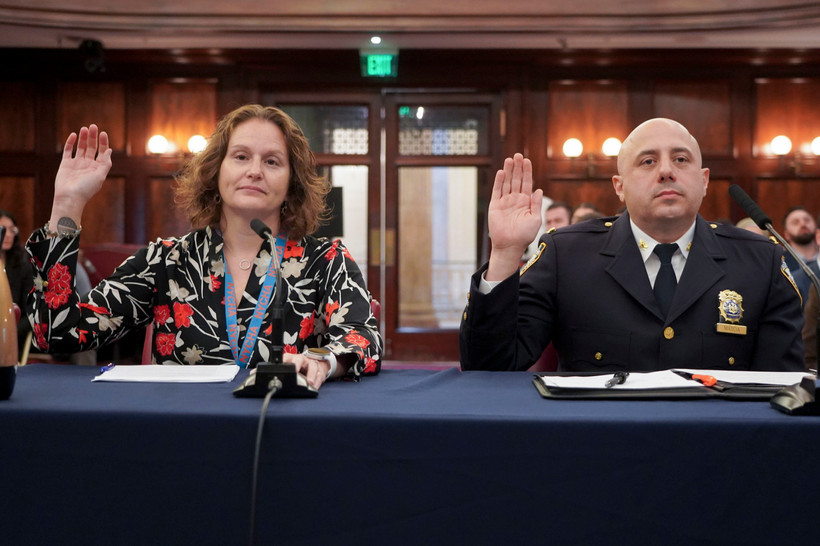
Anthony Mascia, the commanding officer of the NYPD’s Information Technology Bureau (right), and NYCHA Chief Operating Officer Eva Trimble testified at an emergency oversight hearing on police surveillance in NYCHA on September 30. | New York City Council

Sign up for Staying Focused, our newsletter keeping readers up to speed on New York politics.

On Tuesday, the New York City Council held an emergency oversight hearing in response to New York Focus reporting that the police department had covertly used a free internet program to gain real-time access to video cameras at New York City Housing Authority developments.

Lawmakers on the technology, public safety, public housing, and oversight and investigations committees grilled officials from the Office of Technology and Innovation, the New York City Police Department, and NYCHA.

Here’s what we learned.

The NYPD plans to dramatically expand its access to NYCHA cameras.

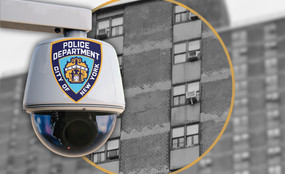
Internet connections established under Mayor Eric Adams’s flagship free internet program for public housing residents, Big Apple Connect, have so far been used to link 68 CCTV cameras at one NYCHA development to the police department’s citywide surveillance software, Anthony Mascia, the commanding officer of the NYPD’s Information Technology Bureau, testified.

By the end of this year, the NYPD plans to fold in 1,900 cameras across 19 more NYCHA properties, Mascia said — and by the end of the next phase, the department expects to have connected 17,897 CCTV cameras across 119 NYCHA developments.

Big Apple Connect allows police to bypass the time-consuming process of physically retrieving footage, Mascia testified. Real-time access is “an unbelievably valuable tool,” he said; if someone reports a robbery, for example, “we’re able to quickly log in and immediately see exactly what’s going on. Maybe we just see two people running away. Maybe we still see the robbery in progress.”

“Every second counts,” Mascia said. “The sooner we see those videos, the sooner we could bring a killer to justice, identify a key witness, or rule out a suspect.”

The city couldn’t explain why it had pursued the initiative in secrecy.

Despite repeated requests, the Office of Technology and Innovation, or OTI, never gave the City Council’s technology committee its contracts for the Big Apple Connect program. The committee only received them (and New York Focus was only able to report on them) after a lawsuit compelled OTI to release them to a small telecom provider, after delaying the provider’s public records request 16 times. “There’s no reason why you shouldn’t have been provided with the contract,” Chantal Senatus, a deputy commissioner leading OTI’s legal office, told lawmakers at the hearing.

The chair of the technology committee, Jennifer Gutiérrez, asked about the contradictory statements that the three agencies provided to New York Focus in the course of its reporting. Brett Sikoff, another OTI representative, said he was “just here to set the record straight.”

“What was said, I apologize for any confusion that may have been caused,” he added.

Sikoff confirmed that OTI never told NYCHA residents it was using the free internet program to facilitate live police surveillance. NYCHA Chief Operating Officer Eva Trimble testified that the housing authority was aware that OTI was contemplating using Big Apple Connect to expand NYPD surveillance, but that the authority never notified residents.

Questions remain about how the data is used and where it goes.

The NYPD may share information collected through NYCHA camera feeds with federal immigration enforcement “when required by law,” Mascia said. The city cooperates with federal immigration authorities on criminal investigations, he said, not to enforce civil infractions.

The Trump administration has eyed public housing as it seeks to carry out mass deportations. ProPublica reported this week that the administration has drafted new rules to revoke federal housing assistance from entire households if a single member lacks legal residency status. NYCHA receives billions of dollars in federal subsidies and is under federal monitorship for failure to maintain adequate living conditions.

Lawmakers also questioned how the police department oversees officers’ use of the technology. Mascia said the department can run internal audits revealing which officers viewed footage and for how long; Gutiérrez suggested more proactive oversight is needed to prevent “suspicionless long-term monitoring of individual residents.”

Mascia committed to “a true, transparent discussion about what audits should be in place to ensure that there’s trust, that you trust that we’re using it correctly.”

Councilmembers, defense attorneys, and civil liberties advocates raised a host of concerns.

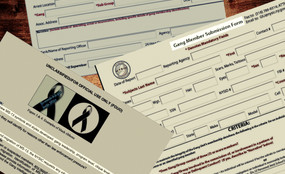
Many zeroed in on the integration of the cameras with the Domain Awareness System, an NYPD tool that fuses data from across the city to build dossiers on New Yorkers and support facial recognition analysis, predictive policing algorithms, and the department’s controversial gang database.

Michal Gross, a public defender at the Neighborhood Defender Service of Harlem, told the committee that police already use NYCHA CCTV footage for reasons other than responding to crimes. The police department, she said, has admitted in court to “surveilling youth via NYCHA video, watching who they spend time with, who their friends are, and even documenting how they spend time with their own family members.”

Gross testified that one of her clients was labeled a gang member based on interactions with friends and family members observed through live surveillance at a NYCHA development. “This is a violation of his First Amendment right of association simply based on where he lives,” Gross said.

Lawmakers and advocates also argued that the city had failed to adhere to transparency requirements outlined in the city’s Public Oversight of Surveillance Technology Act. The NYPD countered that it did not believe the POST Act applied, since the program “only changed the method by which we access the cameras,” rather than creating a new surveillance technology.

Shepherding surveillance through the backdoor of digital equity projects like Big Apple Connect heightens the public’s suspicion of government technology projects, some argued. “It actually ruins our ability to go out and advocate for the freedom to connect,” said Noel Hidalgo, executive director of BetaNYC, a technology nonprofit that has advocated for universal broadband access.

Many questions were left unanswered.

The city didn’t have answers on hand to many of the councilmembers’ questions.

Among them: which NYCHA sites were set for camera integration; how they were selected; how many times the cameras have helped the NYPD respond to crimes; whether the department has statistical evidence showing integration has increased safety or quality of life; how often internal audits of the use of cameras are conducted; which other agencies have given the department real-time access to their cameras; and whether the NYPD has shared footage from the cameras with the federal government.

BEFORE YOU GO, consider: If not for the article you just read, would the information in it be public?

Or would it remain hidden — buried within the confines of New York’s sprawling criminal-legal apparatus?

I started working at New York Focus in 2022, not long after the outlet launched. Since that time, our reporters and editors have been vigorously scrutinizing every facet of the Empire State’s criminal justice institutions, investigating power players and the impact of policy on state prisons, county jails, and local police and courts — always with an eye toward what it means for people involved in the system.

That system works hard to make those people invisible, and it shields those at the top from scrutiny. And without rigorous, resource-intensive journalism, it would all operate with significantly more impunity.

Only a handful of journalists do this type of work in New York. In the last decades, the number of local news outlets in the state has nearly halved, making our coverage all the more critical. Our criminal justice reporting has been cited in lawsuits, spurred legislation, and led to the rescission of statewide policies. With your help, we can continue to do this work, and go even deeper: We have endless ideas for more ambitious projects and harder hitting investigations. But we need your help.

As a small, nonprofit outlet, we rely on our readers to support our journalism. If you’re able, please consider supporting us with a one-time or monthly gift. We so appreciate your help.

Here’s to a more just, more transparent New York.

Chris Gelardi
Justice Bureau Chief
A photo of Chris Gelardi
Zachary Groz is a freelance journalist based in New York. He previously served as co-editor-in-chief of The New Journal, an investigative magazine at Yale University that during his tenure was named Best Student Magazine in America by the Society of Professional Journalists. He is… more
Also filed in Criminal Justice

A bill awaiting the governor’s signature would relax restrictions on who can qualify for victim compensation.

In May, state lawmakers passed a $269 billion budget after haggling for months over thousands of line items and policies affecting New Yorkers.

The legislation would make it easier for currently and formerly incarcerated people and child victims to sue the state over allegations of past abuse.

Also filed in New York City

Under Trump, a status for young immigrants who have experienced abuse or neglect no longer offers much protection.

The Department of Housing Preservation and Development has vowed to go after negligent landlords, but it’s wrestling with a huge backlog of complaints.

A lawsuit accuses federal officials of ignoring evidence that the boy, born in Mexico, held US citizenship through his mother.

Also filed in Housing

Some of the city’s new aid will be canceled out by pension boosts.

A law designed to protect the environment will be partially rolled back to pave the way for much-needed homes.

After a New York Focus investigation, a Bronx charity distributed nearly $400,000 to survivors of a deadly 2022 fire.