Councilmembers Demand NYPD Halt its Public Housing Surveillance Expansion, Following New York Focus Reporting

“New Yorkers did not agree to trade their right to privacy for the promise of free internet,” key committee chairs wrote to city officials.

Zachary Groz   ·   August 25, 2025

The NYC City Hall
Key members of the New York City Council are stepping up oversight of a program providing free internet in public housing, after New York Focus revealed it is being used to expand surveillance. | Canva

Sign up for Staying Focused, our newsletter keeping readers up to speed on New York politics.
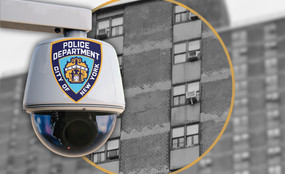
Three committee chairs of the New York City Council sent a letter to Mayor Eric Adams’s administration on Monday demanding that it immediately halt an ongoing expansion of police surveillance in public housing developments and requesting information that could enable a public hearing or investigation.

The letter followed a New York Focus investigation earlier this month that found that the New York City Police Department is using a free internet program to expand its real-time video surveillance capabilities at New York City Housing Authority (NYCHA) developments without notifying lawmakers or residents.

“New Yorkers did not agree to trade their right to privacy for the promise of free internet,” the letter reads. It was sent to the city Office of Technology and Innovation (OTI), the NYPD, and NYCHA by Jennifer Gutiérrez, chair of the council’s technology committee, Yusef Salaam, chair of the public safety committee, and Chris Banks, chair of the public housing committee, as well as Councilmember Althea Stevens, whose Bronx district includes more than a dozen public housing developments.

“We need an investigation,” Banks told New York Focus. “A program that was meant to provide residents of public housing with free WiFi has now become a tool — without any permission, from what I’m hearing from NYCHA — to be used against them, to surveil them.”

New York Focus’s reporting found that the police department is using Big Apple Connect, the mayor’s flagship free internet program, to feed NYCHA CCTV footage directly into its central surveillance system. The surveillance expansion had been in the works for over three years, but the Adams administration had never disclosed it — and NYCHA itself appeared unaware of how its cameras were being used.

The letter represents the first formal step in the council’s oversight process, which could go on to include a public hearing and subpoenas for testimony and the production of relevant records for the purposes of an investigation. The timeline for responses from agencies to the council’s letters of inquiry varies, and can range from a matter of weeks to six months or more — and the letter notes that OTI has stonewalled the council’s requests for information in the past.

“At no point during Council hearings, press conferences, or OTI’s public reporting was the surveillance component disclosed,” the councilmembers wrote. “Residents, advocates, and elected officials were repeatedly told otherwise. This lack of candor erodes public trust in both your agency and this program.”

The lawmakers demanded an “immediate halt” to the NYPD’s expansion of camera access through Big Apple Connect and a full account of where cameras have been linked so far, which the NYPD has declined to disclose to New York Focus. They called on the city to disclose any data-sharing agreements in connection with the program, noting concerns that federal immigration enforcement may be able to harness information from the NYPD’s surveillance systems. And they demanded a transparent process, including consultation with residents, before any future expansions of surveillance in public housing.

Earlier this year, the technology committee held an oversight hearing about Big Apple Connect, focused on OTI’s decision to abandon the city’s Internet Master Plan, which had begun piloting a different free internet service at NYCHA under Mayor Bill De Blasio that used small community providers rather than global telecom corporations. It was one of several oversight hearings featuring OTI that the committee has held in the last year, including a September 2024 meeting on the agency’s MyCity portal, a social services website, which New York Focus previously reported has cost the city north of $100 million in fees paid to outside contractors.

OTI, NYCHA, and the NYPD did not immediately respond to requests for comment. The mayor’s office declined to comment.

Correction: A previous version of this article stated that the City Council's technology committee held two oversight hearings featuring the Office of Technology and Innovation over a span of seven months; in fact, it held several such hearings in that period.

BEFORE YOU GO, consider: If not for the article you just read, would the information in it be public?

Or would it remain hidden — buried within the confines of New York’s sprawling criminal-legal apparatus?

I started working at New York Focus in 2022, not long after the outlet launched. Since that time, our reporters and editors have been vigorously scrutinizing every facet of the Empire State’s criminal justice institutions, investigating power players and the impact of policy on state prisons, county jails, and local police and courts — always with an eye toward what it means for people involved in the system.

That system works hard to make those people invisible, and it shields those at the top from scrutiny. And without rigorous, resource-intensive journalism, it would all operate with significantly more impunity.

Only a handful of journalists do this type of work in New York. In the last decades, the number of local news outlets in the state has nearly halved, making our coverage all the more critical. Our criminal justice reporting has been cited in lawsuits, spurred legislation, and led to the rescission of statewide policies. With your help, we can continue to do this work, and go even deeper: We have endless ideas for more ambitious projects and harder hitting investigations. But we need your help.

As a small, nonprofit outlet, we rely on our readers to support our journalism. If you’re able, please consider supporting us with a one-time or monthly gift. We so appreciate your help.

Here’s to a more just, more transparent New York.

Chris Gelardi
Justice Bureau Chief
A photo of Chris Gelardi
Zachary Groz is a freelance journalist based in New York. He previously served as co-editor-in-chief of The New Journal, an investigative magazine at Yale University that during his tenure was named Best Student Magazine in America by the Society of Professional Journalists. He is… more
Also filed in Criminal Justice

A bill awaiting the governor’s signature would relax restrictions on who can qualify for victim compensation.

In May, state lawmakers passed a $269 billion budget after haggling for months over thousands of line items and policies affecting New Yorkers.

The legislation would make it easier for currently and formerly incarcerated people and child victims to sue the state over allegations of past abuse.

Also filed in New York City

A lawsuit accuses federal officials of ignoring evidence that the boy, born in Mexico, held US citizenship through his mother.

City budget gaps and an ambitious affordability agenda may require pressing Albany again for taxes and aid.

We’ve compiled information for the 450,000 New Yorkers who will lose health care coverage on July 1.

Also filed in Housing

Some of the city’s new aid will be canceled out by pension boosts.

A law designed to protect the environment will be partially rolled back to pave the way for much-needed homes.

After a New York Focus investigation, a Bronx charity distributed nearly $400,000 to survivors of a deadly 2022 fire.

Also filed in Social Services

New York state has pumped millions of taxpayer dollars into an online portal that vowed to make life easier for Rochester’s neediest, but critics say it’s fallen short.

We’ve compiled information for SNAP recipients in New York on the changing work requirements.

Despite last-ditch efforts by a coalition of lawmakers, the state failed to avert a health coverage cliff coming this summer.